 King County
 Why Mercer Island Roofs Wear Differently
Mercer Island sits in a pocket of the Puget Sound region where tall conifer canopy, lake-effect humidity, and long stretches of overcast, drizzly weather combine to put roofs under near-constant moisture stress. Homes here don't usually fail from one dramatic storm — they fail gradually, from months of standing dampness, shaded roof planes that never fully dry out, and moss and debris building up in places a homeowner rarely looks. Add in the marine air that moves through the broader Puget Sound region, which carries fine salt and mineral content that can accelerate corrosion on exposed metal flashing and fasteners, and you get a roofing environment that punishes anything installed or repaired without that context in mind.
We work on Mercer Island roofs regularly, and the repair calls we get tend to follow a pattern: a slow leak that's been dripping for weeks before anyone notices a stain, moss that's lifted shingle edges enough to let water track sideways under the roofing, or flashing that was fine for years and finally gave out after one more wet King County winter. None of that is unusual for the area — it's just what happens to a roof that sits under trees and takes driving rain for eight or nine months a year.
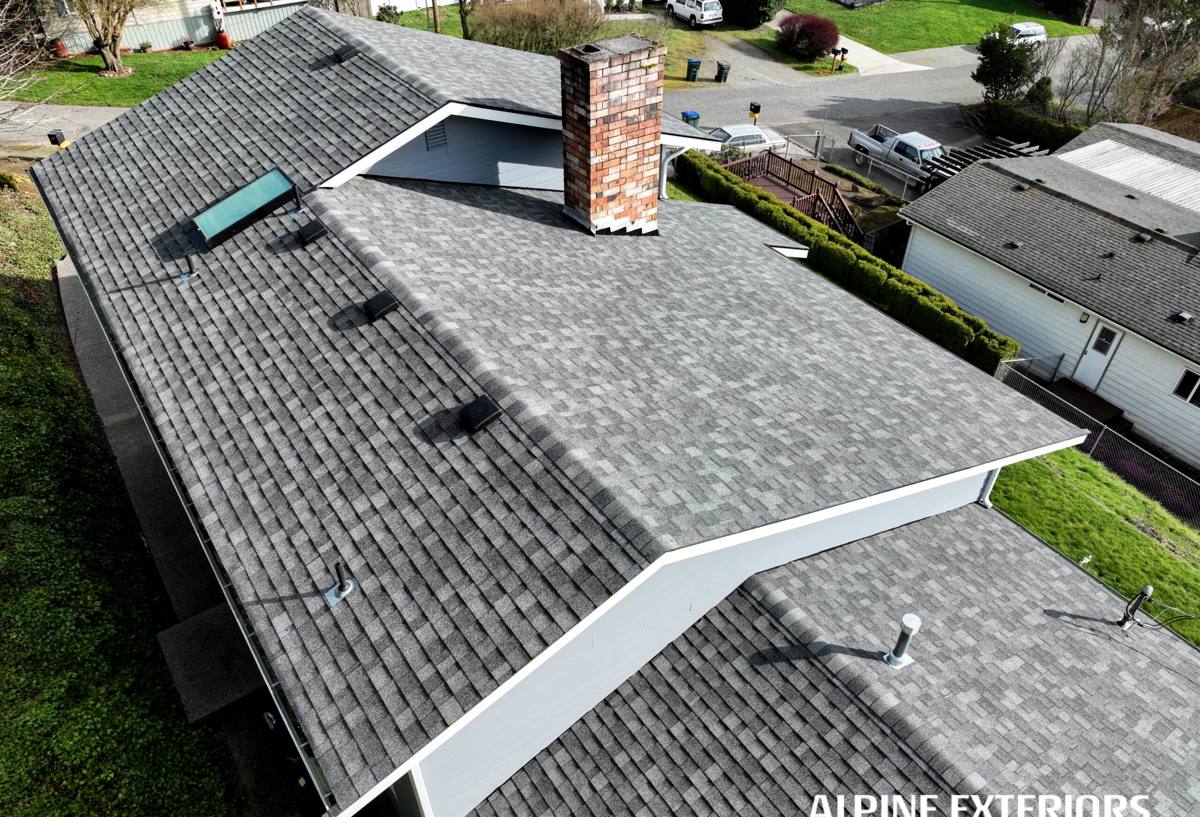
The Conditions Driving Most Repairs Here
Moss and Organic Growth
Moss season on Mercer Island runs long — shaded, north-facing slopes and roofs under mature trees can stay damp enough to support moss growth for most of the year. Moss doesn't just look bad. As it grows, it lifts shingle tabs, holds water against the roofing material, and traps debris that keeps the surface from drying between rains. Left alone, moss growth is one of the most common reasons a roof that's only 10–15 years old starts leaking well ahead of schedule.
Driving Rain and Wind-Driven Water
Storms coming off the water don't always fall straight down. Wind-driven rain gets pushed sideways under loose shingles, around poorly sealed flashing, and into any gap that would be a non-issue in a drier climate. Repairs that don't account for this — patch jobs that only address the visible surface — tend to fail again within a season or two.
Salt-Laden and Humid Air
The marine air typical of this part of King County carries enough moisture and mineral content to speed up corrosion on unprotected metal — nail heads, older flashing, gutter hardware. On a lake-adjacent property like Mercer Island, that humidity also means wood trim, fascia, and sheathing near roof edges stay damp longer after a rain, which is exactly the condition that lets rot start.
Tree Canopy and Debris Load
Mercer Island's tree cover is part of what makes the neighborhood desirable, but it also means gutters and valleys fill with needles and leaves faster than on a more open lot. Clogged valleys and gutters back water up under shingles and are behind a large share of the "mystery leak" calls we get.
What a Correct Roof Repair Actually Involves
A roof repair that actually holds up isn't just slapping a shingle back down or squeezing a bead of sealant over a gap. On a wet-climate roof, the repair has to address why the failure happened, not just where water is currently showing up inside the house.
- Find the real entry point. Water often travels along the underlayment or decking before it shows up as a ceiling stain, so the leak inside the house is rarely directly below the actual failure on the roof.
- Check the decking underneath. If moisture has been getting in for a while, the sheathing under the failure point may be soft or delaminating. Patching over compromised decking just hides the problem.
- Match materials correctly. Shingle color, profile, and granule type vary by manufacturing run. A repair using the wrong replacement shingle stands out visually and can behave differently under UV and moisture than the surrounding roof.
- Rebuild the flashing detail, not just the shingles. Most leaks that aren't storm damage originate at flashing — around chimneys, skylights, roof-to-wall transitions, and valleys. Flashing has to be re-integrated with the underlayment correctly, not just caulked.
- Address the moisture source, not just the hole. If moss, debris, or poor ventilation caused the failure, fixing the hole without addressing the cause means calling us back next winter.
Our Repair Process
1. Inspection and Diagnosis
We walk the roof and the attic when accessible, tracing the leak path rather than assuming the interior stain marks the exact spot. We check flashing, valleys, penetrations (vents, skylights, chimneys), and the general condition of the surrounding roofing — because a repair estimate should tell you if there's a bigger issue nearby, not just quote the obvious spot.
2. A Clear, Written Estimate
You get a written scope before any work starts: what's being repaired, what materials will be used, and why. If we find decking damage or a second problem area during inspection, we tell you before opening anything up — no surprise add-ons mid-job.
3. The Repair Itself
We remove and replace only what's compromised, rebuild flashing details properly, and match shingle or roofing material as closely as the existing product allows. Any exposed fasteners or metal are treated or replaced with corrosion-resistant hardware appropriate for this climate.
4. Cleanup and Debris Check
Given how much debris Mercer Island's tree canopy sheds onto roofs, we clear valleys and gutters near the repair area as part of the job, since leftover debris right next to fresh work undermines it almost immediately.
5. Follow-Up
We tell you what to watch for and, if the repair was moss- or debris-related, what maintenance interval will keep it from recurring.
Repair or Replace? How to Tell
Not every roof problem on Mercer Island calls for a full replacement, and not every leak is safely handled with a patch. These are the factors we actually weigh when giving an honest recommendation:
| Factor | Leans Toward Repair | Leans Toward Replacement |
|---|---|---|
| Age of roof | Under roughly 15 years, good general condition | Nearing or past the material's expected service life |
| Extent of damage | Localized — one flashing area, one valley, a handful of shingles | Widespread granule loss, multiple leak points, curling across large areas |
| Decking condition | Solid, dry sheathing under the damaged area | Soft, rotted, or delaminated decking in multiple spots |
| Moss/moisture history | First occurrence, manageable with cleaning and a repair | Chronic moss damage across most of the roof over several seasons |
| Remaining warranty | Material or workmanship warranty still active | Warranty expired or already voided by prior repairs |
When a roof is borderline, we'll say so plainly and lay out the honest trade-offs rather than pushing toward the bigger job by default.
Materials We Work With and Why
Mercer Island has a mix of roofing types — composition (asphalt) shingle is the most common, with cedar shake and some tile or metal roofing on older or higher-end homes. Each has different repair considerations:
- Composition shingle: The most repairable material overall, provided we can source a reasonably close match; older roofs with discontinued shingle lines sometimes require a slightly visible patch, which we'll flag ahead of time.
- Cedar shake: Requires more care in a wet climate — shake that's been under moss or shaded for years often has underlying rot that isn't visible from the ground, so we inspect more conservatively before quoting a shake repair.
- Tile: Individual tiles are repairable, but the underlayment beneath tile roofing is what actually keeps water out, and it has a shorter service life than the tile itself — a tile repair sometimes reveals underlayment that needs broader attention.
- Metal roofing/flashing: We prioritize corrosion-resistant fasteners and flashing given the mineral content in the region's marine air; mismatched metals at a repair point can accelerate galvanic corrosion, so we match metal types rather than grabbing whatever's on hand.
A Note on Product Choices
We won't install a patch material or fastener just because it's cheaper if it's a poor fit for this climate. For example, uncoated steel fasteners save a little on material cost but corrode faster under the moisture and mineral exposure typical of a lake-adjacent, tree-covered property — that's a maintenance burden we'd rather avoid creating for you than sell you now and revisit in two years.
Moss and Moisture Prevention: What Actually Helps
A repair holds longer when the roof's ongoing exposure to moss and moisture is managed in between. This is the maintenance checklist we give Mercer Island homeowners after a repair:
- Clear moss and debris from shaded and north-facing roof sections at least once a year, more often under heavy tree cover
- Keep gutters and downspouts clear through fall so valleys don't back up during winter storms
- Trim back overhanging branches that keep roof sections shaded and slow to dry
- Check flashing around chimneys, skylights, and vent pipes annually — these are the first spots to fail
- Address small leaks promptly; a slow drip left over a wet winter often turns into decking damage by spring
- Watch for granule buildup in gutters, a sign that shingles are wearing faster than expected
Why Local Experience on Mercer Island Matters
Mercer Island's mix of tree-covered lots, lake-view homes, and tighter, established neighborhoods means access and logistics on a repair job aren't always straightforward — steep driveways, limited staging space, and homeowner association expectations around noise and appearance all factor into how a crew should operate on-site. A contractor who works the island regularly plans for that instead of treating every job like a blank suburban lot.
Just as important is knowing how this specific stretch of King County's climate behaves roof by roof — which orientations hold moss longest, which older subdivisions tend to have a particular shingle style that needs a specific match, and how quickly a small flashing gap turns into a real problem given the rainfall pattern here. That local pattern recognition is what separates a repair that lasts from one that's back on the schedule next winter.
What We Won't Do
We won't recommend a full tear-off when a targeted repair will genuinely hold, and we won't quote a "quick patch" on a roof that clearly needs more without telling you why. If a repair is likely to be a short-term fix given the roof's age or condition, we'll say that upfront so you can decide with real information, not find out in eighteen months.
If you're dealing with a leak, moss buildup, or storm damage on a Mercer Island roof, we're glad to take a look and give you a straight assessment. The estimate is free, there's no pressure to book anything on the spot, and you'll get a clear explanation of what's actually going on with your roof — just fill out the form below to get started.