 King County
 New-Construction Windows Are a Different Job Than Replacement
If you're building new in Woodinville, the windows going into your rough openings aren't the same product — or the same install method — as the replacement windows most homeowners are familiar with. New-construction windows have a nailing fin (sometimes called a flange) that gets integrated directly into the wall's weather-resistant barrier before siding or stone veneer ever goes on. Get that sequencing wrong, and you don't find out for years — until water starts tracking down inside a wall cavity that's already closed up.
This page is about that one job, done right, for builds in and around Woodinville. Whether you're a homeowner working with a general contractor on a custom home, or a builder who needs a window crew that shows up, flashes correctly, and doesn't hold up your siding schedule, this is what a correct install looks like and why it matters here specifically.
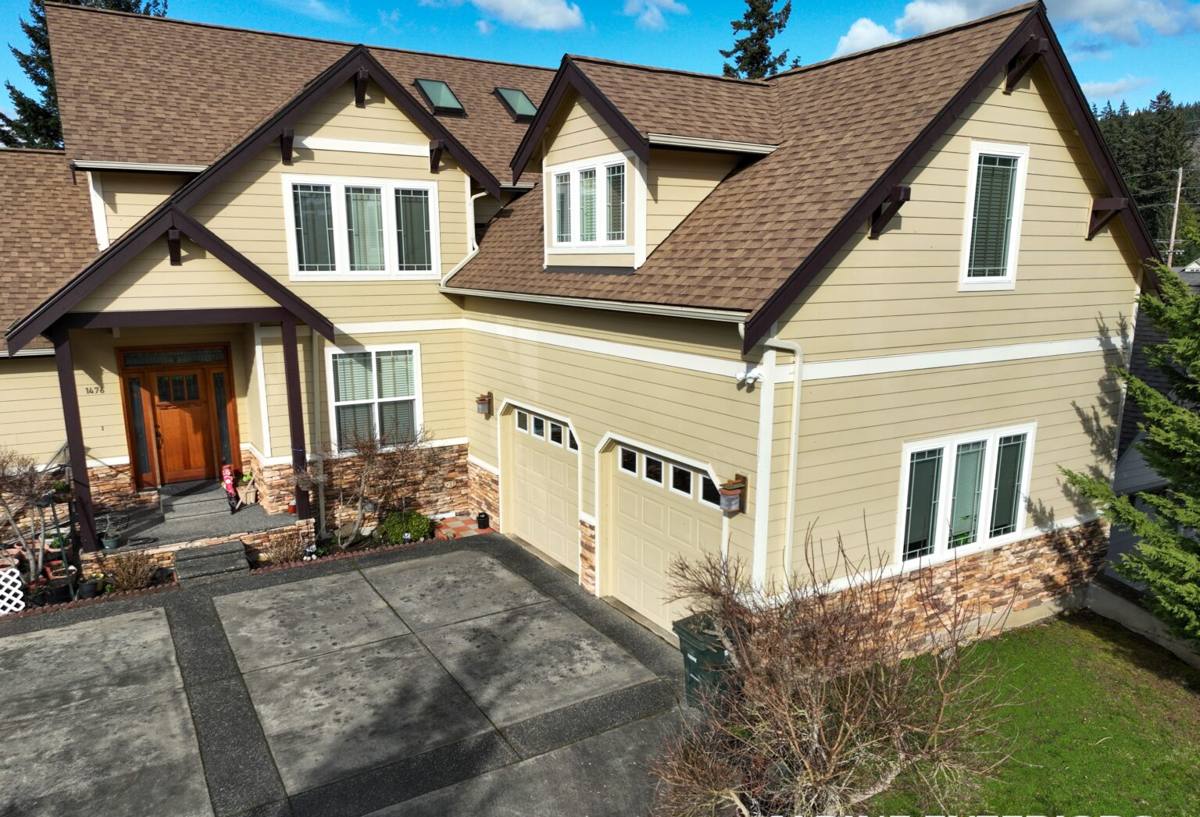
What Woodinville's Climate Actually Asks of a New Window Install
Woodinville sits inland from Puget Sound, so it doesn't take the direct salt spray that homes closer to the water deal with. But it's still King County, and King County winters are long, wet, and mossy. Driving rain off the Sound region pushes moisture sideways against exterior walls for months at a stretch, and the same damp, shaded conditions that grow moss on a roof will grow it in a window sill's low spots if water isn't shedding the way it should.
New construction gives you one real advantage over a retrofit: you get to build the water management system into the wall correctly from the start, instead of working around whatever's already there. That means:
- A sloped sill pan under every window opening, so any water that gets past the glazing has somewhere to go besides the wall framing
- Weather-resistant barrier laps installed shingle-style — upper layers over lower layers — so water moving down the wall never meets an upward-facing seam
- Flashing tape integration at the nailing fin that ties the window into the WRB as one continuous water plane, not two separate systems taped together as an afterthought
- Head flashing above the window that kicks water out and away from the top of the frame
None of this is exotic. It's standard trade practice. But it's also the exact sequence that gets rushed on a tight framing schedule, and it's the reason so many "new" homes develop window leaks well before the windows themselves are old enough to be the problem.
The Anatomy of a Correct New-Construction Window Install
Before the Window Ever Goes In
The rough opening has to be checked for square, level, and correct dimension — plus or minus a little tolerance for shimming, not enough to force the frame out of shape once it's fastened. We also check that the WRB is already lapped correctly below and beside the opening before the window shows up, because the window's own flashing depends on tying into that layer properly.
Setting the Window
The sill pan goes down first, sloped to the exterior. The window gets set into the opening, shimmed plumb and square, and fastened through the nailing fin per the manufacturer's schedule — not just at the corners, but at the spacing the manufacturer actually specifies, because under-fastening is a common source of frame flex and eventual seal failure.
Flashing the Fin
Jamb flashing goes up the sides first, then head flashing across the top, each piece lapped so water sheds down and out — never into a seam. This is the step that separates a window that will perform for decades from one that looks fine on install day and fails quietly behind the siding a few years later.
Interior Air Sealing
On the inside, the gap between the frame and the rough opening gets sealed with a low-expansion foam or backer rod and sealant — not packed solid with standard spray foam, which can bow a frame out of square as it cures. This step also matters for energy performance; an unsealed rough opening gap is a direct path for conditioned air to leak out around every window in the house.
Frame Material Comparison for New Builds
New construction is the best time to choose a frame material, since you're not constrained by an existing opening. Here's how the common options stack up for a King County build:
| Frame Material | Upfront Cost | Maintenance | How It Handles Our Wet Climate |
|---|---|---|---|
| Vinyl | Lowest | Minimal — no painting or sealing | Good moisture resistance; performance varies by manufacturer quality |
| Fiberglass | Mid to high | Low | Very stable dimensionally; expands/contracts close to glass, reducing seal stress |
| Wood-clad | High | Higher — cladding protects wood, but any breach needs prompt attention | Excellent look, but the wood core makes flashing detail and joint sealing more critical here than in a drier climate |
| Aluminum | Mid | Low | Strong and slim-profile, but conducts cold and can condense in our damp winters without a thermal break |
We install several well-established manufacturers across these categories rather than pushing one product line. The honest answer for most Woodinville builds is vinyl or fiberglass for the balance of performance and maintenance; wood-clad earns its keep on homes where the interior wood sightline is a design priority and the owner accepts the added upkeep.
Mistakes We See on New Construction Sites
Most window problems we get called out to fix on newer homes trace back to a handful of repeatable mistakes made during the original build:
- No sill pan, or a flat one instead of sloped — water sits instead of draining, eventually finding a way into the sill framing
- WRB laps reversed or taped over instead of shingled — creates a seam that traps water against the sheathing
- Under-fastened nailing fins — the window looks installed but isn't secured to the schedule the manufacturer engineered it for
- Interior gaps packed with high-expansion foam — bows the frame, which stresses the seals and can crack glazing over time
- Windows installed before the WRB was fully lapped underneath — a sequencing error that's cheap to avoid and expensive to fix once siding is on
These aren't defects you can usually see from inside the finished house. They show up two, five, or ten years later as a stain on drywall, a soft spot in trim, or moss and mildew starting on an interior sill — well after the framing crew and often the original builder are long gone.
How We Work on Woodinville New-Construction Jobs
- Plan review and rough opening check. We look at window schedules and framing dimensions before install day so there are no surprises.
- WRB and flashing coordination. We confirm the weather barrier sequencing with the framing or siding crew so our flashing ties in correctly on both sides — this is where jobs go wrong when trades don't communicate.
- Install to manufacturer spec. Fastening schedule, shim placement, and flashing lap order follow the window manufacturer's installation instructions, not a shortcut version.
- Interior seal and final check. Low-expansion sealing, square and operation check on every unit, and a walk-through before we consider the opening closed out.
- Documentation. We can provide notes on what was installed and how, useful for your own records or for warranty purposes down the line.
Quick Checklist for Builders and Homeowners
- Confirm the WRB is lapped correctly before any window goes in
- Ask whether sill pans are standard on your job or an upgrade
- Get the fastening schedule in writing if you're comparing bids
- Ask what sealant and flashing tape products are being used and whether they're compatible with your specific WRB
- Walk the site after windows are set but before siding closes everything up
Why a Local King County Crew Matters Here
A crew that only occasionally works in the Pacific Northwest can install a window that's technically airtight and still get the water management wrong for our conditions, because dry-climate habits don't transfer well to a region with our rainfall totals and moss season. Flashing details that are optional in Arizona are not optional in King County. We build every install around the assumption that this house will see months of sustained rain every year, because it will.
Working locally also means we're not disappearing after one job. If a question comes up during your build's siding phase, or a framing crew needs to coordinate flashing sequencing with us, we're a short drive away, not a call center.
Get an Estimate for Your Woodinville Build
If you're framing a new home or addition in Woodinville and want a window crew that treats flashing and sequencing as seriously as the windows themselves, we're happy to take a look at your plans. Reach out for a free, no-pressure estimate using the form below.