 King County
 Roof Repair in Queen Anne: Built for a Hill That Sees Every Kind of Weather
Queen Anne sits high above the rest of Seattle, and that elevation cuts both ways. The views are real, but so is the exposure. Homes on the hill catch wind off Puget Sound and Elliott Bay that flatter, more sheltered neighborhoods never deal with, and that wind doesn't just blow rain past a roof — it drives it sideways and up under shingle edges, flashing laps, and ridge caps that were never designed to handle water moving in that direction. Add a long, damp moss season that King County's mild, wet climate practically guarantees, and you've got a roof that ages differently here than it would in a drier inland town.
This page covers roof repair specifically — not full replacement — for Queen Anne homes. It's meant to give you a straight, honest picture of what typically goes wrong on roofs in this neighborhood, what a correct repair actually involves, and how to tell when a repair is still the right call versus when you're looking at something bigger.
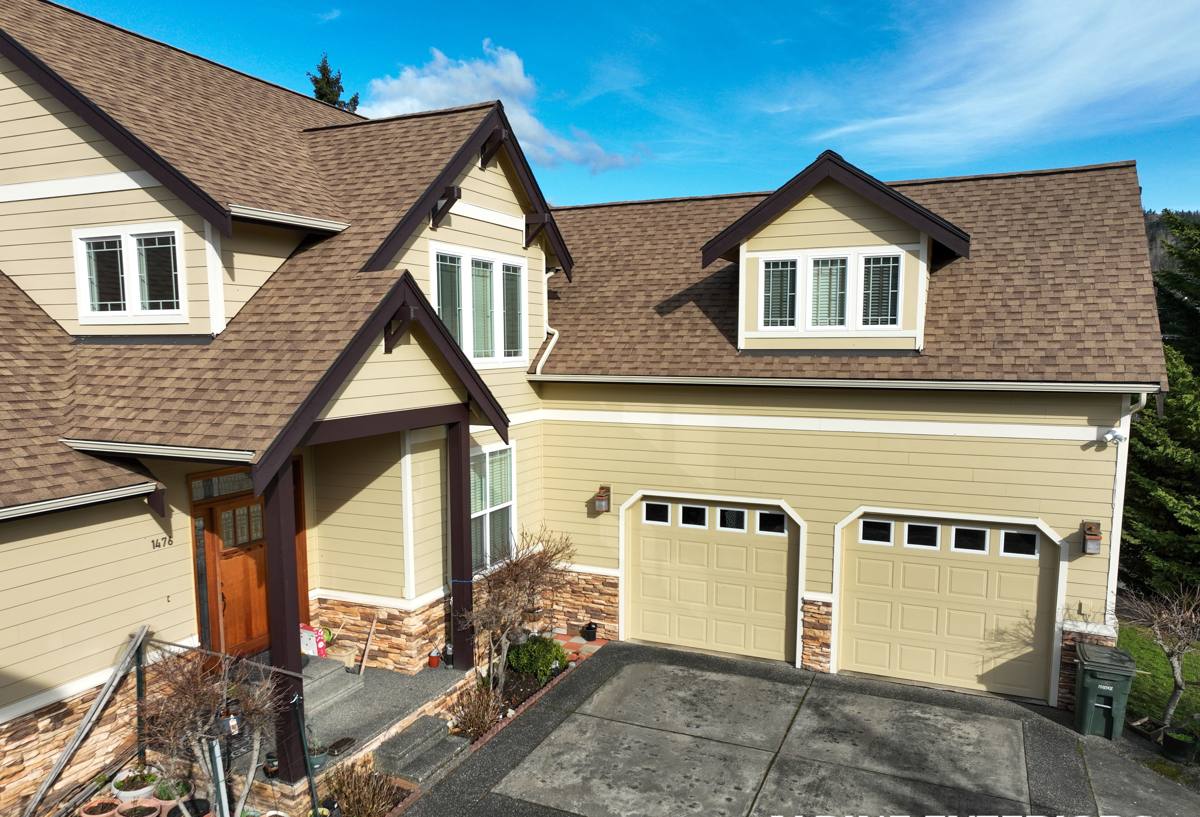
What Makes Queen Anne Roofs Different
Salt Air and Wind Exposure
Queen Anne's elevation and proximity to the water mean roofs here take on a steady dose of salt-tinged marine air, especially on the west- and north-facing slopes. Over years, that air accelerates corrosion on cheaper fasteners, exposed metal flashing, and gutter hardware. A nail or flashing piece that would last decades in a dry inland climate can start failing well before that timeline here, and a failing fastener or a corroded flashing seam is one of the most common starting points for a roof leak.
Driving Rain, Not Just Rain
The distinction matters more than it sounds. A roof designed and installed to shed water falling straight down can still leak badly when rain is being pushed sideways and upward by wind, because water finds its way under shingle tabs, around vent boots, and up under improperly lapped flashing at valleys, chimneys, and wall intersections. Most of the repair calls we see in this neighborhood trace back to a flashing detail or a lap that was fine in calm weather but couldn't hold up once wind-driven rain got involved.
A Long, Genuine Moss Season
Queen Anne's mix of mature tree cover and shaded, north-facing roof slopes creates ideal conditions for moss and organic growth for a good chunk of the year. Moss isn't just cosmetic — it holds moisture against the roofing material, lifts shingle edges as it grows, and works its way into nail lines and laps over time. A roof that looks fine from the ground can have real moisture damage building underneath a moss mat that's been sitting there for a season or two.
The Most Common Roof Repairs We See in Queen Anne
| Issue | Typical Cause | Why It Shows Up Here |
|---|---|---|
| Flashing leaks at valleys, chimneys, and skylights | Corroded, improperly lapped, or aged flashing | Wind-driven rain finds gaps that straight-down rain never would |
| Lifted or missing shingles | Wind uplift, moss growth under tabs, aging adhesive strips | Hilltop wind exposure plus a long moss season loosens shingle edges |
| Moss and organic growth on shaded slopes | Tree cover, north-facing pitches, poor airflow | Mild, damp King County climate supports growth nearly year-round |
| Corroded fasteners and metal flashing | Salt-tinged marine air, age | Elevation and proximity to Puget Sound accelerate corrosion |
| Ventilation and moisture damage in the attic deck | Blocked or inadequate roof ventilation | Trapped moisture speeds up rot beneath moss-covered areas |
| Gutter and downspout backups causing water intrusion | Debris buildup, undersized systems on steep rooflines | Steeper, multi-gable rooflines common on the hill concentrate runoff |
What a Correct Roof Repair Actually Involves
A roof repair that actually holds up is diagnostic work first and patching second. Skipping the diagnosis is how a "fixed" leak reappears eighteen months later, usually because the visible symptom got patched while the underlying cause — a failed flashing lap two feet away, or a saturated section of decking — never got addressed.
Step One: Find the Real Source
Water doesn't always leak straight down from where it enters. It can travel along rafters or decking and show up on a ceiling several feet from the actual point of entry. A proper repair starts by tracing the path, not just patching the spot where the stain appeared.
Step Two: Check the Decking, Not Just the Surface
If water has been getting in for any length of time, the roof decking underneath may be softened or rotted. Patching shingles over compromised decking doesn't fix anything — it just delays the next failure, and often makes the eventual repair more expensive because the damage has had more time to spread.
Step Three: Match Materials Correctly
Repairs should use shingles, flashing, and underlayment that are compatible with what's already on the roof — matching profile, weight, and where reasonably possible, color and product line. A patch that doesn't match the existing roofing not only looks obviously bolted-on, it can also create a weak point where old and new materials don't seal against each other the way a uniform section would.
Step Four: Address the Cause, Not Just the Symptom
If moss caused the failure, the repair should include appropriate moss treatment and a look at what's keeping that section of roof shaded and damp. If ventilation was inadequate and contributed to deck rot, that gets addressed too. A repair that only replaces the visibly damaged material without touching the underlying condition is a repair that's likely to fail again in the same spot.
Repair or Replace? How We Help You Decide
Not every roof problem in Queen Anne means a full replacement, and we're not going to tell you it does. A lot of roofs here are legitimately repairable, especially when the damage is localized to a section, a flashing detail, or an area of moss and moisture intrusion. Replacement becomes the more honest recommendation when the roofing material itself is at or past the end of its practical life, when damage is widespread across multiple sections rather than isolated, or when repeated repairs on an aging roof are starting to cost more, cumulatively, than a replacement would.
- Age of the roofing material: A roof nearing or past its expected service life is a poor candidate for repeated patch repairs.
- How widespread the damage is: One or two isolated problem areas usually repair well; damage spread across the whole roof often doesn't.
- Decking condition: Sound decking under a damaged section supports a straightforward repair; widespread rot points toward replacement.
- Repair history: A roof that's had several repairs in different spots over a short span is telling you something about its overall condition.
- Your timeline in the home: A solid repair can be the right, cost-effective call if you don't need a full 25-30 year roof system.
We'll walk the roof, show you what we find, and give you a straight answer — including telling you when a repair is genuinely the better option, not just the cheaper one to quote.
Our Roof Repair Process
1. In-Person Inspection
We inspect the roof directly rather than estimating from the ground or from photos, since flashing failures, lifted shingle edges, and early moss damage are easy to miss from a distance.
2. Written Diagnosis and Estimate
You get a clear explanation of what we found, what's causing it, and a written estimate before any work starts — no surprise scope changes once the job is underway.
3. The Repair Itself
Work is done with materials matched to your existing roof, proper flashing technique at every lap and penetration, and attention to the underlying cause, not just the visible damage.
4. Cleanup and Final Check
The area is cleaned up, debris and old materials are hauled off, and we do a final check to confirm the repair is sealed and sound before we consider the job done.
Signs You Should Get a Roof Repair Looked At
Roof problems on a Queen Anne home rarely show up as an obvious hole. They usually show up as smaller signs that are easy to write off until they've been going on for a while.
- A water stain on a ceiling or in the attic, even a small one that hasn't grown
- Visible moss, dark streaking, or organic growth on shaded roof slopes
- Shingles that look lifted, curled, or are missing granules in patches
- Rusty or visibly corroded flashing around chimneys, vents, or skylights
- Gutters that overflow or back up during heavier rain
- A musty smell or visible dampness in the attic space
- Daylight visible through the roof deck from inside the attic
Catching any of these early is almost always cheaper and less disruptive than waiting until the damage spreads to the decking or interior finishes.
Why Hiring a Crew That Already Works Queen Anne Matters
Queen Anne's steep, narrow streets and hillside lots aren't just a scenery detail — they affect how a roof job gets staged, where equipment can be set up, and how access and safety are handled on multi-story homes with steep pitches. A crew that's worked this neighborhood before knows what to expect before the truck even arrives.
More importantly, a crew with real King County experience has seen firsthand how salt air corrodes cheap fasteners over a handful of years, how wind-driven rain finds gaps that a textbook installation might miss, and which roof orientations hold moss longest through a wet Puget Sound winter. That's the kind of knowledge that shows up in the small decisions during a repair — which flashing detail to use, how to lap it, whether ventilation needs attention too — decisions a crew unfamiliar with this specific climate is more likely to get wrong.
Get a Free, No-Pressure Estimate
If you've noticed a stain, a patch of moss, or a spot where the roof just doesn't look right, it's worth getting a real look before it turns into a bigger repair. We'll come out, inspect the roof in person, and give you a straightforward written estimate — no pressure, no upsell, just an honest assessment of what your roof actually needs. Use the form below to request your free estimate.