 King County
 Queen Anne's Setting Puts Real Stress on Siding
Perched above downtown Seattle with views out toward Puget Sound and the Olympics, Queen Anne is one of the more weather-exposed neighborhoods in King County. The same elevation and water proximity that make the views worthwhile also mean homes here take a steady beating: salt-laden air moving in off the Sound, wind-driven rain that gets pushed sideways into walls instead of falling straight down, and long stretches of gray, damp weather that keep siding wet for days at a time. Layer in the mature tree canopy that shades many of Queen Anne's older lots, and you get a near-perfect environment for moss and algae to take hold on siding that never fully dries between storms.
None of that means siding on Queen Anne is doomed to fail — it means siding here needs to be inspected, maintained, and repaired with this specific combination of salt, rain, and shade in mind. A repair approach that holds up fine in a drier inland suburb isn't automatically the right approach for a home a few blocks from the water on Queen Anne hill.
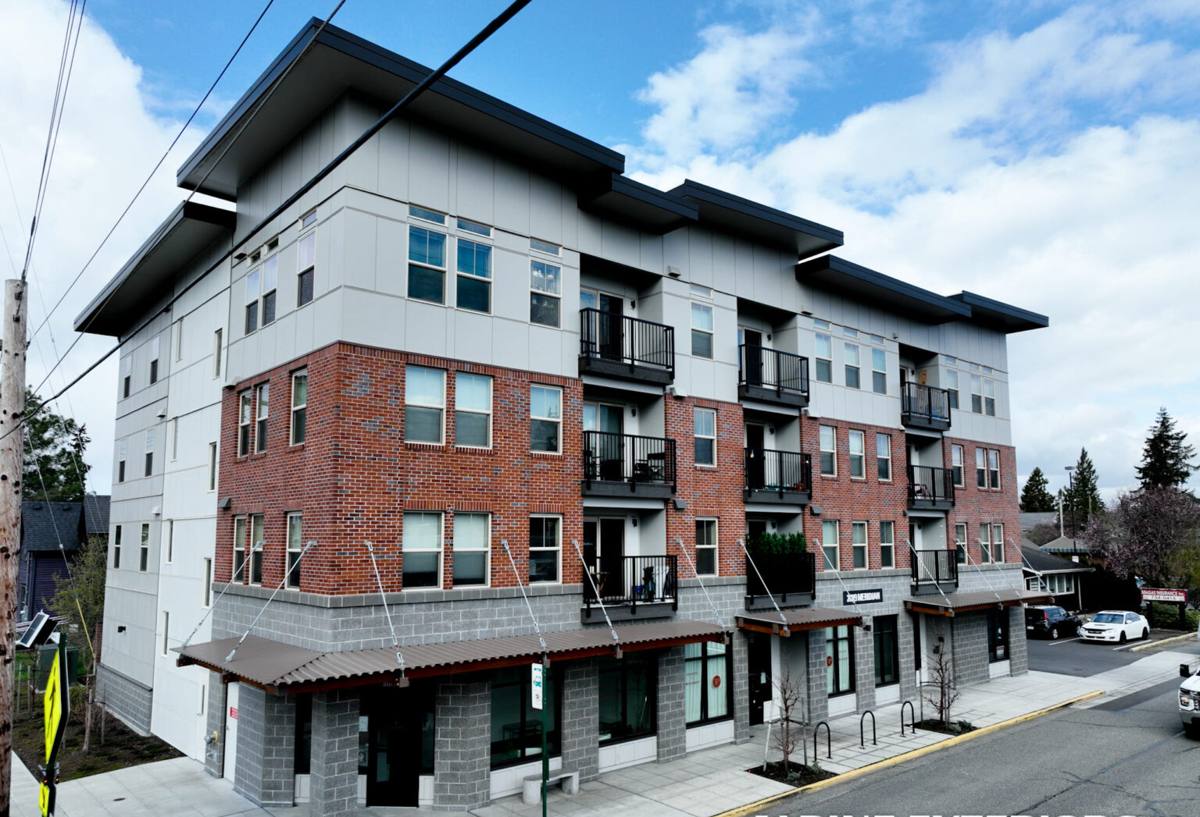
Signs a Queen Anne Home Needs Siding Repair
Most siding damage starts hidden behind the surface, so homeowners often don't catch it until it has already progressed. These are the warning signs we tell Queen Anne homeowners to watch for between routine inspections:
- Soft or spongy spots when you press on the siding, especially near the bottom of walls
- Dark streaking, green or black film, or visible moss buildup on shaded and north-facing walls
- Paint that's peeling, bubbling, or failing faster than the rest of the house
- Gaps or separation showing up at seams, corners, and around window and door trim
- Visible warping, cupping, or cracking in individual boards or panels
- Musty odors or unexplained staining on interior walls, which often means moisture is already inside the wall assembly
- Rust streaking around fasteners, which shows up faster on homes closer to the salt air near the Sound
Any one of these is worth a professional look before it turns into a sheathing or framing repair instead of a siding repair.
What a Correct Siding Repair Actually Involves
It starts with what's underneath, not what you can see
A patch job that only addresses the visible board or panel is not a repair — it's a temporary cover-up. Before we touch the exterior finish, we pull back enough siding to look at the water-resistive barrier, flashing, and sheathing underneath. In a climate like Seattle's, damaged siding is frequently a symptom of a moisture problem that started at a flashing detail, a failed sealant joint, or a penetration that was never properly sealed. Replacing the siding without fixing what let the water in guarantees the same failure repeats in a year or two.
Matching, not just patching
Once the underlying issue is corrected, the repair has to blend into the rest of the wall — matching board profile, reveal, and finish so it doesn't read as an obvious patch. This matters more on Queen Anne than in a lot of newer subdivisions, because the neighborhood has a real mix of home styles and ages, and mismatched repair sections stand out more on a house with character.
Fasteners and flashing built for the coastal air
Salt air corrodes standard fasteners faster than it corrodes the siding material itself. Correct repair work on homes closer to the water means using fasteners and flashing rated for that exposure, not just whatever is fastest to grab off the shelf.
Common Culprits Behind Siding Damage on Queen Anne's Older Homes
Queen Anne has a lot of housing stock that predates modern siding and flashing standards, plus plenty of homes that have been through one or more prior renovations. In our experience, a few patterns show up again and again:
- Original wood siding that has been repainted many times without addressing the moisture getting behind it, so rot is hiding under intact-looking paint
- Older vinyl or engineered wood retrofits installed over the original siding without correcting the flashing details that caused the first round of damage
- Poor kick-out flashing where rooflines meet walls, which is one of the most common sources of concentrated water damage we find behind siding in this area
- Moss and organic growth on shaded walls that holds moisture against the surface far longer than direct sun exposure would allow
- Settling and seasonal movement common on the hill's older lots, which opens seams and joints over time
None of these are unusual or embarrassing — they're just what decades of Pacific Northwest weather does to a house. The point of a proper inspection is to catch which of these is actually driving the damage, rather than guessing.
Repair or Full Replacement: How We Help You Decide
Not every damaged section needs a full re-side, and not every "repair" request should stay a repair. The right call depends on how much of the wall is affected and what's driving the damage.
| Factor | Leans toward repair | Leans toward replacement |
|---|---|---|
| Extent of damage | Isolated to one or two wall sections | Spread across multiple elevations |
| Underlying moisture issue | Localized and correctable (one flashing detail) | Systemic (water intrusion behind most of the wall) |
| Age and material of existing siding | Newer, still-sound material nearby | Original siding nearing the end of its service life |
| Match quality achievable | Product and finish still available or close enough | Discontinued profile or badly weathered color mismatch |
| Future maintenance plans | Homeowner plans to repaint/maintain regularly | Homeowner wants to stop repainting and re-repairing altogether |
We'll walk you through where your home falls on that spectrum honestly. If a section can be properly repaired without compromising the rest of the wall, we'll tell you that — a repair recommendation isn't a sales pitch for a bigger project.
Our Process for Queen Anne Siding Repair
- On-site inspection. We look at the damaged area and the surrounding wall assembly, not just the spot you called about, since Seattle's climate rarely produces truly isolated damage.
- Diagnose the cause. We identify the moisture source — flashing, sealant failure, moss retention, fastener corrosion — before proposing a fix.
- Written scope and estimate. You get a clear explanation of what's damaged, why, and what correcting it involves, in plain language.
- Correct the underlying issue. Flashing, barrier, and sheathing repairs happen before any new siding goes back on.
- Install matched siding. Repaired sections are matched to existing profile and finish as closely as the product allows.
- Final walkthrough. We review the completed work with you and explain any maintenance that will help it hold up through the next wet season.
Why We Repair With James Hardie, Not Wood, Vinyl, or Other Fiber Cement
We install and repair with James Hardie fiber cement exclusively. On a repair project specifically, that decision matters in a few concrete ways. Hardie's ColorPlus factory finish is engineered for consistency, which gives a repaired section a much better chance of actually matching the surrounding wall than field-painted wood or a vinyl profile that has already faded unevenly in the sun and salt air. Hardie's HZ product line is also engineered for exactly the kind of wet, humid climate zones the Pacific Northwest sits in, meaning the material itself resists the moisture-driven swelling, cupping, and rot that we see repeatedly in older wood siding on Queen Anne homes.
We won't pretend other materials don't have their advocates — vinyl is inexpensive and low-maintenance in mild climates, and cedar has real aesthetic appeal. But repairing damage caused by moisture with a material that's also moisture-sensitive doesn't solve the underlying problem, it just delays the next repair call. Fiber cement's dimensional stability and non-combustible composition are why we standardized on it, and why we bring it to repair work as well as full re-sides.
Why Hiring a Crew That Already Works Queen Anne Matters
Queen Anne isn't a flat, easy-access neighborhood. Steep lots, narrow streets, limited parking, and older homes built before modern setback and access standards all add real logistical difficulty to a siding project that a crew unfamiliar with the area hasn't planned for. A crew that regularly works this part of King County knows how to stage material and equipment on a hillside lot, understands the permit process for exterior work in Seattle, and has a feel for the range of home styles here — from early-1900s houses to more recent infill construction — so a repaired wall section actually looks like it belongs.
Local experience also means recognizing patterns faster. When we've seen the same kick-out flashing failure on three other Queen Anne homes in the same block, we know to check for it on the fourth without wasting time and money ruling out less likely causes first.
Get a Straight Answer About Your Siding
If you're seeing soft spots, moss buildup, peeling paint, or gaps in your siding, it's worth getting a professional look before the damage spreads into the sheathing behind it. We offer free, no-pressure estimates for Queen Anne homeowners — we'll tell you honestly whether you're looking at a repair or something bigger, and what correcting it the right way actually involves. Use the form below to get started.