 King County
 Storm Damage on Queen Anne's Hill: Why the Repair Needs to Be Right
Queen Anne sits higher and more exposed than most of the surrounding city, and that position matters when a storm rolls through. Homes up here take wind gusts that flatter, more sheltered blocks never see, and that wind is usually carrying rain sideways off Puget Sound rather than dropping it straight down. Add in King County's long, wet moss season and the salt-tinged air that comes with living close to the water, and you've got a roof that ages differently than one fifty miles inland. A storm doesn't just add new damage here — it exploits weak points that moss, moisture, and salt exposure have already been working on for months.
That's the piece a lot of homeowners miss after a windstorm: the visible damage (a missing shingle, a bent vent cap) is rarely the whole story. The real question is what the storm exposed underneath — and whether the roof was already compromised by the slow, steady wear that comes standard with this climate. We've repaired enough Queen Anne roofs to know the difference matters for how the repair holds up, and for what an insurance adjuster will and won't approve.
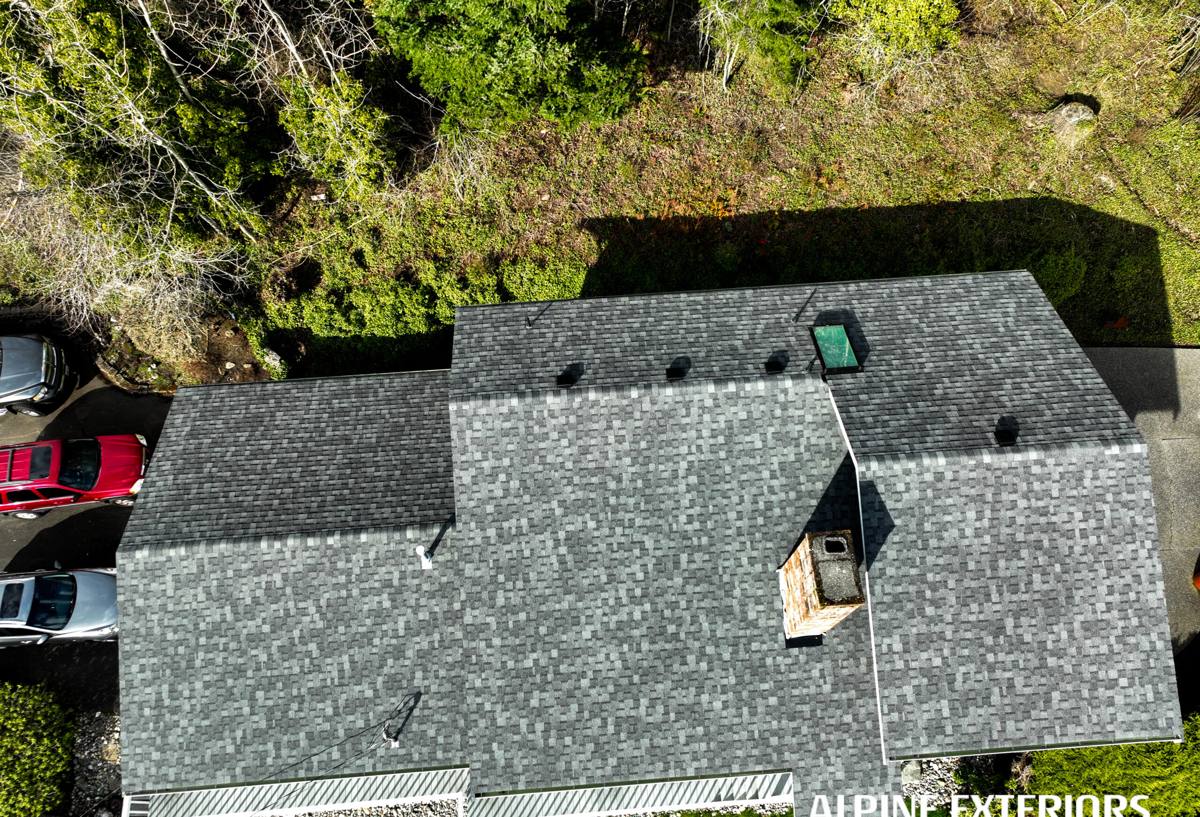
What Actually Counts as Storm Damage
Not everything that looks bad after a windstorm is technically "storm damage," and that distinction affects insurance coverage, not just repair cost. Storm damage is sudden and event-driven: shingles physically lifted or torn off by wind, a branch strike that cracks decking, flashing ripped loose, a gutter torn away and taking fascia with it. Wear and tear is gradual: granule loss from age, moss that's worked its way under shingle tabs over a couple of wet winters, nail pops from repeated freeze-thaw cycling, or flashing that's simply corroded out from years of coastal air.
The catch is that storms almost always finish the job wear and tear started. A shingle that was already moss-lifted at the edge is the first one to go in a 45 mph gust. A roof valley with a slow accumulation of debris is the one that backs up and leaks the first time an atmospheric river event dumps two inches of rain in a day. When we inspect, we document both — what the storm did and what condition the roof was in beforehand — because that record is what determines whether a claim gets approved and what a correct repair actually requires.
Signs You Likely Have Storm Damage
- Shingles that are missing, torn, creased, or flipped up at the edge
- Granules collecting in gutters or at downspout outlets after a windstorm
- Bent, dented, or displaced flashing around chimneys, vents, or skylights
- Water staining on interior ceilings or in the attic following a storm
- Visible daylight through the roof deck from inside the attic
- A gutter or downspout section pulled loose or hanging
- Debris — branches, moss mats, granule piles — sitting where it wasn't before
What a Correct Storm Repair Actually Involves
Inspection Before Anything Gets Touched
A rushed repair after a storm is how homeowners end up back on the phone six months later. We walk the full roof, not just the section with visible damage, because wind damage on a hillside lot rarely stays confined to one spot — if one slope took a hit, the adjacent slopes and ridge line usually took some stress too, even if it isn't obvious from the ground. We check the decking underneath any removed shingles for soft spots or water intrusion, since that's the damage that causes real problems if it's covered back up instead of addressed.
Matching Materials, Not Just Patching Holes
Queen Anne has a lot of older homes with roofing that's been replaced in sections over the years, which means an exact material and color match isn't always possible. When it isn't, we're upfront about it before starting rather than after. What we won't do is mix incompatible shingle weights or profiles on the same slope — that creates uneven wear patterns and water tracking issues that show up as a second repair a year or two later.
Flashing and Underlayment Get the Same Attention as Shingles
Most of the leaks we trace back after a "roof repair" that didn't hold turn out to be flashing, not shingles — step flashing at a wall intersection, counter-flashing around a chimney, or valley metal that's corroded from years of moisture and salt air. Replacing shingles over failing flashing just delays the leak. If flashing is compromised, it gets replaced as part of the repair, not left for the next call.
Moss and Debris Removal, Done Without Damaging What's Left
King County's moss season is long, and a roof that's been storm-damaged is more vulnerable to moss taking hold in the disturbed area. We clear moss and organic debris as part of the repair using methods that don't strip granules or scar the shingle surface — pressure washing a shingle roof does more harm than the moss itself, so we don't do it.
Our Process, Start to Finish
When you're dealing with active leaking or exposed decking, speed matters more than anything else — but speed shouldn't mean skipping steps.
- Emergency mitigation. If the roof has an active leak or exposed opening, our first priority is stopping water intrusion — tarping or temporary sealing — before we do anything else.
- Full inspection and documentation. Photos, notes, and a written scope of what's damaged, what caused it, and what condition surrounding areas are in. This is the record your insurer will need.
- A clear, written estimate. You see the scope and cost before any repair work starts — no verbal estimates that change once the work is underway.
- The repair itself. Matched materials where possible, flashing addressed where needed, decking replaced if compromised — not just shingles laid back over a problem.
- Final walkthrough. We show you what was done and where, so you're not taking our word for it.
Repair or Replace: How to Think About the Cost Factors
Storm damage doesn't always mean a full replacement, but sometimes a repair is a short-term fix on a roof that's near the end of its service life anyway. These are the factors that actually drive that decision:
| Factor | Leans Toward Repair | Leans Toward Replacement |
|---|---|---|
| Roof age | Under 12–15 years, otherwise sound | Near or past expected lifespan for its material |
| Extent of damage | Localized to one section or slope | Spread across multiple slopes or the whole roof |
| Decking condition | Solid, dry decking under the damage | Soft, rotted, or repeatedly wet decking |
| Moss and moisture history | Minor, surface-level moss growth | Long-term moss intrusion under multiple shingle courses |
| Material availability | Matching shingles still available | Discontinued product, mismatch would be obvious |
| Insurance scope | Adjuster approves repair-only scope | Adjuster or contractor documentation supports full replacement |
We'll tell you honestly which side of that table your roof falls on. A repair that's really a stopgap on a failing roof isn't a favor to you — it just delays a bigger bill.
Working With Your Insurance Company
Storm damage claims live or die on documentation. Adjusters aren't on your roof when the damage happens, and they're working from photos, notes, and whatever a contractor puts in writing. We document damage thoroughly at the time of inspection — before any repair covers it up — and we're available to walk an adjuster through what we found if that's useful to your claim. What we won't do is inflate a scope of work to chase a bigger payout, or tell you a claim will be approved when we don't know that. Our job is an honest, well-documented assessment; the claim decision is between you and your insurer.
Reducing the Odds of a Repeat Repair
A storm repair only holds up as well as the roof around it. A few things go a long way toward keeping the next windstorm or wet winter from undoing the work:
- Keep gutters and downspouts clear so wind-driven rain has somewhere to go
- Trim back tree limbs that hang over the roofline before they become storm projectiles
- Address moss early — a light, early-season treatment is far cheaper than a moss-related repair later
- Have flashing and roof penetrations checked every couple of years, not just after damage
- Don't wait on small leaks — a slow drip found early is a patch; found late, it's decking replacement
Why Local Experience in Queen Anne Actually Matters Here
A roof repair crew that mostly works flatter, more sheltered parts of King County isn't necessarily prepared for what a hillside, wind-exposed neighborhood like Queen Anne throws at a roof. We've worked enough jobs up here to know which slopes typically take the worst of a windstorm, how the older housing stock in this area was originally roofed, and how moss and salt air behave differently on a home with this kind of exposure compared to one a few miles inland. That's not a marketing line — it's the difference between a repair that's built for this specific climate and one that's built for generic conditions and happens to be installed here.
If a recent storm left your roof damaged — or you're just not sure whether what you're seeing is storm damage or ordinary wear — we're happy to take a look. We offer free, no-pressure estimates for Queen Anne homeowners, with a straight answer about what's actually going on up there and what it would take to fix it right. Use the form below to get started.