 King County
 Board & Batten Siding in Rainier Valley
Board and batten is one of the most requested siding profiles in Rainier Valley right now, and it's easy to see why. The vertical lines read as clean and modern on newer builds, but the same profile also reads as classic farmhouse or craftsman on older King County homes, which makes it one of the few siding styles that genuinely works across the neighborhood's mixed housing stock. What most homeowners don't realize is that board and batten is not a material — it's a pattern. You can build it out of vinyl, engineered wood, or fiber cement, and the choice of material matters more with this profile than almost any other, because the wide flat boards and exposed battens expose every weakness in a lesser product within a few years.
This page covers what board and batten siding actually needs to perform in Rainier Valley's climate, what a correctly installed system looks like, and why we only install it in James Hardie fiber cement.
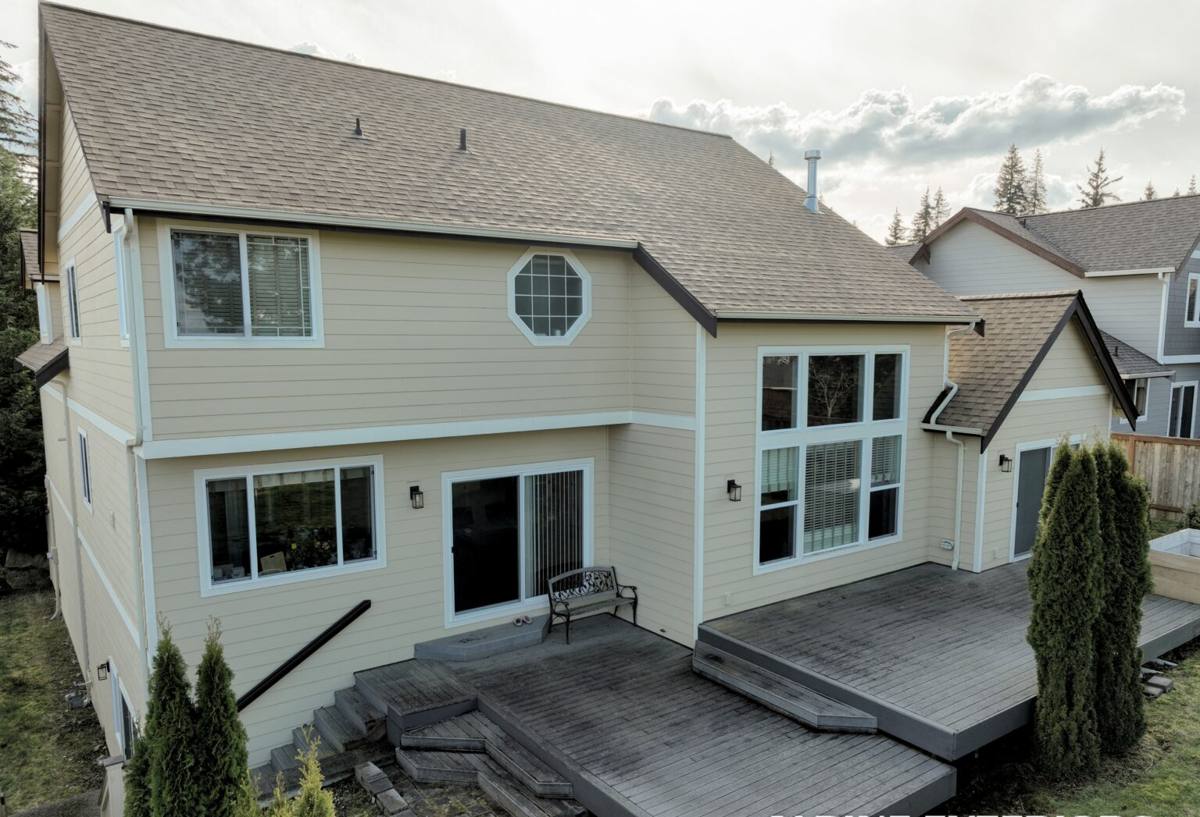
What Rainier Valley's Climate Demands from This Siding Style
King County homes deal with a specific combination of conditions: salt-tinged marine air moving through the region, long stretches of driving rain rather than brief downpours, and a moss season that can stretch for months where surfaces stay damp and shaded. Board and batten siding is more exposed to all three of these than standard horizontal lap siding, for a simple reason — the battens create dozens of vertical seams and shadow lines running down the wall, and every one of those seams is a place where water can be pushed by wind-driven rain if the assembly behind it isn't built correctly.
A flat board also holds more surface moisture than a lapped board, because there's no overlap shedding water down and away. Add in the region's moss growth on shaded, north-facing walls and under eaves, and you have a siding style that will show problems fast if the material underneath the paint can't handle sustained damp exposure. This isn't a reason to avoid board and batten — it's a reason to be precise about the material and the installation detailing.
Why This Matters More Here Than in Drier Climates
In a dry climate, a mediocre board and batten install might look fine for a decade before problems show up. In Rainier Valley's marine climate, weak points get found in the first few wet seasons — swelling at cut edges, staining at fastener heads, moss taking hold in reveal lines that don't drain, or paint failing at butt joints that were never properly flashed. The margin for error is smaller here.
Why We Only Install Board & Batten in James Hardie Fiber Cement
We don't install vinyl board and batten panels, engineered wood systems like LP SmartSide, or raw cedar boards, and it's worth being straightforward about why, since all three have real advantages that make them tempting.
- Vinyl board and batten is inexpensive and low-maintenance in the sense that it never needs paint, but it's a thin extruded product that can warp, oil-can, or crack in cold snaps, and the vertical battens are typically hollow trim pieces rather than solid material — which shows on close inspection and doesn't hold up as a long-term system in a wet climate.
- Engineered wood (LP SmartSide and similar) is a genuine improvement over raw wood and machines beautifully, but it's still a wood-strand product with an engineered resin coating. If that coating is compromised at a cut end, a fastener hole, or a caulk failure, the strand core can absorb moisture and swell. In a climate with Rainier Valley's rain volume and moss season, that's a real long-term risk, not a hypothetical one.
- Raw cedar or primed spruce looks excellent on day one and is genuinely a beautiful natural material, but it's also the highest-maintenance option — it needs to be sealed or repainted on a real schedule, and any lapse in that maintenance shows up as cupping, checking, or rot, especially in shaded, damp locations.
James Hardie fiber cement solves the core problem: it's cement-based, so it doesn't absorb moisture the way wood or wood-strand products can, it won't rot, and it's manufactured with a factory-applied ColorPlus finish that's baked on rather than field-applied, which matters enormously on a profile with this many exposed edges and seams. James Hardie also engineers specific product lines (HZ5 and HZ10) for high-moisture climate zones, which is a meaningful advantage in a region that sees King County's rainfall totals. We standardized on it because it's the one material that holds up to the pattern's exposure without asking the homeowner to maintain it on a strict schedule.
What a Correct Board & Batten Installation Involves
Board and batten looks simple from the street, but the assembly behind the boards is what determines whether it lasts. A correct installation includes:
The Drainage Plane
A weather-resistant barrier goes over the sheathing first, followed by properly lapped and taped seams. On most Rainier Valley homes we also install a rainscreen — vertical furring strips that create a small air gap behind the siding — so any moisture that does get past the outer layer has somewhere to drain and dry rather than sitting against the wall assembly.
Fastening and Flashing
Every board needs to be fastened per James Hardie's published fastener pattern and blind- or face-nailed correctly for the specific product line. Butt joints between boards need to be flashed, not just caulked, because caulk alone is a maintenance item, not a permanent seal. Window and door openings need proper head flashing so water is directed out and away from the sheathing, not just diverted into the joint.
Batten Placement
Battens need consistent spacing and enough of a reveal to let the wall breathe and drain, plus tight, correctly caulked seams where they meet trim, corners, and the foundation line. Sloppy batten spacing is one of the fastest ways to make an otherwise good install look amateurish.
Field-Applied Caulk and Touch-Up Paint
Even with a factory finish, cut ends and fastener heads need to be sealed and touched up with the correct products so the whole system performs as one unit, not a factory-finished board sitting in an unsealed frame.
Our Process for a Rainier Valley Board & Batten Project
- On-site assessment — we look at your home's exposure (which walls take the worst of the wind-driven rain, which stay shaded and hold moss), existing sheathing condition, and any moisture damage under the current siding.
- Tear-off and sheathing check — old siding comes off and we inspect the sheathing underneath for rot or soft spots before anything new goes up, since covering a compromised wall defeats the purpose of a better siding system.
- Weather barrier and rainscreen installation — the drainage plane goes on correctly lapped, with a rainscreen gap installed behind the siding field.
- James Hardie board and batten installation — boards and battens go up to spec, with proper flashing at every joint, window, and door opening.
- Trim, caulk, and touch-up — corners, trim boards, and cut ends are sealed and finished to match the ColorPlus factory finish.
- Final walkthrough and cleanup — we review the completed job with you and clear the site of debris and old material.
Cost Factors for Board & Batten Siding
Board and batten typically runs somewhat higher in labor than standard lap siding, mainly because of the batten installation step and the extra flashing detail at every seam. The table below covers what actually moves the price on a Rainier Valley project.
| Factor | Why It Affects Cost |
|---|---|
| Home size and wall complexity | More corners, gables, and dormers mean more cuts, more battens, and more flashing detail |
| Existing siding removal | Tear-off and disposal of old material adds labor before new siding can start |
| Sheathing repair | Any rot or moisture damage found during tear-off needs to be repaired before re-siding |
| Batten spacing and reveal design | Tighter spacing and custom reveals require more material and more precise labor |
| Rainscreen installation | Adding a drainage gap behind the siding is an added labor and material step, and one we recommend for this climate |
| Trim and color selection | Custom trim details and ColorPlus color selection can shift material cost |
Maintenance and What to Expect Over Time
One of the real advantages of James Hardie board and batten is how little ongoing maintenance it needs compared to wood-based alternatives, but "low maintenance" doesn't mean "no maintenance," especially with King County's moss season. A simple annual check keeps a good installation performing for decades:
- Rinse siding annually to clear pollen, dust, and early moss growth before it takes hold, especially on shaded and north-facing walls
- Check caulk lines at butt joints, corners, and trim for cracking or separation once a year
- Trim back vegetation and tree branches that keep any wall section shaded and damp longer than the rest of the house
- Keep gutters and downspouts clear so roof runoff isn't sheeting down onto the siding field
- Look at fastener heads and cut ends periodically for any exposed, unsealed material
- Address any paint touch-up needs promptly rather than letting a small gap sit through a wet season
Why a Crew That Already Works Rainier Valley Matters
Board and batten's failure points are almost always installation failures, not material failures — a flashing detail skipped to save time, batten spacing rushed, a rainscreen left out to cut cost. A crew that regularly works Rainier Valley and the wider King County area already knows which walls in this neighborhood take the worst of the wind-driven rain, understands local permitting and code requirements for siding replacement, and has seen firsthand what happens to a home when those details get skipped. That local track record is worth more than a low bid from a crew unfamiliar with how this climate actually treats a wall over time.
If you're considering board and batten siding for your Rainier Valley home, we're happy to walk the property with you, look at your specific exposure and existing siding condition, and put together a free, no-pressure estimate using the form below.