 King County
 What Rainier Valley's Climate Asks of Your Siding
Rainier Valley sits inside the same marine weather pattern that shapes exterior wear across King County: damp air moving in off Puget Sound, rain that arrives sideways as often as it falls straight down, and long stretches of gray, humid weather that never quite dry a wall out between storms. None of that is unusual for this part of Washington, but it's a real, cumulative load on a home's exterior, and siding that isn't matched to it tends to show problems within a few wet seasons rather than a few decades.
Salt-Tinged Marine Air
Even neighborhoods set back from open water pick up salt-laden air carried inland on prevailing winds off the Sound. Salt accelerates corrosion in fasteners, flashing, and trim hardware, and it can break down lower-grade factory or field-applied finishes faster than you'd see in a drier inland climate. It's a slow effect, which is exactly why it's easy to underestimate when a siding product or an installation detail is chosen without it in mind.
Wind-Driven Rain
Rain in this region rarely falls straight down for long. Wind pushes it laterally into lap joints, trim intersections, and wall penetrations, which puts more demand on a siding system than a simple annual rainfall total suggests. A product and installation method that would perform fine somewhere drier can still fail here specifically because water is finding a way in from the side, not just the top.
A Long Moss and Mildew Season
Mild temperatures, consistent moisture, and plenty of tree cover across Rainier Valley's residential streets add up to a moss and mildew season that can run most of the year, especially on shaded or north-facing walls. Any siding material that's even slightly porous, or that traps moisture against the substrate, becomes a growth surface over time. It usually shows up first in places you're not looking at daily, well before it's visible from the sidewalk or street.
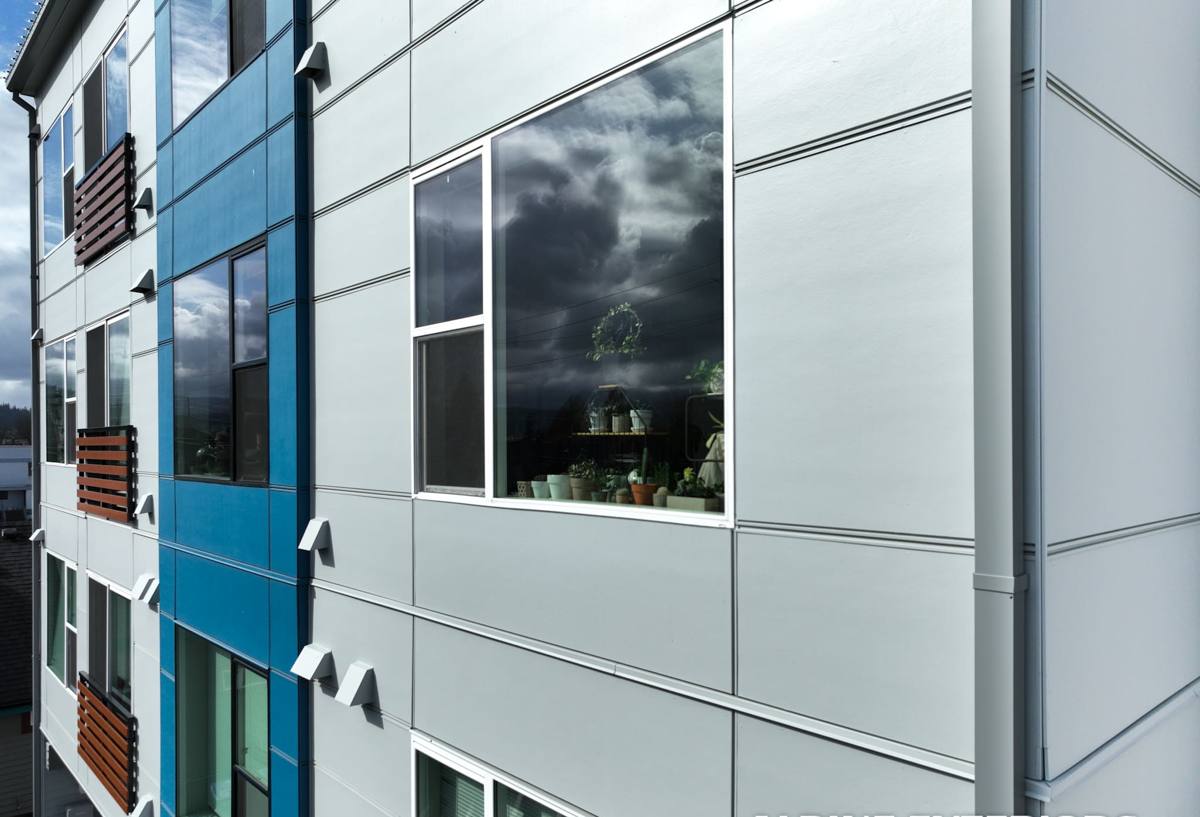
Why We Only Install James Hardie Siding
We used to offer a broader range of siding products. We narrowed to one, and the reason was practical, not promotional: what we kept seeing on tear-offs and service calls in this exact climate is what pushed us there.
- Non-combustible core: Fiber cement doesn't feed a fire the way wood-based siding products can, which matters for household safety and can matter for insurance underwriting as well.
- Factory-applied ColorPlus finish: Color is baked on under controlled factory conditions instead of brushed on in the field, so it resists fading, chalking, and moisture damage far longer than site-applied paint.
- Climate-engineered HZ product lines: Hardie's HZ5 formulation is built for regions with sustained moisture exposure and freeze-thaw swings, which is a reasonable description of King County's marine climate.
- Dimensional stability: Fiber cement doesn't swell, cup, or warp the way engineered wood siding can after repeated wet-season moisture cycles.
- Strong transferable warranty: Hardie backs its products with one of the more robust warranty structures in the category, provided installation follows the manufacturer's spec.
We don't install LP SmartSide, vinyl siding, Cemplank, Allura, primed spruce, or cedar. Each has a legitimate place in the market, and plenty of homeowners are satisfied with them elsewhere. But we made a professional call that in a climate that stays wet this long and this often, one system we can fully stand behind is worth more than a lower-cost option that quietly shifts long-term maintenance risk onto the homeowner.
What a Correct Hardie Installation Involves
Material choice is only half of the equation. A James Hardie job that actually performs the way the product is engineered to requires correct fastening patterns, proper clearances from grade and roofline, properly lapped and sealed joints, and house wrap and flashing details that work with the siding rather than against it. Skipping any of those steps is one of the more common ways a good product ends up with problems that get blamed on the material instead of the installation.
Tear-Off and Substrate Inspection
Before new siding goes up, the existing cladding comes off and the sheathing underneath gets inspected. Rainier Valley includes a good mix of home ages and construction styles, and older sheathing can be hiding rot, past water intrusion, or outdated house wrap that needs to be addressed before anything new goes on. Installing over a compromised substrate defeats the purpose of upgrading the siding in the first place.
Flashing and Moisture Management
Given how much of this region's rain arrives at an angle, the flashing details around windows, doors, and roof-wall intersections matter as much as the siding panels themselves. Correctly integrated house wrap, drainage planes, and flashing are what actually keep wind-driven rain out of the wall assembly; the siding is the visible layer, not the only line of defense.
Fastening, Clearances, and Joint Work
Hardie specifies fastener type, spacing, and placement, along with minimum clearances from grade, decks, roofing, and other surfaces. Those clearances aren't arbitrary — they're what keeps splashback, ground moisture, and debris from sitting against the bottom of the siding, which is exactly where a long moss season does the most damage if it's ignored.
Hardie Product Options for This Neighborhood
Rainier Valley's housing stock ranges from older bungalows and craftsman-style homes to newer infill construction, and Hardie's product lines cover that range well. The right choice usually comes down to the home's existing architecture, trim detailing, and how much of the original character the homeowner wants to preserve or update.
| Product Line | Typical Use | What It Offers |
|---|---|---|
| HardiePlank Lap Siding | Most home styles, traditional and updated | Classic horizontal lap look, widest color and texture selection |
| HardieShingle | Craftsman and cottage-style homes | Staggered or straight-edge shingle profile for period-appropriate detailing |
| HardiePanel | Modern and infill builds | Clean vertical panel look, often paired with board-and-batten trim |
| HardieTrim | Window, door, and corner detailing | Matches the siding's factory finish and moisture resistance at high-wear edges |
All of these are available with Hardie's ColorPlus factory finish, which matters more in this climate than it might elsewhere: a factory-baked finish holds its color and its seal against moisture far longer than paint applied on site after installation, and it removes an entire maintenance task from the homeowner's list for years at a stretch.
What Drives Cost on a Rainier Valley Siding Project
Every home is different, so we won't quote a number without seeing the house, but the same handful of factors drive cost on nearly every project we bid in this neighborhood.
| Factor | Why It Matters |
|---|---|
| Home size and story count | More square footage and taller walls mean more material and more labor, including access equipment for two-story sections |
| Existing siding removal | Tear-off complexity varies a lot depending on what's currently on the wall and how it was originally installed |
| Trim and architectural detail | Craftsman-style trim, dormers, and multiple roof-wall intersections all add labor time versus a simple flat elevation |
| Sheathing and moisture repair | Any rot or water damage found during tear-off needs to be corrected before new siding goes on |
| Site access | Narrow lots, retaining walls, and limited driveway space can affect staging and equipment options |
Our Process, Start to Finish
- Free on-site estimate: We walk the home, look at the current siding and trim condition, and talk through product options that fit the house.
- Detailed written proposal: A clear scope of work, product selection, and price — no vague allowances or surprise add-ons buried in the fine print.
- Tear-off and inspection: Old siding comes off, sheathing gets inspected, and any repairs needed get flagged and priced before work continues.
- House wrap and flashing: Moisture management goes in correctly the first time, since it's the layer that does the real work in this climate.
- Hardie installation to spec: Fastening, clearances, and joint details follow manufacturer specification, not shortcuts.
- Final walkthrough: We go over the finished job with the homeowner before calling it complete.
Why a Crew That Already Works Rainier Valley Matters
Siding work in an established King County neighborhood isn't the same as working on a bare lot. Rainier Valley homes often sit close to neighboring properties, on lots with retaining walls or grade changes, and with a mix of building ages that means no two tear-offs look exactly alike. A crew that regularly works this neighborhood already understands local permitting expectations, common construction quirks in homes of this era, and how to stage a job efficiently on tighter urban lots — which keeps the project moving instead of losing days to problems that a less experienced crew would treat as surprises.
Familiarity with the area also means we're not guessing at how this climate treats siding over time. We've seen what wind-driven rain does to poorly flashed trim, what a decade of shaded, mossy walls does to porous materials, and what correct Hardie installations look like five, ten, and fifteen years after the crew leaves. That's the kind of knowledge that doesn't show up in a product brochure.
Signs Your Current Siding Needs Attention
Homeowners often wait too long to address siding issues simply because the early signs are easy to miss from the ground. Worth checking for:
- Visible warping, cupping, or gaps at panel seams
- Persistent moss, algae, or dark staining, especially on shaded or north-facing walls
- Soft or spongy spots when pressed gently near the base of the wall
- Paint that's peeling, bubbling, or chalking well ahead of schedule
- Visible daylight or drafts around window and door trim
- Rising energy bills without another clear explanation
Any one of these on its own might be minor. Several together usually mean moisture has been getting behind the siding for a while, and it's worth having someone look before it turns into a sheathing repair.
Ready to Talk About Your Home
If your Rainier Valley home's siding is showing its age, or you're planning ahead rather than reacting to a problem, we're happy to take a look and walk you through honest options — no pressure, no upsell to a product we don't stand behind. Use the form below to request a free estimate, and we'll come see the house in person.