 King County
 Metal Roofing Built for Redmond's Wet Seasons
Redmond sits in one of the wetter corners of King County, tucked against the foothills where storms coming off Puget Sound tend to stall and dump rain for days at a time. Add in tree cover from the greenbelts along Bear Creek and the Sammamish River, and you get a climate that's genuinely hard on a roof: long stretches of standing moisture, moss that takes hold fast in shaded valleys, and driving rain that finds every weak seam. Metal roofing, installed correctly, handles that combination better than almost any other material available to homeowners here. Installed poorly, it fails faster than the asphalt shingles it replaced.
We install metal roofing across Redmond and the surrounding King County communities, and the jobs that hold up long-term are the ones where the details — underlayment, fastening pattern, flashing, ventilation — got as much attention as the panels themselves. This page covers what a metal roof actually needs to perform in this climate, what a correct installation looks like, and what to expect if you're considering one for your Redmond home.
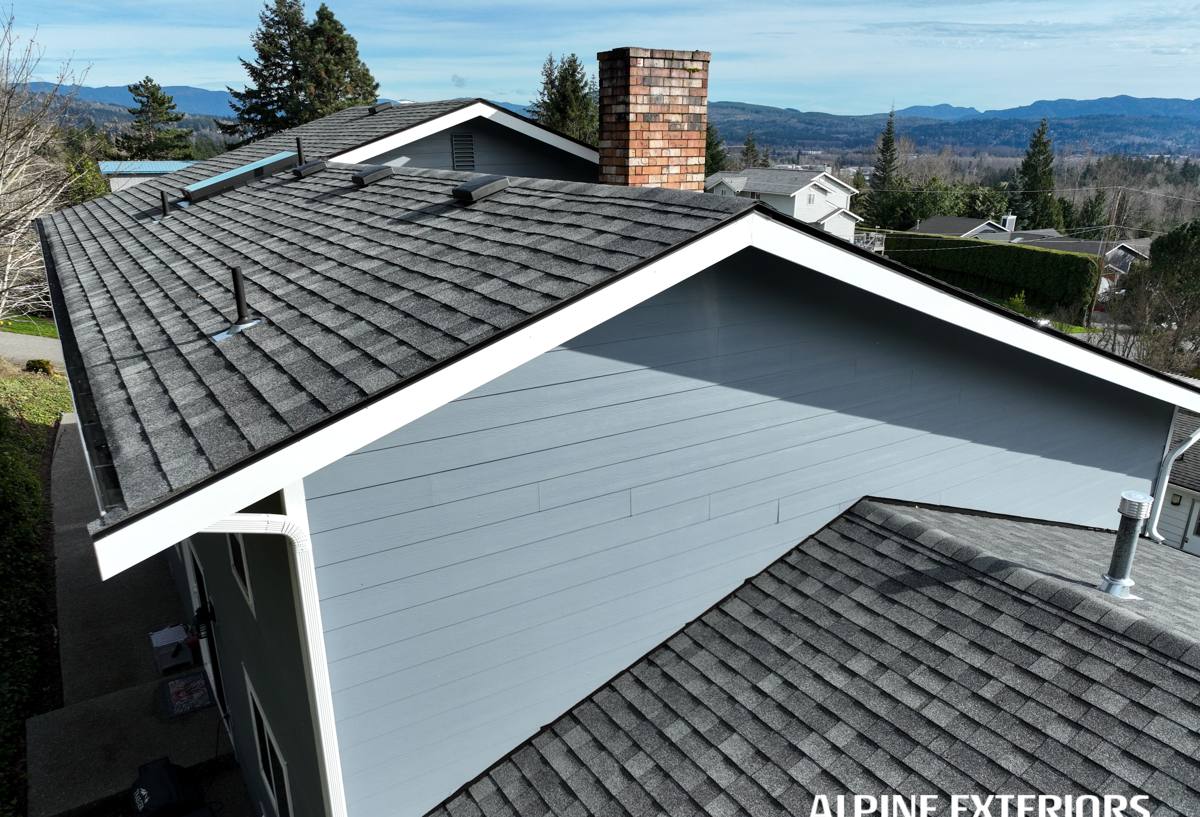
Why Metal Makes Sense in This Climate
Metal roofing has a few properties that line up well with what Redmond weather does to a roof over the years:
- Sheds water fast. Steep-sloped metal panels move rain off the roof quickly instead of letting it sit in shingle overlaps, which matters during the extended rain systems this area gets from fall through spring.
- Resists moss better than asphalt. Moss still grows on metal in shaded, damp spots, but it has a harder time gripping a smooth painted or coated metal surface than it does the granulated texture of asphalt shingles.
- Handles freeze-thaw cycling. King County doesn't get brutal winters, but we do get enough freeze-thaw swings each year to stress roofing materials. Metal doesn't absorb water the way shingle mat can, so it isn't as vulnerable to that cycle.
- Long service life. A correctly installed metal roof commonly outlasts two or three asphalt roof replacements, which changes the long-term math even though the upfront cost is higher.
None of that means metal is maintenance-free. It means the material itself isn't the weak point — the installation is.
What a Correct Metal Roof Installation Involves
Underlayment and Moisture Barrier
Because Redmond roofs go weeks at a time without a real drying period during the rainy months, we don't treat underlayment as an afterthought. A synthetic or high-temp ice-and-water underlayment goes down first, with extra coverage at eaves, valleys, and anywhere water tends to back up. This layer is what protects the roof deck if wind-driven rain ever gets past the metal itself — and in a storm coming off the Sound, it will occasionally get tested.
Fastening and Panel Movement
Metal panels expand and contract with temperature swings, and fasteners need to accommodate that movement without loosening or cracking the panel over time. We use fastening methods and spacing matched to the specific panel system and the roof's exposure — a ridge-line panel exposed to wind off open terrain needs different attention than a panel tucked under tree cover.
Flashing and Penetrations
Most metal roof failures we get called out to repair aren't panel failures — they're flashing failures. Chimneys, skylights, vent pipes, and valleys are where water finds a way in if the flashing was cut short or sealant was used instead of proper metal-to-metal detailing. We flash every penetration and valley as if it has to survive a decade of Redmond rain without depending on caulk to do the work.
Ventilation
A metal roof over a poorly ventilated attic can trap moisture underneath it, which defeats a lot of the material's advantage. We check attic ventilation as part of the job — not just at intake and ridge vents, but whether moist interior air is finding its way into the attic space at all.
Metal Roofing Systems We Work With
| System | Best For | What to Know |
|---|---|---|
| Standing seam | Modern homes, low-slope sections, homeowners wanting a clean look | Concealed fasteners, best water-shedding performance, higher upfront cost |
| Metal shingles / shakes | Homes wanting a traditional look with metal's durability | Mimics wood shake or slate appearance, exposed-fastener or interlocking systems available |
| Corrugated / exposed-fastener panel | Outbuildings, shops, budget-conscious full replacements | Lower cost, fasteners need periodic inspection and occasional re-torquing over the roof's life |
We'll walk through which system fits your roof's slope, your budget, and how the house looks from the street — a steep Craftsman roofline and a low-slope modern addition often call for different answers.
Moss, Shade, and Redmond's Tree Cover
Redmond's mix of mature landscaping and greenbelt-adjacent neighborhoods means a lot of roofs here sit under partial shade for a good part of the day. That shade keeps roofs damp longer after a rain, which is exactly what moss needs to establish. On a metal roof, moss growth usually shows up first in valleys, along shaded eaves, and anywhere debris collects rather than across the whole field of the roof. Keeping gutters and valleys clear of needles and leaf litter does more to prevent moss on a metal roof than any treatment applied after the fact. If moss has already taken hold, it needs to be removed with methods that won't scratch protective coatings — pressure washing at the wrong angle or with too much force can void a panel warranty and expose bare metal to corrosion.
Our Process for a Redmond Metal Roof
- On-site inspection. We assess the existing roof deck, ventilation, flashing points, and slope before recommending a system — not before quoting a price.
- System and color selection. We walk through panel options, finishes, and warranty terms so you know what you're buying and why it costs what it does.
- Tear-off and deck prep. Old roofing comes off, the deck is inspected for rot or soft spots — common where moss and moisture have sat for years — and repaired before anything new goes down.
- Underlayment and flashing. Moisture barrier, valley protection, and flashing go in first, sized for this climate rather than a minimum-code approach.
- Panel installation. Panels are installed and fastened to the manufacturer's specification for the exposure and pitch of your specific roof.
- Final walkthrough. We go over the completed roof with you, including what maintenance (if any) it needs going forward.
Why Hire a Crew That Already Works in Redmond
Metal roofing isn't installed the same way everywhere. A crew that mostly works drier climates can get away with shortcuts on underlayment and flashing that simply don't hold up under King County's rain volume. We work throughout Redmond and the surrounding area, which means we've seen how local weather actually stresses a roof over time — where valleys tend to collect water, which roof orientations get hit hardest by wind-driven rain, and where moss takes hold first. That local pattern recognition shapes how we detail every roof we install here, not just the ones with an obvious problem already.
It also means we're a known, reachable local business if a warranty question or a storm-related concern comes up years down the road — not a crew that worked one job in the area and moved on.
What to Check Before Hiring for a Metal Roof
- Ask whether the crew installing the roof is licensed and insured in Washington, and get that in writing.
- Ask which underlayment and ice-and-water protection they use, and where — not just "we use underlayment."
- Ask how they detail valleys, chimneys, and skylights specifically, since that's where most metal roof leaks originate.
- Ask about the manufacturer's warranty versus the installer's workmanship warranty — they're different, and both matter.
- Ask how they handle existing moss or moisture damage found once the old roofing comes off.
- Get a written scope, not just a price, so you know exactly what system and underlayment you're paying for.
Cost Factors for Redmond Homeowners
Metal roofing costs more upfront than asphalt shingles, and the final number depends on more than just square footage. Roof pitch, the number of valleys and penetrations, whether the existing roof needs tear-off versus a full deck rebuild, and which panel system you choose all move the price. Standing seam with concealed fasteners costs more than exposed-fastener panel systems, largely because of the labor and material involved in achieving that clean seam. We give straightforward, itemized estimates so you can see what's driving the cost rather than a single lump-sum number.
If you're weighing metal roofing for a home in Redmond, we're happy to take a look and give you an honest read on what your roof needs — no pressure, no inflated urgency. Reach out below for a free estimate.