 King County
 Siding Repair in a Climate That Doesn't Forgive Shortcuts
Redmond sits in one of the wettest, greenest corners of King County. Mature tree canopy, proximity to Lake Sammamish and Lake Washington, and long stretches of gray, drizzly weather mean siding here rarely fails all at once. It fails slowly, in the places moisture can sit the longest: behind gutters that overflow onto a wall, under window trim that was never properly flashed, along the north side of a house that never gets direct sun to dry out. Across the broader Puget Sound region, homes deal with salt-tinged marine air, driving rain, and a moss season that can run eight or nine months out of the year. Redmond's version of that is less about salt spray and more about shade, standing moisture, and moss and algae getting a foothold on anything that stays damp — which, on the wrong siding material, is almost the entire wall.
Siding repair done right in this climate isn't about slapping a patch over a stain and moving on. It's about figuring out why that spot failed, fixing the water path that caused it, and repairing with a material and method that will actually hold up through the next twenty Redmond winters.
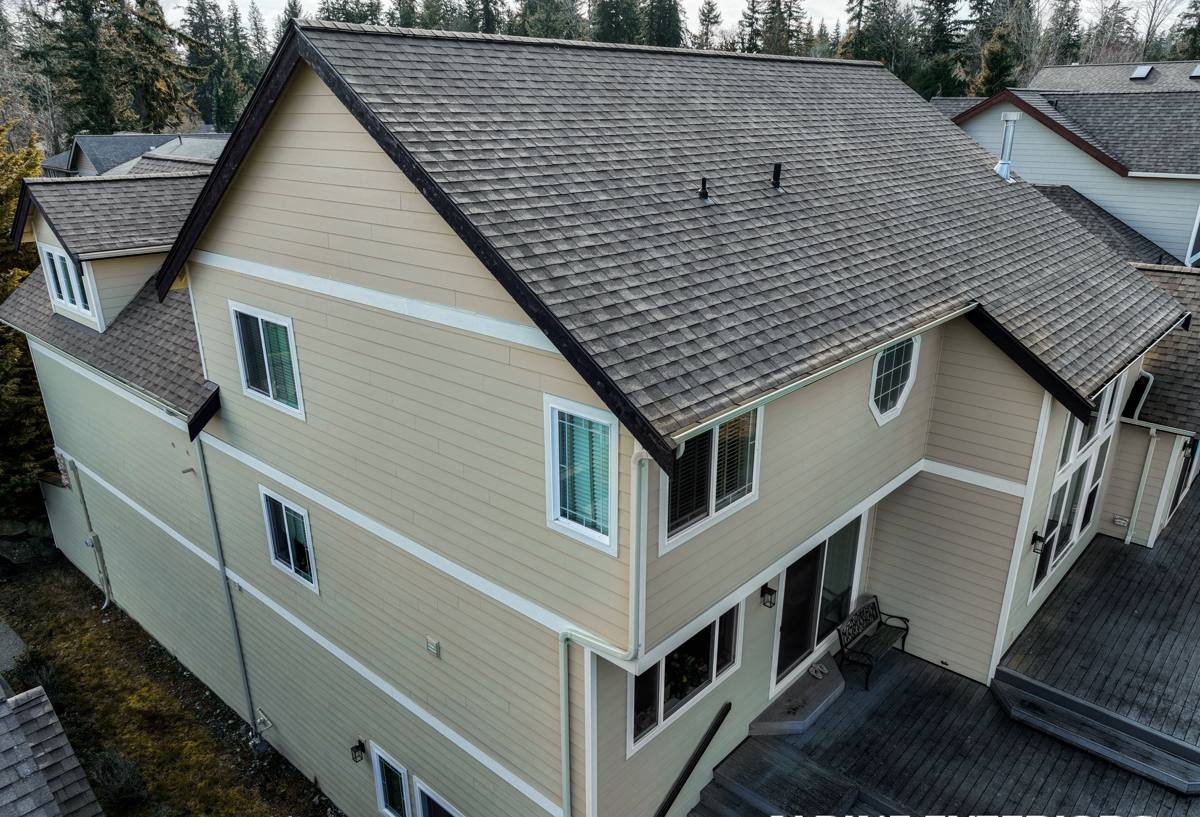
Signs Your Redmond Home Needs Siding Repair
Most homeowners call us after noticing one obvious problem, but a proper inspection almost always turns up related issues nearby. Here's what we look for, and what it usually means.
Cedar and Wood Siding
Cedar looks great on day one and asks a lot of its owner every year after. In Redmond's shaded, damp lots, cedar boards commonly show cupping, splitting, and soft, spongy spots where paint has trapped moisture underneath instead of letting the wood breathe. Once rot sets into a board, it spreads to the fasteners and sheathing behind it faster than most homeowners expect.
LP SmartSide and Other Engineered Wood
Engineered wood siding depends entirely on an intact factory coating and correctly sealed cut edges. In wet climates like ours, any nick, gap, or missed caulk joint becomes a place for water to wick into the substrate. Swelling at the bottom edge of a board, especially near grade or under a downspout, is one of the clearest signs this material has taken on moisture it can't shed.
Vinyl Siding
Vinyl doesn't rot, but it does warp, buckle, and crack — especially with our seasonal temperature swings and the impact of wind-driven debris. Once a panel is cracked, water gets behind it with nowhere to go, and because vinyl relies on overlapping panels rather than a sealed surface, a small breach can let moisture travel a long way before it shows up as a stain indoors.
Fiber Cement (Including James Hardie)
Fiber cement is the most durable of the group, but it isn't damage-proof. Impact chips from ladders, sports equipment, or storm debris, caulking that has failed at trim joints, and rare installation errors (nails driven too deep, boards installed too close to grade) are the issues we see most. The good news is that fiber cement damage is almost always repairable without compromising the rest of the wall.
What a Proper Repair Actually Involves
A patch that only addresses what's visible from the ground is not a repair — it's a temporary cover-up. Our approach on every siding repair call in Redmond includes the same core steps, regardless of the material we find:
- Identify the actual water path — flashing, caulking, grading, gutters, or a penetration point — not just the damaged board.
- Remove and inspect the sheathing and house wrap behind the failed siding for hidden rot or mold before anything new goes back on.
- Correct the underlying cause, whether that's re-flashing a window, re-routing a downspout, or adding proper clearance at grade.
- Replace damaged material with a matching or compatible product, properly fastened and sealed to manufacturer spec.
- Confirm the repair blends into the surrounding wall in both fit and finish, not just structurally but visually.
Skipping step two is the most common shortcut in this trade, and it's exactly why so-called repairs fail again within a year or two. If the sheathing underneath is already compromised, new siding over it is just delaying the same problem.
Repair or Replace? A Straightforward Way to Decide
Not every damaged section needs a full re-side, and not every "small" repair should stay small. We walk every homeowner through the same honest framework before recommending either path.
| Factor | Favors Repair | Favors Replacement |
|---|---|---|
| Extent of damage | Isolated to one or two areas | Recurring across multiple walls |
| Sheathing condition | Dry, sound wood behind siding | Soft, rotted, or mold-affected sheathing |
| Siding material | Fiber cement, in good condition elsewhere | Failing cedar, warped vinyl, or swollen engineered wood |
| Age of existing siding | Well within expected service life | Near or past the end of its practical life |
| Root cause | Easily correctable (caulk, flashing, gutter) | Systemic drainage or design issue affecting the whole house |
When a home is otherwise in good shape and the damage is contained, targeted repair is the honest recommendation — and the more affordable one. When we find recurring rot, widespread moisture intrusion, or a material that's simply reached the end of what it can offer in this climate, we'll tell you that plainly, with our reasoning, rather than pushing a bigger job than the house needs.
Our Process for Siding Repair in Redmond
We keep the process straightforward because homeowners are usually dealing with an active problem, not a hypothetical one.
Inspection: We look at the damaged area and the surrounding wall, check for signs of moisture behind the siding, and evaluate flashing, caulking, and drainage details nearby.
Written scope and estimate: You get a clear explanation of what's failing, why, and what fixing it correctly involves — no vague line items.
Repair: We remove only what needs removing, address the root cause, and install replacement material to spec, including proper fastening, flashing, and sealant.
Final check: We confirm the repair sheds water correctly and blends with the surrounding siding before we consider the job done.
Why We Repair With James Hardie Fiber Cement
King County Exterior installs and repairs with James Hardie fiber cement exclusively — we don't work with vinyl, LP SmartSide, Cemplank, Allura, primed spruce, or cedar. That's not a marketing position; it's a standard we hold because of what we see when we open up walls in climates like ours. Hardie's HZ5 product line is engineered specifically for climates with heavy moisture exposure, its ColorPlus factory finish resists the fading and peeling that plagues field-painted siding, and it's non-combustible, which matters more each fire season in the Pacific Northwest.
For repairs specifically, fiber cement has a practical advantage: because it's dimensionally stable and doesn't expand and contract the way wood or vinyl does, a well-matched repair section holds its fit and finish for years instead of telegraphing a visible seam. When a repair calls for new material, we match board profile, exposure, and color as closely as the existing siding allows, and where an exact match isn't realistic, we'll say so upfront rather than let you find out after the fact.
Why a Crew That Already Works Redmond Matters
Siding repair is detail work, and local experience shows up in the details. A crew that regularly works Redmond homes already knows which failure patterns to expect on shaded, tree-covered lots, understands how the area's rainfall and moss growth affect fastener and flashing choices, and is familiar with the permitting and HOA expectations that come up in many King County neighborhoods. That familiarity translates into faster, more accurate diagnoses and fewer surprises once a wall is opened up.
It also matters for follow-through. A local crew is available if a question comes up six months after the work is done, rather than being a name on an invoice from out of the area.
Before You Call Anyone: A Quick Checklist
- Note where the damage is located — which side of the house, and whether it's near a downspout, window, or roofline.
- Check for soft spots by gently pressing on the siding near any visible damage; sponginess usually means moisture has reached the sheathing.
- Look at nearby caulk joints and trim for cracking or gaps, since these are common water entry points.
- Take note of how long the damage has been visible — sudden versus gradual can help a contractor gauge urgency.
- Ask any contractor you're considering how they'll verify what's happening behind the siding, not just what they'll do to the surface.
- Get a written scope of work before agreeing to any repair, so you know exactly what's being fixed and why.
Let's Take a Look
If you're seeing damage, staining, or soft spots on your Redmond home's siding, it's worth having someone look at it before the next wet season makes the problem worse. We offer free, no-pressure estimates — we'll tell you honestly whether you're looking at a straightforward repair or something bigger, and what we'd recommend either way. Use the form below to get started.