 King County
 Why Seattle Roofs Take a Different Kind of Beating
A roof in Seattle doesn't fail the way a roof in a dry inland climate fails. Here, the enemy isn't one big storm — it's the slow, steady grind of a marine climate that never really gives the roof a break. Salt-laden air off the Sound accelerates corrosion on fasteners, flashing, and metal roofing panels. Driving rain, often pushed sideways by wind off the water, finds its way into laps and seams that would stay bone-dry in a calmer climate. And then there's moss, which doesn't take a season off in King County the way it might elsewhere — it can grow nearly year-round on north-facing slopes and shaded sections of roof.
None of this means Seattle roofs are doomed to fail early. It means they need repairs done by someone who understands how these specific stresses show up on a roof, and who repairs accordingly instead of just patching the visible symptom.
Salt Air and Coastal Moisture
Homes closer to Puget Sound deal with airborne salt that speeds up corrosion on exposed metal — nail heads, flashing, gutter hardware, and any metal roofing components. Corroded fasteners back out slightly over time, which opens tiny gaps that let water in long before anyone notices a leak inside.
Driving Rain and Wind-Driven Water
Seattle's rain is rarely a downpour — it's a persistent, wind-driven drizzle that can push water uphill under shingles or sideways into vertical seams. Roofs that would be fine in a straight-down rain event can leak here because the water simply isn't falling straight down.
The Long Moss Season
Moss holds moisture against the roof surface far longer than the surrounding air would otherwise allow, and its root structure works into shingle granules and seams over time. Left unmanaged through King County's long wet stretch of the year, moss growth is one of the most common reasons a repairable roof section turns into a full replacement.
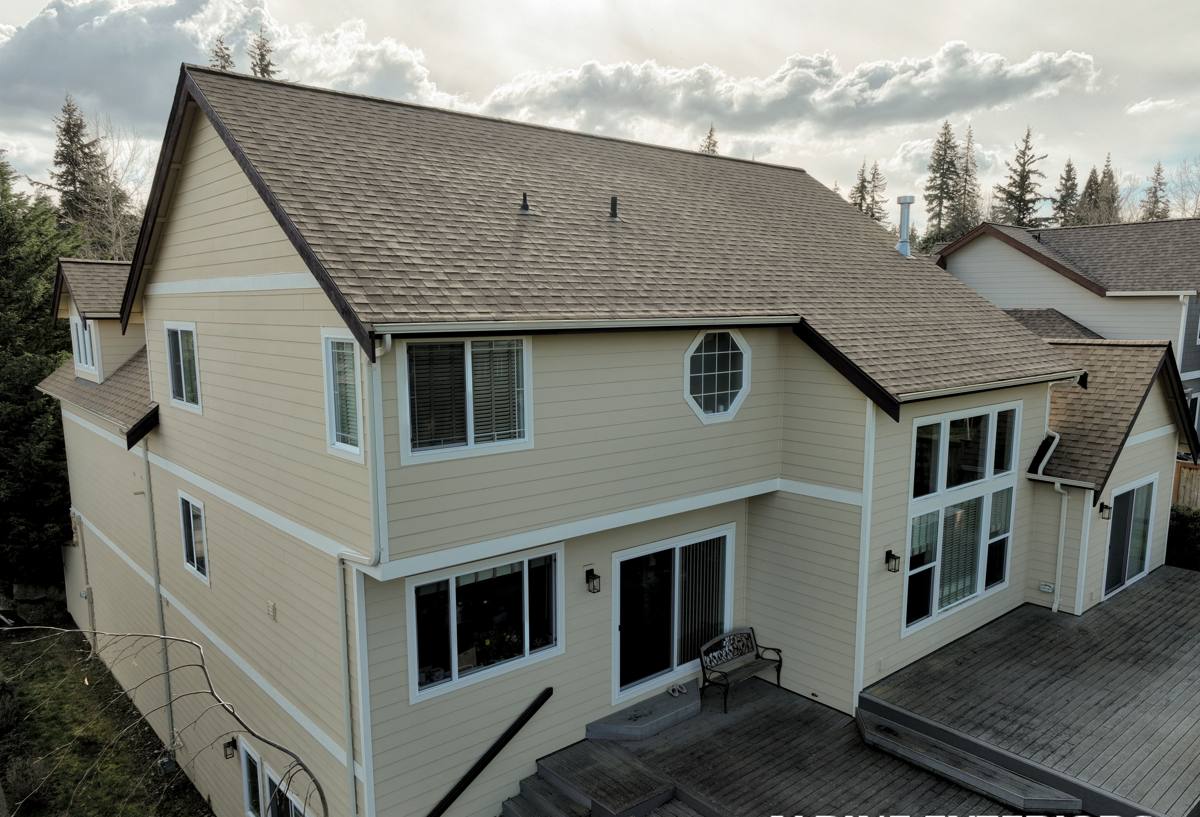
Common Roof Problems We See Around King County
Most of the repair calls we run in the Seattle area fall into a handful of categories. Recognizing these early is usually the difference between a modest repair and a much bigger bill.
- Moss and organic growth breaking down shingle granules and holding moisture against the deck
- Flashing failures around chimneys, skylights, and roof-to-wall transitions, where two different materials meet
- Clogged or undersized gutters causing water to back up under the roof edge
- Nail pops and lifted shingle tabs from wind, which create entry points for wind-driven rain
- Deteriorated pipe boot seals, a small part that causes a disproportionate number of interior leaks
- Ponding or membrane wear on low-slope and flat roof sections common on older Seattle homes and additions
What a Proper Roof Repair Actually Involves
A roof repair that actually solves the problem looks different from a quick patch job. It starts with figuring out where the water is really coming from, which is often not where it shows up inside the house.
Diagnosis Before Patching
Water travels. A stain on a bedroom ceiling might trace back to a flashing gap several feet away, higher up the roof plane. Before any repair material goes on, we trace the path — checking the roof deck, underlayment, flashing, and surrounding shingles — so the fix addresses the actual entry point instead of just the spot where the damage became visible.
Matching Materials and Techniques
Repairs should match the existing roofing system in material, weight, and installation method. Mismatched shingle types or incompatible flashing metals can create new problems — including galvanic corrosion when dissimilar metals sit against each other in a wet climate like ours.
Flashing, Ventilation, and the Details That Matter
Most callback leaks trace back to flashing that was reused, undersized, or improperly lapped, and to attic ventilation that's inadequate for the region's humidity. A correct repair checks both, even when the original complaint was something else entirely — because a roof with poor ventilation will keep generating moisture problems no matter how well the surface repair is done.
Repair or Replace? What Actually Determines the Right Call
Not every roof problem needs a full replacement, and not every repair is a good long-term investment. The right call depends on a few honest factors, not a sales pitch.
| Factor | Leans Toward Repair | Leans Toward Replacement |
|---|---|---|
| Age of roofing material | Well within its expected service life | At or past the age where the material typically fails |
| Extent of damage | Isolated to one section, flashing, or a handful of shingles | Widespread across multiple roof planes |
| Moss and granule loss | Surface growth, granules mostly intact | Heavy granule loss exposing the underlying mat |
| Decking condition | Solid, dry decking under the damaged area | Soft, delaminated, or water-stained decking |
| History of repairs | First real issue in years | Repeated leaks in different spots over recent seasons |
We'll tell you plainly which side of that table your roof falls on, including when a repair is genuinely the smarter move — not just the smaller invoice.
Our Roof Repair Process in Seattle
- Inspection. We walk the roof (or use a ladder and binoculars when access or safety calls for it) and check the attic side too, since interior moisture signs tell part of the story a surface look can't.
- Honest assessment. We explain what we found, what's causing it, and what the realistic options are — repair, more extensive repair, or replacement — with the reasoning behind each.
- Scoped repair plan. We identify the materials needed to match your existing roof and the specific areas that need attention, not just the one spot that was reported.
- The repair itself. Old, failed material comes out; the deck underneath gets checked and dried or replaced if needed; new flashing, underlayment, and roofing material go in to match the surrounding roof.
- Cleanup and debris check. Nails, old material, and moss debris get cleared from the roof and gutters before we consider the job done.
- Follow-through. We stand behind the work and explain what to watch for afterward, particularly during the next wet stretch.
Roofing Materials on Seattle Homes: Repair Considerations
King County has a wide mix of roofing types, and each one calls for different repair judgment.
| Material | What to Know for Repairs |
|---|---|
| Composition (asphalt) shingle | Most common; repairs are straightforward if matching shingles or close equivalents are available, since older shingles fade and weather over time |
| Cedar shake | Common on older Seattle homes; repairs require care to avoid splitting adjacent shakes and to keep proper spacing for drainage |
| Metal roofing | Durable, but fastener and flashing corrosion near salt air needs monitoring; repairs should use compatible metal to avoid galvanic reaction |
| Low-slope / flat (torch-down or membrane) | Found on additions, garages, and some older home styles; repairs depend heavily on correct seam and membrane compatibility, not just patching |
Why a Crew That Already Works Seattle Roofs Matters
A roofer who mostly works drier climates can still do competent work, but they're often solving for the wrong failure modes — treating moss as cosmetic, under-flashing a detail that would be fine somewhere with less driving rain, or missing the ventilation piece that matters so much in a humid marine climate. A crew that works King County roofs regularly has already seen how these specific issues develop and what actually stops them from coming back.
There's also a practical side: familiarity with local permitting expectations, typical home ages and construction styles across Seattle's neighborhoods, and realistic scheduling around our wet season all make the job go smoother from the first call to the final walkthrough.
Between-Repair Maintenance: A Practical Checklist
Good repairs last longer when the roof gets a bit of attention between service calls. This is what we recommend to homeowners in our area:
- Clean gutters at least twice a year, and more often under overhanging trees
- Have moss treated or removed before it spreads across a full roof plane, not after
- Trim back tree branches that keep sections of the roof shaded and slow to dry
- After any significant windstorm, do a visual check (from the ground) for lifted or missing shingles
- Check attic ventilation isn't blocked by insulation or storage, since airflow helps control moisture buildup
- Address small leaks immediately — in this climate, "small" rarely stays small once decking gets wet
If you're noticing a stain on a ceiling, moss creeping across the roofline, or you just want a straight answer on whether a repair will actually hold up through another King County winter, we're glad to take a look. Fill out the form below for a free, no-pressure estimate.