 King County
 Why Bellevue Roofs Wear Differently Than Roofs Inland
Bellevue sits in a part of King County where mature tree canopy, lake-effect humidity, and long stretches of overcast, wet weather combine to age a roof faster than the calendar suggests. It's not one dramatic storm that does the damage — it's the steady accumulation of driving rain, shaded north-facing slopes that never fully dry out, and a moss season that can run most of the year in the right conditions. A roof that would hold up fine in a drier climate can start showing granule loss, soft spots, or moss colonies well ahead of its rated lifespan here.
Salt-tinged air moving in off the Sound and Lake Washington also plays a role, slowly working on exposed metal fasteners, flashing, and vents. None of this means Bellevue roofs fail early by default — it means the materials, ventilation, and detailing have to be chosen and installed with this specific climate in mind, not a generic one.
Signs a Repair Won't Cut It Anymore
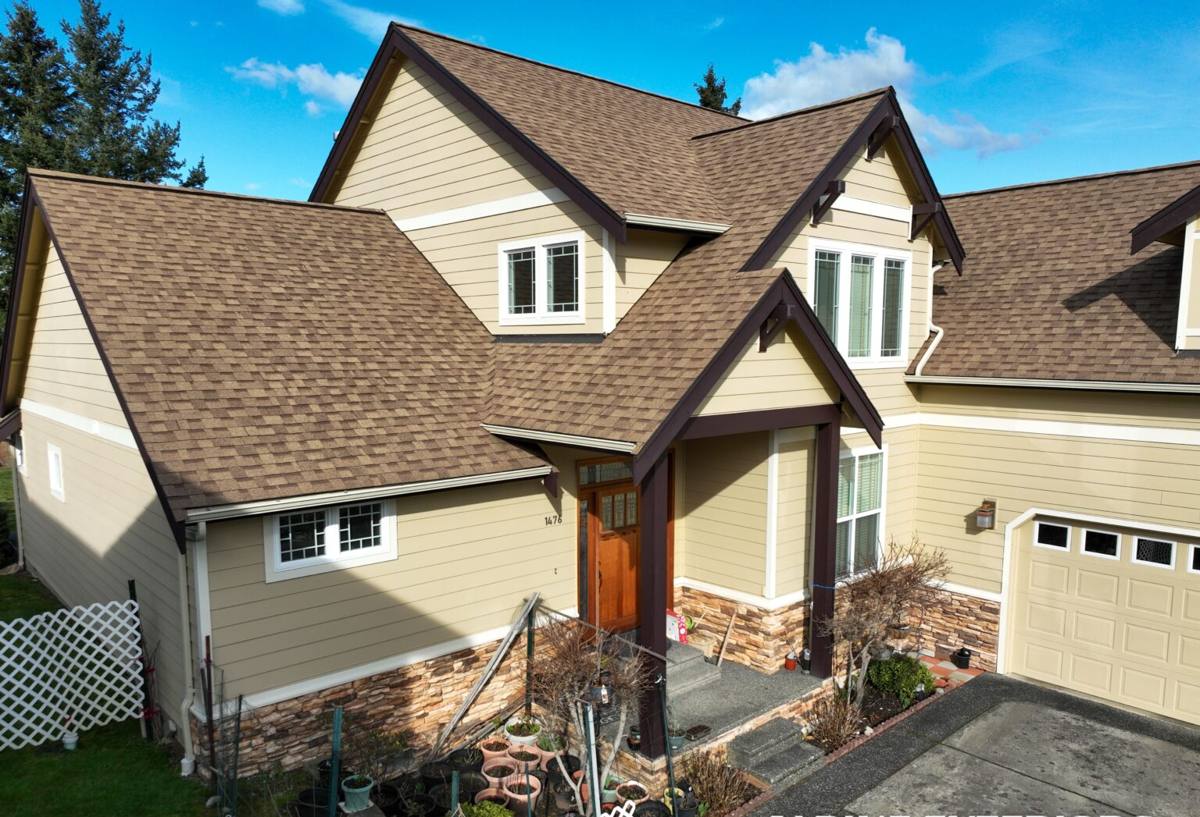
Most homeowners call us for a repair and end up learning the roof has aged past the point where patching makes sense. Some signs point clearly toward replacement rather than another round of spot fixes:
- Granules collecting in gutters or at downspouts, leaving bare, shiny patches on the shingles
- Moss or algae established thick enough to lift shingle edges rather than just staining the surface
- Soft, spongy decking you can feel when walking the roof, especially near valleys or old penetrations
- Leaks that show up in more than one spot after heavy rain, not just around one flashing detail
- Shingles curling, cracking, or losing their seal in multiple areas rather than one isolated section
- The roof is already past 20-25 years old (asphalt) and has never been fully replaced
If you're only seeing one or two of these in a small area, a repair is often still the right call. When several show up together, a patch just delays a bigger problem — and can end up costing more over time than doing the replacement once, correctly.
What a Correct Roof Replacement Actually Involves
A roof replacement is more than swapping old shingles for new ones. In a climate like ours, the layers underneath the visible roofing material matter as much as the material itself.
Tear-Off and Deck Inspection
We remove the old roofing down to the deck rather than layering over it. That's the only way to actually see the condition of the sheathing — rot, delamination, or soft spots from years of trapped moisture won't show up until the old material is off. Any damaged decking gets replaced before anything new goes down; skipping this step is one of the most common shortcuts that leads to early failure.
Underlayment Built for Wet Winters
Underlayment is the roof's backup plan against wind-driven rain, which is a regular feature of King County winters. We use synthetic or self-adhered underlayment at valleys, eaves, and other vulnerable areas rather than relying on older felt products that absorb moisture and break down faster in a persistently damp climate.
Ventilation That Keeps Moisture Moving
A roof deck that can't breathe stays damp longer, which is exactly what moss and rot need to take hold. Balanced intake and exhaust ventilation — enough at the eaves, enough at the ridge — keeps air moving through the attic space so both the deck and the shingles above it dry out between rain events instead of sitting wet.
Flashing Details Where Roofs Actually Fail
Most roof leaks don't start in the open field of shingles — they start at flashing: chimneys, skylights, valleys, and wall intersections. These are the details that take the most skill and the most time to get right, and they're also the first thing an inexperienced or rushed crew cuts corners on.
Choosing a Roofing Material for Bellevue's Climate
There's no single "best" roofing material — there's a best fit for your home, your budget, and how much upkeep you want to take on. Here's how the common options compare specifically against our moss and moisture conditions.
| Material | Moisture & Moss Resistance | Typical Lifespan | Maintenance Needs |
|---|---|---|---|
| Architectural asphalt shingle | Good, especially algae-resistant lines | 25-30 years | Low; periodic moss/debris removal |
| Standing seam metal | Excellent; sheds moisture, resists moss | 40-60+ years | Very low |
| Cedar shake | Moderate; needs active upkeep to resist rot and moss | 20-30 years with maintenance | High; regular treatment and cleaning |
| Synthetic/composite shake | Good; engineered to resist moisture absorption | 30-50 years | Low to moderate |
We're honest with clients about cedar shake in particular: it can look great and it's a traditional Pacific Northwest look, but in a climate with this much shade and moisture, it demands a real maintenance commitment — periodic cleaning, moss treatment, and eventual replacement of individual shakes — or it will age faster than the other options. That's not a knock on the material, just a realistic trade-off worth knowing before you commit to it.
Our Roof Replacement Process, Start to Finish
- On-site inspection and estimate. We walk the roof (weather permitting) or inspect from the attic and exterior, and give you a written estimate with material options.
- Material selection. We go over the trade-offs in the table above based on your budget, roof pitch, and how much upkeep you want long-term.
- Permitting. We handle the permit application with the applicable jurisdiction before work starts.
- Scheduling around the weather. We build in tarping and contingency plans for King County's unpredictable rain rather than gambling on a clear stretch.
- Tear-off and deck repair. Old roofing comes off, the deck is inspected, and any damaged sheathing is replaced.
- Underlayment, flashing, and ventilation install. These layers go in before a single new shingle or panel is placed.
- New roofing installation. Installed to manufacturer specifications, not shortcuts, so warranty coverage stays intact.
- Cleanup and magnetic sweep. Job site and yard cleared of debris and stray fasteners.
- Final walkthrough and warranty paperwork. We review the finished roof with you and hand over documentation.
Moss Is a Seasonal Reality Here — Plan For It, Not Just React To It
In this part of King County, moss isn't a rare nuisance — it's a predictable seasonal event, especially on shaded, north-facing slopes under tree cover. Left alone, moss does more than look bad: it holds moisture against the shingle surface, works its way under tabs, and gradually lifts them, opening the door to leaks. A roof replacement is the right time to build in moss prevention rather than treat it as a separate future project.
Practical steps we build into a new roof or recommend afterward:
- Zinc or copper control strips near the ridge, which release trace metals that inhibit moss growth as rain washes over the roof
- Keeping gutters, valleys, and low-slope areas clear of needle and leaf litter, which retains moisture and feeds moss growth
- Trimming overhanging branches to cut down on shade and debris, especially on the north and east-facing slopes
- A yearly or twice-yearly soft wash rather than aggressive pressure washing, which can strip granules and shorten shingle life
Permits, Timing, and Weather Windows in King County
Most full roof replacements in King County require a permit, and requirements can vary depending on the specific jurisdiction and scope of work — something we confirm and handle as part of the job rather than leaving it to you to sort out. If your property is part of an HOA, as some Bellevue neighborhoods are, there may also be architectural guidelines around roofing color or material that are worth checking before you finalize a choice.
Timing matters too. We schedule replacements around realistic weather windows rather than promising a specific start date regardless of forecast — a roof torn off and left exposed during an unexpected rain system is a preventable problem, not bad luck. Part of doing this work responsibly in a wet climate is having a tarping and sequencing plan ready in case conditions shift mid-project.
Why a Crew That Already Works Bellevue Matters
Roofing crews that mostly work drier climates sometimes bring assumptions that don't hold up here — underlayment choices, ventilation ratios, or moss prevention that were never designed for this much sustained moisture. A crew that regularly works Bellevue and the surrounding King County area already knows how local tree cover, roof pitches, and weather patterns affect the details, and doesn't need to relearn that on your roof.
There's also a practical side: local crews can respond faster if a tarp needs adjusting during a storm, know the permitting process for the jurisdictions they work in, and have ongoing relationships with local material suppliers rather than sourcing on the fly.
Questions Worth Asking Before You Hire
- Are you licensed, bonded, and insured to work in King County?
- Will you tear off down to the deck, or is a layover being proposed?
- What underlayment and ventilation approach are you using, and why for this specific roof?
- How do you handle weather delays or exposed decking mid-project?
- Is moss prevention (control strips, cleaning plan) included or discussed as part of the job?
- What does the written warranty actually cover — materials, labor, or both?
If you're weighing repair versus replacement, or just want a straight answer on what your Bellevue roof actually needs, we're happy to take a look. Use the form below to request a free, no-pressure estimate.