 King County
 Why Sammamish Decks Wear Out Faster Than the Rest of the House
A deck takes more weather abuse than almost any other part of a Sammamish home. It's horizontal, it's outdoors year-round, and it sits low to the ground where moisture lingers longest. In the greater Puget Sound region, that means months of driving rain, damp salt-tinged air on windy days even well inland, and long stretches of shade under mature trees that never let the boards fully dry out. Add a moss season that can run from fall through spring, and you have a structure that's constantly wet, constantly shaded, and constantly at risk of quiet rot happening underneath a deck that still looks fine on top.
That's the trap with deck damage here: the surface can look mostly okay while the framing underneath is already compromised. We've seen decks that passed a casual glance but had soft, spongy joists or rusted-out hardware once we pulled a few boards. Sammamish's mix of tree cover, sloped lots, and long wet seasons makes this a genuinely different repair environment than a deck in a dry climate, where problems tend to stay cosmetic longer.
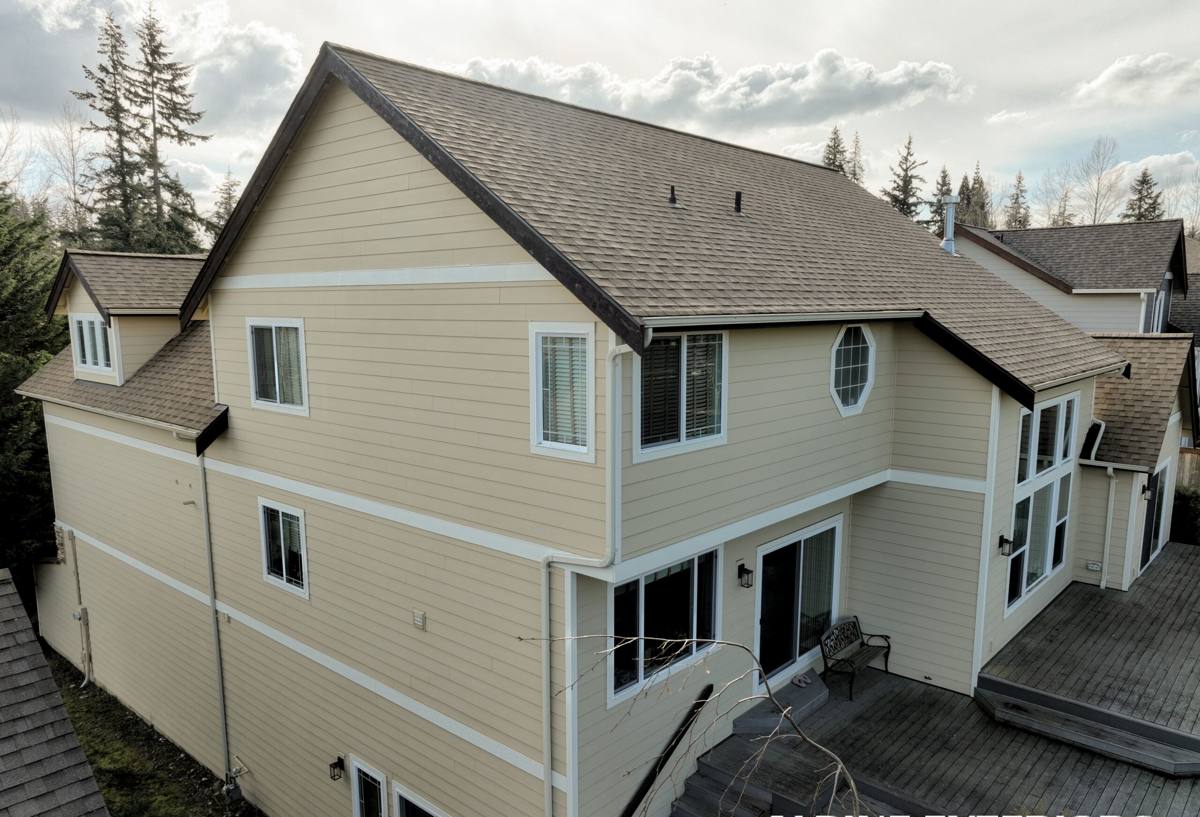
Signs Your Deck Needs Repair — Not Just a Pressure Wash
Cosmetic issues you can usually live with a while longer
- Faded or graying wood that hasn't started to soften or split
- Surface moss or algae film that wipes or scrubs off without leaving pitting
- Minor checking (small surface cracks) on individual boards with no movement underfoot
Signs that mean real repair work, not just cleaning
- Boards that feel spongy, springy, or noticeably softer than neighboring boards
- A screwdriver or awl sinking easily into wood at deck-to-house connections, post bases, or stair stringers
- Visible gaps, rust streaks, or dark staining around fasteners and flashing
- Railings that flex, wiggle, or feel less rigid than they used to
- Any separation between the deck ledger board and the house
That last one is the item we take most seriously. A ledger board pulling away from the house is a structural warning sign, not a cosmetic one, and it's one of the more common failure points we find on older Sammamish decks that were built before current attachment standards.
What a Correct Deck Repair Actually Involves
Deck repair gets treated like a weekend project more often than any other exterior trade, which is part of why we see so many decks that were "fixed" once and are already failing again. A repair done right addresses the cause of the damage, not just the board that finally gave out.
Framing and substructure
Joists, beams, and posts are the part homeowners never see and the part that matters most. We check for soft spots, checking that's gone past cosmetic, and any connection where water has been sitting rather than draining. Undersized or corroded structural hardware gets replaced with hardware rated for exterior, wet-service use — this is a place we don't cut corners, because it's the difference between a deck that's safe and one that only looks safe.
Decking boards
Individual board replacement only works if the new boards are properly spaced for drainage and ventilation. Tight-fitting old boards that don't let water run through are a big reason moss and rot come back in the same spots — so a proper repair usually means adjusting spacing, not just swapping wood.
Fasteners and flashing
Most of the deck failures we get called out for in King County trace back to fasteners and flashing, not the decking material itself. Exposed nail heads, missing or undersized flashing at the ledger, and non-coated screws that react with treated lumber all accelerate rot from the inside. We replace these with corrosion-resistant, code-rated hardware and proper flashing details every time — no exceptions, because this is the part that fails first and is hardest to inspect once it's covered again.
Railings and stairs
Railings and stair stringers take direct structural loads from people, so any looseness gets addressed at the connection point, not just tightened at the surface. A wobbly railing is almost always a sign the post base or blocking behind it has already started to fail.
Repair or Replace? What Actually Drives That Decision
Homeowners often assume any deck with problems needs full replacement, or the opposite — that any deck can be patched indefinitely. Neither is usually true. The honest answer depends on how much of the structure is still sound.
| Factor | Usually Repairable | Usually Needs Replacement |
|---|---|---|
| Framing condition | Isolated soft spots at joists or beams | Widespread softness across multiple framing members |
| Ledger connection | Intact, properly flashed | Separating from house or missing proper flashing entirely |
| Decking boards | Scattered boards showing wear | Most boards cupping, splitting, or soft |
| Age of structure | Under 15-20 years, built to a reasonable standard | Older deck with outdated fastening methods throughout |
| Footings and posts | Stable, no visible movement | Settling, rot at post bases, or undersized footings |
We'll always tell you plainly which category your deck falls into, including when repair is the more honest and more affordable answer. A targeted repair on a structurally sound deck can add years of safe use for a fraction of replacement cost.
How We Approach a Deck Repair in Sammamish
- Full structural inspection — we check framing, ledger attachment, footings, and hardware, not just the visible surface, including probing suspect areas rather than guessing from a visual scan.
- Written scope and honest recommendation — you get a clear explanation of what's failing, why, and whether repair or replacement is the right call for your deck specifically.
- Repair the cause, not just the symptom — that means addressing drainage, flashing, and fastener issues alongside any board or framing replacement, so the same failure doesn't reappear in a season or two.
- Code-appropriate hardware and connections — especially at the ledger and post bases, since these are the spots inspectors and future buyers scrutinize most.
- Cleanup and a final walkthrough — so you understand what was done and what to watch going forward.
Materials: What We Use and Why
Sammamish decks are typically built from pressure-treated lumber, cedar, or composite decking, and each has real trade-offs worth understanding before a repair.
Pressure-treated lumber
Affordable and easy to repair in sections, but it depends heavily on proper sealing and maintenance to resist the moisture load this region delivers. Left unsealed, it's the material most prone to the soft-spot and checking issues we described above.
Cedar
Naturally more rot-resistant and a good look for many Sammamish homes, but it's a softer wood that shows wear and needs re-staining or sealing more often to keep that resistance intact, especially in shaded, damp yard conditions.
Composite decking
Composite holds up well against moisture and doesn't need staining, which appeals to a lot of homeowners tired of yearly upkeep. Our professional standard is to be upfront that composite isn't maintenance-free — it still needs proper ventilation underneath and correct fastening, since trapped moisture and improperly spaced boards can cause issues under any decking material, composite included. We're honest about that trade-off rather than overselling any one product.
Keeping a Repaired Deck in Good Shape
A repair is only as good as the maintenance that follows it. Here's what actually matters for decks in this climate:
- Sweep debris and standing leaves off the deck regularly, especially in fall — trapped organic matter holds moisture against the wood
- Rinse off moss and algae before it gets a foothold rather than waiting for a deep clean once a year
- Check that gaps between boards stay clear so water can actually drain through
- Re-seal or re-stain wood decking on the manufacturer's recommended schedule, not just when it looks faded
- Walk the deck once or twice a year and check railings, stair connections, and any spot near the house for softness or movement
- Keep gutters and downspouts near the deck clear so runoff isn't dumping extra water onto or under it
Why It Matters That We Already Work in Sammamish
A crew that works King County regularly knows how differently a shaded, tree-covered Sammamish lot behaves compared to a sun-exposed deck elsewhere in the county. We know what moss growth actually indicates versus what's just cosmetic, we know which older fastening methods are common in this area's building stock, and we know how to sequence repair work around a wet-season schedule so it doesn't drag on for months. That local familiarity means fewer surprises once we start pulling boards, and a repair plan that's realistic about this region's weather rather than a generic checklist.
If your deck has soft spots, a wobbly railing, or you're just not sure whether it needs repair or replacement, we're happy to take a look. Reach out for a free, no-pressure estimate — use the form below and we'll follow up to schedule a time that works.