 King County
 Deck Replacement Built for Sammamish's Climate
Sammamish sits in one of the wetter, greener corners of King County, and that reputation is well earned. Long stretches of overcast, drizzly weather from fall through spring keep everything outdoors damp for months at a time, and decks take the brunt of it. Add in the tree cover that so many Sammamish properties enjoy near Lake Sammamish, the Plateau, and the surrounding greenbelts, and you get near-constant shade, slow-drying wood, and a moss season that can stretch far longer than most homeowners expect. Combine that with the broader Puget Sound region's marine air and driving rain events, and a deck here is working harder than the same structure would in a drier climate.
None of that means a deck can't last. It means the materials, fasteners, and construction details need to match what this specific climate does to wood and metal over time. A deck replacement done right in Sammamish looks different in some important ways from a deck built in a drier, sunnier part of the state, and that's the gap we specialize in closing.
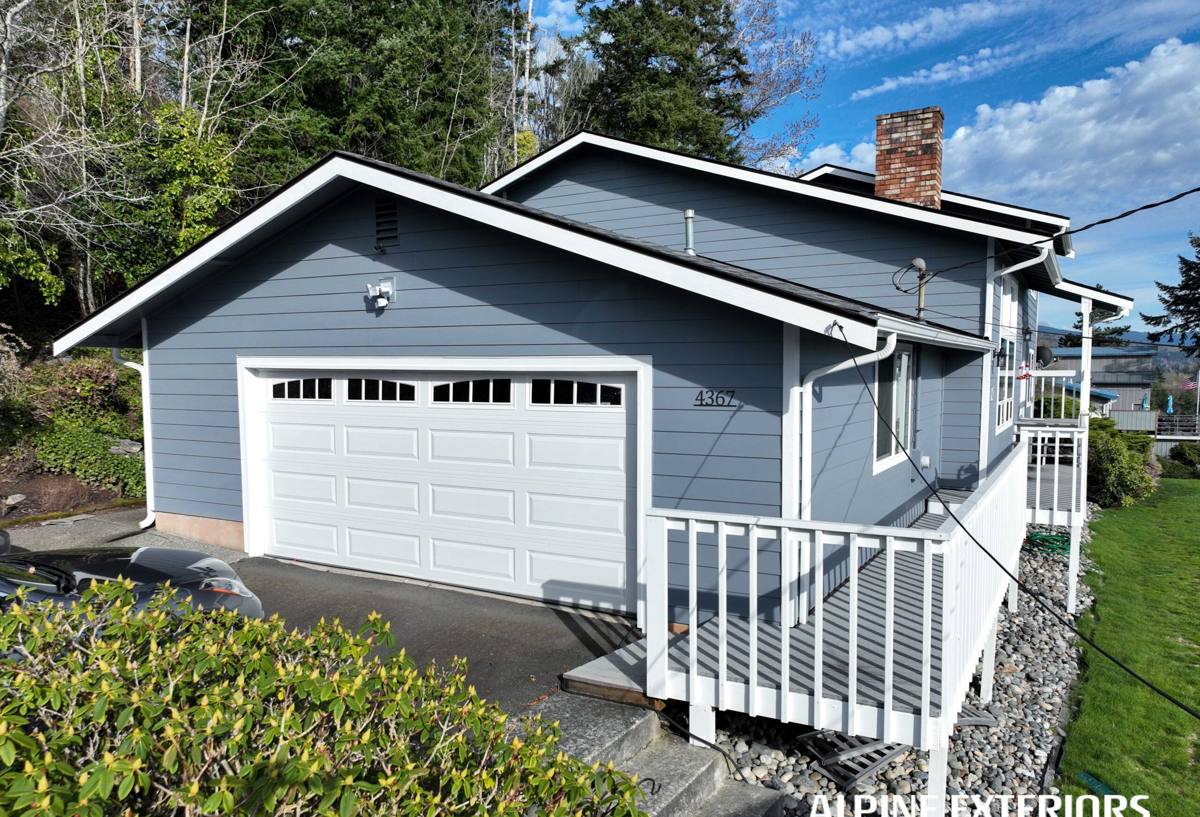
What King County's Wet Season Does to an Aging Deck
If your current deck is more than 12-15 years old, or has never had ledger, joist, or post-base work done, it's worth understanding what's likely happening underneath the surface. Surface boards get most of the attention because they're visible, but the structural failures that actually matter tend to happen out of sight.
Common problems we see on Sammamish decks
- Moss and algae buildup on the deck surface, especially on the shaded side of the house or under mature trees, creating a slick, slowly degrading top layer
- Soft or spongy spots where water has been sitting against the ledger board or pooling near the house
- Rusted or corroded fasteners and joist hangers, particularly on older decks built before code required coated, corrosion-resistant hardware
- Rot at post bases where wood sits in contact with, or close to, wet soil or concrete
- Gaps opening up between boards from repeated wet-dry cycling, or boards cupping and warping
- Flashing that was never installed, or installed incorrectly, at the ledger-to-house connection — one of the most common sources of hidden rot in this region
The visible stuff — gray, weathered boards, moss stains, a railing that wobbles a little — is usually the least of the problem. The ledger connection, the framing, and the post bases are where a deck actually fails, and those are exactly the areas that stay wet the longest in a shaded, tree-covered yard.
What a Correct Deck Replacement Actually Involves
A deck replacement isn't just pulling up old boards and screwing down new ones. In a climate like Sammamish's, the framing and water-management details matter as much as the decking material itself — arguably more, since that's what determines how long the whole structure lasts before the next replacement is needed.
The structural work that doesn't show
Proper ledger flashing where the deck attaches to the house is non-negotiable here. This is the single most common point of hidden water intrusion on older decks, and it's also one of the cheapest details to get right the first time. We also look closely at joist spacing and hardware — corrosion-resistant, code-rated hangers and fasteners are worth the modest upcharge given how much moisture this framing will see over its lifetime.
Post bases and ground contact
Wherever posts meet the ground, we use hardware that keeps the wood off wet soil and concrete rather than burying or embedding it. Standing water and prolonged soil contact are what rot post bases fastest, and it's a detail that's easy to shortcut on a fast rebuild but expensive to fix later.
Drainage and airflow underneath
A deck that can't breathe underneath stays damp longer after every rain. Where grading or landscaping is trapping moisture under the deck, we'll flag it — sometimes a small grading adjustment or gap in skirting does more for longevity than any material upgrade.
Choosing Decking Material for a Shaded, Wet Property
There's no single "best" decking material — there's a best material for your specific yard, sun exposure, and how much upkeep you actually want to do. Here's how the common options stack up for a moss-prone, tree-shaded King County lot.
| Material | How it handles moss & moisture | Maintenance | Typical lifespan |
|---|---|---|---|
| Pressure-treated wood | Resists rot chemically, but surface still grows moss/algae in shade and needs regular cleaning | Annual cleaning, periodic staining/sealing | 10-15 years before major repair or replacement |
| Cedar | Naturally rot-resistant, but softer surface holds moisture and can gray or stain quickly in full shade | Regular sealing to maintain appearance and resistance | 15-20 years with upkeep |
| Composite decking | Doesn't absorb water like wood, but can still grow surface moss/mildew in deep shade — needs occasional washing | Low — periodic rinsing/cleaning, no staining | 25-30+ years, manufacturer-dependent |
| PVC/synthetic decking | Fully non-organic surface resists rot and moss growth best of the group | Low — occasional cleaning | 25-30+ years, manufacturer-dependent |
We don't push one material on every job. A sunnier deck with good airflow can do perfectly well in cedar or pressure-treated wood with a homeowner who's willing to clean and seal it on a schedule. A heavily shaded deck under mature trees, where moss and slow drying are unavoidable, usually makes a stronger case for composite or PVC decking, simply because it removes the organic surface that moss and algae feed on. We'll walk your specific site conditions with you and give you a straight answer, including the maintenance trade-offs, rather than steering you toward whatever's easiest for us to install.
Railings, Fasteners, and the Small Details That Fail First
Railings and hardware take a beating in this climate for a less obvious reason: they're exposed to the same rain as the decking, but they're often thinner, more exposed to wind-driven rain, and harder to inspect from the ground. On a replacement, we use fasteners and connectors rated for exterior, corrosion-prone environments — not just because code often requires it, but because swapping out a rusted bracket in year four is a false economy compared to installing the right hardware once.
Stair stringers and any structural wood in near-constant shade get the same attention as the main frame. These are common failure points that get missed on quick resurfacing jobs because they're not the "star" of the deck, but they're just as exposed to King County's wet season as anything else.
Our Deck Replacement Process
- On-site assessment — We inspect the existing deck's framing, ledger connection, post bases, and drainage, not just the surface boards, so you know what's actually driving the need for replacement.
- Honest scope and material conversation — Based on your sun exposure, tree cover, and how much maintenance you want long-term, we walk through material options and what each one actually costs to own over time, not just to install.
- Removal and structural correction — Old decking, and any rotted or undersized framing, is removed. Ledger flashing, joist hardware, and post bases are corrected to current standards, even if that wasn't part of the original build.
- Installation — New decking, railings, and stairs are installed to code, with fastening and spacing appropriate for wet-dry cycling and, where relevant, freeze-thaw swings.
- Final walkthrough — We go over basic care for whatever material you chose, so you know what to expect in year one versus year ten.
Questions worth asking before you hire anyone for a deck project
- Will you inspect and correct the ledger flashing, or just replace the boards on top of what's there?
- What hardware and fasteners do you use, and are they rated for exterior/corrosion-prone conditions?
- How do you handle post bases — is wood kept off the ground and away from standing water?
- Do you pull the required permit, and is the work inspected?
- What's the realistic maintenance schedule for the material you're recommending, given my yard's sun and shade?
Why Local Experience in King County Matters
A crew that works Sammamish and the surrounding King County area regularly has already seen how the local climate treats different decking materials, framing details, and hardware choices over years, not just at installation. That matters more than it sounds. Decisions that look fine on day one — a shortcut on flashing, an untreated post base, decking chosen without accounting for a shaded lot — often don't show their consequences for several rainy seasons. A crew with local track record has watched those consequences play out on other properties and builds accordingly.
Local experience also means knowing King County's permitting requirements for deck work, understanding how HOA guidelines in some Sammamish neighborhoods may affect material or railing choices, and being available for follow-up if a question comes up after the project wraps — not a crew that drove in from out of the area for one job.
Is It Time to Replace or Just Repair?
Not every deck needs a full replacement. If the framing is sound, the ledger connection is properly flashed, and the issues are limited to surface wear, board replacement or resurfacing may be enough. Replacement generally makes more sense when the ledger flashing was never done correctly, when post bases or joists show rot rather than surface weathering, when the deck was undersized or under-built for current code, or when repeated moss and moisture problems point to a design issue — like poor drainage or airflow underneath — that patching won't fix. We'll give you a straight assessment of which category your deck falls into before recommending a full replacement; there's no reason to replace a structurally sound deck just to sell a bigger job.
If you're dealing with a moss-covered, soft-feeling, or aging deck anywhere in Sammamish or the surrounding King County area, we're happy to take a look and give you a straightforward, no-pressure estimate — just fill out the short form below to get started.