 King County
 Sammamish's Climate Is Harder on Siding Than It Looks
Sammamish looks like an easy place to own a house. The lots are well kept, the neighborhoods are newer, and the weather rarely does anything dramatic. But "mild" is exactly what wears siding out here — not one big storm, but hundreds of gray, wet weeks strung together every year. Long stretches of driving rain soak into siding seams and trim joints, and the heavy tree cover that makes so many Sammamish lots attractive also keeps north- and east-facing walls shaded and damp for days after a storm passes. That combination is what produces the long moss and algae season homeowners here know well — green-black staining that keeps coming back no matter how many times it gets pressure washed off.
None of that is unique to Sammamish, but the plateau setting makes it more persistent. Mature trees, cul-de-sac lots tucked against greenbelts, and homes built into slopes all mean more shade and slower drying than you'd get on an open, sun-exposed lot elsewhere in King County. Siding that can't shed water fast and dry out between storms is siding that's working against the odds from day one. That's the problem we design every replacement around — not just picking a color, but picking a system that actually holds up to how wet this specific area stays.
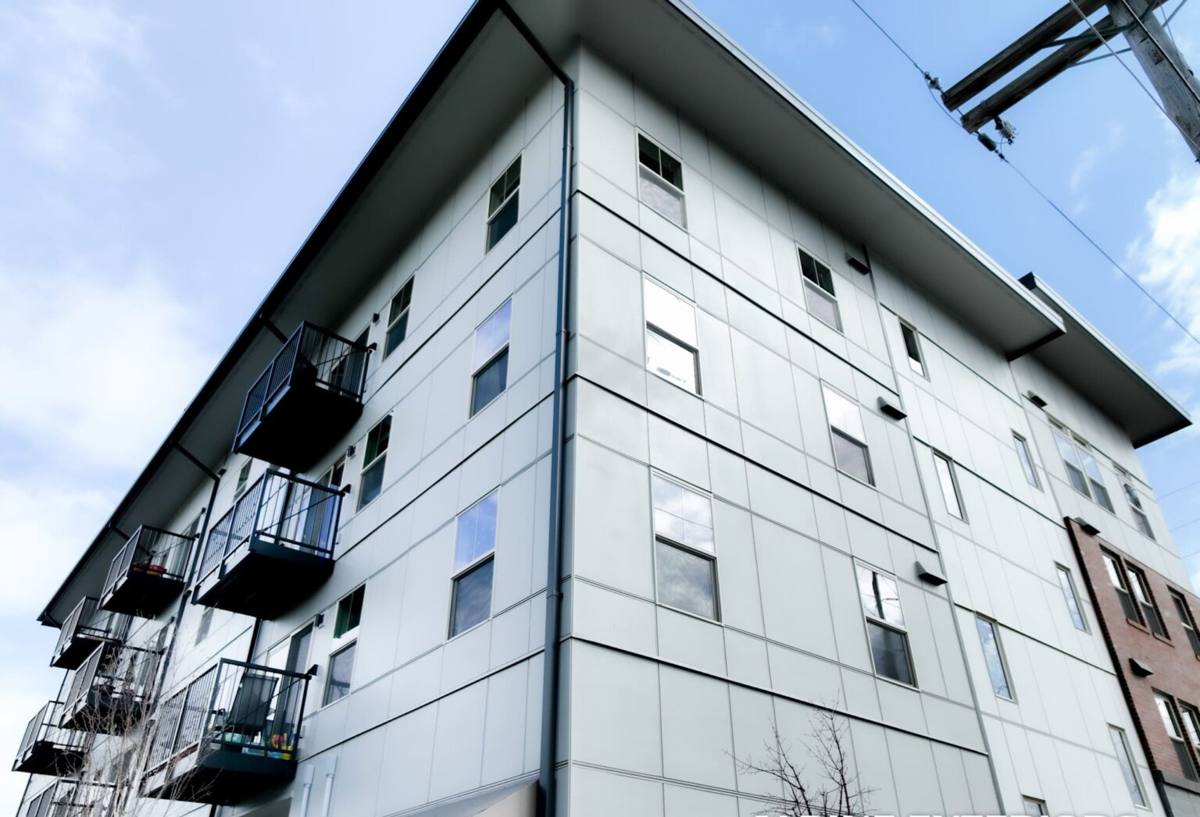
Warning Signs Your Sammamish Home Needs New Siding, Not a Patch
A lot of siding problems get patched for years before anyone calls a contractor, mostly because the damage is easy to miss from the ground. By the time it's obvious — bulging panels, soft trim, paint that won't hold — the water has usually been getting behind the siding for a while. Here's what we tell Sammamish homeowners to check for:
- Panels or boards that look warped, cupped, or separated at the seams
- Soft or spongy spots when you press on siding near the bottom of walls or below windows
- Paint that keeps peeling or bubbling in the same spots year after year, even after repainting
- Moss, algae, or dark streaking that returns within a season of being cleaned
- Visible gaps, cracking, or caulk failure at corners, trim, and window/door edges
- Rot or discoloration at the bottom edge of siding near grade, decks, or downspouts
- A musty smell or unexplained moisture inside exterior walls
- Rising heating bills that aren't explained by anything else — a sign air and moisture are moving through the wall
One or two of these can sometimes be repaired locally. Several at once, especially soft spots or repeat paint failure, usually means the water-resistive barrier behind the siding has been compromised and it's time to talk about full replacement rather than another patch.
What a Correct Siding Replacement Actually Involves
Tear-Off and What's Underneath
A proper replacement starts with removing the old siding entirely, not just installing new material over it. That's the only way to actually see what's happening underneath — sheathing that's soft or delaminated, insulation that's wet, framing that's been sitting damp behind a wall that looked fine from the street. In a climate like ours, skipping this step just seals existing moisture problems back into the wall.
The Water-Resistive Barrier and Flashing
This is the layer that does the real work of keeping King County rain out of your walls, and it's also the layer most likely to get rushed on a low-bid job. Correct installation means a continuous water-resistive barrier, properly lapped and taped seams, and flashing at every window, door, and horizontal trim transition — installed so water is directed out and down, never trapped behind the siding. Get this wrong and even the best siding material in the world will eventually fail from behind.
The Siding Itself
We install James Hardie fiber cement exclusively, using the HZ5 product line engineered for climates like ours — high rainfall, repeated wet-dry cycles, and long stretches of damp shade. It's non-combustible, holds paint and factory-applied ColorPlus finishes far longer than wood or engineered wood products, and doesn't absorb moisture the way wood-based siding can. Proper fastening, gapping, and caulking at every joint matters as much as the product choice — a Hardie board installed with the wrong nailing pattern or without the right clearance at grade will still develop problems, just more slowly than a lesser product would.
How James Hardie Compares to Other Siding Options in This Climate
We get asked why we only install James Hardie, especially from homeowners comparing bids that include vinyl, cedar, or engineered wood products like LP SmartSide. Each of those materials has real strengths. Here's how they hold up specifically against a wet, shaded, moss-prone climate like Sammamish's:
| Material | Moisture Behavior | Moss & Algae Resistance | Maintenance | Longevity Here |
|---|---|---|---|---|
| James Hardie fiber cement | Doesn't absorb and swell; engineered for wet climates | Factory finish resists staining better than raw wood surfaces | Low — no repainting cycle with ColorPlus finish | Very strong when installed to spec |
| Vinyl siding | Sheds water but seams and edges can trap moisture behind panels | Prone to visible algae streaking, especially in shade | Low, but can crack, fade, and warp in temperature swings | Moderate; appearance degrades faster than the material fails |
| Cedar / primed spruce | Absorbs moisture readily; needs consistent sealing to perform | Highly prone to moss and mildew without regular treatment | High — recurring staining, sealing, or repainting | Shortest lifespan without diligent upkeep |
| LP SmartSide (engineered wood) | Better than raw wood but still wood-based; edge sealing is critical | Can stain and hold moisture at cut edges and seams | Moderate — periodic caulk and paint touch-up | Depends heavily on installation quality and edge sealing |
None of these products are "bad" — they're just built around different trade-offs, and in a climate that stays wet and shaded as long as Sammamish does, those trade-offs show up faster and cost more to manage over time. That's the honest reason we standardized on Hardie: it's the option that asks the least of the homeowner year after year.
Our Process for a Sammamish Siding Replacement
- Walk-through and assessment — we look at your current siding, trim, and any problem areas you've noticed, including shaded or tree-covered walls that tend to hold moisture longest.
- Written estimate — a clear scope covering tear-off, any sheathing repair, water-resistive barrier, flashing, Hardie material and finish, and trim work, with no vague allowances.
- Scheduling around the weather — we plan tear-off in manageable sections so your home isn't left exposed to a King County storm system overnight.
- Tear-off and inspection — old siding comes off, sheathing and framing get checked, and anything soft or water-damaged gets addressed before anything new goes up.
- Barrier, flashing, and siding installation — installed to manufacturer spec, with attention to fastening, gapping, and clearance at grade and roofline transitions.
- Final walk-through — we go over the finished job with you before calling it done, including care and cleaning guidance specific to your home's exposure.
What Affects the Cost of Your Project
Every Sammamish home is a little different, and siding replacement pricing reflects that. Rather than quote a number that won't mean much without context, here's what actually moves the estimate:
| Factor | Why It Matters |
|---|---|
| Home size and number of stories | More wall area and taller elevations mean more material, staging, and labor time |
| What's coming off | Tear-off of wood or engineered wood siding, especially with rot, takes longer than removing vinyl |
| Trim, windows, and architectural detail | Dormers, bump-outs, and heavy trim packages add cutting, fitting, and flashing work |
| Condition of the sheathing underneath | Water-damaged sheathing found during tear-off needs repair before new siding goes on |
| Site access | Sloped lots, tight side yards, and mature landscaping common on wooded Sammamish lots can affect staging and cleanup |
| HOA or design review requirements | Some Sammamish neighborhoods require color and material approval before work begins |
Why Local Experience in Sammamish Matters
A siding crew that already works in Sammamish knows things a company driving in from farther out doesn't always account for: how HOA design review timelines typically run, how shaded lots on the plateau behave differently than open ones, and how to schedule tear-off around the region's wet season instead of getting caught mid-project by a multi-day system. It also means someone local is accountable after the job is done — not a crew that finished up and moved permanently to the next county.
We're a King County exteriors contractor, and Sammamish is part of the area we work in every season, not an occasional job we drive out for. That familiarity shows up in small decisions throughout a project — where to pay extra attention to flashing on a heavily shaded wall, how to sequence work around an HOA's approval process, what a correctly installed system needs to look like to hold up through another wet Puget Sound winter.
Living With Your New Siding
One of the practical benefits of switching to James Hardie with a factory ColorPlus finish is how little it asks of you afterward. There's no repainting cycle to plan around, and the finish is formulated to hold color and resist the kind of staining that makes moss and algae look worse on wood and wood-composite siding. That doesn't mean zero maintenance — an occasional gentle rinse to keep organic growth from establishing on shaded walls is still worth doing, and it's good practice to glance at caulking and trim joints once a year the way you would any exterior surface. But it's a fraction of the upkeep that cedar, primed spruce, or engineered wood siding requires in a climate that stays wet as long as ours does.
James Hardie also backs its siding with one of the stronger warranty structures in the industry — coverage on the material itself measured in decades, plus separate coverage on the factory finish — and that warranty is transferable if you sell the home, which matters in a market like Sammamish's.
If your siding is showing any of the signs above, or you're just planning ahead for a home that's due, we're happy to take a look and give you a straight assessment — no pressure, no inflated urgency. Reach out for a free estimate using the form below.