 King County
 Why Woodinville's Climate Is Hard on Windows
Woodinville sits in a part of King County where trees, hillsides, and the Sammamish River valley combine to hold moisture close to the ground for months at a time. Winters bring long stretches of driving rain, often pushed sideways by wind, and the marine-influenced air common across the greater Puget Sound region keeps humidity high even between storms. Add a moss and algae season that can run from fall through spring on shaded north- and east-facing walls, and you have a climate that is genuinely tough on window assemblies.
None of this is dramatic on its own. It's the accumulation that causes problems — wood trim that never fully dries out, caulk joints that flex through repeated wet-dry cycles, and seals that are asked to perform in damp conditions far more often than in a drier climate. Windows that were installed correctly shrug this off for decades. Windows that weren't tend to show it early, usually at the sill, the corners, or wherever flashing was skipped or done as an afterthought.
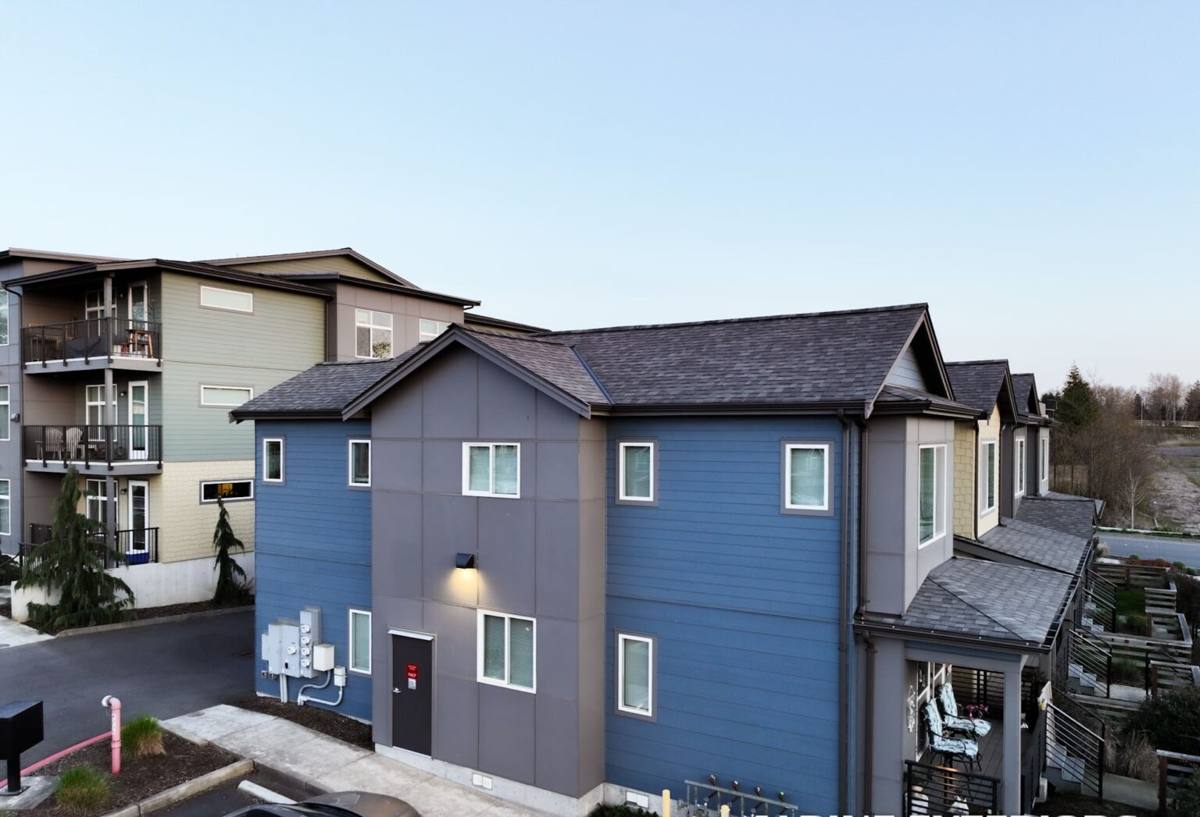
Signs Your Woodinville Home's Windows Need Attention
Most window failures don't announce themselves with a flood. They show up as small, ignorable things that add up. Worth checking for:
- A draft you can feel with your hand near the frame on a windy day
- Fog or condensation trapped between the panes of a double-pane window (a sign the seal has failed)
- Soft, discolored, or spongy wood at the sill or lower frame corners
- Windows that stick, won't latch fully, or need extra force to open and close
- Visible gaps, cracked caulk, or missing sealant around the exterior trim
- A noticeable jump in heating costs with no other explanation
- Original single-pane glass in an older home that hasn't been updated
- Moss or dark staining creeping onto the frame from nearby siding or trim
Any one of these can be minor. Several at once, or a failed seal on a window that's only a few years old, usually points to an installation issue rather than a product issue — which is why the install itself matters as much as the window you buy.
What a Correct Window Installation Actually Involves
A window is only as good as the details you can't see once the trim is back on. In a climate that sends this much driving rain at a house, the sill pan flashing is the single most important detail in the whole job. Done right, it directs any water that gets past the exterior seal back outside instead of into the wall cavity. Done poorly, or skipped, it sets up a slow leak that can go unnoticed for years while it rots framing behind the drywall.
A correct installation also means tying the new window into the home's existing weather-resistive barrier in the right order — house wrap, flashing tape, and window flange layered so water always sheds outward and down, never inward. The unit itself has to be set square, plumb, and level, shimmed at the right points so it isn't stressed or bowed, then insulated around the gap without overpacking (which can bow the frame) or underfilling (which leaves cold spots and air leaks). Exterior sealant goes on last, at the joints designed to be sealed — not as a substitute for proper flashing underneath.
Before any of that, we look at the existing opening and decide whether it calls for an insert replacement or a full-frame replacement. That decision drives cost, timeline, and how much of the surrounding wall gets disturbed.
| Factor | Insert (Pocket) Replacement | Full-Frame Replacement |
|---|---|---|
| What's removed | Old sash and hardware only; existing frame stays | Entire window down to the framing, including old flashing |
| Best for | Frames that are still square, dry, and structurally sound | Frames with rot, water damage, or that are out of square |
| Disruption | Lower — mostly interior and exterior trim touch-up | Higher — siding, trim, and sometimes interior wall repair |
| Opening size | Stays the same; glass area shrinks slightly | Can be adjusted; full original glass area is recoverable |
| When we recommend it | Sound frame, budget-conscious, faster turnaround | Any sign of hidden rot or a frame that's already failing |
Choosing Windows Built for This Climate
Frame Materials at a Glance
Vinyl frames are the most common choice for good reason — they don't rot, they don't need painting, and modern multi-chamber designs handle temperature swings well. Fiberglass costs more but resists expansion and contraction better than vinyl across our wide seasonal temperature range, which can matter on larger openings or south-facing walls that see more direct sun. Wood and wood-clad windows still have a place for homes where the interior look matters most, but wood requires real maintenance discipline in a wet climate — any gap in the exterior cladding or finish becomes an entry point for moisture, and that upkeep is the trade-off, not a defect in the product itself. We'll talk through which frame material fits your home, your budget, and how much upkeep you actually want to take on.
Glass Packages Worth Considering Here
For this region, we generally steer homeowners toward dual-pane glass with a Low-E coating and argon gas fill as the baseline, not the upgrade. Low-E coatings cut summer heat gain and winter heat loss, and argon fill improves insulating performance without changing how the glass looks. Triple-pane glass adds another layer of insulation and can help with condensation resistance and street noise, but it also adds weight and cost — worth it on a north-facing wall or a busier street, less necessary on a sheltered, south-facing opening. The U-factor (how well the window resists heat transfer) and the condensation resistance rating are both worth asking about specifically, since a window that's fine in a dry climate can still fog or sweat here if those numbers are low.
Our Installation Process
- On-site assessment — we measure openings, check framing condition, and note anything unusual before you get a quote
- Product selection — we walk through frame material and glass package options that fit the home and budget
- Site protection — flooring, landscaping, and interior finishes near the work area are covered and protected
- Careful removal — the old window comes out without unnecessary damage to surrounding trim or siding
- Framing inspection — we check the opening for hidden moisture damage before anything new goes in, and flag it immediately if we find it
- Flashing and barrier integration — sill pan, flashing tape, and house wrap are layered correctly to shed water outward
- Setting the window — squared, plumbed, leveled, and shimmed so the frame isn't under stress
- Insulating and sealing — gap insulation, interior air sealing, and exterior sealant applied at the right joints
- Finish work and walkthrough — trim reinstalled or replaced, hardware tested, area cleaned, and we walk the job with you before calling it done
Cost Factors for Window Installation in Woodinville
Every home is different, so we don't quote sight-unseen — but these are the factors that actually move the price:
| Factor | How It Affects Price |
|---|---|
| Number of windows | Per-window cost drops somewhat as the job gets larger |
| Frame material | Vinyl is typically the most affordable; fiberglass and wood-clad cost more |
| Glass package | Triple-pane and upgraded coatings add cost over standard dual-pane Low-E |
| Insert vs. full-frame | Full-frame runs higher due to added labor and exterior repair work |
| Accessibility | Second-story openings or windows behind mature landscaping take more time |
| Trim and siding repair | Any material damaged during removal has to be matched and replaced |
| Hidden rot repair | Framing repairs found during removal are priced separately, with your approval first |
Why a Crew That Already Works in Woodinville Matters
Window installation is a trade where local experience actually shows up in the work. A crew that regularly works King County homes knows which wall orientations take the worst weather exposure in a given neighborhood, what kind of framing and flashing details tend to show up (or fail) in homes built in different eras, and how to navigate mature landscaping and tight side yards without turning a window job into a landscaping repair job. We also know the permitting expectations that apply depending on whether a property falls under King County or a local city's jurisdiction, and we handle that paperwork as part of the job rather than leaving it for you to sort out.
That local familiarity also means fewer surprises. We've seen what happens when a previous owner or a different contractor cut corners on flashing in this climate, and we know what to look for when we open up an old window opening — which lets us catch problems before they become bigger, more expensive repairs mid-project.
Keeping New Windows Performing Through the Wet Season
A correctly installed window is largely maintenance-free, but a little attention goes a long way in this climate. Keep weep holes at the bottom of the frame clear of debris so water can drain as designed. Do a quick visual check of the exterior caulk lines once a year, ideally before the wet season starts, and address any cracking before it lets water in. If moss or algae starts creeping onto a frame from nearby siding or roofline, clean it off rather than letting it hold moisture against the window. Inside, wipe away any condensation promptly rather than letting it sit on the sill, and make sure gutters and downspouts near window walls are directing water away from the house rather than sheeting down across the glass.
If you're weighing whether it's time to replace aging windows or want a second opinion on a leak or draft you've noticed, we're happy to take a look. We offer free, no-pressure estimates for Woodinville homeowners — come talk to us through the form below and we'll give you an honest read on what your windows actually need.