 King County
 Why Seattle Decks Need More Than a Quick Patch Job
A deck in Seattle lives a harder life than the same deck would in a dry climate. Between the long wet season, the moss that colonizes any shaded or north-facing surface, and the salt-tinged air that rolls off Puget Sound in parts of King County, wood and fasteners take a steady beating for most of the year. Add in freeze-thaw cycles during cold snaps and UV exposure during the brief but intense summer stretch, and you get a structure that's constantly expanding, contracting, absorbing moisture, and drying out. That cycle is what actually breaks decks down — not one bad storm, but years of small movements nobody notices until a board flexes underfoot or a railing wobbles.
Deck repair here isn't just about swapping a rotten board for a new one. Done right, it means understanding why that board failed in the first place and fixing the underlying moisture or structural issue, not just the symptom. That's the difference between a repair that lasts a season and one that lasts another decade.
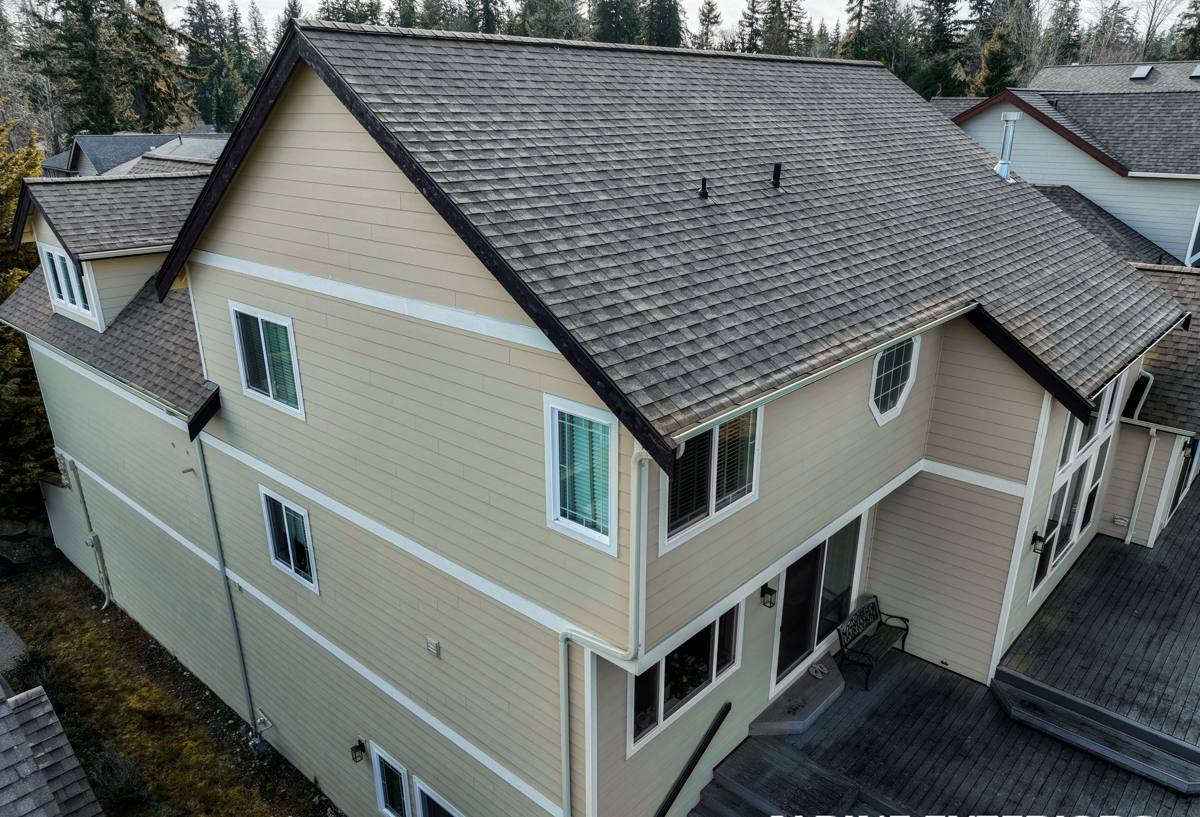
Signs Your Deck Needs Repair — And When It's More Than That
Most deck problems we get called out for in Seattle fall into a handful of categories. Catching them early is almost always cheaper than waiting.
- Soft, spongy, or springy spots in the decking — usually trapped moisture breaking down the wood fiber
- Visible moss or black-green staining on boards, especially on the shaded side of the house
- Rust streaks around fasteners, or screw heads that have popped up or stripped out
- Gaps opening up between boards, or boards cupping and warping
- A railing or stair stringer that flexes or feels loose when you lean on it
- Water pooling on the deck surface instead of draining off
- Visible rot, soft wood, or discoloration where the deck ledger board meets the house
- Fasteners or joist hangers that look corroded, undersized, or missing entirely
Any one of these can usually be repaired. But if you're seeing several at once — especially rot at the ledger board or multiple compromised joists — that's often a sign the deck's structural core has been failing quietly for years, and a full or partial rebuild may be the more honest answer than another round of patches.
The Repairs We See Most Often on Seattle Decks
Ledger Board and House Connection
The ledger board — where the deck attaches to the house — is the single most important structural connection on most decks, and it's also the part most exposed to water that runs off the house wall or gets trapped behind poorly flashed decking. When flashing is missing, cracked, or was never properly installed, water works its way behind the ledger and rots it from the inside, often before it's visible from underneath. This is a repair we take seriously and never shortcut.
Framing and Joists
Joists and beams hidden under the decking can rot or weaken without an obvious surface sign until the deck starts to feel spongy. We check for undersized or corroded joist hangers, cracked framing members, and any spots where standing water has been sitting against wood for a long time.
Decking Boards
Individual board replacement is the most common repair — cupped, cracked, or rotted boards that need to come out. We match fastening patterns and, where possible, board profiles so a repair doesn't stand out as an obvious patch.
Railings and Stairs
Loose railings and shifting stair stringers are a safety issue, not just a cosmetic one. We re-anchor posts, replace compromised balusters, and rebuild stringers when rot has taken hold — this is one area where we don't recommend cutting corners, since it's the part of the deck most tied to someone's safety.
Moss and Surface Treatment
Moss isn't just unsightly — it holds moisture against the wood surface and accelerates decay, and on stairs it becomes a real slip hazard through a wet King County winter. Repair work often includes cleaning the surface properly and addressing the drainage or shade issue that let moss take hold in the first place, rather than just scraping it off once.
Repair or Rebuild? How We Make That Call
| Situation | Usually Repairable | Usually Needs Rebuild |
|---|---|---|
| Rot location | Isolated to a few boards or one framing member | Spread through ledger, multiple joists, or posts |
| Deck age | Under 15-20 years, built to a reasonable standard | Older deck with outdated fastening or no proper flashing |
| Structural feel | Solid frame, isolated soft spots on surface | Flex or movement felt throughout the structure |
| Code compliance | Meets current railing and attachment standards | Undersized railings, missing hardware, no permit on file |
| Cost logic | Repair cost is a fraction of rebuild cost | Repair cost approaches 50%+ of a rebuild |
We'll always tell you honestly which side of this table your deck falls on. There's no benefit to us patching a deck that's going to need a full rebuild in two years anyway — that just costs you twice.
How We Approach a Deck Repair Job
- Full inspection — we check the ledger connection, framing, fasteners, and every board, not just the spot you called about, since one visible problem often points to a hidden one nearby
- Honest scope — we tell you what actually needs to happen, what can wait, and what's a safety issue versus a cosmetic one
- Written estimate — clear pricing before any work starts, no surprise change orders for things we could have caught up front
- Proper repair — matched materials, correct fasteners and flashing for our climate, and structural fixes done to code, not just to "look fixed"
- Cleanup and walkthrough — we show you what was done and what to watch going forward
Materials: What We Use for Repairs and Why
| Material | Best For | Trade-Offs |
|---|---|---|
| Pressure-treated lumber | Framing, joists, structural repairs | Needs proper sealing at cuts; can warp if not fully dried before install |
| Cedar | Matching existing cedar decking, natural look | Softer wood, needs regular sealing to resist our wet season |
| Composite/PVC boards | Full board replacement, low future maintenance | Higher upfront cost; color matching to older composite runs can be imperfect |
| Stainless or coated fasteners | Any repair near ground contact or exposed to moisture | Costs more than standard fasteners but resists the corrosion we see from rain and residual salt air |
Whenever we're replacing structural hardware, we upgrade to fasteners and joist hangers rated for our exposure, even if what's currently there is a lighter-duty option. It's a small cost difference now versus the same repair again in a few years.
Permits and Code Considerations in King County
Depending on the scope, deck repair work — especially anything touching structural framing, the ledger connection, or railings — can fall under permit requirements in Seattle and unincorporated King County. Railing height, baluster spacing, and guardrail strength all have code minimums, and a repair is a good opportunity to bring an older deck up to current standard even if the original build predates it. We'll tell you upfront if your project needs a permit pulled, and we don't skip that step to save time — it's not worth the risk to you as the homeowner.
Maintenance That Extends the Life of a Repair
A good repair only holds up if the deck gets basic seasonal care afterward. A few habits go a long way in our climate:
- Clear leaves and debris off the surface and out of gaps between boards before the fall rains set in
- Rinse or gently scrub moss off before it spreads, especially on shaded stairs and north-facing sections
- Check and re-seal wood decking on the manufacturer's recommended schedule, not just when it looks dry
- Look under the deck once a year for standing water, blocked drainage, or new rot at the ledger
- Tighten or replace any fastener showing rust before it fails
Why a Crew That Already Works Seattle Decks Matters
Deck repair isn't one-size-fits-all trade work — the right fix depends on how a specific deck has been aging in a specific climate. A crew that repairs decks throughout Seattle and the rest of King County has already seen how ledger boards fail in this rainfall pattern, which fastener grades actually hold up here, and where moss and drainage problems tend to originate on homes in this region. That's knowledge you can't get from a general handyman doing one deck a year. We show up knowing what to check first, we don't guess at what our climate does to a structure, and we stand behind the repair because we're not leaving town.
If your deck has a soft spot, a wobbly railing, or just needs an honest once-over before another wet season, we're happy to take a look. Reach out for a free, no-pressure estimate using the form below.