 King County
 Why Shoreline's Marine Climate Is Tough on Windows
Shoreline sits right on Puget Sound, and that location cuts both ways. The water views are part of what makes the neighborhood what it is, but that same exposure means homes here take on salt-laden air, wind-driven rain, and long stretches of shade and dampness that most inland King County properties never deal with. Windows are one of the first parts of a house to show the wear from that combination.
Salt air is corrosive to bare or poorly coated metal hardware — hinges, locks, and cranks can start sticking or pitting years before they would in a drier climate. Driving rain, especially in wind events off the Sound, tests flashing and seals in ways a gentle vertical rain never does; water gets pushed sideways and upward into gaps that would stay dry elsewhere. And the long moss season that comes with our wet, mild winters isn't just a roof problem — it colonizes window sills, tracks, and any wood trim that stays damp too long, holding moisture against the frame and accelerating rot.
None of this means Shoreline is a bad place for windows. It means the windows and the installation details have to be chosen with this specific climate in mind, not a generic "Pacific Northwest" spec sheet.
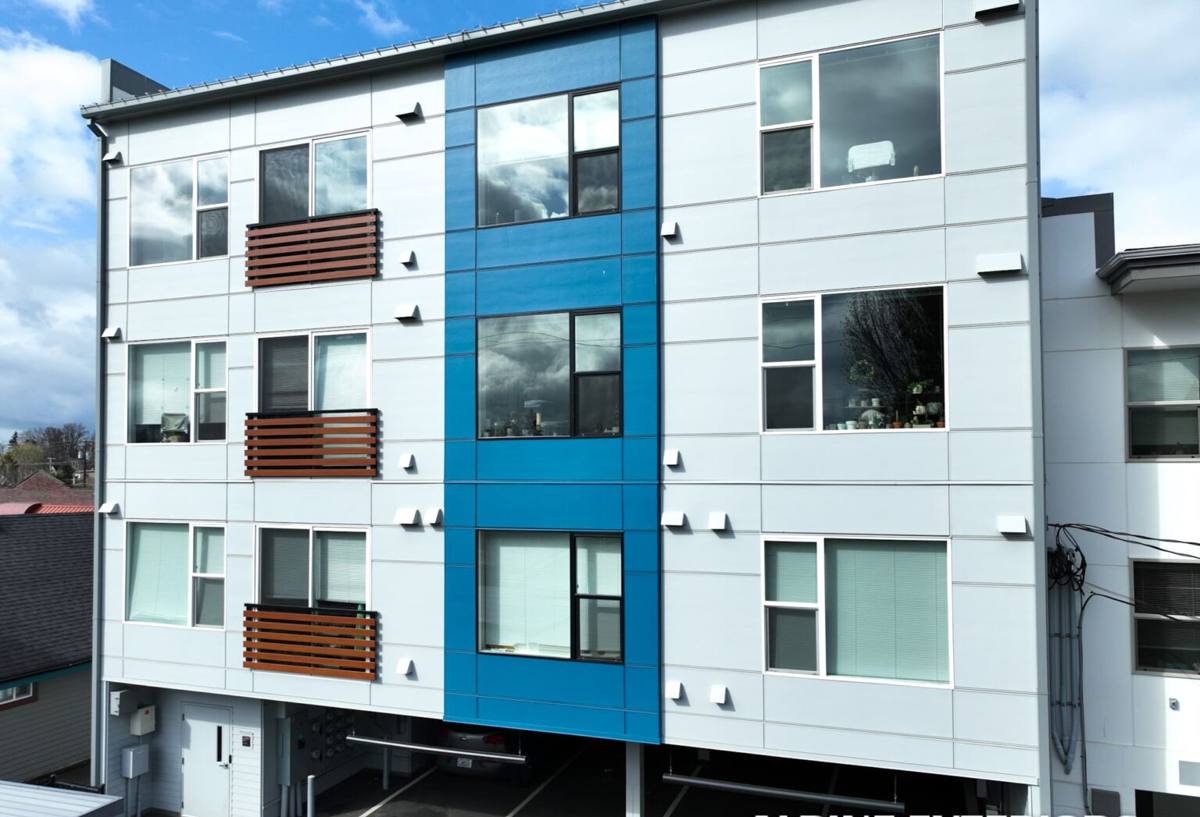
What Makes a Window Job "Custom" in an Older Shoreline Neighborhood
A lot of Shoreline's housing stock dates back to the mid-20th century, with plenty of remodels, additions, and updates layered on since. That history is exactly why "custom" matters more here than it would in a new subdivision with identical stock openings.
Non-Standard Openings and Out-of-Square Walls
Older framing settles over decades. Openings that started square rarely stay perfectly square, and many homes have had at least one addition or renovation that introduced a slightly different rough opening size. Ordering off-the-shelf standard sizes for these openings usually means gaps that get packed with extra shim and caulk — which is exactly the kind of shortcut that fails first in wind-driven rain. A properly custom window is measured and built to the actual opening, not the nominal one.
Matching Style on Additions and Remodels
Plenty of Shoreline homes mix original mid-century sightlines with newer additions. Getting sash proportions, grille patterns, and trim reveals to match — or to intentionally and cleanly differentiate — takes a measure-and-plan process, not a catalog pick. We treat this as part of the job, not an upcharge conversation halfway through.
Frame Materials: What Holds Up Near Puget Sound
Every frame material has real trade-offs in a marine climate. We don't push one product as universally "best" — we walk through what each one actually costs you in upkeep, moisture behavior, and lifespan so you can make an informed call.
| Frame Material | Salt Air / Moisture Behavior | Maintenance | Typical Fit |
|---|---|---|---|
| Vinyl | Won't corrode or rot; some lower-end vinyl can become brittle with UV exposure over many years | Low — no painting, occasional cleaning | Budget-conscious full replacements |
| Fiberglass | Very stable dimensionally; handles temperature swings and moisture well | Low | Larger openings, longer-term ownership |
| Wood-clad | Interior wood needs the cladding and seals intact to stay protected from moisture intrusion | Moderate — cladding protects, but seal failures need prompt attention | Historic-style or high-end aesthetic matching |
| Aluminum | Prone to condensation and, without a thermal break, can transmit cold and moisture issues | Low, but coating quality matters near salt air | Modern/narrow-sightline designs, used selectively |
For most Shoreline homes we're steering clients toward vinyl or fiberglass for the bulk of a job, with wood-clad reserved for spots where the look genuinely calls for it and the homeowner understands the maintenance commitment. We're honest about that trade-off rather than selling wood-clad as low-maintenance, because near the Sound it isn't.
Glass Packages and Weatherproofing Details That Matter Here
Low-E Coatings and Gas Fills
Double-pane with a low-E coating and argon fill is a reasonable baseline for this climate — it cuts heat loss and reduces condensation risk on the interior glass during our cold, wet winters. Triple-pane adds further insulation and sound dampening, which is worth considering on rooms facing wind exposure or road noise, but it's a real cost jump and not always necessary on every opening in a house.
Flashing and Sealing — Where Most Failures Start
Honestly, more window problems in this area come from bad flashing and sealant work than from the glass or frame itself. Correct installation means proper flashing tape integration with the house wrap, a sloped sill pan so any water that does get past the exterior sheds outward instead of pooling, and sealant applied to manufacturer spec rather than just caulked over the trim as a finishing step. This is the part of the job that's invisible once it's done — and the part that determines whether you have a dry wall cavity in five years or a rot problem hidden behind the drywall.
Signs Your Current Windows Are Already Losing
Some warning signs are obvious; others get written off as "just an old house" when they're actually early water intrusion. Worth checking for:
- Sills or lower sashes that feel soft, spongy, or show dark staining
- Moss or black growth developing on the sill, track, or bottom corners of the frame
- Fogging or moisture trapped between panes on double-pane units (a sign the seal has failed)
- Windows that are noticeably harder to open, close, or lock than they used to be
- Visible daylight or a draft you can feel around the frame when it's windy outside
- Paint or finish that's peeling specifically around the window, even if the rest of the siding looks fine
- Higher heating bills in rooms with older or single-pane windows compared to the rest of the house
Any one of these on its own isn't necessarily an emergency, but a few of them together on the same window usually means moisture has already gotten past the seal.
How We Handle a Shoreline Custom Window Project
The process is the same discipline on every job, whether it's one window or a whole-house replacement:
- On-site assessment of each opening — measuring actual rough openings, checking for out-of-square conditions, and noting any existing moisture or rot damage before we quote anything
- Material and glass package walkthrough based on what that specific opening faces — a window catching direct wind off the Sound gets a different conversation than one on a sheltered side of the house
- Custom order to the true measured dimensions, not a rounded-up stock size
- Removal of the old unit with inspection of the framing and sheathing underneath — this is often where hidden moisture damage from years of a failed seal shows up, and we flag it before closing anything in
- Installation with proper flashing integration, sloped sill pans, and manufacturer-spec sealant — not just trim and caulk
- Final check of operation, weatherstripping contact, and a walk-through with the homeowner before we consider the job done
Cost Factors for Custom Windows in Shoreline
There's no honest single price for "a window" — too many variables change the number. Here's what actually drives cost on a typical Shoreline job:
| Factor | Why It Moves the Price |
|---|---|
| Opening size and shape | Larger, non-rectangular, or heavily out-of-square openings take more custom fabrication and labor |
| Frame material | Vinyl is typically the most budget-friendly; fiberglass and wood-clad cost more upfront |
| Glass package | Triple-pane and specialty coatings add cost over a standard double-pane low-E unit |
| Existing damage | Rot or water damage found in the framing during removal adds repair scope beyond the window itself |
| Access and second-story work | Upper-floor or hard-to-reach openings take longer and may need additional equipment |
| Number of openings | Whole-house jobs typically bring a better per-window rate than single, one-off replacements |
We'd rather walk your specific windows and give you real numbers than throw out a broad range that doesn't hold up once we're on site.
Timing the Work Around Our Wet Season
Window installation can happen most of the year here, but scheduling around King County's rain patterns matters more for this job than for most other exterior work. Openings are exposed to the weather for at least part of the install day, so we plan around forecasts rather than fixed dates, and we sequence multi-window jobs to minimize how long any single opening sits open. Late spring through early fall tends to give the most predictable windows of dry weather, but we install through the wetter months too when the job and forecast allow — it just takes more careful planning.
Why a Crew That Already Works Shoreline Matters
A contractor who works this specific part of King County regularly has already seen how the local conditions play out over years, not just on install day. That means knowing which orientations take the worst of the wind off the Sound, recognizing early moss and moisture patterns before they become structural problems, and not being surprised by the out-of-square openings common in Shoreline's older housing stock. It also means we're a known, reachable crew if a question comes up on a window we installed — not a name that only shows up for the one job and then disappears.
If you're dealing with drafty, foggy, or water-stained windows, or you're planning ahead for a remodel, we're glad to come take a look. The estimate is free, there's no pressure to commit on the spot, and you'll get a straight answer about what your windows actually need — just fill out the form below to get started.