 King County
 Siding Replacement in Rainier Valley: What the Climate Puts Homes Through
Rainier Valley homes sit in a part of King County where siding takes a genuine beating year after year. The combination of salt-laden air drifting in from the Sound and Lake Washington, driving rain that comes in sideways during fall and winter storms, and a moss season that can stretch for most of the year adds up to conditions that most siding products were never designed to handle indefinitely. It's not one dramatic event that ruins siding here — it's the slow, cumulative effect of moisture finding its way in, sitting against organic growth, and cycling through freeze-thaw and wet-dry swings for decades.
When we talk about siding replacement in this neighborhood, we're not talking about a cosmetic upgrade. We're talking about restoring the building envelope that keeps water, mold, and rot out of the structure underneath. Get it wrong, and you're paying for the same job twice within a decade. Get it right, and the siding becomes one of the lowest-maintenance parts of the house for the next 30-plus years.
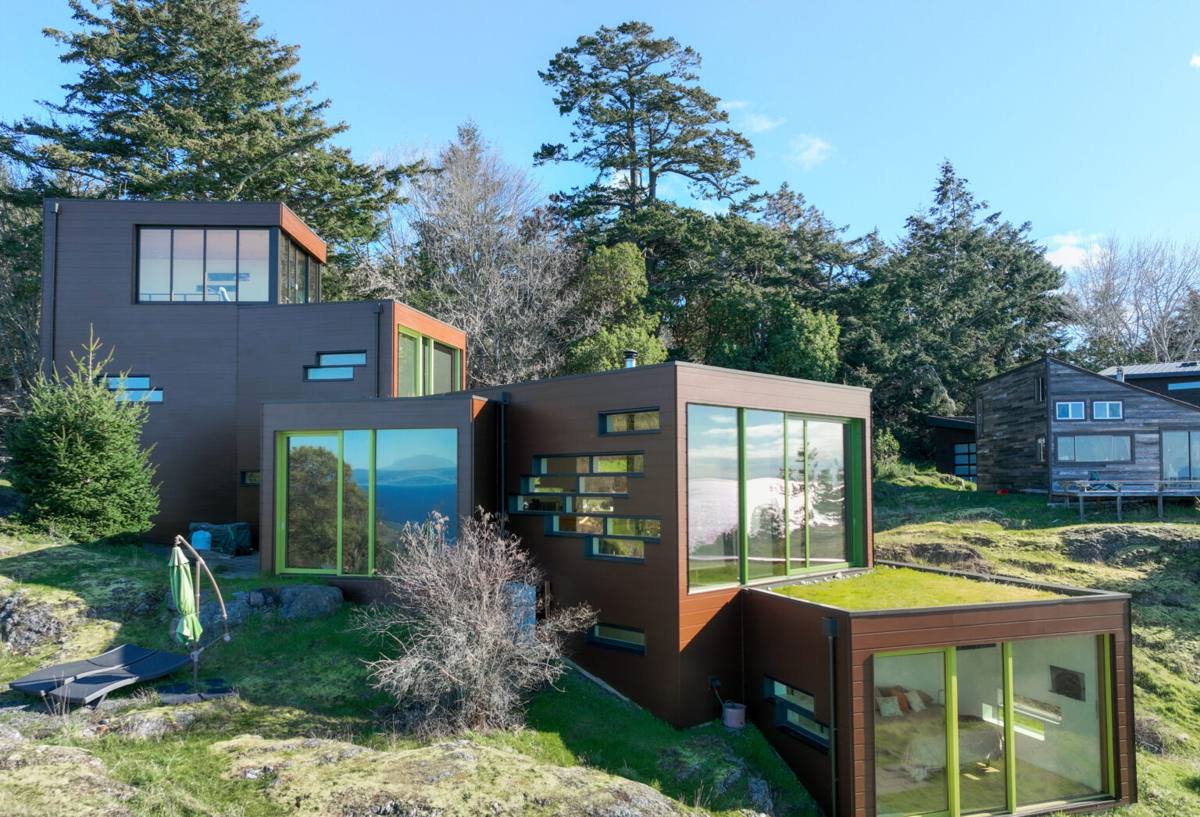
Signs Your Siding Has Reached the End of Its Life
Repair makes sense when the damage is isolated. Replacement makes sense when the problems are systemic — when what's failing in one spot is a preview of what's coming everywhere else. In Rainier Valley, we typically see full replacement become the right call when a home shows several of the following at once:
- Soft, spongy, or crumbling spots when you press on the siding, especially near the bottom courses and around windows
- Paint that won't hold anymore — bubbling, peeling, or needing a repaint every two to three years
- Persistent moss, algae, or black streaking that comes back within months of cleaning
- Visible warping, cupping, or buckling panels, particularly on north-facing or shaded walls
- Gaps opening up at seams, corners, or trim boards that weren't there a few years ago
- A musty smell or noticeable temperature difference near exterior walls, which can point to moisture already inside the wall assembly
If you're only seeing one or two of these in a small area, a repair or targeted panel replacement may still be reasonable. Once several of these show up together, it usually means the water-resistive barrier behind the siding has been compromised for a while, and patching won't address the root cause.
What a Correct Siding Replacement Actually Involves
It starts underneath, not on the surface
The siding itself is the least important variable in how long a replacement lasts. What matters most is everything behind it. A correct job always includes a full tear-off — not siding installed over the old material — so the sheathing can be inspected and any rot or soft spots repaired before anything new goes up. Skipping this step is the single most common reason siding fails early in wet climates like ours.
The details that actually keep water out
Once the sheathing is sound, the job depends on a properly lapped weather-resistive barrier, correctly integrated flashing at every window, door, and penetration, and a fastening pattern that matches the manufacturer's specification rather than whatever is fastest for the crew. In a climate with as much driving rain as Rainier Valley gets, many installers also build in a rainscreen gap behind the siding, giving any moisture that does get past the cladding a way to drain and dry instead of sitting against the wall.
Where corners get cut
The visible mistakes homeowners spot later — waviness, nail pops, caulk cracking at joints — almost always trace back to skipped steps at this stage: fasteners driven too tight or too loose, missing flashing behind trim, or panels installed without the manufacturer-specified gaps for expansion. None of this shows up on day one. It shows up in year three or four.
Why We Install Only James Hardie Fiber Cement
We get asked fairly often why we don't offer vinyl, LP SmartSide, or cedar as options. It's a reasonable question, and the honest answer is about trade-offs rather than any one product being a bad product in every situation.
Vinyl is inexpensive and easy to install, but it's a petroleum-based product that expands and contracts significantly with temperature swings, can crack in impacts, and has no real fire resistance. LP SmartSide is an engineered wood product — it performs reasonably well when installation and maintenance are followed exactly, but wood-based substrates are inherently more vulnerable to the kind of sustained moisture exposure Rainier Valley sees, and any lapse in caulking or paint maintenance shortens its life. Cedar is a beautiful, traditional material, but it requires ongoing staining or sealing, and in a climate with this much rain and moss pressure, that maintenance burden is constant and the material is naturally more prone to rot, insect activity, and moss retention than a cement-based product.
James Hardie fiber cement is non-combustible, dimensionally stable across our wet winters and warmer summers, and its ColorPlus factory finish is baked on under controlled conditions rather than field-applied, which gives it a longer, more consistent finish life than site-painted materials. Hardie also engineers specific product lines, including HZ5 formulations, for climates defined by moisture exposure — which describes most of western Washington. That's the deciding factor for us: in a region where the climate actively works against siding, we'd rather install the one product line built and warrantied for exactly these conditions than ask a homeowner to manage the maintenance schedule that keeps a more moisture-sensitive product performing.
Our Rainier Valley Siding Replacement Process
- On-site assessment — we walk the exterior, check for soft spots, moisture staining, and existing moss or algae patterns specific to the home's exposure
- Sheathing inspection — once tear-off begins, we check the wall assembly underneath and repair or replace any compromised sheathing before moving forward
- Weather-resistive barrier and flashing — installed and lapped correctly at every seam, window, door, and penetration
- Hardie panel or lap installation — fastened to manufacturer specification, with correct gapping and fastener placement
- Trim and finish work — since ColorPlus siding arrives factory-finished, on-site painting is limited mainly to cut edges and trim, which reduces both time and long-term touch-up needs
- Final walkthrough — we go over the finished work with the homeowner and flag anything worth watching, like drainage near grade or nearby trees contributing to moss
What Drives the Cost of a Siding Replacement
Every Rainier Valley home is a little different, so we avoid quoting numbers without seeing the house. What we can tell you is which factors move the price up or down, so you can gauge where your project is likely to land before you ever get a quote.
| Cost Factor | Effect on Price |
|---|---|
| Full tear-off vs. re-siding over existing layers | Tear-off costs more upfront but is the only way to inspect and fix hidden sheathing damage |
| Extent of hidden rot or moisture damage found underneath | Increases cost; can't be known precisely until old siding is off |
| Home size and wall complexity (dormers, gables, multiple stories) | More cuts, corners, and staging drive labor time up |
| Siding profile chosen (lap, shingle, panel, board-and-batten accents) | More detailed profiles and mixed treatments add labor |
| Trim, fascia, and soffit work bundled into the project | Increases scope but often makes sense to address at the same time |
| Access and site conditions (narrow lots, mature landscaping, slopes) | Can add staging or protection costs on tighter Rainier Valley lots |
As a general rule, the widest swings in price come from what's found once the old siding is off — not from the siding material itself. A home with sound sheathing and straightforward walls will cost meaningfully less than one where hidden moisture damage needs to be repaired first.
Why Hiring a Crew That Already Works Rainier Valley Matters
Siding performance is local. A crew that mostly works drier inland areas of King County doesn't necessarily think about rainscreen gaps, moss-prone shaded walls, or the flashing details that matter most where driving rain and salt air are a daily fact of life. Crews familiar with this part of the county also tend to have a better read on what's common in the area's housing stock — the general age range of homes, typical wall assemblies, and the kinds of moisture patterns that show up on north- and west-facing walls shaded by mature trees, which are common throughout the neighborhood.
That familiarity also matters for permitting and code compliance, since requirements can vary between jurisdictions within King County. A crew that regularly pulls permits and passes inspections in this specific area moves through that process with fewer delays than one encountering it for the first time.
Caring for Your Siding After Replacement
Correctly installed James Hardie siding is genuinely low-maintenance, but "low" doesn't mean "none" — especially in a climate that grows moss on almost anything that sits still long enough. A short annual routine keeps it performing the way it's designed to:
- Rinse the siding with a garden hose once or twice a year to clear pollen, dust, and early moss growth before it takes hold
- Keep gutters clean and downspouts directed away from the wall so water isn't running down the siding face
- Trim back branches and shrubs that keep sections of the wall shaded and damp longer than the rest of the house
- Do a quick visual check of caulking at trim joints and penetrations every year or two, and touch up as needed
- Address any impact damage promptly rather than letting a small chip sit exposed through a wet season
None of this requires a professional visit in most years — it's the kind of maintenance most homeowners can handle in an afternoon, which is a large part of why we standardized on a product that rewards this light routine instead of demanding a repaint or resealing schedule.
If your siding is showing its age or you're just not sure whether repair or replacement is the right call, we're happy to take a look and give you a straight answer. The form below gets you a free, no-pressure estimate with no obligation attached.