 King County
 Why Seattle Siding Wears Differently Than Siding Anywhere Else
Seattle sits in a climate that's tough on the outside of a house in ways that don't always show up until the damage is already done. You've got salt-laden air moving in off Puget Sound, long stretches of driving rain that can come in sideways during a winter storm, and a moss and algae season that runs far longer here than in drier parts of the country. None of these things destroy siding overnight. They work slowly, at the seams, at the fastener points, and at anywhere water can sit instead of shed.
That combination is exactly why siding replacement in Seattle isn't a one-size-fits-all job. A product or installation method that holds up fine in a dry climate can fail here in a fraction of the time. If you're planning a siding replacement on a Seattle home, the material choice and the installation details matter more than they would almost anywhere else in the country.
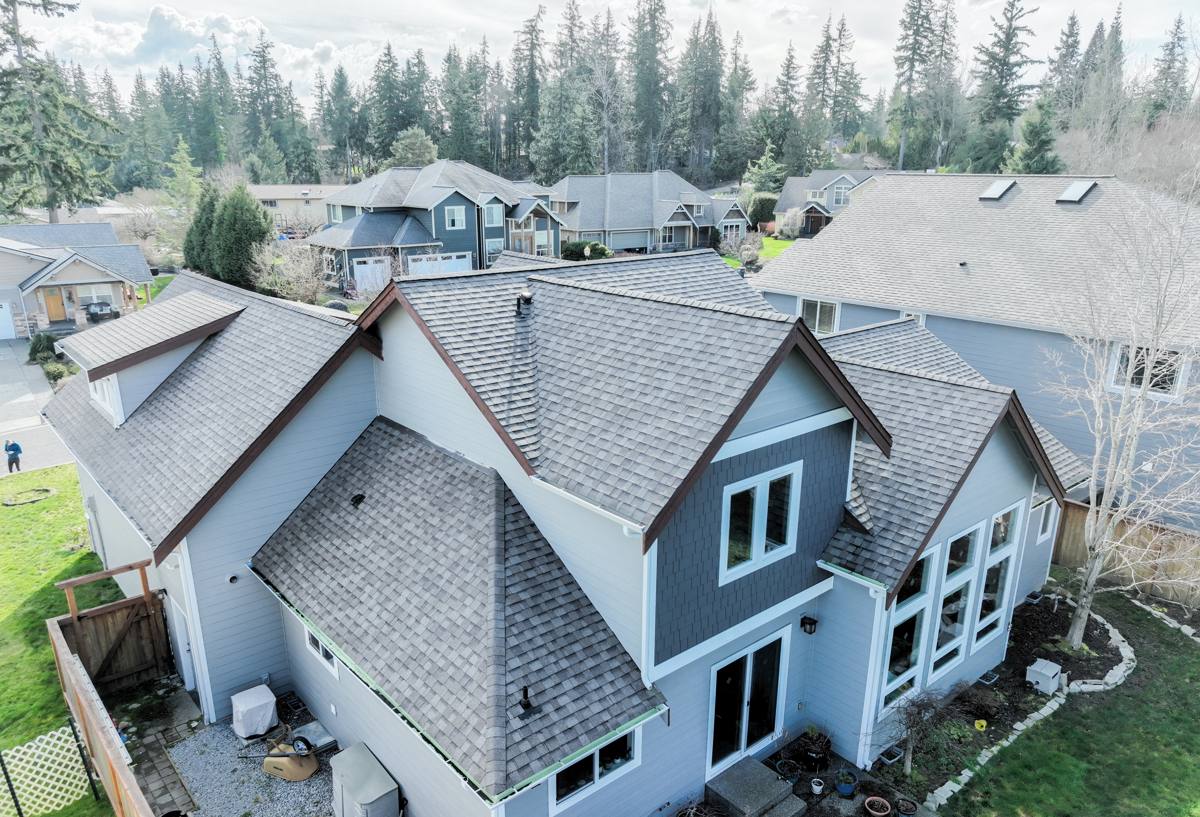
What King County's Climate Actually Does to Siding
Moisture That Doesn't Let Up
Seattle doesn't get the heaviest single-storm rainfall totals in the country, but it gets rain more days than most cities do, and that persistence matters. Siding that traps even a small amount of moisture behind it — through a bad seam, a missing flashing detail, or a material that absorbs water at the edges — stays damp longer here than it would in a climate with more drying days between storms. Over years, that constant low-grade moisture exposure is what causes rot, delamination, and paint failure.
Salt Air Along the Sound
Homes closer to Puget Sound deal with airborne salt that accelerates corrosion on fasteners, trim, and any metal components in the wall assembly. It also breaks down some paint and coating systems faster than inland homes experience. Siding and the hardware behind it need to be able to stand up to that exposure without becoming a maintenance project every couple of years.
A Moss and Algae Season That Runs Long
Shaded, damp exteriors in the Seattle area are prone to moss and algae growth for much of the year, not just a few weeks in spring. On siding with a porous surface or a factory finish that doesn't resist biological growth well, that shows up as green-black staining and streaking, especially on north-facing walls and under eaves. It's more than a cosmetic issue — sustained moss growth holds moisture against the siding surface.
Signs a Seattle Home Needs Siding Replacement, Not Just Repair
- Soft or spongy spots when you press on the siding, especially near the bottom courses or around windows
- Visible warping, buckling, or gaps between boards or panels
- Paint that's peeling, bubbling, or won't hold a new coat for more than a couple of years
- Persistent moss or algae staining that returns quickly after cleaning
- Cracked or crumbling caulk at seams, trim, and penetrations
- A musty smell or visible staining on interior walls that share an exterior wall with problem siding
- Rising energy bills that suggest the wall assembly behind the siding isn't performing anymore
One or two of these on their own might point to a repair. Several at once, or damage spread across multiple walls, usually means the underlying material or installation has run its course and a full replacement is the more honest recommendation.
What a Correct Siding Replacement Involves
Replacing siding on a Seattle home is not just pulling off old boards and nailing up new ones. Done right, it's a sequence of steps where each one protects the next, and skipping any of them shows up as a problem within a few wet seasons.
Tear-Off and Sheathing Inspection
Once the old siding is removed, the sheathing underneath gets inspected for rot, soft spots, or water damage that was hidden. This is the point where problems from years of moisture exposure get found and fixed — patching or replacing damaged sheathing before anything new goes up.
Weather-Resistive Barrier and Flashing
A properly installed weather-resistive barrier, correctly lapped and sealed, is what actually keeps bulk water out of the wall assembly — the siding itself is the first line of defense, not the only one. Flashing at windows, doors, and any horizontal trim needs to direct water outward and downward, never allow it to collect and work its way behind the cladding.
Siding Installation to Manufacturer Spec
Fastener placement, board spacing, gaps at butt joints, and clearance from grade and hard surfaces all matter, and all of it is spelled out in the manufacturer's installation instructions for a reason. In a climate like Seattle's, corners cut here are corners that come back to bite the homeowner in the form of moisture intrusion a few years down the line.
Trim, Caulking, and Finish Details
The last details — corner trim, caulking at seams and penetrations, touch-up on cut edges — are what keep water from finding a way in at the small gaps. It's unglamorous work, but it's often the difference between siding that performs for decades and siding that needs attention again in five years.
Why We Only Install James Hardie Fiber Cement
We standardized on James Hardie fiber cement siding for every home we work on, including here in Seattle, and we don't install vinyl, LP SmartSide, cedar, primed spruce, Cemplank, or Allura. That's not a marketing position — it's a decision based on what actually holds up against the conditions King County throws at a house year after year.
Hardie's fiber cement is non-combustible, which matters increasingly to homeowners and insurers alike. It's engineered to resist moisture absorption far better than wood-based products, which is exactly the vulnerability that Seattle's persistent rain exploits. The ColorPlus factory finish is baked on under controlled conditions and holds color and resists fading, chipping, and the kind of paint failure that shows up early on field-painted siding exposed to salt air and UV. And Hardie's HZ5 product line is specifically engineered for climates like the Pacific Northwest's, with performance testing built around moisture and freeze-thaw cycling rather than a generic national spec.
The warranty is also a real, transferable one — not a prorated policy that shrinks in value the moment you sell the house. For a homeowner making a decision that's supposed to last 30-plus years, that matters.
What We Turn Down, and Why
Vinyl siding is inexpensive and easy to install, but it can warp in heat, crack in cold, and it's not something we can install with confidence for the long term against Seattle's weather swings. LP SmartSide and other engineered wood products perform well when moisture is controlled, but they're more sensitive to installation errors and ongoing maintenance than fiber cement, and King County's rain doesn't leave much room for error. Cedar and primed spruce are beautiful materials, but they require an ongoing maintenance commitment — staining, sealing, watching for rot — that most homeowners underestimate until they're a few years in. We'd rather put a product on your home that we know will still be performing well after we've moved on to the next job.
Comparing Siding Options for a Seattle Climate
| Material | Moisture Resistance | Maintenance | Fire Rating | Typical Lifespan |
|---|---|---|---|---|
| James Hardie Fiber Cement | Engineered for wet climates (HZ5) | Low — factory finish, occasional wash | Non-combustible | 30+ years |
| Vinyl | Moderate — can warp or crack with age | Low, but limited repair options | Combustible | 20-30 years |
| Cedar / Wood | Poor without diligent upkeep | High — regular staining/sealing | Combustible | 15-25 years with upkeep |
| LP SmartSide (Engineered Wood) | Moderate — installation-sensitive | Moderate — caulk and paint upkeep | Combustible | 20-30 years |
This table reflects general industry characteristics, not guarantees for any individual product or installation — actual performance always depends heavily on installation quality and ongoing care.
Cost Factors for Siding Replacement in Seattle
Every Seattle-area home is different, so we won't quote a number here that doesn't mean anything without seeing your house. What we can tell you is what actually moves the price:
- Home size and wall complexity — more corners, dormers, and cutouts mean more labor and material waste
- Sheathing condition — hidden rot found during tear-off adds repair work before new siding can go up
- Siding profile and trim detail — lap width, board-and-batten, or shingle-style Hardie panels vary in material and labor cost
- Access and site conditions — steep lots, tight urban setbacks, and limited staging space common in Seattle neighborhoods can add time
- Existing paint or coatings — lead-safe practices are required on pre-1978 homes, which adds handling steps
Why Hiring a Crew That Already Works in Seattle Matters
Installation quality is what determines whether siding performs for 30 years or needs attention in five. A crew that regularly works Seattle and King County homes already understands how to detail flashing for our rain patterns, how to size gaps for our temperature swings, and where moss and algae problems tend to start on local homes. That local pattern recognition is hard to replace with a generic install crew working from a manual alone.
It also means someone who's still local and reachable if a question comes up years down the road — not a crew that worked a few jobs in the area and moved on. For a product with a warranty meant to last decades, having an installer with a real, ongoing presence in King County is part of what makes that warranty worth something in practice.
Get a Straightforward Estimate
If your Seattle home's siding is showing its age, or you're just trying to understand your options before committing to anything, we're happy to take a look and walk you through what we see — no pressure, no hard sell. Use the form below to request a free estimate.