 King County
 West Seattle's Siding Has to Work Harder Than Most
West Seattle sits out on the water in a way that most King County neighborhoods don't. Homes here catch wind and moisture straight off Puget Sound, sit under mature tree canopy that keeps north walls damp for days after a storm, and go through a wet season that runs long even by Western Washington standards. Siding that would coast through a drier inland suburb gets tested here every single winter, and the difference shows up on the wall a lot sooner than most homeowners expect.
That's the backdrop for this page. We're not writing about siding replacement in general — we're writing about what a full siding replacement needs to do, specifically, on a West Seattle home, and why the material and the installation detail work matter more here than they would somewhere sheltered and dry.
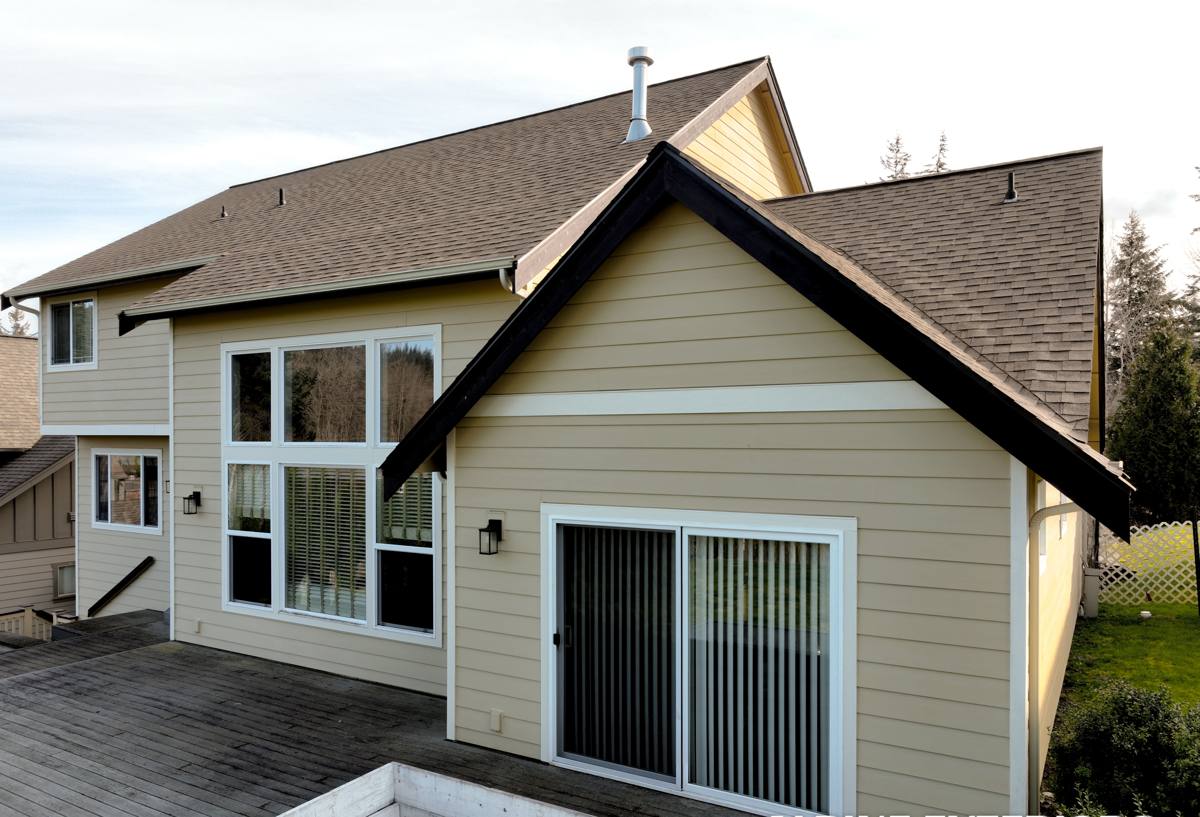
Three Climate Factors That Shape Every Decision Here
Salt Air and Marine Exposure
Being close to open water means salt-laden air is a routine part of daily exposure, not an occasional event. Salt speeds up the breakdown of paint and factory finishes, and it accelerates corrosion on fasteners, flashing, and trim hardware. A siding system that isn't built and fastened with that in mind will show fading, chalking, and rust streaking years before it should.
Driving, Wind-Pushed Rain
Rain in this part of King County rarely falls straight down for long. Wind off the Sound pushes it sideways, right into lap joints, under trim, and into any gap in the water management system behind the siding. That's a harder test than an annual rainfall total suggests — it's a test of every seam, every piece of flashing, and every caulk joint, over and over, for the life of the siding.
A Long Moss and Algae Season
Mature tree cover and a mild, wet climate mean shaded walls stay damp for extended stretches, especially on north- and west-facing elevations. That's exactly the condition moss, algae, and mildew need to take hold. Siding that can't shed water quickly or that traps moisture against the substrate turns green and stays green, and constant dampness at the surface eventually works its way into any weak point in the cladding.
What a Correct Siding Replacement Actually Involves
Replacing siding well is not a cosmetic swap. The visible lap boards are the last five percent of the job. The other ninety-five percent is water management — the parts of the system nobody sees once the new siding is up.
Full Tear-Off, Not an Overlay
Siding over existing siding hides problems instead of fixing them. A correct replacement strips the wall down to the sheathing so we can actually see what's there, not guess at it.
Inspecting and Repairing What's Underneath
Once the old siding is off, we check the sheathing, framing, and any existing weather-resistive barrier for rot, soft spots, or prior water damage — common on older homes in wet coastal neighborhoods where a failure was covered rather than repaired. Any damaged sheathing or framing gets replaced before anything new goes back up.
A Continuous Weather-Resistive Barrier
A new, continuous house wrap or weather-resistive barrier goes on before siding, lapped correctly at every seam so water is directed out and down rather than trapped behind the cladding.
Flashing at Every Penetration
Windows, doors, hose bibs, vents, and any other wall penetration get properly flashed and integrated with the weather barrier. This is where driving rain finds its way in on a poorly built wall, and it's the detail work that separates a siding job that lasts decades from one that starts leaking in five years.
Correct Fastening and Clearances
Fasteners, spacing, and ground and roofline clearances all follow the manufacturer's installation spec, not a generic approach. Getting this wrong is one of the most common ways a siding warranty gets voided without the homeowner ever knowing it happened.
Why We Install Only James Hardie Fiber Cement
We don't offer vinyl, engineered wood, or cedar as options on a West Seattle re-side, and that's a deliberate standard, not a limitation of what we know how to install. Vinyl can warp and fade under sustained UV and temperature swings and relies on loose-fit installation that leaves gaps at every seam for wind-driven rain to exploit. Engineered wood and cedar both depend on an intact factory or field-applied finish to keep moisture out of a wood-based core — and every cut edge, fastener hole, and aging caulk joint is a place that finish can fail, which is a tough bet to make in a climate this consistently wet.
James Hardie fiber cement is cement, sand, and cellulose fiber — it doesn't have a wood core to swell, rot, or feed moss, and it's non-combustible. It's engineered in specific climate formulations, factory-finished with ColorPlus coating so the color and protective layer are baked on before the product ever reaches the job site, and backed by a strong, transferable warranty when installed to spec. For a wall that's fighting salt air, driving rain, and a long moss season every single year, that's the material we're willing to put our name behind.
Comparing Siding Materials for This Climate
| Material | How It Handles Salt Air & Driving Rain | Moss & Algae Resistance | Typical Maintenance |
|---|---|---|---|
| James Hardie fiber cement | Non-combustible, dimensionally stable; factory ColorPlus finish resists fading and salt exposure | No wood core to feed growth; smooth or textured finishes shed water well | Occasional rinse; repaint only if ever needed after warranty-length finish life |
| Vinyl | Can warp, fade, and crack over time; loose-fit seams let wind-driven rain behind panels | Grows moss/algae on shaded runs same as any material that stays damp | Low, but seams and panels can't be spot-repaired invisibly |
| Engineered wood (e.g. LP SmartSide) | Performance depends on an intact factory coating; cut edges and fasteners are vulnerable points | Wood-based core can absorb moisture and support growth if coating fails | Ongoing caulk and finish upkeep is required to protect the core |
| Cedar | Natural wood; requires sealing/staining to resist driving rain and salt exposure | Prone to moss and mildew without regular treatment, especially in shade | Highest — periodic staining, sealing, and moss treatment |
Our Process for a West Seattle Re-Side
- On-site assessment. We look at your home's specific exposure — how much direct wind and rain it takes, how much shade and tree cover it sits under, and the condition of the siding and trim it has now.
- Written scope and product selection. You get a clear, written plan covering the Hardie product line and profile that fits the home, tear-off scope, and any sheathing or framing repair anticipated.
- Tear-off and substrate inspection. Old siding comes off, the wall is inspected, and any rot or damage is repaired before anything new is installed.
- Weather barrier and flashing. A continuous weather-resistive barrier goes on, with flashing integrated at every window, door, and penetration.
- Siding installation to spec. Fastening, spacing, and clearances follow manufacturer requirements so your warranty stays intact.
- Final walkthrough. We go over the finished work with you directly and address anything you want a closer look at before we call the job done.
Signs Your Siding Needs Replacing, Not Just Patching
- Soft, spongy, or visibly swollen spots anywhere on the siding, especially around windows, corners, or near ground level.
- Persistent moss or algae growth that comes right back within weeks of cleaning.
- Paint that's peeling, bubbling, or chalking heavily rather than just fading evenly.
- Visible gaps, warping, or cracking at seams and panel edges.
- Rising energy bills alongside noticeably drafty walls, which can point to a failing water and air barrier behind the siding.
- Interior signs like staining or soft drywall on exterior-facing walls, which usually means water has already gotten past the cladding.
Why Hiring a Crew That Already Works This Neighborhood Matters
West Seattle isn't uniform. A home a few blocks from open water takes a different beating than one set back and sheltered by trees, and a crew that already works this part of King County knows how to read that difference during the estimate instead of applying a one-size-fits-all spec. That familiarity also extends to practical logistics — narrow streets, hillside lots, and limited staging space are common here, and a crew that's used to it plans around it instead of improvising on the day. Local experience also means we're not guessing at permitting requirements or inspection expectations for King County jurisdictions; we've already been through that process on homes like yours.
Caring for Your Siding After Installation
James Hardie siding installed to spec is genuinely low-maintenance, but "low" doesn't mean "none." A yearly rinse-down knocks back the early stages of moss and grime buildup before it can take hold, especially on shaded walls. It's worth walking the exterior once or twice a year to check caulking at trim and penetrations, since caulk is the one component in the system with a shorter service life than the siding itself. Catching a failed caulk joint early is a small fix; ignoring it for years is how water finds its way to places it shouldn't be.
If your West Seattle home's siding is showing its age, or you just want a straight answer about what condition it's really in, we're glad to come take a look. Use the form below to schedule a free, no-pressure estimate — we'll walk the property, tell you what we see, and give you a clear recommendation either way.