 King County
 West Seattle's Climate Is Harder on Siding Seams Than Most People Realize
West Seattle sits out on a peninsula, with Puget Sound on one side and the working waterways of the Duwamish on the other. That geography means more homes here catch wind straight off the water than almost anywhere else in King County, and wind off the Sound carries salt, moisture, and a lot of driving rain that hits siding at an angle instead of falling straight down. Add in the region's long, wet moss season — typically stretching from fall through spring — and you've got a climate that's genuinely tougher on exterior cladding than the county average, especially anything installed with more seams than it needs.
Board and batten siding is a style built almost entirely around seams — vertical joints and the narrow strips that cover them. That's not a reason to avoid it. It's a reason to be picky about who installs it and what it's made of.
What Board & Batten Siding Actually Is
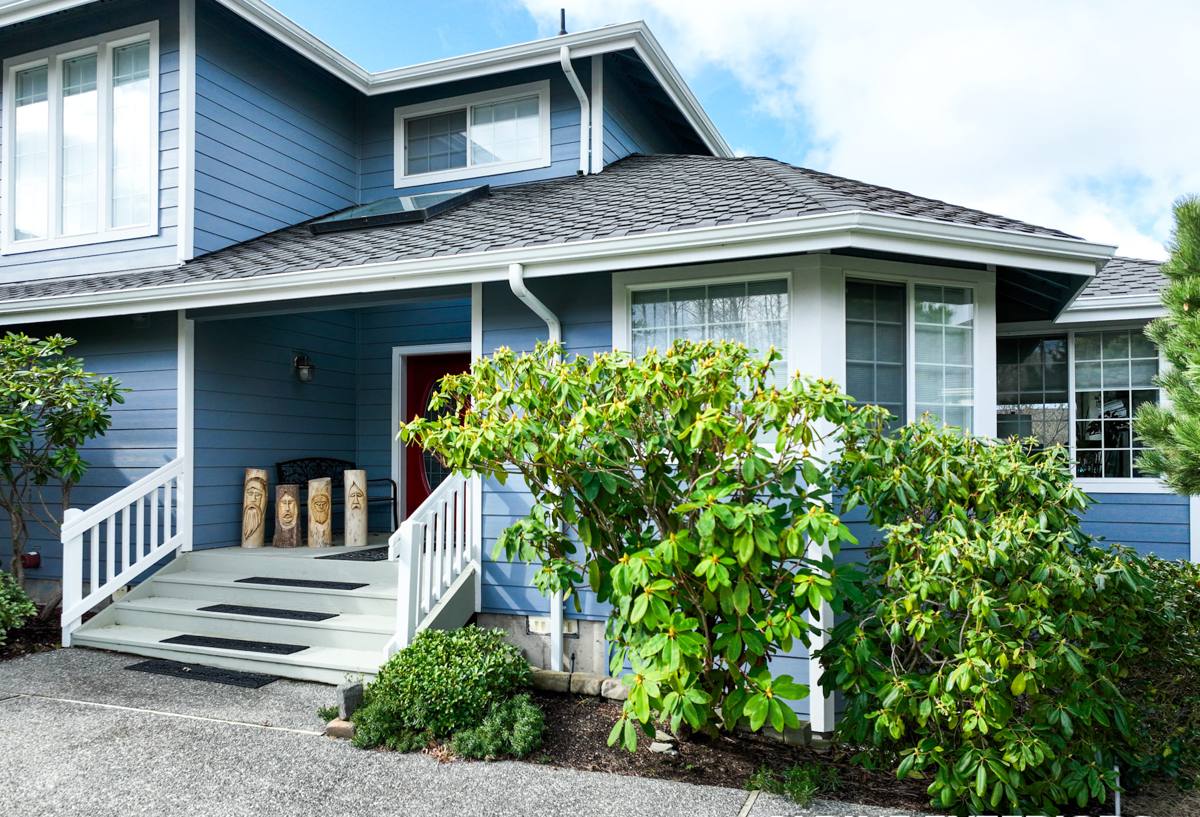
Board and batten is a vertical siding pattern: wide panels or boards run up the wall, and narrower strips (the "battens") are installed over the vertical joints between them. The result is a strong, linear look with visible shadow lines — it reads as modern farmhouse, craftsman, or clean contemporary depending on the trim details and paint color, which is part of why it's shown up so often on newer builds and remodels around West Seattle's residential streets.
The style itself isn't new — it goes back to old barn and cabin construction, where vertical boards shed water better than horizontal ones on a structure with no real weather barrier behind it. Modern homes have proper weather-resistive barriers, so the functional argument has changed, but the moisture logic behind board and batten hasn't disappeared. It still matters how those vertical joints and battens are built, because that's exactly where water finds a way in if the details are wrong.
Why the Look Is Popular in This Area
Board and batten pairs well with the mix of craftsman bungalows, newer infill construction, and remodeled homes you'll find throughout West Seattle. It's often used as an accent — on a gable, a porch surround, or a dormer — alongside standard lap siding on the rest of the house, though full-elevation board and batten homes are common too.
Why Board & Batten Is Riskier to Get Wrong Than Lap Siding
Horizontal lap siding is designed so each board overlaps the one below it, shedding water downward by gravity. Board and batten runs the opposite direction, so the water-shedding logic has to be built into the assembly rather than the orientation of the boards themselves. A few things make it less forgiving than lap siding if the installer cuts corners:
- More vertical seams per square foot of wall, and each one is a potential water entry point if it isn't backed and flashed correctly.
- Battens are fastened directly over a joint, which means fastener placement and spacing matter more — miss the framing or crowd a joint and you create a weak point.
- Without a drainage gap behind the panels, any moisture that does get past a seam has nowhere to go and no way to dry out, which is exactly the setup that leads to trapped moisture, paint failure, and rot in a climate as wet as King County's.
- Board and batten shows sloppy work more than lap siding does — uneven batten spacing or crooked reveals are obvious from the sidewalk, unlike small lap-siding inconsistencies that blend in.
None of this means board and batten is a bad choice for a West Seattle home. It means the installation details carry more weight than they do with a simpler siding style, which is exactly where an inexperienced crew gets into trouble.
The James Hardie System We Use for Board & Batten
We install James Hardie fiber cement exclusively, and for board and batten that typically means HardiePanel vertical siding as the field material with HardieTrim boards used as the battens, finished in a factory-applied ColorPlus coating. A few reasons this combination holds up in this climate specifically:
- Non-combustible, dimensionally stable material. Fiber cement doesn't expand and contract with moisture the way wood-based panels do, which matters at every batten joint.
- Engineered for the Pacific Northwest. James Hardie makes climate-specific HZ product formulations, and the HZ10 line used in this region is engineered around moisture exposure rather than a one-size-fits-all national spec.
- Factory-applied ColorPlus finish. The finish is baked on under controlled conditions rather than field-painted, which gives more consistent coverage at cut edges and holds color longer against UV and salt air than most job-site paint jobs.
- A real transferable warranty backing both the substrate and the finish, which matters more on a style with this many seams and joints.
What a Correct Board & Batten Installation Involves
Assessment Before Anything Goes Up
We start by checking the existing wall assembly — what's currently on the house, whether there's any hidden moisture damage, and what condition the sheathing is in. Skipping this step is how new siding ends up covering an existing problem instead of fixing it.
Drainage Plane and Rainscreen Gap
This is the detail that matters most for board and batten in a wet climate. A proper installation includes a weather-resistive barrier and a drainage gap behind the panels, so any moisture that reaches the back side of the siding has a path to drain and dry out instead of sitting against the wall. This is non-negotiable on a peninsula getting regular wind-driven rain.
Flashing and Joint Treatment
Every vertical joint, window, door, and penetration gets flashed to shed water outward rather than relying on caulk alone. Caulk is a maintenance item, not a waterproofing strategy — it degrades over time, and a wall that depends on it to stay dry is a wall that will eventually leak.
Fastening and Batten Layout
Battens are laid out and fastened into solid framing at the correct spacing per manufacturer specification, not just eyeballed for even reveals. Fastener spacing affects both the finished look and how the assembly handles the area's wind exposure over time.
Finishing Details
Trim, corners, and transitions to other siding materials get finished with attention to how water will actually move across the wall — not just how the seam looks from the street.
Board & Batten vs. Other Siding Approaches
Homeowners comparing siding styles and materials for a West Seattle project often ask how board and batten stacks up against a standard lap profile, and how fiber cement compares to other materials sold under the "board and batten" name.
| Option | Moisture Handling | Long-Term Maintenance | Fit for This Climate |
|---|---|---|---|
| James Hardie board & batten (HardiePanel + HardieTrim) | Strong, with proper rainscreen detailing | Low — factory finish, non-combustible substrate | Engineered for Pacific Northwest exposure |
| Standard Hardie lap siding | Very strong — horizontal overlap sheds water by design | Low | Excellent; the safer default where style is flexible |
| Vinyl "board and batten" panels | Prone to trapping moisture behind panels; seams rely on interlocking joints, not flashing | Low cost, but limited repair options and can warp/fade | Weaker in prolonged wind-driven rain |
| Wood or engineered-wood board and batten | Depends heavily on paint maintenance and joint sealing | High — repainting, caulk renewal, moisture inspection | Demanding in a long wet season |
We don't install the vinyl or wood-based options listed above — we're a Hardie-only crew — but the comparison is useful context for anyone weighing the style and material together before committing to a look for their home.
Maintenance to Expect
Board and batten in ColorPlus-finished fiber cement is genuinely low-maintenance compared to painted alternatives, but "low-maintenance" doesn't mean "no maintenance" in a climate that grows moss on nearly everything left alone long enough.
- Periodic gentle rinsing to keep moss and organic buildup from taking hold, especially on north-facing or shaded walls.
- Visual checks at trim, flashing, and any transitions after major wind or rain events.
- Prompt attention to any caulk lines that crack or separate — small, cheap fixes early prevent bigger repairs later.
- Avoiding pressure washing directly into seams and battens, which can force water past joints that were built to shed it, not absorb direct high-pressure spray.
Signs Your Current Siding Needs Attention
Whether you have existing board and batten or another siding style you're considering replacing with it, a few warning signs are worth acting on before they become structural issues:
- Soft or spongy spots when pressed gently, especially near the base of walls or under windows
- Visible gaps opening up at seams, battens, or trim joints
- Persistent moss or dark streaking that returns quickly after cleaning
- Peeling or bubbling paint, particularly on wood-based siding
- Warping, bowing, or panels that no longer sit flat against the wall
- Rising utility bills that suggest air and moisture are moving through the wall assembly
Why a Crew That Already Works West Seattle Matters
Siding installation isn't identical everywhere in King County. A crew that works this peninsula regularly already understands how exposed a given wall is likely to be relative to the water, how the moss season behaves on shaded versus sun-facing elevations, and how local wind patterns off the Sound affect where wind-driven rain actually lands on a house. That's the kind of judgment that shows up in small decisions — where to add extra flashing attention, which elevation needs the most rigorous joint detailing — long before it shows up as a problem five years later.
It also matters for the practical side of the job: knowing what King County permitting and inspection expect for exterior work, and having a crew that isn't learning the neighborhood's quirks on your project for the first time.
If you're considering board and batten siding for a home in West Seattle, we're happy to walk the property, look at what's there now, and talk through what a correct installation would involve for your specific walls and exposure. Reach out for a free, no-pressure estimate using the form below.