 King County
 Mercer Island's Siding Problem Isn't What Most Homeowners Think
Mercer Island sits in an unusual spot climate-wise. It's surrounded by Lake Washington, which moderates temperatures but also keeps humidity and moisture exposure high year-round. Add King County's long wet season, wind-driven rain off the water, and months of shaded, slow-drying north and east walls under mature tree canopy, and you get a siding environment that punishes anything that isn't dimensionally stable and moisture-resistant. Homeowners here often assume rot and paint failure are just "what happens" to a house eventually. On Mercer Island specifically, they happen faster than most people expect, and the cause is almost always the siding material, not bad luck.
We install James Hardie fiber cement siding exclusively — no LP SmartSide, no vinyl, no Cemplank, no Allura, no primed spruce or cedar. That's not a marketing position, it's a standard we hold because we've seen what the Pacific Northwest's specific mix of moisture, moss, and salt-tinged air does to less durable siding over a 10-15 year window. This page covers what Mercer Island homes specifically need from their siding, what a correct Hardie install looks like, and why local installation experience matters as much as the product itself.
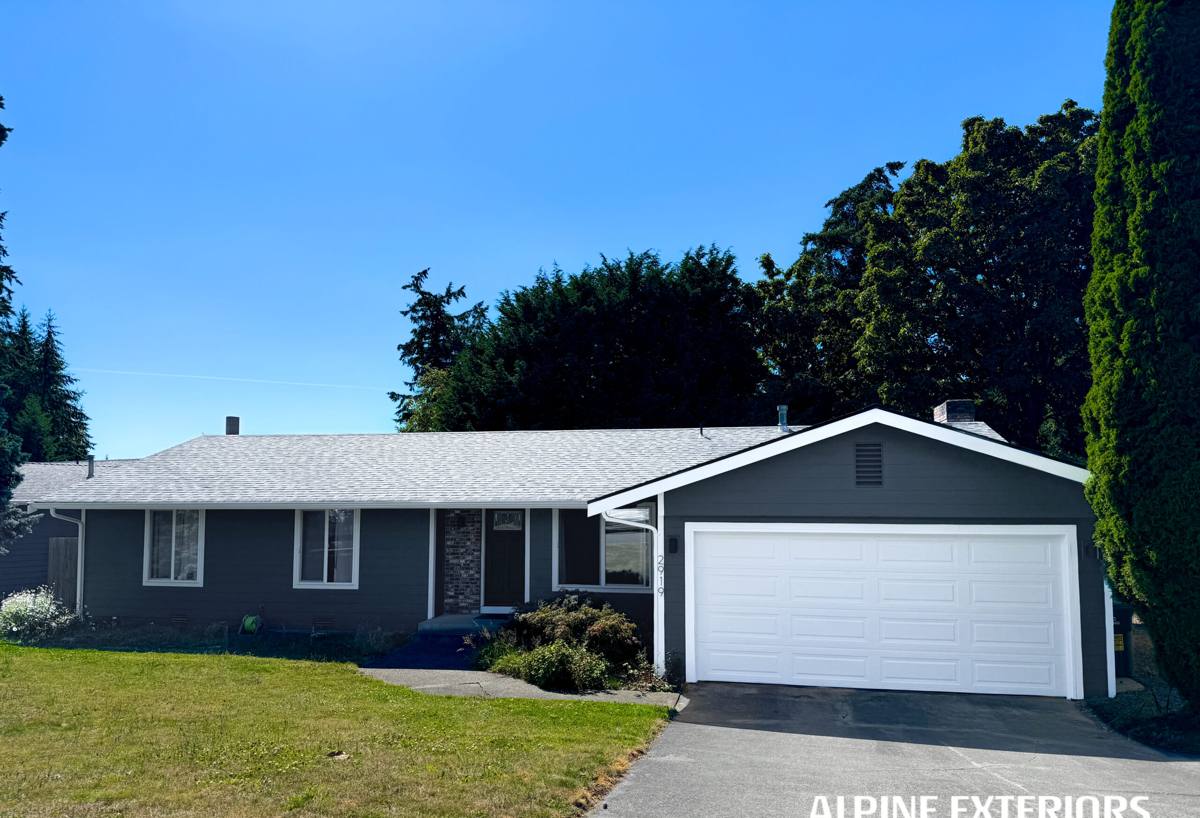
What Mercer Island's Climate Actually Does to Siding
Lake Moisture and Driving Rain
Lake Washington adds ambient humidity to the air around the island that inland King County neighborhoods don't deal with as consistently. Combined with wind-driven rain during fall and winter storms, siding on lake-facing and west-facing walls takes on more direct moisture load than siding on a comparable home a few miles inland. Any material that absorbs water, swells, or delaminates when wet is working against the site conditions from day one.
Salt Air Exposure
Mercer Island isn't coastal in the ocean sense, but its lake-adjacent, breezy microclimate exposes exterior materials — siding, fasteners, trim — to more airborne moisture and mild salt content than a fully inland site. Over years, that accelerates corrosion on lower-grade fasteners and speeds up finish breakdown on paint-grade products that weren't engineered for it.
Moss Season
King County's moss season runs long — often eight months or more of conditions damp and shaded enough for moss and algae to establish on north-facing walls, under eaves, and anywhere tree cover blocks sun and airflow. Mercer Island's tree canopy is dense in many neighborhoods, which extends shaded, slow-drying wall time even further. Moss holds moisture against the siding surface, and on materials that aren't moisture-resistant at the core, that sustained dampness is what starts rot from the outside in.
Why We Only Install James Hardie Here
James Hardie fiber cement is engineered from cement, sand, and cellulose fibers — it doesn't absorb and swell the way wood-based products do, and it doesn't degrade in UV and moisture the way vinyl does over time. For a site like Mercer Island, that matters in three specific ways:
- Dimensional stability: Fiber cement doesn't swell, warp, or cup when it takes on moisture from lake humidity or driving rain, so seams and paint lines stay tight for decades instead of opening up after a few wet seasons.
- Non-combustible core: James Hardie siding is non-combustible, which matters given King County's wildfire smoke and ember exposure during dry summer stretches, even on a lake-adjacent lot.
- ColorPlus factory finish: A baked-on, UV-cured finish holds color and resists the chalking and fading that field-applied paint shows first, especially on sun-exposed south and west walls.
We've made the call not to install LP SmartSide, vinyl, Cemplank, Allura, or primed wood siding. Each of those products has legitimate uses elsewhere, but for the moisture load, shade patterns, and salt-air exposure typical on Mercer Island, we don't think they hold up to the standard we want to put our name behind. Hardie's HZ5 product line in particular is engineered for exactly this kind of high-moisture, freeze-thaw-adjacent climate zone.
What Correct Installation Looks Like
James Hardie siding is only as good as the install behind it. The product is engineered to perform for decades, but manufacturer specs exist because installation mistakes are the most common cause of early failure — not the material itself. On a lake-adjacent site like Mercer Island, getting these details right matters more than usual.
Water Management Comes First
Before a single piece of siding goes up, the wall needs a correctly lapped weather-resistive barrier, properly flashed windows and doors, and drainage planes that let any moisture that gets behind the cladding find its way back out. On homes with heavy shade or lake-facing exposure, we pay particular attention to flashing details at window heads and any horizontal trim, since those are the spots where trapped moisture does the most damage over time.
Fastening and Clearances
James Hardie specifies exact fastener types, spacing, and penetration depth, and those specs change slightly depending on the product line and your local wind-exposure category. We also hold to Hardie's minimum clearances — siding held up off decks, patios, and grade — which is what keeps splash-back moisture and ground moisture from wicking into the bottom courses. Skipping clearance requirements is one of the most common corner-cutting mistakes we see on other contractors' work, and it's often invisible until moisture damage shows up years later.
Caulking, Painting, and Finish Details
Cut edges get sealed per manufacturer spec, joints get treated correctly, and touch-up paint gets matched to ColorPlus finishes rather than generic exterior paint. These are small line items that are easy to skip and hard to notice at final walkthrough, but they're exactly what separates a install that looks good for one summer from one that holds up through fifteen King County winters.
Pre-Install Checklist We Walk Through On Every Mercer Island Job
- Inspect and repair or replace any water-damaged sheathing before new siding goes up
- Confirm weather-resistive barrier is continuous and properly lapped
- Flash all windows, doors, and horizontal trim per current best practice
- Verify minimum ground, deck, and roof-line clearances per Hardie spec
- Select the correct HZ product line and fastener spec for the site's wind and moisture exposure
- Plan siding layout to minimize butt joints on the most weather-exposed walls
Choosing the Right Hardie Line and Look for Mercer Island Homes
Mercer Island has a mix of architectural styles — from traditional homes to more contemporary lakefront-influenced designs — and Hardie's product lines cover that range without forcing a compromise on durability.
| Product | Best For | Why It Fits Mercer Island |
|---|---|---|
| HardiePlank Lap Siding | Traditional and transitional homes | Classic profile, widely used across King County, holds ColorPlus finish well in high-humidity conditions |
| HardiePanel Vertical Siding | Contemporary and modern designs | Clean vertical lines popular in newer lake-area builds, pairs well with metal or wood accent trim |
| HardieShingle Siding | Craftsman and cottage-style homes | Textured, traditional look without the moisture absorption of real wood shingle |
| HardieTrim Boards | Window, door, and corner trim on any style | Matches durability of field siding so trim doesn't fail years before the walls do |
Cost Factors Specific to Mercer Island Jobs
Every home is different, but a few site factors tend to move the estimate more on Mercer Island than in a typical inland King County neighborhood:
| Factor | Why It Affects Cost |
|---|---|
| Existing siding removal and sheathing condition | Long-term moisture exposure sometimes means hidden sheathing repair once old siding comes off |
| Site access | Narrower lots, steep driveways, and lake-side setbacks common on the island can affect staging and material handling |
| Wall exposure and story height | Lake-facing and upper-story walls may call for additional flashing detail and fall-protection planning |
| Product line and profile selection | HardieShingle and custom trim details cost more in labor than straight lap siding runs |
| Tree canopy and shading | Heavy shade areas sometimes need extra prep work to address existing moss or moisture staining before install |
We give straight, itemized estimates so you know what's driving the number, not a flat per-square-foot figure that hides the details.
Why Hiring a Crew That Already Works Mercer Island Matters
Siding work on Mercer Island isn't identical to siding work in Renton or Kent, even though they're all King County. Lot access is often tighter, lake-adjacent sites can have different drainage and grading considerations, and the shade patterns from mature landscaping change which walls need the most attention during install. A crew that's worked the island before knows to check those things without being told, and knows which product lines and details hold up best against this specific mix of humidity, salt air, and moss pressure.
We're also a James Hardie-only contractor, which means every crew member is trained on one product system instead of juggling install specs across five different manufacturers. That specialization is what lets us catch the small details — fastener spacing, clearance, flashing laps — that are exactly the things that go wrong when a generalist crew treats fiber cement like any other siding material.
What to Expect From Our Process
- On-site inspection: We look at your current siding, sheathing condition, and site-specific exposure factors — sun, shade, lake-facing walls, tree canopy — before recommending anything.
- Written estimate: An itemized quote covering product line, prep work, and labor, with no vague allowances.
- Prep and water management: Any needed sheathing repair, barrier, and flashing work happens before the first piece of siding goes up.
- Installation to Hardie spec: Correct fastening, clearances, and joint treatment, with attention to the walls that take the most moisture load.
- Final walkthrough: We review the finished work with you and confirm caulking, trim, and touch-up details are complete.
If your Mercer Island home's siding is showing paint failure, moss buildup, soft spots, or just approaching the age where it's worth getting ahead of a problem, we're happy to take a look. Reach out for a free, no-pressure estimate using the form below.