 King County
 Siding Repair in Bellevue: Fixing the Cause, Not Just the Spot
Bellevue sits on the Eastside of King County along Lake Washington, close enough to Puget Sound's marine climate that homes here deal with the same basic exposure as much of the region: salt-tinged air moving in off the Sound, rain that comes in sideways during winter storm systems, and long stretches of mild, damp weather that keep exterior surfaces wet for days at a time. None of that is dramatic on any single day, but it adds up on a wall system year after year, and it's why siding repair in Bellevue is rarely as simple as patching the spot that looks bad. A crack, a soft board, or a stained seam is usually a symptom, and the real question is what's happening behind it.
We repair siding, and we also handle roofing, windows, and decks, because exterior problems rarely respect trade boundaries — a leak that shows up as damaged siding often started at a roof edge or a window flashing detail. On siding specifically, we install and repair James Hardie fiber cement exclusively. That's a professional standard we hold to because of what we consistently find when we open up a wall in a wet climate like King County's, not because of a supplier relationship or a sales angle.
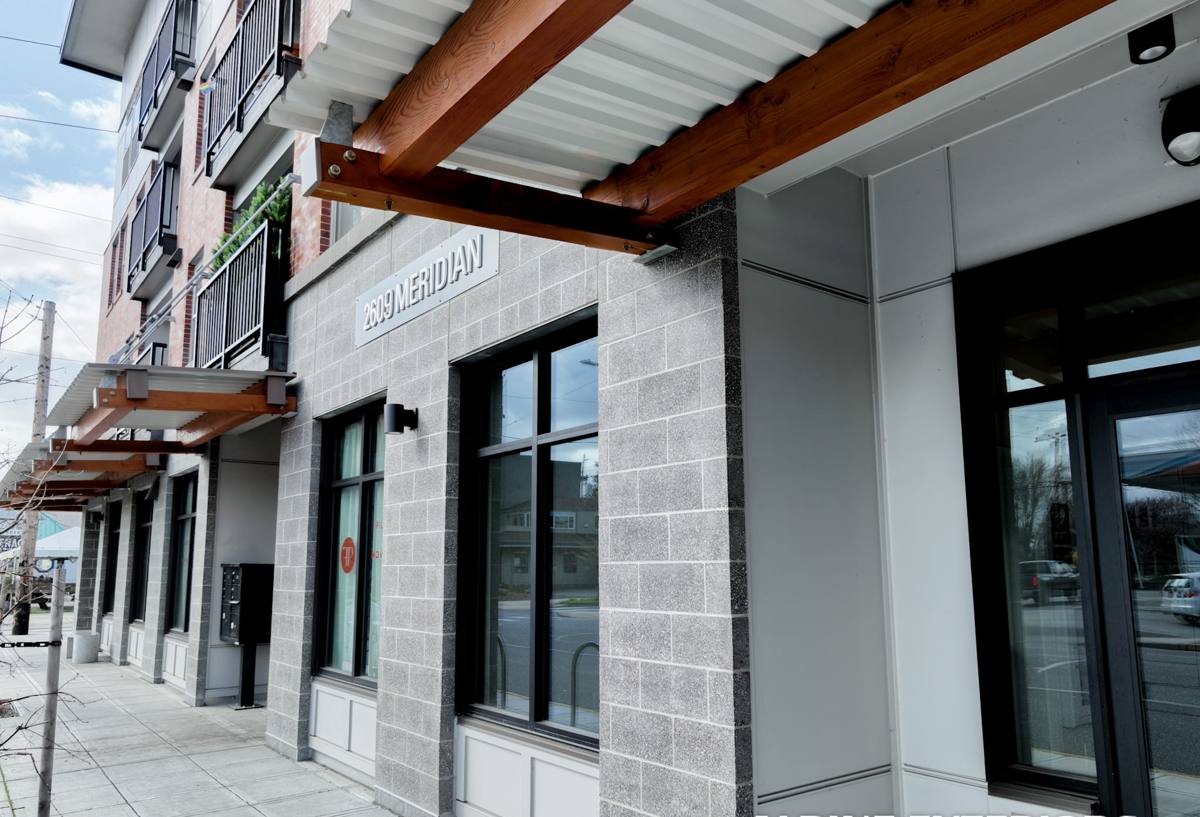
What Bellevue's Climate Does to Siding Over Time
Moisture That Doesn't Let Up
King County's wet season runs long, and Bellevue doesn't get a real dry-out period the way inland or drier climates do. Siding that has even a small gap, an open seam, or a failed caulk joint stays damp behind the surface for extended stretches, which is exactly the condition that turns a minor issue into rot, delamination, or mold growth on the sheathing behind the cladding.
Wind-Driven Rain
Winter storms moving through the Puget Sound region don't just drop rain straight down — wind pushes it into vertical joints, around window and door trim, and up under lap siding edges. That sideways-driven moisture finds the weak points in an installation that ordinary rainfall would never reach, which is why damage often shows up first at trim transitions and butt joints rather than in the middle of a wall.
A Long Moss and Mildew Season
Mild temperatures combined with near-constant moisture give moss, algae, and mildew a growing season that runs most of the year on shaded or north-facing walls. Beyond the cosmetic staining, sustained moss growth holds moisture directly against a wall surface, which shortens the life of paint, caulk, and any porous siding material underneath it.
Signs a Bellevue Home Needs Siding Repair
Some damage is obvious. Some of the more serious problems are quiet until they aren't. Worth checking for, especially before a wet winter sets in:
- Soft, spongy, or visibly warped boards, especially low on the wall or near grade
- Cracking, splitting, or gaps opening up at panel seams and butt joints
- Peeling paint, bubbling, or a chalky surface on siding that used to hold its finish
- Dark staining or a musty smell near a window, door, or roofline that suggests moisture is getting behind the cladding
- Visible moss or algae buildup that keeps returning even after cleaning
- Nail pops, loose panels, or fasteners that have worked their way out
- Any spot where a past repair or caulk patch has already failed once
What a Correct Siding Repair Actually Involves
Diagnosing the Cause, Not Just the Symptom
A repair that only replaces the damaged board without figuring out why it failed tends to fail again in the same spot within a few years. Before we touch a panel, we're looking at the flashing, the house wrap, the fastener pattern, and the drainage path behind the siding to understand what let moisture in, or what mechanical issue caused the damage, in the first place. Patching over an unresolved moisture source is a short-term fix that costs more in the long run.
Matching Material and Finish
On a Hardie system, a correct repair uses the same product line, profile, and — where the home has ColorPlus factory-finished siding — a matched color rather than a field-painted patch that will weather differently over time. Mismatched profiles or a slightly-off color are the easiest way to turn a repair into a visible eyesore on an otherwise good-looking wall.
Restoring the Water Management, Not Just the Surface
Any time siding comes off for a repair, it's a chance to check the rain screen gap, re-lap the house wrap correctly, and reseal flashing at the point of damage — details that are invisible once the new siding goes back on but make the difference between a repair that lasts and one that doesn't.
Using the Right Fasteners and Spacing
Hardie specifies fastener type, spacing, and placement for a reason, and a rushed repair is one of the more common places we see that spec ignored. Getting it right on a repair matters just as much as it does on a full installation.
Repair vs. Replacement: When Patching Isn't Enough
Not every damaged wall needs to come off entirely, but not every problem should be patched either. The honest answer depends on how much of the wall is affected and what's driving the damage.
| Situation | Repair Usually Makes Sense | Replacement Is Usually the Better Call |
|---|---|---|
| Extent of damage | Isolated to one or a few panels or a single wall section | Damage is spread across multiple walls or shows up in more than one repair cycle |
| Cause of damage | Impact damage or a single, identifiable, now-resolved moisture source | Widespread moisture intrusion behind the cladding or systemic flashing failure |
| Existing material | Existing Hardie siding in otherwise good condition | Aging or failing non-Hardie material (vinyl, LP SmartSide, cedar, primed wood) reaching the end of its practical life |
| Age of the siding | Newer installation with an isolated defect | Siding is decades old and repeated repairs are becoming the norm rather than the exception |
| Color match | Color and profile can be matched closely | Discontinued color or profile makes a seamless patch impossible |
We'll give a straight answer either way. If a repair genuinely solves the problem, that's what we recommend, because a smaller job done correctly is a better outcome for a homeowner than an oversold replacement.
Repairing Non-Hardie Siding on Existing Bellevue Homes
A lot of the homes we're called out to in Bellevue and greater King County weren't originally sided with James Hardie — vinyl, LP SmartSide, cedar, and primed wood are all common on older Eastside homes. We'll assess and repair what's there when a targeted fix is the right call, and we'll be straightforward about it when we can't get a clean color or profile match, or when the underlying material is nearing the point where repeated repairs stop making financial sense. We install James Hardie fiber cement exclusively for full siding replacement, for the reasons covered below, but that standard doesn't mean turning away a homeowner who has a legitimate repair need on a different material.
Why We Only Install James Hardie Fiber Cement
For full siding work, we install one system: James Hardie fiber cement. That standard comes from what we've seen over years of repair calls in wet, marine climates like King County's — which products hold up to sustained moisture and driving rain, and which ones show up on our repair schedule again and again.
- Non-combustible core: Fiber cement doesn't feed a fire the way wood-based siding products can, a factor both for safety and for insurance considerations.
- Factory-applied ColorPlus finish: Baked on under controlled factory conditions rather than brushed on in the field, holding color and finish longer against fading and moisture exposure — and giving us a real color-matching system when a repair is needed years later.
- Climate-engineered HZ product lines: Hardie's HZ5 formulation is built for regions with sustained moisture and freeze-thaw cycling, which describes King County's marine climate well.
- Dimensional stability: Fiber cement doesn't swell, cup, or warp the way engineered wood products can after repeated wet-weather exposure.
- Strong transferable warranty: Backed by one of the stronger warranty structures in the industry, provided the installation follows spec.
We won't install LP SmartSide, vinyl siding, Cemplank, Allura, primed spruce, or cedar for new siding work. Each has a place in the market, and plenty of homeowners are satisfied with them. But after years of repair calls tied to moisture damage, warping, and finish failure on those products in wet Pacific Northwest conditions, we made a professional decision to stand fully behind one system rather than offer something cheaper that quietly shifts maintenance risk onto the homeowner down the road.
Why a Local King County Crew Matters for a Repair Like This
A siding repair is only as good as the diagnosis behind it, and a crew that works Bellevue and the rest of King County regularly has a working sense of how this region's climate actually behaves on real homes — which walls stay wet longest through the winter, where wind-driven rain tends to find its way in, and how quickly moss takes hold on shaded siding here compared to drier parts of the state. That local pattern recognition is what separates a repair that actually solves the problem from one that looks fine for a season and fails again at the next damage point. It also means faster response and follow-up if anything about the repair needs a second look.
If you're seeing damage, staining, or soft spots on your Bellevue home's siding, we're glad to take a look and give you a straightforward opinion on what's actually going on and what it will take to fix it right — repair or replacement, whichever the situation calls for. Reach out using the form below to schedule a free, no-pressure estimate.