 King County
 Why Board & Batten Fits Woodinville Homes
Woodinville's mix of wooded acreage, wine-country farmhouses, and newer craftsman-style builds is a natural match for board and batten siding. The vertical lines and deep shadow reveals read as clean and modern on contemporary homes, while the same profile reads as classic farmhouse on a property with a barn, a horse pasture, or a vineyard view. It's one of the few siding profiles that works equally well as a full exterior or as an accent on gables, dormers, and entry features paired with horizontal lap siding elsewhere on the house.
But board and batten is also less forgiving than standard lap siding when it's installed wrong. The vertical battens create more seams, more fastener penetrations, and more opportunities for water to get trapped behind the cladding instead of shedding off it. On a lot with heavy tree cover — which describes a lot of Woodinville — that detail matters more than the style choice does.
The Climate Challenge: Moss, Moisture, and Tree Cover
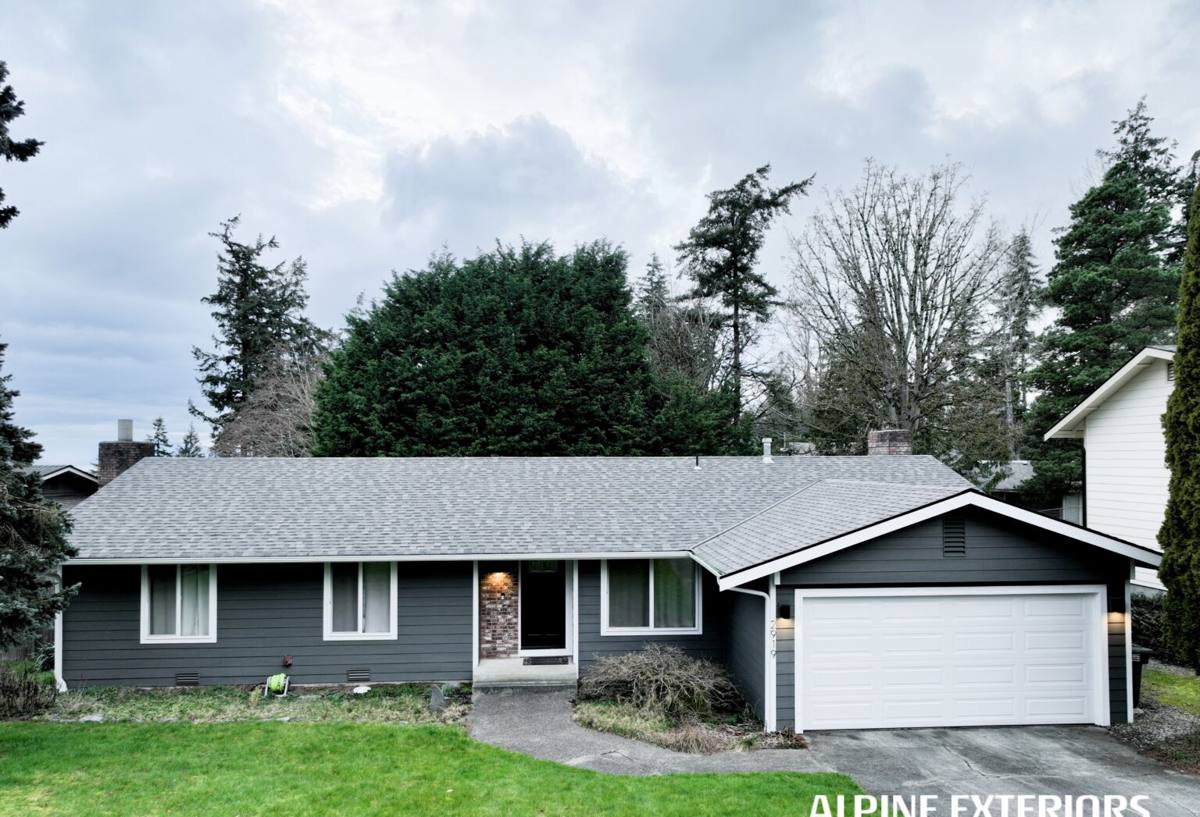
Woodinville sits inland in the Sammamish River valley, but it still gets the same wet, marine-influenced weather that moves across the rest of King County — long stretches of steady rain, short winter days, and humidity that doesn't burn off quickly under tree canopy. Add in the mature firs and maples that shade so many Woodinville lots, and you get siding that stays damp longer than it would on an open, sun-exposed property. That's the combination that grows moss and mildew fastest: shade, moisture, and organic debris (needles, leaves, pollen) collecting in siding joints and at the base of walls.
The broader marine air that reaches across King County also carries fine moisture and airborne debris that settles on exterior surfaces over a full wet season. None of this is unique to Woodinville, but it's a real factor for a property with dense tree cover and long stretches of shade on at least one elevation — which is most homes here.
Board and batten siding doesn't cause moss and mildew, but a poorly installed system gives moisture more places to sit: horizontal battens or panel joints without proper flashing, gaps without a drainage plane behind them, and caulk used as a substitute for real flashing instead of a supplement to it. A correctly installed system sheds water instead of holding it.
What Correct Board & Batten Installation Requires
Board and batten looks simple — vertical boards over vertical battens, or a single grooved panel that mimics the look — but the installation details determine whether it lasts 30+ years or starts failing in five. On a shaded, moisture-prone Woodinville lot, these details aren't optional:
- A drainage plane and rainscreen gap. Siding needs a gap behind it so any moisture that does get past the surface can drain and the wall can dry out, rather than sitting against the sheathing.
- Correct fastener placement. Battens and panels need to be fastened into framing at the manufacturer's specified spacing — not just wherever is convenient — or the siding can work loose over time with wind and temperature swings.
- Proper flashing at every horizontal transition. Window heads, roof-to-wall intersections, and any horizontal trim need metal flashing, not just caulk, to direct water out and away from the wall assembly.
- Sealed, not just caulked, joints. Butt joints and panel seams need to be treated per the manufacturer's install guide — caulk alone breaks down and fails years before the siding does.
- Ground clearance. Siding installed too close to grade, planting beds, or hardscaping stays damp and invites rot and moss growth at the base of the wall — a common problem on tree-shaded, landscaped Woodinville lots.
Skip any one of these and the siding might look fine for a season or two before problems show up — usually as staining, soft spots, or moss colonies exactly where water has been sitting unnoticed.
James Hardie Board & Batten: The System We Install
King County Exterior installs James Hardie fiber cement exclusively — we don't install LP SmartSide, vinyl, Cemplank, Allura, primed spruce, or cedar board and batten, and we're upfront about why. For a board and batten profile specifically, the material choice matters even more than usual, because this profile has more seams and more exposed edges than lap siding.
Hardie's fiber cement is non-combustible, doesn't swell or delaminate at cut edges the way wood-based products can, and holds a factory-applied ColorPlus finish that's baked on rather than field-painted — which matters a great deal on a profile with lots of visible board edges and reveals. Hardie's HZ5 product line is engineered for the wet, humid Pacific Northwest climate specifically, which is the version we install throughout King County, including Woodinville.
For board and batten, Hardie offers a few approaches depending on the look a homeowner wants:
- True board and batten: HardiePanel vertical siding with separate battens installed over the panel seams, giving the deepest, most traditional shadow lines.
- Artisan V-Groove panel: A single engineered panel with a routed groove that mimics the board and batten look with fewer field seams — a good option where minimizing joints is a priority.
- Accent applications: Board and batten on gables or entry features paired with HardiePlank lap siding on the main walls, a common combination on Woodinville craftsman and farmhouse-style homes.
Every one of these carries Hardie's manufacturer warranty when installed to their published specifications — which is the installation standard we follow on every job, not a baseline we work up from.
Board & Batten Material Comparison
| Material | Moisture behavior | Finish | Fire resistance | Long-term maintenance |
|---|---|---|---|---|
| James Hardie fiber cement | Doesn't absorb and swell like wood; engineered for wet climates | Factory ColorPlus finish, baked on | Non-combustible | Occasional wash; repaint only if desired, decades out |
| Cedar | Absorbs moisture, prone to cupping and rot without diligent upkeep | Field-applied stain or paint | Combustible | Refinish every few years; more with heavy tree shade |
| Primed spruce/wood composite | Vulnerable at cut edges and joints if seal breaks down | Field-applied paint | Combustible | Regular repainting and edge sealing |
| Vinyl board and batten | Doesn't rot, but traps moisture behind it if installed without ventilation | Molded-in color, fades over time | Combustible, can warp near heat sources | Low, but panels can crack or fade unevenly |
This isn't a claim that every alternative fails — it's why, after weighing moisture behavior, fire resistance, and how a factory finish holds up on a seam-heavy profile like board and batten, we standardized on one material and install it correctly every time instead of offering several products at different quality levels.
Our Installation Process
- On-site assessment. We look at sun exposure, tree cover, existing moisture damage, and how water currently moves off the roof and walls before we plan the job.
- Sheathing and moisture check. Old siding comes off and we inspect the wall assembly underneath for rot or existing moisture problems before anything new goes on — covering a damaged wall with new siding just hides the problem.
- Weather-resistive barrier and rainscreen. We install a proper drainage plane so the wall can dry out even if some moisture gets behind the cladding.
- Flashing first. Windows, doors, and horizontal transitions get flashed correctly before siding goes up around them.
- Hardie installation to spec. Panels and battens go up per James Hardie's fastening, spacing, and clearance requirements — not shortcuts.
- Final detailing and walkthrough. Caulking, touch-up, and a walkthrough so the homeowner understands what was done and what maintenance, if any, to expect.
Maintenance Checklist for Board & Batten Siding
- Rinse siding annually, more often on shaded elevations where moss and mildew build up faster
- Keep gutters clear so water isn't overflowing directly onto siding or pooling at the base of walls
- Trim back branches and shrubs that keep siding shaded and damp longer than the rest of the house
- Check caulking at trim and joints yearly and have any cracked sections resealed before winter rains
- Watch for staining or soft spots near ground level, which usually means water is sitting there longer than it should
Why a Local King County Crew Matters
Board and batten installed by a crew that hasn't worked in the Pacific Northwest before is one of the more common sources of the moisture problems described above — not because the product is complicated, but because the wet-climate details (drainage planes, flashing sequencing, ground clearance) are easy to skip on a dry-climate install schedule and hard to notice until a wet season later. A crew that installs Hardie board and batten throughout King County, including tree-covered, moisture-prone lots like the ones common around Woodinville, treats those details as standard practice rather than an upsell.
We also stand behind the workmanship on top of the manufacturer's material warranty, which matters most on a profile with more seams and more places for a poor install to go wrong.
If you're weighing board and batten siding for a Woodinville home, we're happy to take a look and walk through what your property specifically needs — no pressure, no obligation. Use the form below to request a free estimate.