 King County
 Why Woodinville Decks Wear Out Faster Than Homeowners Expect
Woodinville sits inland in the Sammamish Valley, but "inland" doesn't mean dry. Between the tree canopy that shades so many King County lots and the long stretch of wet months typical of this part of Washington, decks here rarely fail because of one big storm. They fail slowly, from moisture that never fully leaves. Mature firs and maples that make a Woodinville backyard pleasant in July also mean less direct sun on the deck boards the rest of the year — needles and leaf litter collect in the gaps, rain soaks in, and the surface underneath stays damp far longer than it would in an open, sunny yard.
That combination — shade, moisture, and organic debris — is exactly what moss and rot need. Add a King County winter of driving rain and you get a deck that looks fine on top while the framing underneath quietly deteriorates. By the time boards feel soft or spongy, the damage has usually been building for years.
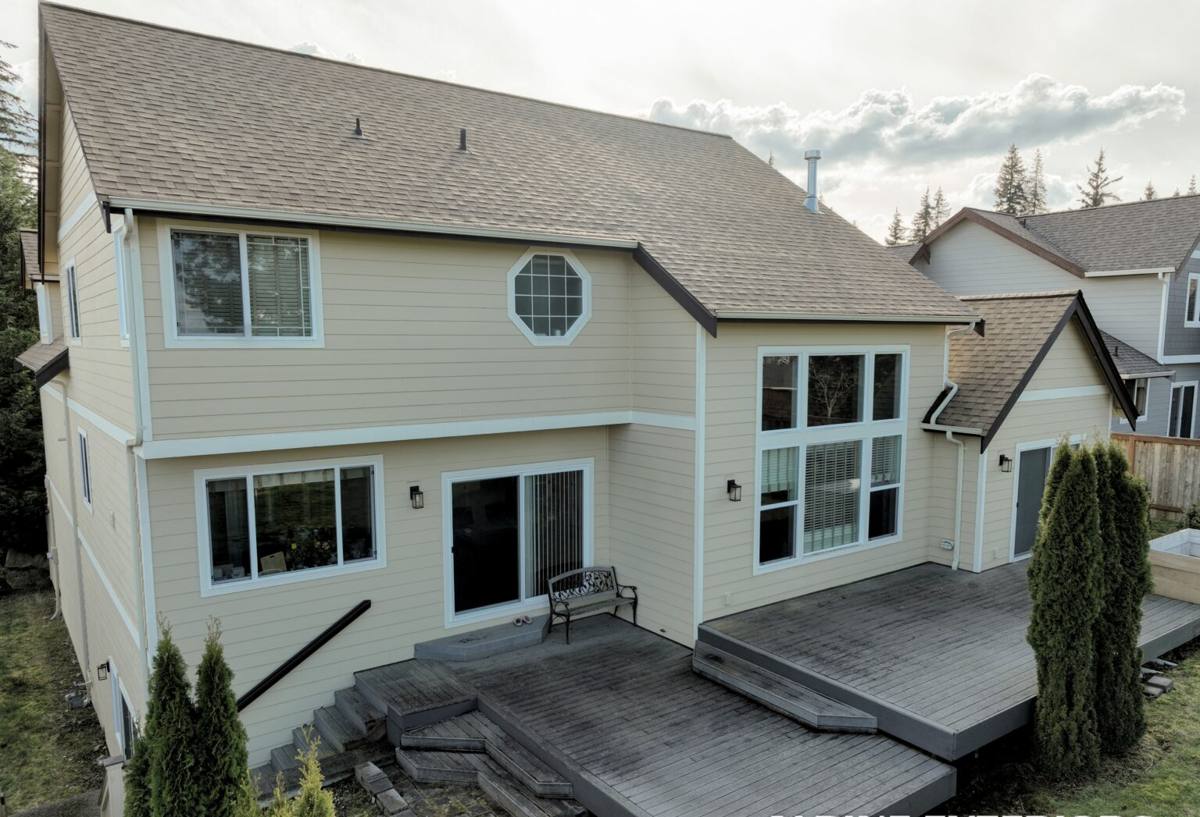
Signs Your Deck Needs Replacement, Not Just Repair
Not every tired-looking deck needs a full teardown. But there's a point where patching individual boards is just delaying an inevitable, more expensive job — or masking a safety issue. Watch for:
- Boards that feel soft, spongy, or flex noticeably underfoot
- Gaps opening up where the deck meets the house (ledger board separation)
- Rust streaks bleeding from fastener heads, a sign the wood around them is staying wet
- Visible moss or algae that keeps coming back within weeks of cleaning
- Noticeable bounce or movement when a group of people walks across it
- Railings or stair stringers that feel loose even after tightening hardware
- A structure older than 15–20 years that has never had the framing inspected
If you're seeing two or more of these, it's worth having someone pull a few boards and look at the joists before deciding between repair and replacement.
What a Correct Deck Replacement Actually Involves
A deck replacement isn't just new boards on old framing. Done right, it starts underneath the surface most homeowners never look at:
- Footings checked for settling, heaving, or cracking, and replaced if they no longer meet current load requirements
- Framing — joists and beams sized and spaced correctly for the decking material going on top, since composite and wood have different span requirements
- Hardware — structural screws and joist hangers rated for exterior or ground-contact use, not general-purpose fasteners that corrode and lose strength over time
- Drainage — grading and slope that move water away from the house rather than pooling under the deck
Ledger Board Flashing — the Detail Most Deck Failures Trace Back To
If there's one point in a deck replacement that determines whether the structure lasts or rots from the inside out, it's the ledger board — the piece that attaches the deck to the house. Water that gets behind an improperly flashed ledger doesn't evaporate; it sits against the house's rim joist and framing, out of sight, for months at a time. In a climate like King County's, that's often the actual cause of a "surprise" structural failure years later.
A correct installation separates the ledger from the siding, uses proper flashing (and flashing tape or membrane where it meets the house), and directs water down and away rather than letting it wick inward. It's not a glamorous part of the job, but it's the part we won't shortcut, because it's the difference between a deck that lasts and one that quietly fails behind the scenes.
Decking Material Options for This Climate
There's no single "best" decking material — there's the right material for how you use the deck, how much shade it sits in, and how much upkeep you're willing to do. Here's how the common options compare for a shaded, rain-heavy King County lot:
| Material | Moisture Behavior | Maintenance | Moss/Algae Resistance |
|---|---|---|---|
| Pressure-treated lumber | Absorbs and releases moisture readily; needs to dry out between rains | Annual cleaning, periodic sealing or staining | Low in shaded spots without upkeep |
| Cedar | Naturally more rot-resistant than PT pine, but still a real wood that moves with moisture | Regular cleaning, sealing every 1–2 years to hold its look | Moderate; still grows moss if left damp and unmaintained |
| Capped composite | Doesn't absorb water the way wood does; core is protected by a plastic cap | Occasional washing, no staining or sealing | Higher, though moss can still grow on a dirty, shaded surface if never cleaned |
We install all three depending on the homeowner's budget and priorities. What we won't do is put wood-grain composite over framing that wasn't built to the manufacturer's span and ventilation specs — that's how a good material still fails early, and it's a shortcut we treat as a professional standard we don't compromise on, not a sales pitch against any particular product.
Our Woodinville Deck Replacement Process
- On-site assessment — we look at the existing deck, pull a board or two if needed, and check the framing and footings before quoting anything
- Permit check — we confirm what's required for your specific project and jurisdiction before work starts, not after
- Demo and haul-away — full removal of the old structure down to whatever framing is actually salvageable, which is often less than homeowners expect
- Framing and footings — repaired or replaced to current code, with ledger flashing done properly the first time
- Decking, railing, and stairs — installed to the manufacturer's spec for your chosen material, with attention to fastener spacing and board gapping for drainage
- Final walkthrough — we go over the finished deck with you and explain what maintenance, if any, it needs going forward
Permits and Code Requirements
Most deck replacements that involve new framing, footings, or a structure attached to the house require a permit — whether that falls under City of Woodinville review or King County jurisdiction depends on your specific address, and we confirm that before pulling anything apart. Beyond permitting, current code sets real requirements for guardrail height, baluster spacing (a 4-inch sphere shouldn't be able to pass through), and stair stringer construction. These aren't bureaucratic hoops — they're the same rules that keep a deck safe under a full load of people, and skipping them is one of the more common corners cut by unpermitted repair work.
What Affects the Cost of a Deck Replacement
We don't publish flat prices because two decks that look similar from the street can require very different scopes of work once the framing is opened up. The honest cost drivers are:
| Factor | Why It Matters |
|---|---|
| Size and layout | More square footage and multiple levels or stair runs add material and labor |
| Condition of existing framing | Hidden rot found during demo can mean more replacement than originally scoped |
| Material choice | Pressure-treated, cedar, and composite carry different material costs and install labor |
| Height and stairs | Taller decks and longer stair runs mean more structural work and railing |
| Railing style | Cable, glass, or custom railing systems cost more than standard baluster rail |
| Permitting and engineering | Some jurisdictions or unusual spans require engineered drawings before a permit is issued |
We walk every deck in person before giving a number, because a phone estimate on a structural project usually means someone is guessing.
Caring for a New Deck in a Wet, Shaded Climate
A properly built deck should need very little from you — but a little seasonal attention goes a long way toward getting the full lifespan out of it, especially under tree cover:
- Sweep leaves and needles out of board gaps regularly rather than letting them mat down and hold moisture
- Keep gutters above the deck clear so runoff doesn't dump directly onto it
- Trim back overhanging branches where practical to let in more light and airflow
- Rinse off moss or algae as soon as you notice it, before it has a chance to establish
- If you chose wood decking, reseal or stain on the schedule the product calls for — don't wait until it looks worn
- Use risers or feet under planters and furniture so water can't pool underneath them on the boards
- Do a quick check of railings and stair connections once a year
Why a Local Woodinville Crew Matters
A deck replacement is a structural project attached to your house, not a weekend cosmetic upgrade — the crew you hire should be someone you can call two years later if a question comes up. Working around Woodinville and King County regularly means we already understand the kind of lots common here: sloped yards, mature tree cover, and the permitting process for the jurisdictions in this area. That familiarity shows up in fewer surprises during the job and a more accurate estimate up front, because we're not learning the local conditions and requirements on your project.
If your deck is showing its age, or you just want an honest second opinion on repair versus replacement, we're glad to take a look. Use the form below to request a free, no-pressure estimate — we'll walk the deck, tell you what we actually see, and give you a real number before any work begins.