 King County
 Why Ballard's Marine Climate Is Hard on Siding
Ballard sits close to Puget Sound and Salmon Bay, and that proximity to open water shapes everything about how exterior materials hold up here. Homes in this part of King County deal with a combination most siding products were never designed for: salt-laden air blowing in off the water, long stretches of driving rain, and a shady, damp growing season that gives moss and mildew months to take hold on north- and west-facing walls. Any one of these on its own is manageable. Together, over years, they expose weak points in cheap materials and sloppy installations fast.
Salt Air and Corrosion
Salt air doesn't just affect boats and dock hardware. It accelerates corrosion on exposed fasteners, trim flashing, and any metal components integrated into a siding system. Siding materials that rely on face-nailing with exposed fastener heads, or trim packages with lower-grade hardware, show rust streaking and fastener failure sooner in a neighborhood like Ballard than they would twenty miles inland.
Moss, Mildew, and Shade
Mature trees and tight lot spacing are common in Ballard's older residential blocks, and that shade keeps siding surfaces damp longer after a rain. Combined with our mild, wet winters, that's ideal growing conditions for moss and mildew on any surface that stays wet or has a porous, absorbent face. Wood-based products are especially vulnerable because the organic material itself is a food source for the fungus and moss taking hold.
Driving Rain and Wind-Driven Moisture
Storms coming off the Sound often bring rain sideways, not straight down. That means siding isn't just shedding water off a flat wall — it's fighting moisture that gets pushed up under laps, into seams, and behind trim if the installation doesn't account for it. A siding system's real performance in a place like Ballard comes down to what happens behind the surface, not just what the material is made of.
Why Fiber Cement Is the Right Call for This Climate
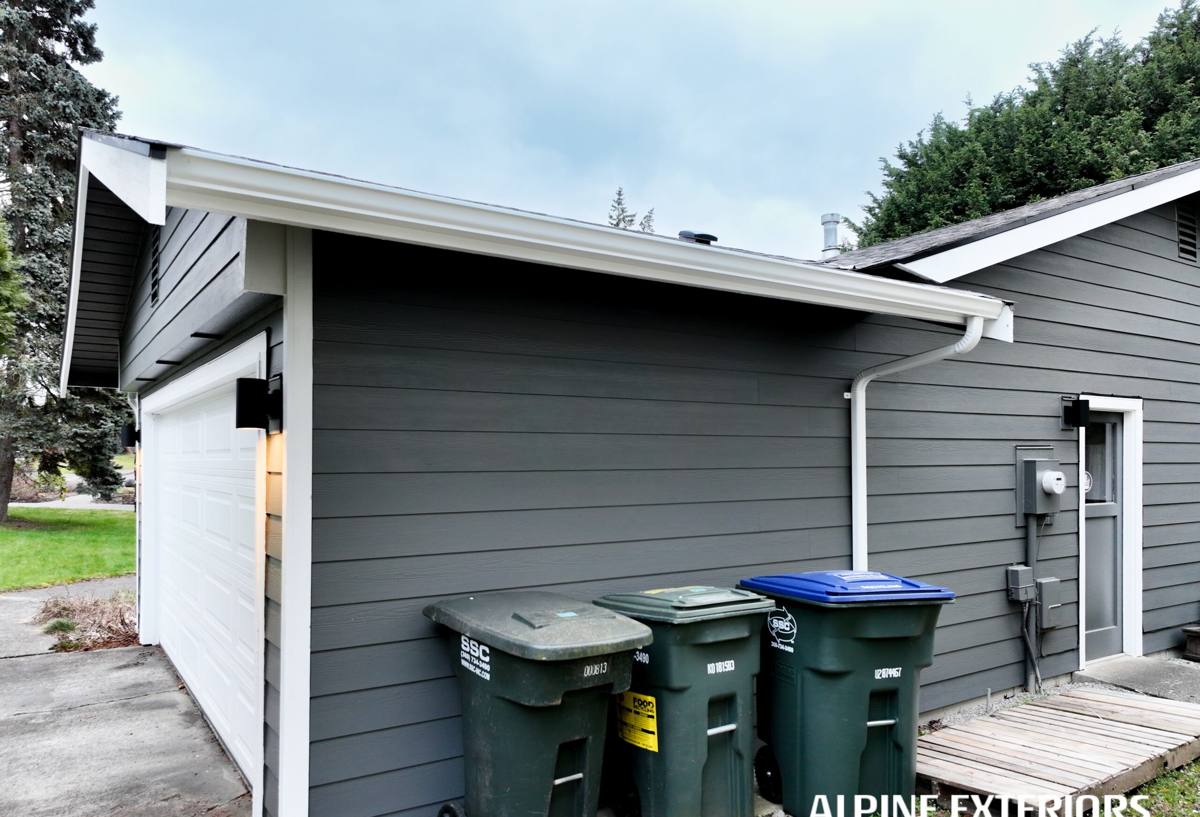
Fiber cement siding is a mix of cement, sand, and cellulose fibers, and once it's cured, it doesn't absorb and swell the way wood does, and it doesn't soften, warp, or become brittle from cold and UV the way vinyl can. It's also non-combustible, which matters increasingly to insurers and to homeowners thinking about wildfire smoke and ember exposure during our drier summer stretches. For a neighborhood dealing with salt air, sustained rain, and shade-driven moss growth all at once, a dimensionally stable, moisture-resistant, factory-finished material solves more problems than it creates — which is not something we can say about every siding option on the market.
We install James Hardie fiber cement exclusively. We don't install LP SmartSide, vinyl, Cemplank, Allura, or bare wood siding, and we're upfront about why: those products each ask a homeowner to accept a trade-off — more frequent painting, more caulk maintenance, more vulnerability to moisture intrusion, or a shorter realistic service life — that we don't think makes sense for homes exposed to Ballard's specific mix of salt air and rain. Hardie's HZ5 product line is engineered specifically for climates like ours, with a moisture and freeze-thaw profile suited to the Pacific Northwest.
What a Correct Fiber Cement Installation Actually Involves
The material is only half the equation. Fiber cement siding fails prematurely almost exclusively because of installation mistakes, not because the product itself gave out. In a climate like Ballard's, the margin for error is smaller than it would be somewhere dry.
Moisture Management Behind the Siding
Correct installation starts with a drainable water-resistive barrier and a rainscreen gap behind the siding, so that any water that does get past the surface has a way to drain and the wall can dry out between storms. This is the single biggest factor in whether siding lasts decades or needs early repair, and it's invisible once the job is done — which is exactly why it matters who's doing the work.
Fastening and Clearances
Hardie's own installation specifications call for specific nail or screw patterns, minimum clearances from grade, roof lines, decks, and other siding-to-trim intersections, and correct blind- or face-nailing depending on the product. Skipping clearances is one of the most common corner-cutting mistakes we see on older installs — siding run too close to grade or a deck surface wicks up moisture and starts failing years before it should, especially with the rain volumes we get.
Caulking, Flashing, and Trim
Every window, door, and penetration needs proper flashing integrated with the water-resistive barrier — caulk alone is not a substitute for flashing, it's a secondary seal. Corrosion-resistant trim hardware matters here specifically because of the salt air; standard fasteners can start showing rust bleed on light-colored trim within a few years near the water.
Choosing the Right Hardie Line and Finish for a Ballard Home
Most Ballard homes fall into a lap-siding or panel-siding approach depending on the architectural style, with trim and soffit details finished to match. The table below covers the main choices we walk homeowners through.
| Product | Best Fit | What It Offers |
|---|---|---|
| HardiePlank Lap Siding | Traditional and craftsman-style homes | Classic horizontal lap look, wide color and texture range, the most common choice in this area |
| HardiePanel Vertical Siding | Modern builds, accent walls, gable ends | Clean vertical lines, often paired with lap siding for a mixed-material look |
| HardieTrim | Window and door surrounds, corners, fascia | Matches the siding's durability so trim doesn't become the weak point |
| ColorPlus Factory Finish | Any home wanting long-term color performance | Baked-on finish that resists fading and chipping better than field-applied paint, backed by its own finish warranty |
We steer most clients toward ColorPlus over field-painted Hardie whenever the budget allows, specifically because of the moisture and UV cycle we get here — factory-cured finishes hold up to repeated wetting and drying far better than paint applied on site.
How Our Process Works
We start with an on-site inspection of the existing siding, sheathing, and any moisture damage already present, since that changes the scope of the job. From there:
- Walk the exterior with the homeowner to assess current siding condition, trim, and any problem areas (window flashing, deck ledger connections, grade clearance)
- Provide a written estimate covering material selection, prep work, and any sheathing repair if damage is found
- Remove old siding and inspect/repair the wall assembly before anything new goes up
- Install water-resistive barrier and rainscreen system correctly, per Hardie spec, before a single piece of siding is hung
- Install Hardie siding, trim, and flashing to manufacturer specifications
- Final walkthrough with the homeowner before we consider the job done
Cost Factors for Fiber Cement Siding in Ballard
We don't quote a number without seeing the house, but the factors that move the price up or down are consistent across jobs in this area.
| Factor | Impact |
|---|---|
| Existing wall condition | Rot or moisture damage found during tear-off adds sheathing repair before new siding goes up |
| Home size and complexity | Multiple gables, dormers, and trim details add labor time beyond simple square footage |
| Lap vs. panel vs. mixed materials | Combining lap siding with panel accents or shingle-style detailing adds cutting and fitting time |
| ColorPlus vs. field-painted | Factory finish costs more up front but removes a repaint cycle from the home's maintenance schedule |
| Access and lot constraints | Tight Ballard lot lines, fencing, and limited staging space can affect labor and equipment setup |
What Maintenance Looks Like Once It's Installed
Fiber cement doesn't need the upkeep that wood siding does, but "low maintenance" isn't "no maintenance," especially with the moss and mildew pressure a shaded, damp climate like ours puts on any exterior surface. A short annual routine keeps a Hardie installation performing the way it's supposed to for decades.
- Rinse the siding once or twice a year with a garden hose to clear salt residue and organic buildup, especially on walls facing the water or under tree cover
- Keep gutters clear so overflow isn't running down the siding face during heavy storms
- Trim back vegetation and tree limbs that keep a wall section shaded and damp longer than the rest of the house
- Check caulking at window and door trim every year or two and have gaps resealed before they become a moisture entry point
- Look at ground-level clearance periodically, especially where mulch, soil, or landscaping has crept up over time
Why It Matters Who's Doing the Work
Fiber cement siding installed to spec and fiber cement siding installed without a rainscreen, correct clearances, or proper flashing can look identical the day the crew leaves — the difference only shows up years later, usually as a repair bill. A crew that already works Ballard regularly has already dealt with this specific combination of salt exposure, shade-driven moss, and wind-driven rain, and builds the wall assembly with that in mind from the start rather than treating it as a generic siding job. That local familiarity is worth more than it sounds like on paper, because the mistakes that cause early failure here aren't the same ones that cause problems in a drier part of the state.
If you're weighing a siding replacement or new construction project in Ballard, we're happy to walk the exterior with you and put together a straightforward, no-pressure estimate — just fill out the form below to get started.