 King County
 Why Ballard Homes Wear Out Siding Faster Than You'd Expect
Ballard sits close to Puget Sound and Shilshole Bay, which means homes here take on a steady diet of salt-laden marine air on top of everything else the Pacific Northwest throws at a house. That combination is harder on exterior siding than most homeowners realize. Salt air accelerates the breakdown of paint films and metal fasteners. Driving rain, especially the sideways kind that comes in off the water during winter storms, finds every gap, seam, and hairline crack in a siding system and pushes water behind it. And King County's long, wet, low-light stretches from fall through spring create ideal conditions for moss and algae to take hold on north-facing walls and anywhere siding stays damp for days at a time.
None of this is dramatic on its own. It's cumulative. A siding product that's marginal in a drier climate can fail years ahead of schedule in a neighborhood like Ballard, where wind off the water, persistent moisture, and salt exposure are working on it every single day of the year.
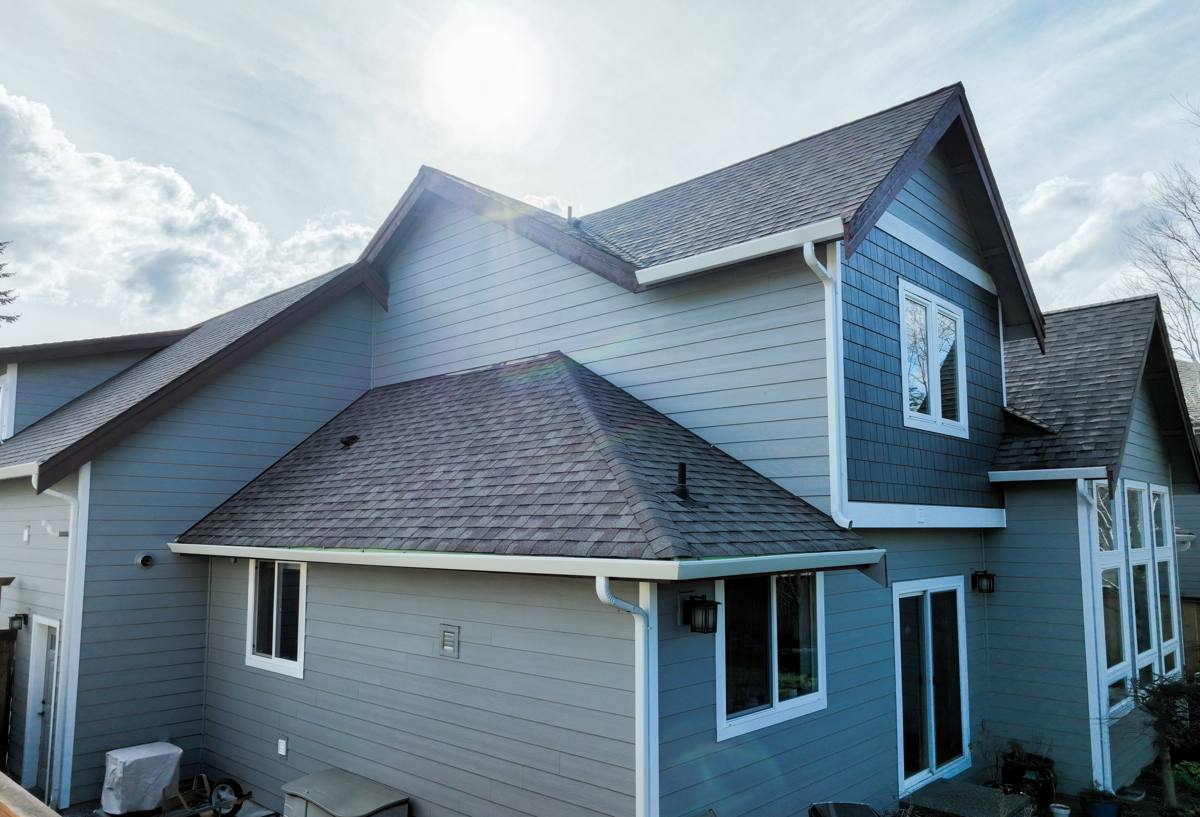
What Ballard's Climate Actually Does to Siding
Salt Air and Corrosion
Airborne salt doesn't just affect homes right on the waterfront. It travels on wind and settles on exterior surfaces throughout Ballard and nearby shoreline-adjacent neighborhoods. Over time it corrodes exposed fasteners, pits and dulls painted finishes, and can accelerate the breakdown of caulking and sealants at joints and trim lines. Siding that isn't engineered to resist this kind of exposure tends to show premature fading, chalking, and fastener staining.
Driving Rain and Wind-Driven Moisture
Ballard gets plenty of straightforward rainfall, but the bigger threat to siding is wind-driven rain during winter storms rolling in off the Sound. That kind of rain doesn't just fall on a wall — it's pushed sideways into seams, laps, and penetrations. If a siding system, the water-resistive barrier behind it, or the flashing details around windows and doors aren't installed correctly, that moisture gets behind the cladding and into the wall assembly, where it can sit for months before anyone notices a problem.
Moss, Algae, and Prolonged Dampness
King County's overcast, drizzly stretches mean many exterior walls — especially those shaded by mature trees or facing north — stay damp for extended periods. That's exactly the environment moss and algae need to establish themselves. On siding that absorbs moisture or has a finish that doesn't resist organic growth, you'll see green and black staining creep in within a few years, along with the moisture retention that comes with it.
Signs Your Ballard Home's Siding Needs Replacing, Not Just Repairing
- Persistent moss or algae staining that returns quickly after cleaning
- Soft, spongy, or crumbling spots when you press on the siding, especially near the bottom courses or under windows
- Paint that's peeling, bubbling, or failing well ahead of its expected repaint cycle
- Visible warping, buckling, or gaps opening up between boards or panels
- Rust streaks running down from fasteners or trim
- A musty smell or visible staining on interior walls that share an exterior wall with problem siding
- Siding that's original to an older Ballard home and has never been fully replaced
A lot of Ballard's housing stock includes older bungalows, Craftsman-style homes, and mid-century houses where the original siding — or a prior replacement — is decades old. If any of the signs above sound familiar, it's worth having the siding and the wall assembly behind it evaluated before deciding whether repair is realistic or replacement is the smarter long-term move.
Why We Install Only James Hardie Fiber Cement
We don't install vinyl siding, LP SmartSide, Cemplank, Allura, or unprimed wood siding like cedar or spruce. That's not a marketing angle — it's a standard we hold because of what we see happen to those products in exactly this kind of climate over time.
Vinyl siding can warp and become brittle with age, its seams and J-channels give wind-driven rain an easy path behind the cladding, and it isn't fire-resistant. Engineered wood products like LP SmartSide perform reasonably well when installation and maintenance are perfect, but they rely on an intact factory treatment and careful field sealing at every cut edge — miss one detail in a wet climate like this and moisture-driven damage can follow. Other fiber cement brands compete on price but don't offer the same factory-applied finish warranty or the region-specific engineering James Hardie has built into its product lines. Untreated wood siding needs a maintenance commitment — regular repainting and sealing — that most homeowners underestimate, and it's especially punishing in a climate with this much sustained moisture.
James Hardie fiber cement is non-combustible, doesn't support moss and algae growth the way wood-based products can, and is engineered in region-specific formulations — Hardie's HZ5 product line is built for climates like ours, with wetter winters and cooler, more humid conditions than the Hardie products formulated for the Southeast or Southwest. The ColorPlus factory finish is baked on under controlled conditions rather than field-applied, which means far more consistent, longer-lasting color and a finish warranty that follows the product. When it's installed to Hardie's specifications, it's a siding system built to hold up to salt air, driving rain, and a long moss season — not just tolerate them for a few years.
What a Correct Siding Replacement Actually Involves
Replacing siding is not simply pulling off old boards and nailing up new ones. In a climate like Ballard's, the details behind the siding matter as much as the siding itself.
Tear-Off and Inspection
Once the old siding is removed, the sheathing and framing underneath get inspected for rot, moisture damage, or prior installation shortcuts. This is often the point where hidden problems — the ones causing that musty smell or interior staining — get found and addressed before they're covered up again.
Water-Resistive Barrier and Flashing
A properly lapped house wrap or weather-resistive barrier, correctly integrated with window and door flashing, is what actually keeps wind-driven rain out of the wall assembly. This is the layer that matters most in a climate with Ballard's rain exposure, and it's also the layer that's easiest to shortcut if a crew is moving fast.
Proper Fastening and Clearances
James Hardie siding has specific fastening patterns, nail penetration requirements, and clearance standards — from grade, from roof lines, from decks and patios — that are part of what makes the manufacturer's warranty valid. Skipping these details doesn't just risk the warranty; it risks the same moisture intrusion problems the siding is supposed to prevent.
Finish Details
Corner boards, trim, caulking at penetrations, and touch-up on any field-cut edges all need to be handled correctly, particularly in a salt-air environment where exposed, unsealed edges corrode and fail faster than they would inland.
Our Process for Ballard Homes
We start with an on-site assessment of the existing siding and, where accessible, the wall assembly behind it, so we can tell you honestly whether repair is a reasonable option or replacement is the better long-term call. From there, we walk through product and color selection, confirm scope and timeline, and handle any permitting King County or the City of Seattle requires for the work. Installation follows Hardie's specifications for our climate zone, and we do a final walkthrough with you before calling the job complete. Because we work this area regularly, we're familiar with the mix of home styles common in Ballard and the practical realities of narrower lots, shared property lines, and older construction that a crew unfamiliar with the neighborhood might not anticipate.
What Affects the Cost of a Siding Replacement
| Factor | Why It Matters |
|---|---|
| Home size and number of stories | More surface area and taller walls mean more material and labor, plus added equipment for upper stories |
| Condition of the sheathing underneath | Rot or water damage found during tear-off adds repair work before new siding can go on |
| Existing siding type | Some materials are more labor-intensive to remove and dispose of than others |
| Trim, color, and accent choices | Custom trim details and premium ColorPlus finishes cost more than standard options |
| Site access | Narrow lots, tight setbacks, or limited staging space can affect labor time and equipment needs |
| Window and door flashing work | Proper integration at every penetration takes more time than a simple panel swap |
Anyone quoting a full siding replacement without first inspecting the home in person is guessing. Costs vary enough between houses, even similar-sized ones in the same neighborhood, that an honest number only comes after someone's actually looked at your walls.
What to Look for in a Ballard Siding Contractor
- Experience specifically with James Hardie installation, not just general siding work
- Familiarity with local permitting requirements in King County and Seattle
- A clear explanation of how they'll handle flashing and moisture barriers, not just the visible siding
- Willingness to inspect sheathing and framing during tear-off rather than covering up existing damage
- A written scope of work and warranty terms you can actually read and understand
- References or examples of work on homes similar in age and style to yours
- A straightforward answer when you ask why they recommend one product over another
Hiring a crew that already works regularly in Ballard and similar King County neighborhoods matters because they've seen how the local climate treats different products and installation approaches over time — not just how a job looks the day it's finished.
Get a Straightforward Look at Your Siding
If your Ballard home is showing moss staining, paint failure, soft spots, or siding that's simply reached the end of its useful life, we're glad to take a look and give you an honest assessment — repair, replacement, or somewhere in between. Request a free, no-pressure estimate using the form below, and we'll walk you through what we see and what we'd recommend.