 King County
 Why Bothell's Climate Is Hard on Siding
Bothell sits in that stretch of King County where Puget Sound's marine air, the Cascade foothill rain shadow, and heavy tree cover all overlap. That combination means siding here deals with more than just rain. It deals with damp air that lingers for days without drying out, driving rain that gets pushed sideways into wall assemblies during winter storms, and a moss and mildew season that can run eight or nine months out of the year in shaded, north-facing areas near mature landscaping.
None of that is unique to Bothell, but it's more pronounced here than in drier pockets of King County. Homes tucked against tree lines or set back from direct sun stay wet longer after a storm, which is exactly the environment moss, algae, and moisture-driven rot need to take hold. Siding that isn't installed with the right drainage plane, flashing, and material choice will show it — streaking, soft spots, and paint failure show up years before they should.
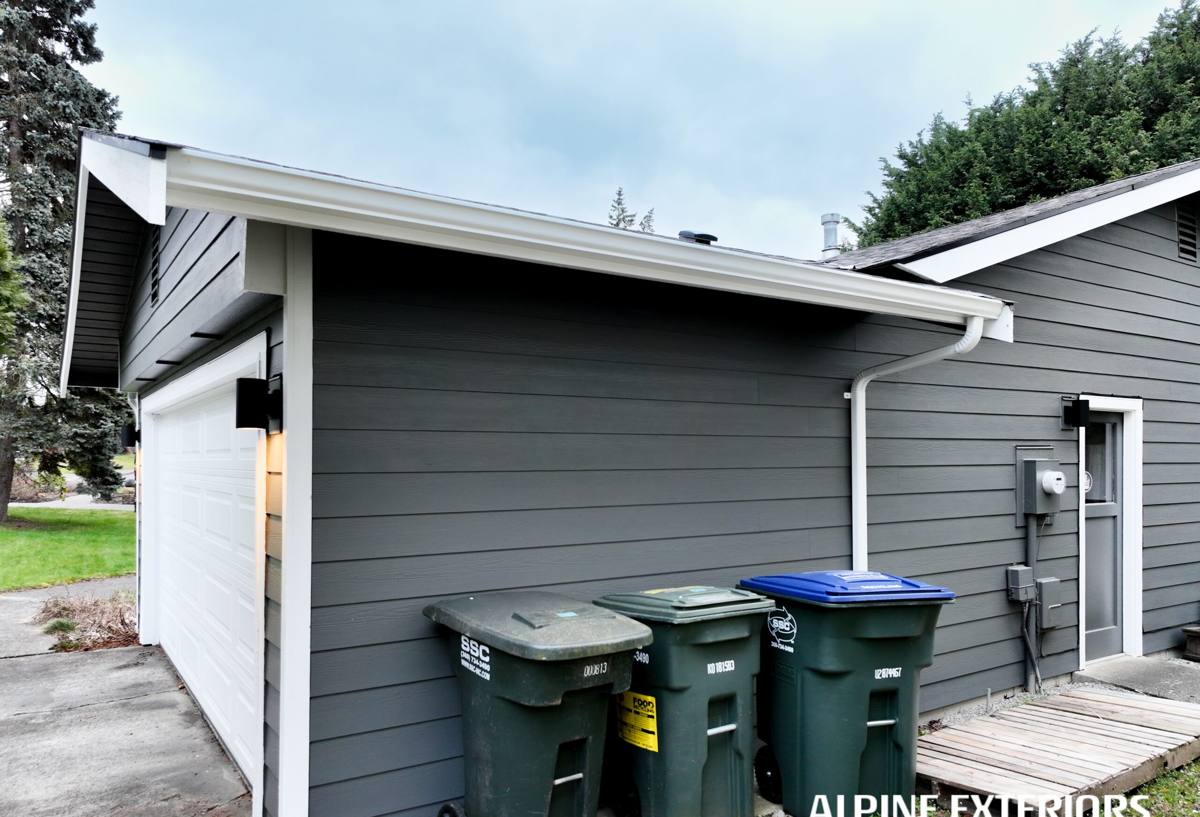
Signs Your Bothell Home's Siding Is Losing the Fight
Most siding failures don't happen overnight. They build slowly, and by the time they're obvious from the street, there's often already moisture damage behind the surface. Here's what we look for on inspections in this area:
- Green or black streaking on north- and west-facing walls, especially under eaves or near landscaping
- Paint that's peeling, bubbling, or chalking faster than it should for its age
- Soft or spongy spots when you press on the siding, particularly near the bottom courses and around window trim
- Visible gaps, warping, or cupping in wood or composite panels
- Caulk that's cracked, shrunk, or pulled away from joints and trim
- Musty smell or discoloration on interior walls that back up to exterior siding
If you're seeing two or more of these, it's worth having someone look at what's underneath the surface, not just repaint over it.
What Correct Siding Installation Actually Involves
Siding looks like a finish material, but it's really the outer layer of a drainage system. Get the layers underneath it wrong, and even the best siding product will fail early. In a climate like Bothell's, the details matter more than they would in a dry region.
Weather-Resistive Barrier
Every wall needs a continuous, properly lapped weather-resistive barrier (WRB) behind the siding. Seams get taped, penetrations get sealed, and the barrier laps correctly with flashing so water is directed out and down, never trapped behind the wall.
Flashing at Every Penetration
Windows, doors, hose bibs, light fixtures, deck ledgers — anything that punches through the wall plane is a potential entry point for water. Proper flashing at each of these, installed in the right order relative to the WRB, is one of the most common things we find missing or done wrong on older installs in this area.
A Rainscreen Gap
A small air gap between the siding and the WRB lets any water that does get past the surface drain and dry out instead of sitting against the wall. Given how long things stay damp in Bothell's shaded, tree-covered lots, this gap isn't optional — it's one of the biggest factors in how long siding actually lasts here.
Fastening and Gapping to Spec
Fiber cement siding has manufacturer-specified fastener patterns, gapping at joints, and clearance from grade, decks, and roof lines. Skipping these specs to save time is the single most common cause of early siding failure we see — moisture wicks up from the bottom edge, or panels crack because they were fastened too tight with no room to move.
Why We Install Only James Hardie Fiber Cement
We made a decision as a company to install James Hardie fiber cement siding exclusively — not vinyl, not LP SmartSide, not cedar or primed spruce. That's not a marketing position; it's a practical one based on what actually holds up in Pacific Northwest conditions over decades, not just years.
Non-Combustible and Climate-Engineered
Fiber cement doesn't feed a fire the way wood-based products can, and it doesn't absorb moisture the way engineered wood siding does. Hardie also builds region-specific product lines — its HZ5 formulation is engineered for the moisture and freeze-thaw conditions found in the Pacific Northwest, which matters more here than in drier climates where a general-purpose product would perform fine.
ColorPlus Factory Finish
Instead of field-applied paint, Hardie's ColorPlus finish is baked on at the factory in multiple coats, which holds color and resists the chalking and peeling that field-painted siding is prone to in damp, low-sun conditions. That matters directly for the moss-and-mildew problem — a tighter, more consistent factory finish gives organic growth less to grab onto and makes maintenance washing more effective.
A Warranty Backed by the Manufacturer
Hardie's product warranty is transferable and backed by the manufacturer, not just the installer. That's a meaningfully different position than warranties on products where the finish, the substrate, and the installation are covered by different parties with different fine print.
How James Hardie Compares to Other Siding Options
| Factor | James Hardie Fiber Cement | Vinyl | LP SmartSide / Engineered Wood | Cedar / Primed Spruce |
|---|---|---|---|---|
| Moisture resistance | Excellent — engineered for PNW climate zones | Good surface resistance, but seams and fasteners can trap moisture behind panels | Moderate — wood-based core is vulnerable if the finish is compromised | Requires diligent maintenance to resist rot |
| Moss / mildew resistance | Strong, especially with ColorPlus finish | Moderate — moss and algae can still colonize the surface | Moderate | Low without frequent treatment |
| Fire performance | Non-combustible | Combustible, can warp or melt | Combustible | Combustible |
| Finish longevity | Factory-baked, long color retention | Color molded in but can fade and become brittle over time | Field or factory finish, variable | Field-painted, needs recoating regularly |
| Typical maintenance | Occasional washing | Low, but prone to cracking in impacts | Regular inspection of caulked joints and finish | Frequent painting/staining and rot checks |
Our Installation Process, Start to Finish
The process is straightforward, but every step matters for how the finished siding performs over the next 20-30 years.
- On-site assessment. We look at the existing wall assembly, check for hidden moisture damage, and evaluate drainage, grading, and areas prone to standing dampness — common around shaded, tree-lined lots typical of Bothell.
- Removal and substrate check. Old siding comes off and we inspect the sheathing underneath for rot or soft spots before anything new goes on. Damaged sheathing gets repaired, not covered up.
- Weather-resistive barrier and flashing. A new, continuous WRB goes up with properly lapped and taped seams, and flashing is installed at every window, door, and penetration.
- Rainscreen furring. We install the drainage gap system before siding goes up, so water has somewhere to go if it gets past the surface.
- Hardie panel installation. Panels and trim are installed to manufacturer fastening and gapping specifications, not shortcuts.
- Detail work. Caulking at appropriate joints (and only where Hardie specifies it — over-caulking traps moisture just as badly as under-caulking), touch-up paint on cut edges, and a final walk-through.
- Site cleanup. Old siding, packaging, and debris are hauled off; the yard is left clean.
Why a Crew That Works Bothell Regularly Matters
Siding installation isn't the same job everywhere in King County. A crew used to working in drier, more open lots doesn't automatically account for the moisture load that shaded, tree-covered Bothell properties carry, or plan flashing and rainscreen details accordingly. Knowing which walls in this area take the worst of the driving rain, which lots hold moisture longest after a storm, and how aggressively moss establishes on north faces here changes how we sequence a job and where we spend extra attention. That's the kind of judgment that only comes from doing this work in this specific climate, repeatedly, not from a general install checklist.
What Affects the Cost of a Siding Project
| Cost Factor | Why It Matters |
|---|---|
| Home size and wall complexity | More square footage, corners, and roof lines mean more material and labor |
| Existing siding removal and disposal | Tear-off adds labor and disposal costs versus new construction |
| Hidden sheathing repair | Rot or moisture damage found during tear-off needs to be fixed before new siding goes on |
| Trim and accessory work | Window trim, corner boards, and fascia detailing add time and material |
| Color and finish selection | Factory ColorPlus finishes and specialty colors can affect material pricing |
We don't quote off broad averages — every home's siding condition, access, and wall complexity is different, and hidden damage isn't something you can price accurately without opening the walls up.
If you're weighing a siding replacement or repair in Bothell, we're happy to take a look and give you a straightforward, no-pressure estimate. There's a form below — reach out and we'll get a time on the calendar.