 King County
 Why Shoreline Decks Wear Out Faster Than the Manuals Say
Most decking and hardware manufacturers write their maintenance schedules for a generic climate that doesn't really exist in Shoreline. Sitting along the Puget Sound shoreline in King County, homes here deal with a combination that's tougher on wood and fasteners than most inland areas: salt-laden marine air drifting off the Sound, long stretches of driving rain from fall through spring, and deep shade from mature evergreen canopy that keeps decks damp long after a storm has passed. That last part is what drives the moss problem so many Shoreline homeowners deal with every year.
None of this means a deck can't last — it means it has to be built and maintained with that combination in mind. A deck detailed the same way you'd build one in a dry, sunny climate will show rot, corrosion, and surface failure years earlier here. That's the gap we build to close.
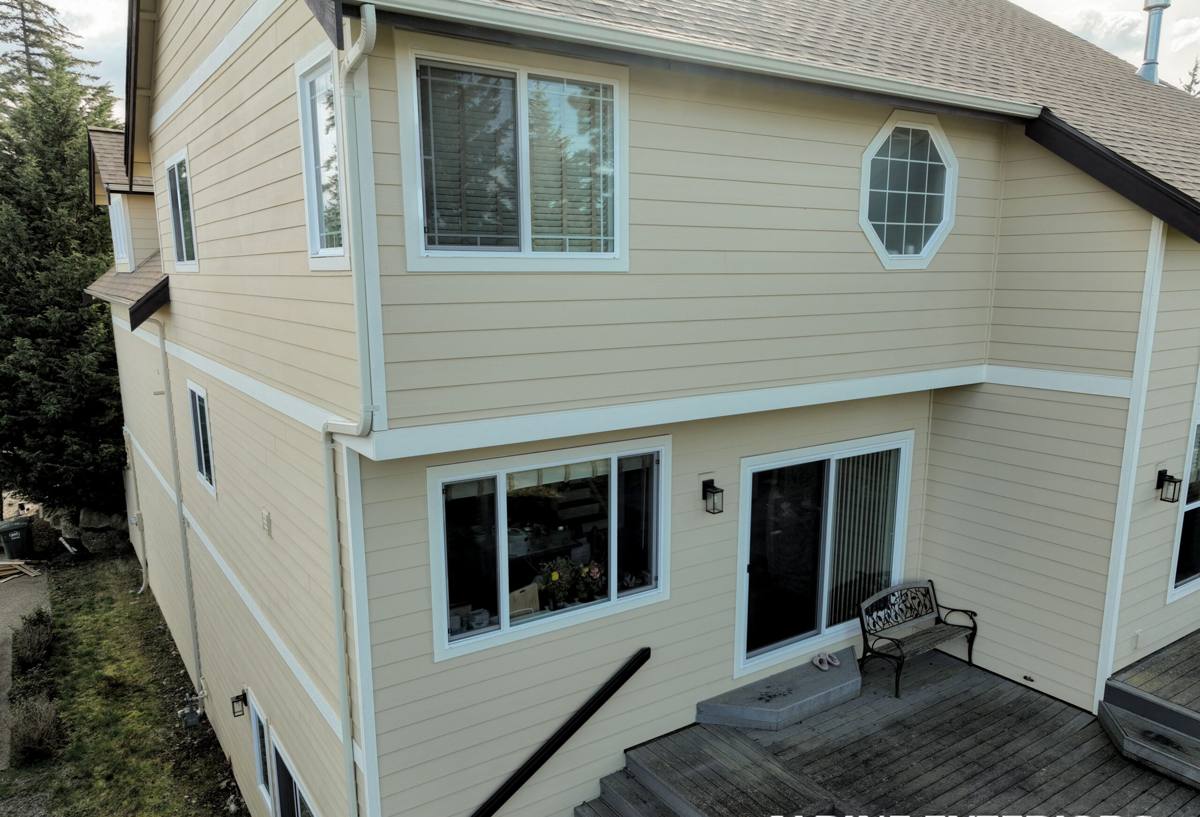
What the Local Climate Actually Does to a Deck
Salt Air and Metal Fasteners
Homes closer to the water take on airborne salt that accelerates corrosion in screws, joist hangers, and structural connectors. Once a fastener starts rusting, it loses holding strength quietly — you won't see it until a board is loose or a railing flexes. This is why fastener and hardware selection matters more here than in a lot of other King County neighborhoods.
Driving Rain and Ledger Rot
Wind-driven rain doesn't just fall on a deck's surface, it gets pushed sideways into gaps, under flashing, and behind ledger boards where the deck attaches to the house. A ledger board with poor or missing flashing is one of the most common failure points we find on older Shoreline decks, and it's often invisible until the wood behind the siding is already soft.
Moss, Shade, and Slow Drying
Mature tree cover keeps a lot of Shoreline lots shaded most of the day, which means decking surfaces, especially wood, stay damp far longer after rain than they would in full sun. That extended dampness is exactly what moss and algae need to establish, and a mossy deck surface isn't just unattractive — it's a slip hazard and it holds moisture against the wood fibers, speeding up decay.
Repair or Full Replacement? How to Tell
Not every tired deck needs a full teardown, but a lot of decks that look "mostly fine" on the surface have structural problems underneath. Here's what we actually check before recommending either path.
- Soft or spongy spots underfoot, especially near the house or stair landings
- Rust streaking around fasteners or visible corrosion on joist hangers
- Gaps, cracking, or dark staining where the ledger board meets the siding
- Railings or posts that flex, wobble, or feel loose when pushed
- Persistent moss or black staining that returns within weeks of cleaning
- Footings or posts that show cracking, heaving, or visible rot at ground contact
- Deck age beyond 20-25 years, particularly if it was built with untreated fasteners
If the problems are limited to surface boards and the structure underneath — framing, ledger, footings — is sound, a resurfacing or partial repair can make sense. If we find rot or corrosion in the framing, ledger, or footings, patching the surface just hides a problem that will resurface, usually as a safety issue rather than a cosmetic one.
What a Correct Deck Replacement Actually Involves
A deck replacement isn't just pulling up old boards and screwing down new ones. In a climate like ours, the parts you don't see matter more than the surface.
Structural Foundation
Footings need to be sized and set to current code depth for our region, which accounts for frost and soil conditions. Posts should sit on proper post bases that keep wood off standing water rather than buried or set directly in concrete, which traps moisture against the base and speeds rot.
Ledger Attachment and Flashing
Where the deck ties into the house, we install proper flashing that directs water away from the wall assembly, not just a bead of caulk. Given how much wind-driven rain this area sees, this is one detail we won't shortcut regardless of what the original deck had.
Framing and Fasteners
Joists, beams, and hangers should be rated for the exposure — stainless or heavy hot-dip galvanized hardware holds up far better near the Sound than standard coated fasteners, which can start showing corrosion within a few seasons in salt-air exposure.
Guardrails and Stairs
Railing height, baluster spacing, and stair geometry all need to meet current building code, which has tightened over the years. If your existing deck predates current code, a full replacement is also the chance to bring it up to today's safety standards.
Choosing Decking Material for This Climate
There's no single "best" decking material — there's a best material for your budget, your sun exposure, and how much upkeep you actually want to do. Here's how the common options hold up under Shoreline's shade-and-rain conditions specifically.
| Material | How it handles moss/damp shade | Maintenance | Typical lifespan |
|---|---|---|---|
| Pressure-treated wood | Needs regular cleaning and sealing to resist moss and staining in shaded areas | Annual cleaning, re-sealing every 1-2 years | 10-15 years with upkeep |
| Cedar | Naturally moisture-resistant but still needs cleaning in deep shade; grays without sealer | Cleaning plus sealer every 1-2 years to hold color and resist mildew | 15-20 years with upkeep |
| Composite decking | Won't rot, but can still grow surface moss/algae in constant shade — needs occasional washing | Periodic washing, no sealing or staining | 25-30 years, varies by brand |
| PVC decking | Fully moisture-resistant surface; easiest to keep clean of moss film | Occasional washing only | 25-30+ years |
We're upfront with clients about trade-offs rather than pushing one product. Wood costs less upfront but demands consistent maintenance to actually get its expected lifespan in a wet, shaded climate — skip a season of sealing here and moisture damage accelerates fast. Composite and PVC cost more initially but remove the rot risk entirely, which matters most on decks that sit in shade most of the day. On sunnier, more open lots, either category can work well; the decision comes down to how much maintenance you want on your calendar every year.
Our Deck Replacement Process
We keep the process straightforward and in an order that avoids surprises mid-project.
- On-site inspection — we check the existing structure, ledger, footings, and framing to confirm what's failing and why, not just what's visible on the surface.
- Written scope and estimate — clear breakdown of what's being replaced, materials discussed, and cost factors, with no vague allowances.
- Permitting — deck replacements typically require a permit through the appropriate local building department; we handle that paperwork so it's done correctly the first time.
- Demolition and disposal — old decking, framing, and any compromised structure removed and hauled off site.
- Structural rebuild — footings, posts, ledger flashing, and framing built to current code with corrosion-appropriate hardware.
- Decking, railing, and stair installation — installed per manufacturer spacing and fastening specs, which matters for warranty coverage on composite and PVC products.
- Final walkthrough — we go over the finished deck with you, including basic care guidance specific to your material and site's sun exposure.
Permits and Code in King County
Deck replacements in Shoreline generally require a building permit, and inspections check footing depth, ledger attachment, guardrail height, and stair geometry against current code. Skipping the permit process might save time upfront, but it creates real problems at resale — unpermitted deck work is a common flag in home inspections and can hold up a sale. We pull the necessary permits as a standard part of our process, not an upsell.
Keeping a New Deck Ahead of Moss and Moisture
Whatever material you choose, a few habits go a long way in this climate.
- Sweep debris and fallen needles off the surface regularly — trapped organic matter holds moisture and feeds moss
- Rinse or wash shaded sections more often than sunny ones; they dry slower and grow moss faster
- Keep gutters and downspouts clear so runoff isn't dumping extra water onto or near the deck
- Check railings and stair connections once a year for looseness, especially if the deck is close to the water
- Re-seal wood decking on schedule rather than waiting until it looks gray or dry
- Trim back overhanging branches where practical to let more light and air reach the deck surface
Why a Crew That Already Works in Shoreline Matters
Building a deck to withstand generic Pacific Northwest weather is different from building one specifically for a shaded, marine-exposed lot near the Sound. A crew that regularly works in Shoreline and the surrounding King County waterfront communities already knows which fastener grades hold up, which ledger details actually stop wind-driven rain, and which decking choices are worth the extra cost on a shaded lot versus a sunny one. That local pattern recognition is what prevents a homeowner from finding out the hard way, a few years in, that a detail was cut for a drier climate.
If your current deck is showing soft spots, persistent moss, rust at the hardware, or is simply past its reasonable lifespan, we're happy to take a look and give you an honest read on repair versus replacement. Reach out for a free, no-pressure estimate using the form below.