 King County
 Storm Damage Roof Repair for Capitol Hill Homes
Capitol Hill is one of Seattle's older, denser neighborhoods, with a lot of homes tucked close together under a heavy tree canopy and roof lines that range from steep Victorian and Craftsman pitches to lower-slope additions and rowhouse-style roofs. That mix matters after a storm, because different roof shapes and ages fail in different places. A steep older roof with decades of layered repairs behaves nothing like a newer, simpler roof next door, and a correct repair has to account for that instead of treating every storm call the same way.
Like the rest King County, Capitol Hill sits inside a marine climate that keeps roofs under steady pressure even between storms — salt-tinged air moving in off the water, driving rain that comes at walls and roof planes sideways instead of straight down, and a moss season that can run most of the year on shaded, tree-covered slopes. A storm doesn't create damage out of nothing; it usually finds and widens a weak point that's already been forming from ordinary wear, wind-driven rain, and moisture sitting under moss for months at a time. That's part of why storm damage repair on a Capitol Hill roof needs to be treated as more than a patch job — the storm exposed something, and the repair should address what it exposed, not just what's visibly broken.
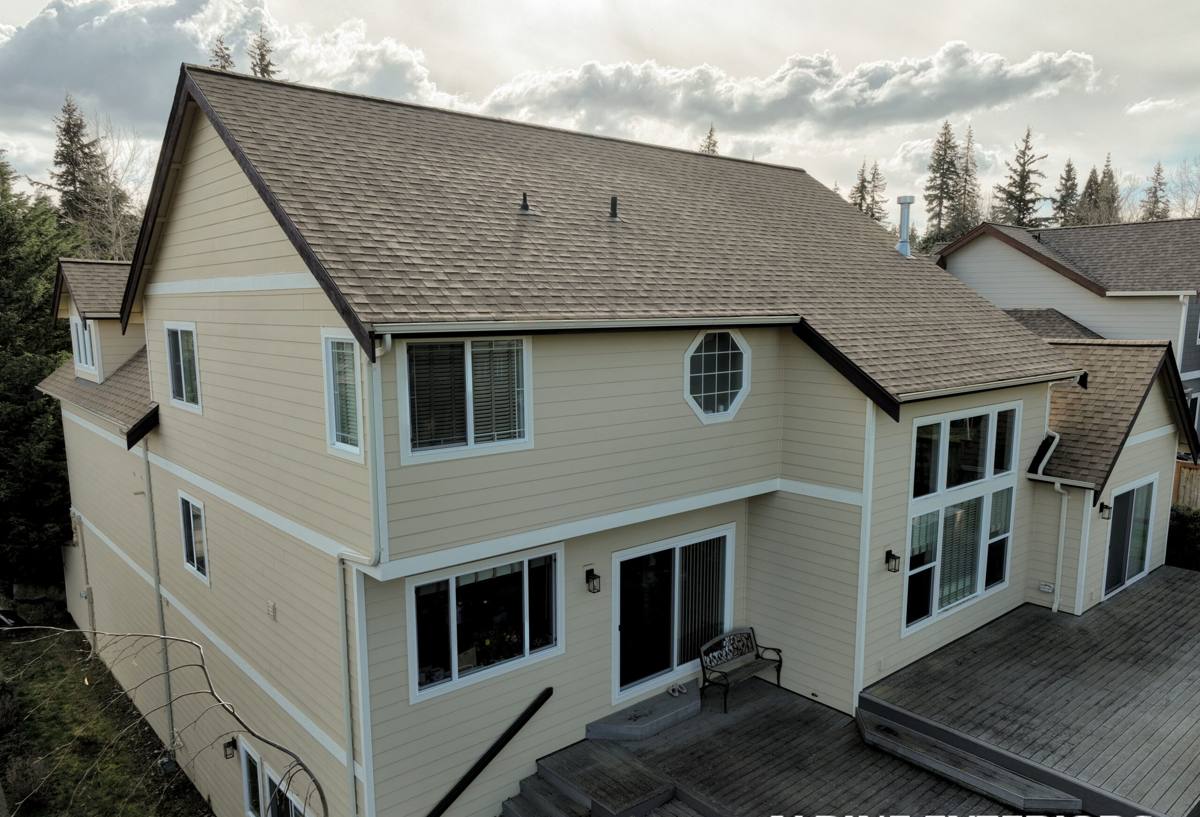
What Actually Counts as Storm Damage
Not every storm-related roof problem looks dramatic. Some of the most damaging events leave very little visible from the ground.
Wind Uplift and Lifted Shingles
Sustained wind gets under a shingle edge and lifts it, breaking the seal strip underneath even if the shingle doesn't tear off. A lifted shingle that lays back down afterward can look fine from the street while the adhesive bond underneath is permanently broken — the next rain finds that opening even though nothing looks obviously wrong.
Falling Debris and Impact Damage
Capitol Hill's mature street trees and yard trees are part of what gives the neighborhood its character, but they're also a real source of storm damage — dropped limbs, whole branches, and even smaller debris carried by wind can crack shingles, dent metal flashing, or puncture the roof deck outright. Impact damage is often localized to one spot, which makes it tempting to treat as minor, but a cracked shingle or dented flashing at a single point is still an open path for water.
Wind-Driven Rain at Flashing and Penetrations
Chimneys, vent pipes, skylights, and valleys are the highest-risk points on any roof, and wind-driven rain during a storm tests every one of them at once. Flashing that was marginal before the storm — slightly lifted, under-lapped, or sealed with caulk instead of proper metal work — is where storm-driven leaks usually start, even when the surrounding shingles are untouched.
Granule Loss and Accelerated Wear
Heavy, sustained rain and wind can strip granules off asphalt shingles faster than normal weathering does, especially on a roof that's already past midlife. This doesn't cause an immediate leak, but it shortens the roof's remaining service life and is worth documenting after any significant storm, even if nothing is actively dripping.
Signs You Should Have a Capitol Hill Roof Checked After a Storm
- Shingles that are visibly lifted, torn, curled at the edge, or missing outright
- Fresh dents, cracks, or displacement in flashing around chimneys, vents, or skylights
- Granules collecting in gutters, downspouts, or at the base of the foundation after a storm
- New water stains on ceilings or attic sheathing, even faint ones
- A branch or limb strike, even if the visible damage looks minor
- Gutters pulling away from the fascia or sagging under debris weight
- Any musty smell in the attic that wasn't there before the storm
Any one of these on its own is worth a look. Several together, or damage on a roof that's already past its expected lifespan, usually means it's time to have someone get eyes on it before the next system moves through.
Why Fast, Correct Response Matters More Than It Seems
The first 24 to 48 hours after storm damage are the highest-risk window for a small problem to become a big one. An open seam or a missing shingle that goes unaddressed through even one more heavy rain event can let enough water into the deck to start rot, which changes the scope of the repair from a shingle patch to a section of new sheathing. Temporary protection — a properly secured tarp over the damaged area — buys time to schedule the real repair without letting the problem compound in the meantime. A tarp that's loosely draped or poorly anchored can do more harm than good in wind, so this step needs to be done correctly even though it's meant to be temporary.
| Situation | Reasonable First Step | What Comes Next |
|---|---|---|
| Active leak, storm still passing | Temporary tarp over the damaged area, secured properly | Full inspection and permanent repair once weather clears |
| Isolated shingle or flashing damage, no active leak | Inspection to confirm the deck is dry | Targeted repair matched to the existing roof |
| Limb or debris impact with a visible puncture | Tarp and inspect immediately, don't wait | Deck repair plus shingle and flashing replacement at that spot |
| Widespread granule loss or multiple damaged areas | Full roof inspection, not a spot check | Repair vs. replace conversation based on overall roof condition |
| No visible damage but a major wind event occurred | A precautionary walk-around and attic check | Documentation on file even if no repair is needed yet |
What a Correct Storm Damage Repair Actually Involves
A repair that only replaces what's visibly broken on the surface often misses what the storm did underneath. A correct process starts with a full inspection, not just a look at the damaged spot.
Deck Inspection
Before any new shingles go on, the sheathing underneath the damaged area gets checked for softness, delamination, or water staining. If water reached the deck, that section needs to be dried out or replaced before anything is closed back up — covering wet sheathing with new shingles just traps the problem.
Underlayment and Flashing
Storm repairs are a chance to correct underlying flashing problems, not just patch the shingle layer. Flashing around the repaired area should be replaced or re-lapped correctly with the underlayment, not caulked over. Caulk breaks down and cracks over time; it was never meant to be a standalone water barrier.
Shingle Matching and Tie-In
New shingles need to tie into the surrounding roof correctly, both physically and visually. On an older roof, exact color matches aren't always available, and we'll tell you honestly when that's the case rather than pretending a mismatch won't be noticeable. Structural integrity of the tie-in matters more than a perfect color match, but we try to get both right where possible.
Final Water Test and Documentation
Once the repair is complete, the area gets checked for proper drainage and sealed penetrations, and we document the damage and repair with photos — useful both for your own records and for any insurance claim tied to the storm.
Insurance and Documentation
A lot of Capitol Hill storm damage calls involve a homeowner's insurance claim, and we treat documentation as part of the job, not an afterthought. That means photographing the damage before repair, keeping a written scope of what was found and what was done, and being available to talk with an adjuster about the technical details if needed. We won't tell you what your policy covers or promise a claim outcome — that's between you and your insurer — but we will make sure the documentation on our end is thorough and honest, which tends to make that process smoother regardless of how the claim goes.
Repair vs. Replace After a Storm
A storm can be the event that reveals a roof was already near the end of its useful life, even if the storm damage itself is technically repairable. The honest question isn't just "can this be patched" but "does patching this make sense given the roof's overall age and condition."
| Factor | Leans Toward Repair | Leans Toward Replacement |
|---|---|---|
| Roof age | Well under expected lifespan for the material | At or past expected lifespan |
| Extent of storm damage | Isolated to one section or penetration | Spread across multiple slopes |
| Deck condition underneath | Dry and solid once opened up | Soft, delaminated, or rotted in places |
| Prior repair history | First or second repair on this roof | Recurring leaks or repeated past patches |
| Moss and granule condition elsewhere on the roof | Rest of the roof is in reasonable shape | Heavy moss or granule loss beyond the storm-damaged area |
We'll always give you our honest read on which side of that table your roof falls on. A young roof with one branch strike almost always makes sense to repair. An older roof that's already showing widespread wear, where the storm just happened to be the thing that finally caused a leak, is a different conversation.
Why Capitol Hill's Housing Stock and Layout Change the Job
A lot of roofs in this part of Seattle sit on older homes with steeper original pitches, layered additions, and roof-to-wall connections that weren't always built to current standards. Steep pitches mean more careful staging and fall protection, and older framing means we pay closer attention to what we find once a section is opened up rather than assuming it matches a modern build. Dense lot spacing and mature trees close to the house also mean debris removal and access sometimes take more planning than they would on a more open suburban property. None of this makes the work harder to get right — it just means a crew that knows this kind of housing stock moves through it more efficiently and catches things a crew unfamiliar with older Seattle homes might miss on the first pass.
Why Hiring a Local King County Crew Matters After a Storm
After a significant storm, roofing crews sometimes come through the region temporarily, do quick repairs, and move on before problems surface. A local crew that works Capitol Hill and the rest of King County regularly has a reason to stand behind the work months and years later, and already understands how this specific climate — salt air, driving rain, long moss seasons — affects the materials and details used in the repair. That local knowledge shows up in small decisions: how much flashing lap is used, whether a temporary tarp is anchored well enough to survive the next wind event, which fastener grade holds up against marine-influenced air. Those decisions are what separate a repair that lasts from one that reopens with the next storm.
Our Process
We start with a full roof inspection, not just a look at the obviously damaged spot, because storms often cause secondary damage that isn't visible from the ground. If there's an active leak, we get a proper temporary tarp on first to stop further water intrusion. From there, we give you a written scope covering what we found, what needs repair versus what can wait, and an honest read on repair versus replacement if the roof's overall condition calls for that conversation. Documentation and photos are part of every storm repair we do, whether or not you plan to file an insurance claim.
If a recent storm has left you with a leak, missing shingles, or just a nagging feeling you should have someone check the roof, we're happy to take a look. Reach out below for a free, no-pressure estimate.