 King County
 Building Decks That Hold Up in Woodinville's Climate
Woodinville sits in one of the wetter, shadier pockets of King County. Many homes here are set on wooded or semi-rural lots with mature tree cover, which means decks get less direct sun, more falling leaf and needle debris, and longer stretches of standing dampness than a deck built out in the open. Add in the driving rain that blows through the Puget Sound region for much of the year, and you have a recipe for the two things that ruin decks fastest: trapped moisture and moss.
A deck that looks fine on installation day can fail in five years if it wasn't built with this climate in mind. The framing rots from the inside before the surface ever shows it. The goal with a custom deck in Woodinville isn't just to make something that looks good — it's to build something that sheds water, resists moss, and stays structurally sound through decade after decade of Western Washington winters.
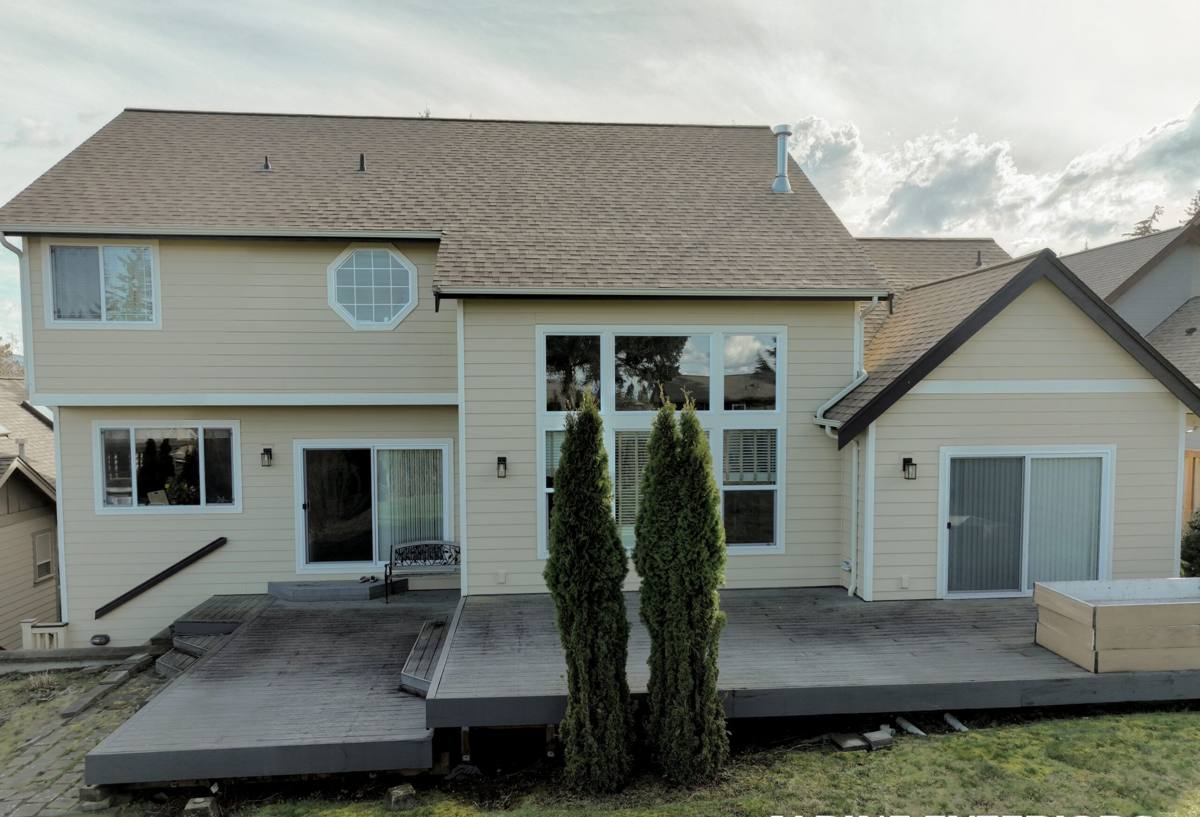
What Local Conditions Actually Do to a Deck
Moss and Algae
Shaded, damp surfaces are exactly what moss and algae need to take hold. Once established, moss holds moisture against the decking material, which accelerates rot in wood and can stain or degrade the surface of composite boards over time. A deck under heavy tree canopy — common in Woodinville — needs a design and material choice that accounts for reduced sun exposure, not one built as if it sat in full sun all day.
Driving Rain and Wind-Driven Moisture
Rain in this region doesn't just fall straight down — it's frequently pushed sideways by wind, which means it gets up under ledger boards, behind rim joists, and into any gap in the flashing that a fair-weather build might get away with. Ledger board attachment to the house is the single most common point of failure we see on older or poorly built decks, because water intrusion there rots the house's structural framing, not just the deck.
Falling Debris
Leaves, needles, and seed pods from mature trees collect in deck board gaps and around posts and stairs. Left alone, this organic debris holds water against the wood or composite surface and feeds moss growth. Deck spacing and drainage design should account for this, not just for rain volume.
What a Correctly Built Deck Involves
A deck is a structural project first and a finish project second. The parts nobody sees are what determine whether it lasts 10 years or 30.
Footings and Framing
Footings need to be sized and set below frost depth per King County code, on undisturbed or properly compacted soil. On sloped or wooded Woodinville lots, that sometimes means adjusting footing placement to avoid root systems or uneven grade, which is part of why a site visit before design matters.
Ledger Flashing
Where a deck attaches to the house, proper flashing — installed correctly, in the right order relative to the house's existing weather barrier — is what keeps water out of the wall structure. This is not an area to cut corners in a climate that sees this much sustained rain.
Fasteners and Hardware
Structural connectors, joist hangers, and fasteners should be corrosion-resistant hardware rated for ground contact and exterior use. In a wet climate, standard hardware corrodes faster, weakens over time, and can stain lighter-colored decking. This is one of those details that's cheap to get right during construction and expensive to fix later.
Drainage and Ventilation Underneath
Decks need airflow underneath to dry out between rain events. On lower decks or decks over living space, proper drainage systems and slope prevent water from pooling against framing members.
Choosing the Right Decking Material
There's no single "best" material — the right choice depends on your budget, how much sun the deck gets, and how much maintenance you're willing to keep up with. Given how many Woodinville decks sit under partial or heavy tree cover, moisture and moss resistance carry extra weight in this decision.
| Material | Upfront Cost | Maintenance | Moisture & Moss Behavior |
|---|---|---|---|
| Pressure-treated fir/hem-fir | Lower | Higher — regular sealing/staining | Prone to moss and graying if not maintained; good performance if kept up |
| Cedar | Mid-range | Higher — periodic sealing recommended | Naturally rot-resistant but still needs upkeep in constant shade/moisture |
| Composite decking | Higher | Lower — occasional cleaning | Resists rot; can still develop surface algae/moss in heavy shade without cleaning |
| PVC decking | Highest | Lowest | Most moisture-resistant option; premium cost |
We install both natural wood and composite systems. Our recommendation depends on your specific site — a deck tucked under a canopy of conifers gets a different recommendation than one with mostly open sky. What we won't do is install a product in a location where it's a poor fit for the site's sun and moisture exposure just because it's the cheaper option; we'd rather explain the trade-offs up front.
Design Considerations Specific to Woodinville Properties
Woodinville's mix of wooded, semi-rural lots and more traditional neighborhood parcels means deck design has to respond to the specific site, not a one-size template.
- Sloped or uneven lots often call for multi-level decks or additional footing engineering
- Decks near mature trees need footing placement that avoids major root systems without harming the tree
- Heavy shade areas benefit from wider board gaps and lower-maintenance materials
- Railings and guards must meet current King County building code height and spacing requirements
- Stairs and landings need slip-resistant surfaces given how often boards stay damp
None of this is exotic — it's just paying attention to the actual conditions on your property instead of building the same deck regardless of site.
Permits and Code Compliance in King County
Most attached decks and any deck above a certain height above grade require a building permit in King County, along with inspections at key stages of construction — typically footings, framing, and final. Requirements can vary depending on the size, height, and attachment method of the deck, so it's worth confirming specifics with the county before work begins. A contractor who regularly pulls permits in this jurisdiction can walk you through what applies to your specific project and handle the inspection process without it becoming a bottleneck.
Our Process, Start to Finish
- Site visit and assessment — we look at sun exposure, tree cover, grade, and how the deck will attach to your home
- Design and material discussion — honest trade-offs between wood, composite, and PVC based on your site and budget
- Permitting — we prepare and submit what's needed for King County approval
- Construction — footings, framing, proper ledger flashing, decking, and railings, built to code and to hold up in this climate
- Final walkthrough — we go over the finished deck and what maintenance it needs going forward
Keeping a Deck Healthy After It's Built
Even a well-built deck needs some seasonal attention in a climate with this much rain and shade. Most of it is simple and doesn't take long if you stay on top of it.
- Sweep leaves and needles out of board gaps and off stair treads regularly, especially in fall
- Rinse off moss and algae buildup before it has a chance to establish, particularly on shaded sections
- Check that boards near the house and around posts drain freely and don't stay wet for days after rain
- Inspect fasteners and connectors periodically for rust staining or loosening
- Reseal or restain wood decking on a regular schedule — don't wait until it's visibly graying and cracked
- Confirm the ledger flashing area stays free of debris and caulking gaps
Skipping this upkeep is how a well-built deck ends up needing board replacement or structural repair years earlier than it should.
Why It Matters to Hire a Crew That Already Works in Woodinville
A deck contractor who mostly works in drier climates, or who treats every job the same regardless of site conditions, will often miss the details that matter here — shade patterns, drainage needs, and the flashing and hardware choices that actually hold up through a Puget Sound winter. Working regularly in King County means we're familiar with local permitting expectations, the way local soil and lots behave, and the specific ways this climate stresses a deck over time. That's not a marketing line — it's the difference between a deck that needs major repair in year six and one that's still solid in year twenty-five.
If you're planning a new deck or replacing one that's showing its age, we're glad to come take a look and talk through what makes sense for your property. There's no cost and no pressure to get an estimate — just an honest assessment of what your Woodinville home needs.