 King County
 Rainier Valley's Climate and What It Does to Windows
Rainier Valley sits in a part of King County that gets the full range of what Pacific Northwest weather can do to a house. Winters bring long stretches of driving rain that finds its way into any gap in a window frame, not just through the glass. Shaded lots and mature tree cover — common throughout the neighborhood — keep moisture sitting on north-facing walls and window sills long after a storm passes, which is exactly the setup that grows moss and mildew stains around frames and trim. Add in the salt-tinged air that pushes inland off Puget Sound during winter storm systems, and you have a combination that slowly works on seals, hardware, and wood trim year after year.
None of this means windows in this area fail faster than anywhere else. It means they fail differently — usually starting with seal and moisture problems rather than sun damage or heat stress. A window that was installed correctly, with the right flashing and the right material for this climate, holds up fine for decades. One that was installed as a quick swap without attention to water management usually shows problems within a few years, no matter how good the window itself is.
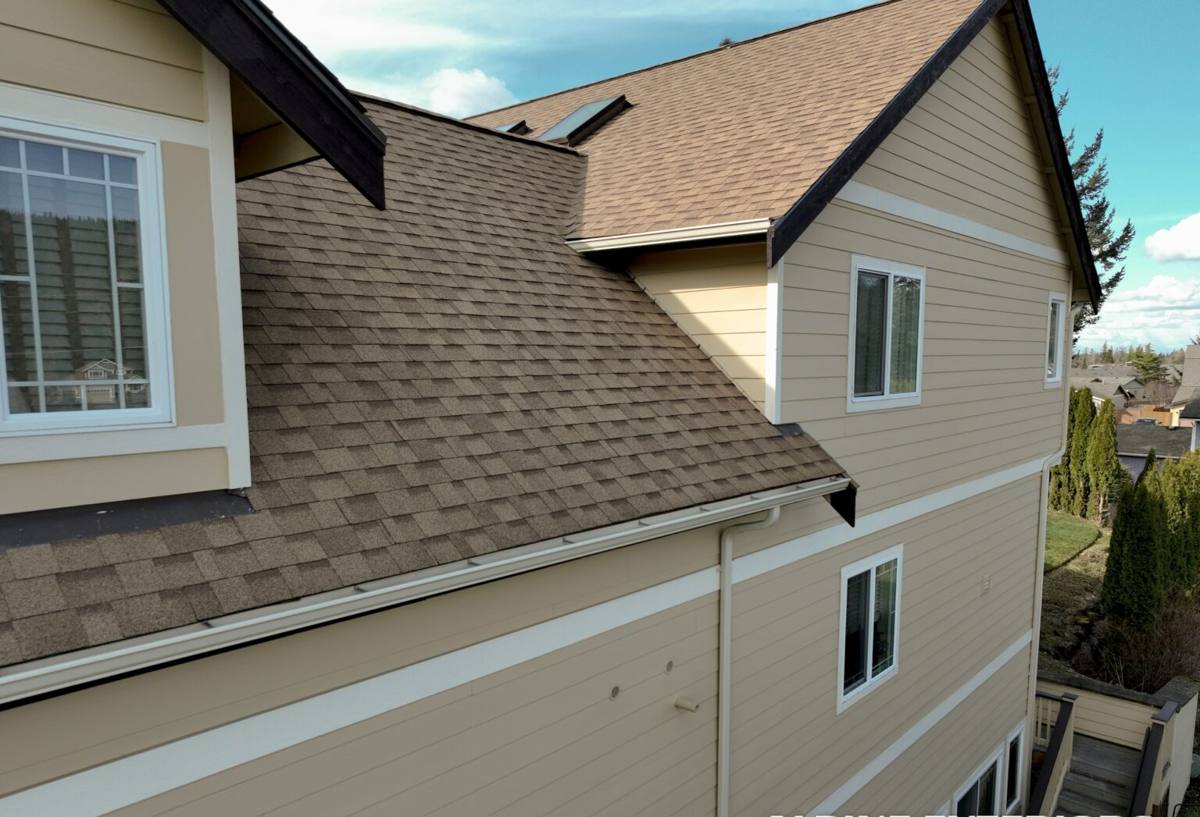
Signs Your Windows Are Losing the Fight
Most homeowners don't think about their windows until something is visibly wrong. In a climate like King County's, by the time you see the problem, moisture has usually been working on the frame or sill for a while already. Worth checking for:
- Fogging or a hazy film between panes of double-glazed glass — the seal has failed and the gas fill is gone
- Soft or spongy wood at the sill, especially at the corners where water collects
- Moss, black staining, or green growth on the exterior trim or sill, even if the window itself still opens fine
- A noticeable draft or cold spot near the frame on windy, rainy days
- Window sashes that are hard to open, stick, or don't sit flush anymore
- Condensation forming on the inside of the glass regularly, which often points to poor seals or inadequate insulation around the frame
Any one of these on its own might just need attention. Several at once, especially on the same wall, usually means it's time to talk about replacement rather than another repair.
What a Correct Custom Window Installation Involves
"Custom" windows simply means the units are built to fit your specific openings rather than pulled off a shelf in a standard size — important in older Rainier Valley homes where original openings are rarely a perfectly standard dimension. Getting the product right is only half the job. The installation is where most long-term problems either get prevented or get built in.
Measuring and Product Selection
Every opening gets measured individually, not assumed to match its neighbor. We also look at what's actually happening at that wall — sun exposure, wind direction, whether it's a wall that catches driving rain — before recommending glass package and frame material, since the right choice on a sheltered south wall isn't always the right choice on an exposed north or west wall.
Removal and Structural Check
Once the old window comes out, we check the framing underneath. This is often the first time in decades anyone has actually seen that wood, and in a wet climate it's the step that reveals whether there's hidden rot or water damage that needs to be addressed before a new window goes in. Installing a new window over a compromised frame just hides the problem for a few more years.
Flashing and Moisture Management
This is the step that matters most in King County's climate and the one most often shortcut on cheap installs. Proper flashing tape and a correctly lapped weather-resistive barrier direct water down and out and away from the wall assembly, rather than letting it wick into the framing. A window can be top-quality and still leak and rot the wall around it within a few years if the flashing detail is wrong.
Installation, Shimming, and Sealing
The window gets shimmed square and plumb, fastened per the manufacturer's specification, insulated around the gap without over-packing it, and sealed with the right sealant on both the interior and exterior. Interior and exterior sealing serve different purposes — one manages air leakage, the other manages bulk water — and both need to be done correctly, not just one or the other.
Cleanup and Final Check
Every new window gets operated, checked for square, and inspected for a clean seal before we consider the job done. We also walk the exterior with you so you know exactly what was done and what to watch for going forward.
Choosing Materials That Hold Up Locally
There's no single "best" window material — the right choice depends on the home, the wall exposure, and how much upkeep you want to take on. Here's how the common options compare for a climate like this one:
| Material | Moisture Resistance | Maintenance | Typical Lifespan | Relative Cost |
|---|---|---|---|---|
| Vinyl | Very good — won't rot, but seals and hardware are the weak point over time | Low | 20-30 years | $ |
| Fiberglass | Excellent — stable in wet/dry cycles, resists warping | Low | 30-40+ years | $$-$$$ |
| Wood (unclad) | Requires diligent upkeep — most vulnerable to this climate if neglected | High | Varies widely with maintenance | $$-$$$ |
| Wood with exterior cladding | Good — cladding shields the wood from direct weather exposure | Moderate | 25-35+ years | $$$ |
We generally steer homeowners away from unclad wood on exposed, rain-facing walls in this area unless they're committed to regular repainting and sealing — not because the material is bad, but because bare wood exposed to King County's wet season for months at a stretch punishes any lapse in maintenance. Clad wood or fiberglass gives a similar look with far less ongoing work.
Our Process, Start to Finish
- On-site assessment. We look at your current windows, the condition of the framing where visible, and how each wall is exposed to weather before recommending anything.
- Written estimate. You get a clear breakdown of product, labor, and scope — no surprise add-ons once work starts unless we find something hidden behind the old window that needs to be addressed.
- Product selection. We help you weigh material, glass package, and style against your budget and how that wall actually performs in weather, not just how it looks in a showroom.
- Scheduling around the weather. Openings are only exposed for the minimum time needed, and work is planned to avoid leaving a wall open during an incoming storm system.
- Installation. Careful removal, a structural check of the opening, correct flashing, and precise fitting — one window at a time, done right rather than rushed.
- Final walkthrough. We test operation, check seals, and answer any questions before we consider the job finished.
Permits, Codes, and Older Rainier Valley Homes
Window replacement in King County and within Seattle city limits can trigger permit requirements depending on the scope of work — particularly if the opening size is changing, if it affects an egress window in a bedroom, or if the structure has other factors that bring it under closer review. A lot of homes in this neighborhood were built decades ago, and older openings sometimes don't meet current egress or safety glazing requirements, which can affect what's allowed as a like-for-like replacement versus what needs to be brought up to current code.
We handle the permit question as part of the estimate rather than leaving you to figure it out. Getting this wrong isn't just a paperwork issue — it can create problems later when you sell the home or if there's ever an inspection tied to insurance or a future renovation.
Why a Crew That Already Works This Neighborhood Matters
Window installation looks similar on paper everywhere, but a crew that regularly works Rainier Valley and the surrounding parts of King County has already dealt with the specific issues that come up here repeatedly — the framing quirks common to homes of a certain age in this area, how exposed a given block tends to be to wind-driven rain, and which flashing details actually hold up through a full wet season rather than just looking fine on installation day. That's the kind of judgment that only comes from doing the work locally and coming back to check on it.
It also means faster, more accurate estimates. We're not guessing at how your home's construction era typically behaves — we've already seen it on other jobs nearby.
Maintenance After Installation
A correctly installed custom window in this climate is largely low-maintenance, but a little attention goes a long way:
- Clear debris and moss buildup from sills and tracks before it holds moisture against the frame
- Check exterior caulking annually, especially after the first full wet season, and touch up any cracking
- Operate every window at least a couple times a year so hardware and weatherstripping don't seize up
- Keep gutters and downspouts clear nearby, since overflow is a common source of water hitting window trim that shouldn't be there
If you'd like a straight answer on what your current windows need — repair, partial replacement, or a full custom install — we're happy to take a look. Reach out for a free, no-pressure estimate using the form below.