 King County
 New-Construction Windows Are a Different Job Than Replacement
Installing windows during a new build or a full teardown-rebuild is not the same trade as swapping out an old window in an existing wall. New-construction windows are typically nail-fin (flange-mounted) units that get integrated directly into the framing, the weather-resistive barrier (WRB), and the flashing sequence before siding ever goes on. There is no old opening to reference and no existing trim to match — the rough opening, the water management plane, and the finished weather seal are all being built at the same time, by multiple trades, on the same schedule.
That means window installation on a Redmond new-build project is really a coordination problem as much as a carpentry problem. Framers, the WRB/weatherization crew, the window installer, and the siding crew all touch the same wall assembly within a few weeks of each other. If any one of those steps is out of sequence, the window looks fine on install day and starts leaking two winters later — after the drywall, insulation, and finish work are already in place behind it.
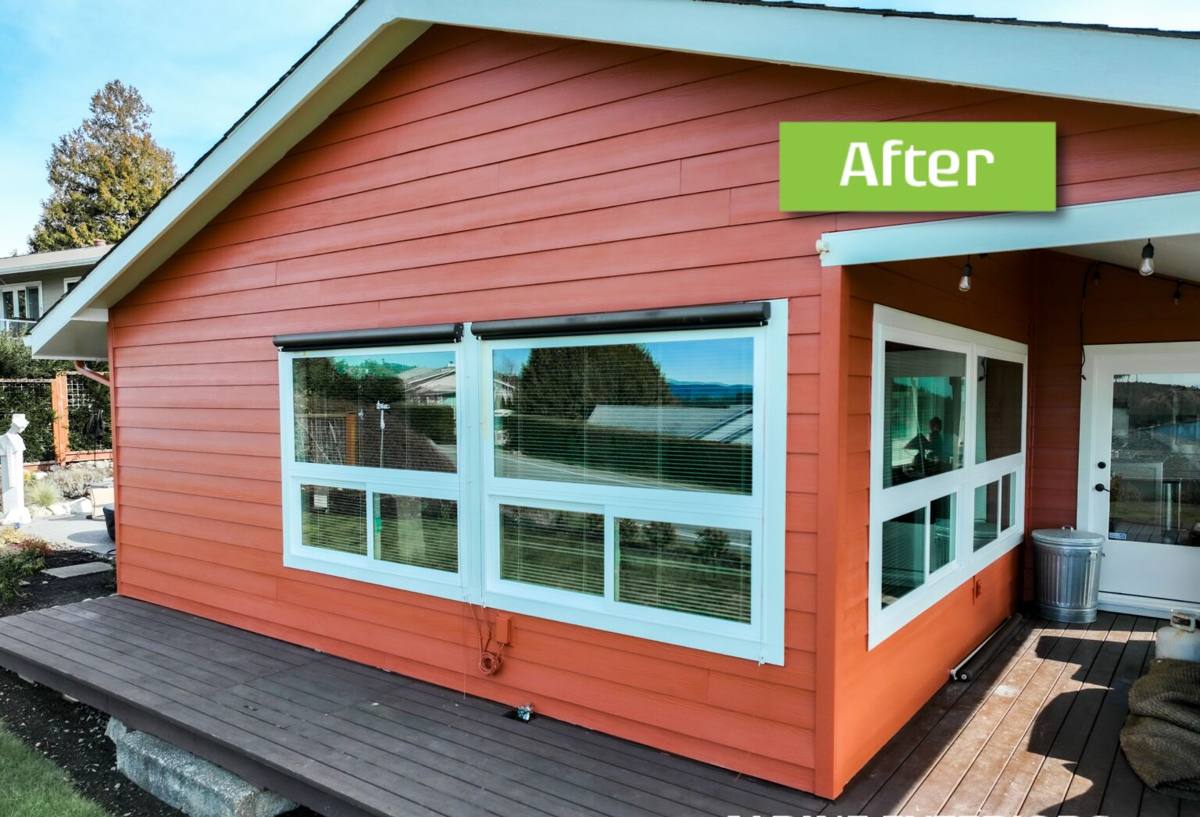
What Redmond's Climate Actually Asks of a New-Construction Window
Redmond sits inland from Puget Sound in the Eastside's tree-heavy, hill-and-valley terrain, and that shapes what a window assembly needs to survive here. The region gets long stretches of steady rain rather than short heavy downpours, which means water has more time to find any gap in the flashing or WRB lap. Moisture-laden marine air off the Sound reaches inland communities like Redmond too, adding to the general dampness even without direct saltwater exposure.
Two other local factors matter as much as the rain itself:
Tree Canopy and Moss Season
Many Redmond lots — especially the wooded and hillside parcels common in and around the city — stay shaded and damp longer through fall and spring than open lots do. That extends the season when moss, algae, and general surface moisture sit against exterior surfaces, including window sills and trim. A properly sloped sill, back-dammed pan flashing, and a drainable WRB matter more on a shaded lot than on one that gets full sun and dries out quickly after a storm.
Wind-Driven Rain
King County storms regularly push rain sideways against south- and west-facing walls. A window that isn't properly flashed can look watertight in a light rain and still fail under wind-driven conditions during a real winter storm — which is exactly when it's hardest to diagnose and hardest to repair without opening up finished walls.
Getting the Water Management Right
On a new build, the window opening is one link in a continuous drainage plane that runs from the roof down through the walls to the foundation. Our job is to make sure the window doesn't break that chain.
The Flashing Sequence That Actually Works
In practice, that means following a strict shingle-lap order so water is always directed outward and downward, never trapped behind a layer:
- Sill pan flashing installed first, sloped to the exterior, with back and end dams so any water that gets past the window has somewhere to go
- WRB integrated at the sides and head so it laps over the flange correctly — not taped flat against it in a way that traps water
- Corner and head flashing installed in the correct order relative to the WRB, not as an afterthought once the wall is already wrapped
- Flashing tape compatible with both the WRB and the window manufacturer's flange material — mixing incompatible tapes and housewraps is a common source of adhesion failure
- A drainage path behind the siding so any incidental moisture can still get out
None of this is visible once siding goes on, which is exactly why it has to be done right the first time. We document flashing details with photos before they're covered, so there's a record of what's actually behind the wall.
Energy Code and Performance Requirements in King County
Washington's state energy code sets minimum performance targets for new-construction fenestration, and Redmond's building department enforces those as part of the permit and inspection process. New windows generally need to meet a prescriptive U-factor around 0.30 or better (lower is more efficient), along with solar heat gain coefficient (SHGC) limits depending on orientation and the compliance path the builder is using. Bedrooms and other habitable rooms also have minimum egress size and sill-height requirements that have to be met regardless of the window's energy rating.
Because code requirements and compliance paths do change and vary by project, we confirm the current specifics against the permit set and the city's requirements for each job rather than assuming last year's numbers still apply.
How Frame Materials Compare for New Construction
| Material | Moisture Performance | Maintenance | Typical Fit in New Builds |
|---|---|---|---|
| Vinyl | Good; won't rot, resists moisture well | Low | Cost-effective, widely used across price points |
| Fiberglass | Excellent; very stable in wet-dry cycling | Low | Common on higher-end new builds; holds paint well if colored |
| Wood / Wood-Clad | Good on the clad exterior; interior wood needs protection | Moderate to higher | Chosen for interior appearance; requires disciplined flashing detail |
| Aluminum | Durable but conducts heat/cold; needs a thermal break | Low | Less common residentially in our wet, mild climate |
We don't push one material as universally "best" — the right choice depends on the home's design, the budget, and how much exterior maintenance the owner wants to take on long-term.
Our New-Construction Window Process
Coordinating with Builders and Framers
We work off the same framing and window schedule as the general contractor, and we check rough openings against the actual window specs before install day — not after. Undersized or out-of-square openings are common on fast-moving builds, and catching that early is much cheaper than forcing a window into a bad opening.
Install, Seal, and Document
Each window is set plumb, level, and square, fastened per the manufacturer's instructions (which affects the warranty), shimmed correctly to avoid frame distortion, and sealed with the flashing sequence described above. We photograph flashing and pan details before the WRB and siding cover them.
Timeline and Inspections
Window installation on a new build has to line up with the city's inspection schedule — typically after rough framing and weatherization but before siding closes the wall. We build our schedule around those inspection points so the project doesn't stall waiting on us, and so nothing gets covered before it's been signed off.
Choosing the Right Window for a Redmond New Build
Beyond frame material, a few decisions matter more in our climate than they might elsewhere:
- Glazing package: double-pane, low-E, argon-filled units are standard for meeting current energy code and keeping heating costs down through our long, mild-but-damp winters
- Sill design: a sloped sill with a proper drip edge sheds water faster, which matters more on shaded or wooded Redmond lots that stay damp longer
- Operating style: casements seal tighter against wind-driven rain than sliders because the sash compresses against the frame rather than sliding past a track
- Color and finish: darker exterior finishes absorb more heat, which can affect frame expansion — worth discussing on larger window walls or south-facing exposures
- Screens and hardware: corrosion-resistant hardware is worth the small upcharge given our year-round moisture exposure
Before Windows Go In: A Practical Checklist
- Rough openings measured and confirmed against actual window sizes, not just the plan set
- WRB installed and properly lapped at all window openings
- Sill pan flashing in place, sloped, with back and end dams
- Flashing tape confirmed compatible with the WRB and window flange material
- Manufacturer installation instructions on site and followed (warranty depends on it)
- NFRC labels checked against the energy code path used for the permit
- Egress sizes and sill heights confirmed for all required bedrooms
Mistakes We See on New-Construction Projects
Most of the water problems that show up years later trace back to a handful of avoidable issues: flashing installed out of shingle-lap order, WRB taped flat against the flange instead of properly lapped, sill pans skipped or installed without end dams, or fasteners driven through the flange in the wrong pattern, distorting the frame. None of these are visible after siding goes on — which is exactly why they're worth getting right the first time rather than diagnosing a leak after the drywall is finished.
Why a Crew That Already Works Redmond Matters
New-construction window work sits at the intersection of the manufacturer's install requirements, King County and Redmond's permitting and inspection process, and the realities of our wet climate. A crew that installs windows regularly on Redmond and greater King County builds already knows the local inspection expectations, has a working relationship with the flashing and WRB systems commonly specified here, and has seen firsthand how shaded, tree-covered lots behave differently than open ones. That familiarity shows up as fewer surprises during inspection and a wall assembly built to actually shed water through a full Pacific Northwest winter — not just look finished on install day.
If you're framing up a new home or ADU in Redmond, or coordinating windows for a build already underway, we're happy to walk the plan set with you and provide a free, no-pressure estimate — use the form below to get started.