 King County
 Why Window Performance Matters for Renton Homes
Renton sits in a climate that's rarely extreme but almost never lets up. Winters bring long stretches of damp, gray weather and driving rain that comes in sideways off the wind more often than most homeowners realize. Summers are mild, but the shoulder seasons carry heavy moisture, and a long moss season sets in on anything that stays cool and wet for too long. Windows sit right at the front line of all of that. They're one of the few parts of a house that have to manage heat loss, air infiltration, and constant moisture exposure all at once, every single day of the year.
Older or poorly installed windows in this climate don't fail quietly. They fog between the panes, they let cold air track along the frame, and they can quietly drive up heating bills for years before anyone traces the problem back to the window itself. Energy-efficient windows, installed correctly for our conditions, address all of that at the same time — comfort, moisture control, and lower utility bills.
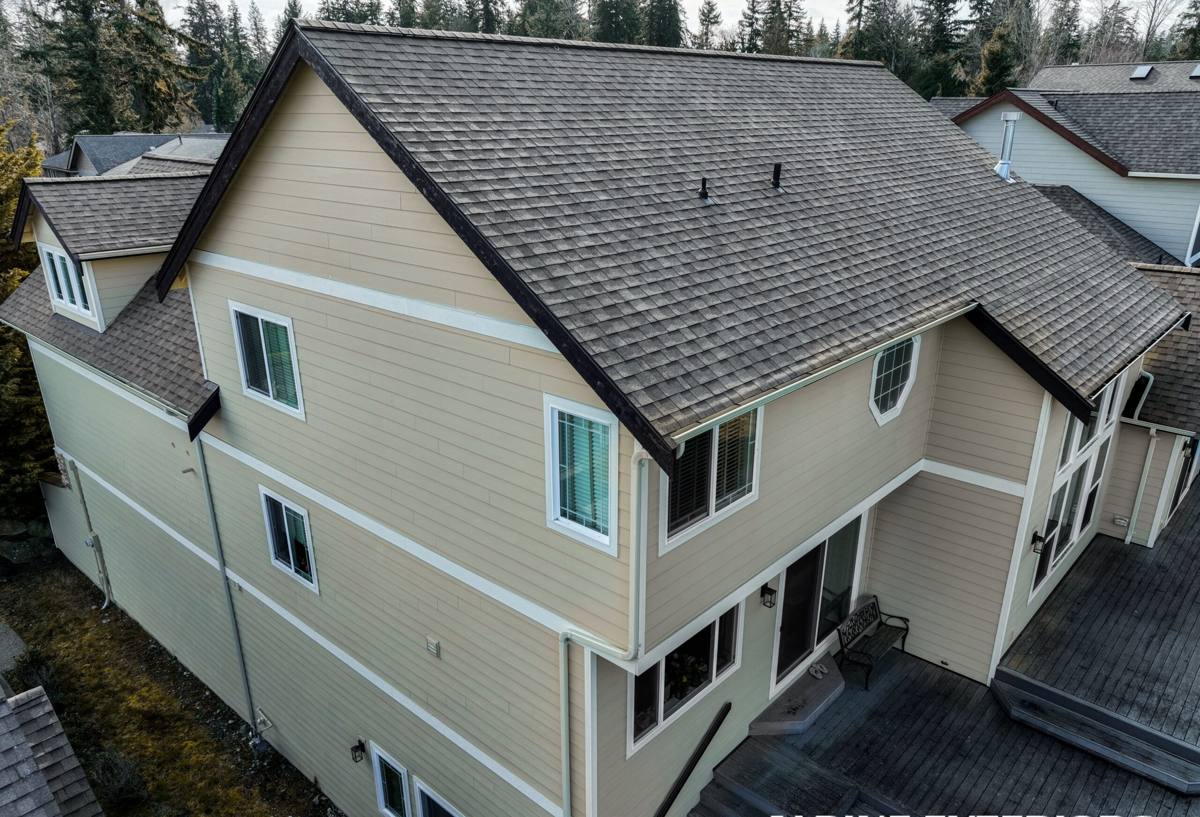
Signs Your Windows Are Working Against You
Most homeowners don't think about their windows until something is visibly wrong, but by then the underlying problem has usually been building for a while. Common signs we see on Renton service calls include:
- Visible fog or moisture trapped between glass panes, meaning the seal has failed
- Cold drafts near the frame even when the window is fully closed and latched
- Condensation forming on the inside of the glass during cold, wet weeks
- Frames that feel soft, swollen, or show dark staining at the corners or sill
- Moss or algae growth on wood sills or trim that stays damp longer than the rest of the house
- A noticeable temperature difference near the window compared to the rest of the room
Any one of these on its own might be minor. Several at once usually means the window's seal, insulation, or original installation is no longer doing its job.
What Actually Makes a Window Energy-Efficient
"Energy-efficient" gets used loosely in this industry, so it's worth being specific about what actually matters for a house in this part of King County.
U-Factor: The Number That Matters Most Here
U-factor measures how well a window resists heat loss — lower is better. In a climate like ours, where the heating season is long and the cooling season is short and mild, U-factor does more real work for your comfort and your bills than almost any other spec. When we talk through window options with a homeowner, this is usually the number we spend the most time on.
Low-E Coatings and Gas Fills
Low-emissivity (Low-E) coatings are a microscopically thin layer that reflects heat back into the home in winter while still letting in visible light. Paired with an inert gas fill like argon between the panes, a Low-E dual-pane or triple-pane unit slows heat transfer significantly compared to older single-pane or basic dual-pane glass. This is standard practice on any energy-efficient window we install today.
Warm-Edge Spacers and Condensation
The spacer bar that separates the panes of glass affects more than most people expect. Older metal spacers conduct cold straight to the edge of the glass, which is exactly where condensation and eventual seal failure tend to start. Warm-edge spacer technology reduces that cold edge effect, which matters a great deal in a climate where indoor humidity and outdoor cold meet at the glass line for months at a time.
Frame Materials: What Holds Up in This Climate
Frame material affects energy performance, maintenance, and how the window handles years of damp weather. We don't push one material as universally "best" — the right choice depends on the house, the budget, and how much upkeep the homeowner wants to take on.
| Frame Material | Energy Performance | Moisture Behavior | Maintenance |
|---|---|---|---|
| Vinyl | Very good; multi-chamber designs insulate well | Won't rot; handles constant moisture without issue | Low; occasional cleaning only |
| Fiberglass | Excellent; low expansion/contraction keeps seals tight | Very stable in wet-dry cycling | Low; holds paint well if color changes are wanted |
| Wood / Wood-Clad | Good; wood is a natural insulator | Needs a sound exterior cladding or finish to resist rot | Higher; finish needs monitoring over time |
| Aluminum | Weaker unless thermally broken | Handles rain well but conducts cold readily | Low, but energy trade-off is real |
For a house that sees the amount of driving rain and prolonged dampness common in this region, we lean toward materials and finishes that don't depend on perfect upkeep to keep performing. That's a judgment call we make with each homeowner based on their specific house, not a one-size-fits-all recommendation.
Installation Is Where Energy Efficiency Is Won or Lost
A high-performance window installed poorly will underperform a modest window installed correctly. This is the part of the job that doesn't show up on a spec sheet but matters more than almost anything else.
Flashing and Weatherproofing
Driving rain doesn't just hit a window head-on — it gets pushed sideways and upward under wind pressure, which means flashing has to be layered correctly so water sheds outward at every point, not just at the sill. This is one of the most common places we find shortcuts on older installations, and it's usually the root cause of hidden rot around a window opening long before the glass itself shows any problem.
Sealing and Insulation Around the Rough Opening
The gap between the window frame and the rough opening needs to be insulated and air-sealed without being packed so tight it distorts the frame. Done right, this stops drafts and moisture intrusion at the same time. Done carelessly, it can trap moisture against wood framing, which in a climate this wet can lead to problems well beyond the window itself.
Our Process for Renton Window Projects
We keep the process straightforward and transparent from the first visit to the final walkthrough:
- On-site assessment — we look at existing window condition, framing, and any signs of moisture or air leakage specific to your home.
- Product selection — we walk through frame material, glass package, and performance ratings that fit your house and budget, without pushing a single "one size fits all" option.
- Removal and installation — old units are removed carefully to check the condition of the framing underneath before anything new goes in.
- Flashing and sealing — this is done to shed water outward at every layer, matched to how rain actually hits homes in this area.
- Final inspection — every window is checked for square, smooth operation, and a complete seal before we consider the job finished.
Why Local Experience in King County Matters
Window installation practices that work fine in a dry climate can fail here. A crew that primarily works Renton and the surrounding King County area already knows how local building patterns, common framing conditions, and our wet, wind-driven weather interact. That translates into flashing details, sealant choices, and scheduling decisions (avoiding open wall or window cavities during heavy rain stretches, for example) that a crew unfamiliar with this region might not think twice about. Many window replacement projects here don't require a structural permit if the opening size and framing aren't changing, but code requirements around egress and safety glazing in certain rooms still apply, and it's worth confirming that before work starts rather than after.
Keeping Your New Windows Performing
Energy-efficient windows are a long-term investment, and a small amount of upkeep protects that investment through our wet seasons:
- Clear debris and moss from sills and tracks before it holds moisture against the frame
- Check weep holes on vinyl and fiberglass frames periodically to make sure they're not blocked
- Inspect exterior caulking annually and touch up any cracked or separated sealant
- Wipe down glass and frames after long wet stretches, especially on north- and west-facing walls
- Watch for early condensation between panes — it's the first sign a seal is starting to fail
- Keep gutters and downspouts clear so runoff isn't sheeting directly across window openings
What Affects the Cost of a Window Project
Costs vary quite a bit from house to house, and we'd rather walk through real numbers on-site than quote a generic range that doesn't mean much. In general, the biggest cost factors are the number of windows, frame material, glass package (dual- vs triple-pane, coatings), whether any framing repair is needed once old units come out, and window size or shape complexity. A straightforward like-for-like replacement is usually more affordable than a project that also involves resizing openings or repairing water damage discovered during removal — which is exactly why we don't skip a proper assessment before quoting.
If your windows are drafty, fogged, or just costing you more in heating bills than they should, we're happy to take a look. Fill out the form below for a free, no-pressure estimate on energy-efficient windows for your Renton home.