 King County
 Building a Deck That Actually Holds Up in Fremont
Fremont sits close enough to the water and under enough tree canopy that a deck here takes a different kind of beating than one out in a drier, sunnier part of King County. Salt-tinged air off Puget Sound, driving rain that comes in sideways for months at a time, and a moss season that can stretch from October into May all work on wood, fasteners, and framing in ways that a generic "build a deck" approach doesn't account for. We build custom decks for Fremont homeowners with that climate as the starting assumption, not an afterthought.
A deck that looks right on installation day and then goes soft, slick, or squeaky within a couple of winters usually failed for one of a handful of predictable reasons: the wrong footing depth, no drainage plan under the boards, fasteners that weren't rated for wet coastal exposure, or a decking material chosen for looks instead of how it performs shaded and damp. This page covers what we actually do differently for a Fremont build, and what to expect from a project here from first call to final walkthrough.
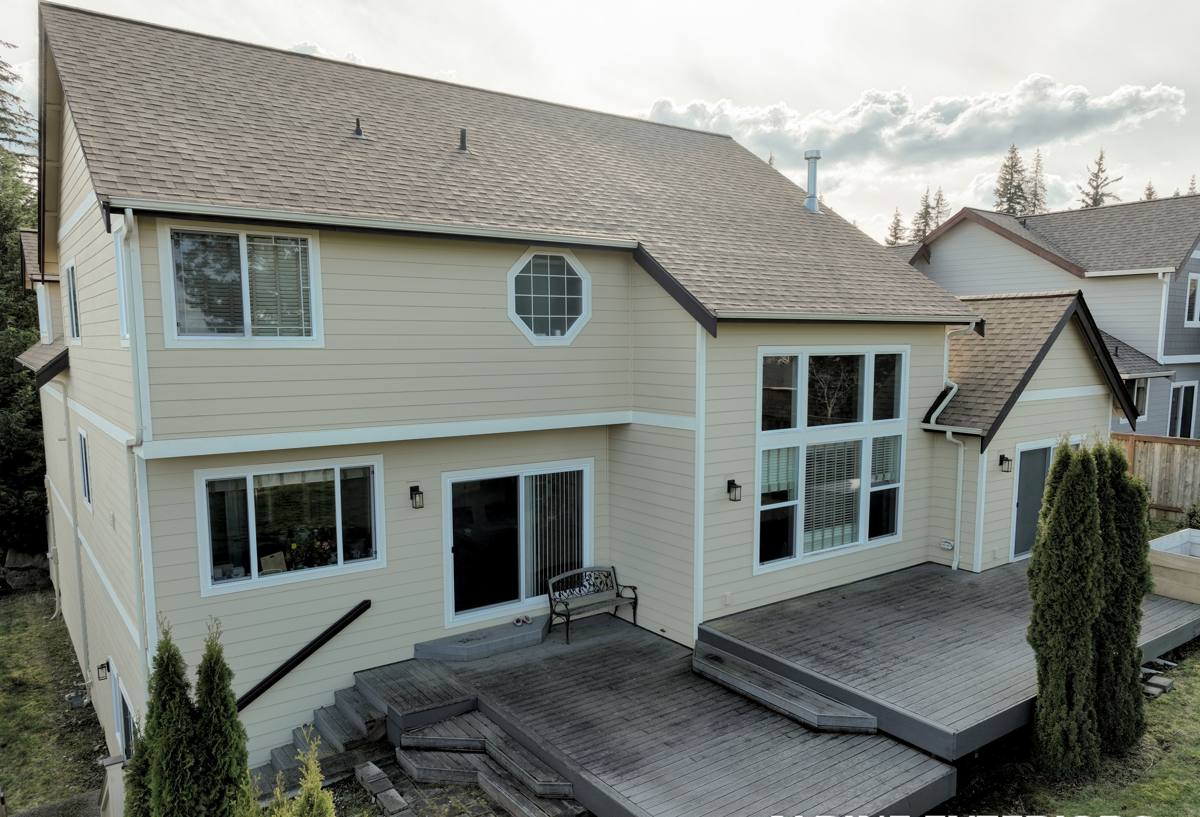
What Fremont's Climate Does to a Deck Over Time
King County's marine climate is generally mild, but "mild" doesn't mean easy on a structure. A few conditions show up again and again on Fremont properties:
- Moss and algae growth on horizontal surfaces that stay damp and shaded for weeks at a stretch, especially under mature trees or on the north side of a house
- Slick decking in fall and winter when moss, leaf litter, and standing moisture combine, which is a real slip hazard on stairs and landings
- Corrosion on hardware that isn't rated for coastal or high-moisture exposure, leading to rust streaks, loosened connections, and eventually structural movement
- Wood movement and checking from repeated wet-dry cycles, which opens up cracks that trap moisture and accelerate rot
- Slower drying times for lower decks and any structure close to grade, since Fremont's tree cover and hillier lots limit direct sun exposure on parts of the day
None of this means a deck can't last for decades in this neighborhood. It means the framing, fasteners, ventilation, and surface material all have to be chosen with that moisture load in mind from the design stage, not patched around later.
What a Correctly Built Deck Involves
The Substructure
Everything visible on a deck sits on top of a structure that has to handle Pacific Northwest wet loads for its entire life. That means footings set to the correct depth for frost and soil bearing, posts and beams sized for the actual span and load (not just "what's on the shelf"), and joist spacing tight enough to support the decking material you've chosen. On sloped or shaded Fremont lots, we also pay close attention to grading and airflow underneath the deck, since standing water or dead air pockets under a low deck are where rot problems usually start.
Ledger Attachment and Flashing
Where a deck attaches to the house is the single most common failure point on older decks in wet climates. Proper ledger flashing keeps water from working its way behind the siding and into the rim joist. This is one of those details that's invisible once the deck is finished but decides whether the connection to your house stays dry for 20 years or starts rotting from the inside in five.
Fasteners and Connectors
We use structural hardware and fasteners rated for exterior, high-moisture use — not standard interior-grade screws or connectors that will streak and weaken within a few wet seasons. This matters more in a marine climate like King County's than it does further inland.
Choosing a Decking Material for a Shaded, Wet Lot
The right decking material for a Fremont yard depends on how much sun the deck actually gets, how much upkeep you want to do, and your budget. Here's how the common options compare for this specific climate:
| Material | Moss/Moisture Resistance | Maintenance | Typical Lifespan | Relative Cost |
|---|---|---|---|---|
| Pressure-treated wood | Moderate — needs sealing to resist moss and rot | Annual cleaning, periodic staining/sealing | 10–15 years with upkeep | Lowest |
| Cedar | Good natural rot resistance, but still grows moss when shaded | Regular cleaning and refinishing to keep color and resistance | 15–20 years with upkeep | Mid |
| Composite (capped) | Very good — resists moisture absorption; still needs periodic cleaning to prevent surface moss/algae | Occasional washing, no staining or sealing | 25–30+ years | Higher |
| PVC decking | Excellent — doesn't absorb moisture | Low; periodic washing | 30+ years | Highest |
For heavily shaded Fremont lots, we're honest with homeowners: uncapped or budget wood decking on a low, tree-covered deck is going to need more frequent attention to stay safe and good-looking than the same design would on a sunny, open lot. That's not a knock on wood — it's just a maintenance trade-off worth knowing before you choose.
Design Choices That Matter More Here Than Elsewhere
Board Orientation and Drainage
Proper gapping and slope away from the house help water shed instead of pooling on the surface — important anywhere, but especially where a deck doesn't get much direct sun to dry it out between rain events.
Railing and Stair Surfaces
Stairs and landings are where moss buildup turns into a real fall risk. We pay extra attention to tread material and any texture or grooved-board orientation that helps with grip during the wet months.
Under-Deck Airflow
On lower decks or ones built close to grade — common on Fremont's hillier and more compact lots — we design for airflow underneath rather than sealing the space off, which helps everything dry out between storms instead of holding moisture against the framing.
Our Process, Start to Finish
- On-site consultation — we look at your lot's sun exposure, tree cover, slope, and existing structure before recommending a design or material
- Design and material selection — sized and specified for your actual site conditions and budget, not a one-size-fits-all package
- Permitting — most elevated decks in King County and Seattle require a permit; we handle the application and inspection scheduling
- Footings and framing — built to code for your soil and span, with attention to ledger flashing and structural hardware
- Decking, railing, and finish work — installed per manufacturer specification, since composite and PVC warranties are often tied to correct installation
- Final walkthrough — we go over the finished deck with you, including what maintenance it will and won't need
Permits and Code Basics for King County Decks
Most elevated decks require a building permit, engineered or prescriptive footing design appropriate to King County soil conditions, and guardrails at code-minimum height once the deck reaches a certain height above grade. Requirements can vary depending on whether your property falls under Seattle's building code or unincorporated King County jurisdiction, and whether the deck is attached to the house or freestanding. We handle the permit process as part of the build so you're not left figuring out jurisdiction-specific rules on your own.
Keeping a Fremont Deck Moss-Free and Solid
Even a well-built deck needs some ongoing attention in this climate. A short seasonal maintenance routine goes a long way:
- Sweep leaves and debris off the surface regularly in fall, especially between boards where they trap moisture
- Clean visible moss or algae buildup before it gets slick, using a deck-safe cleaner rather than a pressure washer set too aggressively
- Check and re-tighten any loose railing or stair connections once a year
- Inspect the ledger board area at the house for any signs of water staining or gaps in flashing
- For wood decks, plan on re-sealing or staining on the schedule the product calls for — skipping a cycle in a wet climate catches up fast
- Trim back overhanging branches where practical to get a bit more sun and airflow onto shaded sections
Why It Matters to Hire a Crew That Already Works in Fremont
A contractor who mostly builds in drier parts of the country — or even drier parts of King County — can still build a structurally sound deck, but the material choices, drainage details, and fastener specs that hold up long-term in a shaded, marine-influenced neighborhood like Fremont come from having actually dealt with the failures that happen when those details get skipped. We've seen what a five-year-old deck looks like when ledger flashing was done wrong, and what a wood deck looks like after a few moss seasons with no maintenance plan. That's the experience we build from, not a generic spec sheet.
If you're planning a new deck or replacing one that's showing its age, we're happy to walk your property, talk through material options honestly — including the maintenance trade-offs — and give you a clear picture of what a correctly built deck for your specific lot looks like. Reach out for a free, no-pressure estimate using the form below.