 King County
 Fremont's Roofs Take a Different Kind of Beating
Fremont sits close to the water, between Lake Union and the ship canal, which means the neighborhood gets a steady mix of salt-tinged air, driving rain off the Sound, and deep shade from mature trees that never really lets a roof dry out. That combination is hard on shingles, flashing, and the wood underneath in ways that drier, more inland parts of King County don't deal with in quite the same way. A roof that would hold up fine somewhere drier can develop soft spots, moss colonies, and slow leaks here simply because it never gets a real chance to dry out between storms.
We've worked on roofs throughout King County long enough to know that a generic repair playbook doesn't hold up in Fremont. The fixes that actually last here account for near-constant moisture exposure, salt-laden air, and a moss season that can run most of the year on shaded lots.
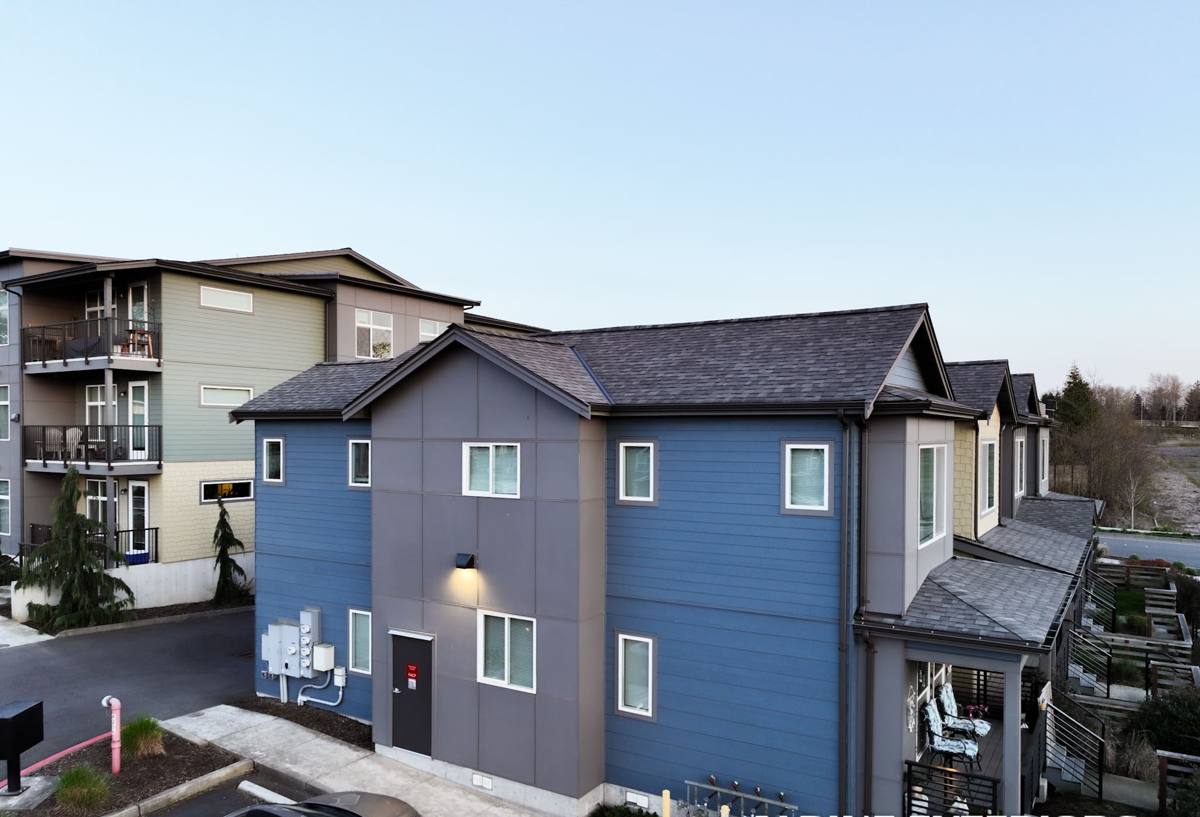
Common Roof Problems We Find in Fremont Homes
Moss and Organic Growth
Moss is the most visible issue on Fremont roofs, and it's more than cosmetic. Moss holds moisture against the roofing material, works its way under shingle edges, and lifts tabs as it spreads, creating small gaps that driving rain can push water through. Left alone through a few wet seasons, what starts as a patch of green on a north-facing slope can turn into a saturated roof deck underneath it.
Flashing Failures
Flashing around chimneys, skylights, vent pipes, and roof-to-wall transitions is where most leaks actually start, not out in the open field of the roof. Older homes in Fremont often have flashing that's been patched with roofing cement over the years instead of properly replaced, and that kind of patch job tends to fail quietly until water shows up on a ceiling below.
Aging Materials on Older Housing Stock
Fremont has a lot of homes that are several decades old, and many have already been re-roofed at least once. Repair work on these houses often turns up layered roofing, older underlayment that's lost its flexibility, or decking that's softened in spots from long-term moisture exposure — all things an honest repair estimate has to account for rather than gloss over.
Wind-Driven Rain Intrusion
Storms off the Sound don't just drop rain straight down — wind pushes it sideways and up under edges, ridge caps, and poorly lapped shingles. A roof that sheds water fine in a light drizzle can still leak in a wind-driven storm if the laps and fasteners weren't done right the first time.
What a Correct Roof Repair Actually Involves
A repair that actually solves the problem starts with finding the real cause, not just patching wherever water happens to be showing up inside the house. Water travels before it drips, so a stain on a ceiling can be several feet away from the actual failure point on the roof above it.
- Walk the full roof, not just the reported leak area, to check flashing, vents, valleys, and moss coverage
- Identify the actual entry point, which is often different from where the leak shows up indoors
- Check the roof deck and underlayment condition around the failure, not just the surface layer
- Match repair materials to the existing roof in type, weight, and where possible, color and age
- Rebuild flashing and step flashing properly rather than covering old flashing with more sealant
- Clear moss and debris from the surrounding area so the repair isn't sitting under trapped moisture again within a season
- Clean up and haul away all old material and debris before calling the job finished
That's the checklist we work from on every repair call, whether it's a single flashing fix or a larger patch job spanning a full slope.
Repair vs. Replacement: How We Help You Decide
Not every roof problem in Fremont needs a full replacement, but not every leak should be chased with another round of patches either. We look at the age of the roof, how many prior repairs it's had, and how much of the roof deck is actually affected before recommending either path.
| Factor | Leans Toward Repair | Leans Toward Replacement |
|---|---|---|
| Roof age | Under 15-20 years, single layer | Nearing or past its expected lifespan |
| Extent of damage | Isolated to one area, like flashing or one slope | Multiple leak points spread across the roof |
| Moss and moisture history | Recently treated, limited deck softening | Long-term moss growth with soft decking in several spots |
| Prior repair history | First or second repair on this roof | Several past patch jobs stacking up over the years |
| Materials available | Matching shingles or panels still obtainable | Discontinued product or poor color and material match |
We'll walk you through where your roof falls on that list and give you a straight answer, not an upsell. If a repair will genuinely hold for several more years, that's what we'll recommend.
Roofing Materials We See Around King County
Fremont's housing stock includes a mix of roofing types, and each one carries its own repair considerations in this climate.
| Material | What to Know for This Climate |
|---|---|
| Composition (asphalt) shingle | Most common material locally; performs well when ventilation and flashing are done right, but moss and algae streaking need regular attention |
| Cedar shake | Found on a number of older Fremont homes; needs consistent moss and moisture management or the wood loses years off its expected life |
| Metal roofing | Sheds moss and water well overall, but repairs require carefully matching panel profile and finish to avoid a visible mismatch |
| Low-slope or flat sections | Common on additions and certain home styles; membrane seams and drains are the areas that need the closest inspection |
When we recommend against a particular repair approach, such as patching a shake roof with asphalt shingle instead of matching material, it comes down to long-term moisture behavior and appearance, not brand-bashing. Mixing roofing materials on one roof can create its own problems over time, from uneven wear to water tracking at the seam where two systems meet.
Our Repair Process, Start to Finish
- Inspection. We get on the roof, not just a ground-level look, and document what we find, including areas beyond the reported leak.
- Honest estimate. You get a written scope and price before any work starts, including whether we think repair or replacement makes more sense for your situation.
- Scheduling around the weather. Roof repair in King County means working around rain windows — we plan the job for a stretch of workable weather rather than rushing a patch into an incoming storm.
- The repair itself. Flashing rebuilt where needed, decking replaced where it's gone soft, and shingles or panels matched and properly fastened and lapped.
- Cleanup and haul-away. Old material, nails, and debris cleared off the roof and from the ground around your home.
- Follow-up. We tell you what to expect going forward, whether that's a moss treatment schedule, a gutter check, or a note to keep an eye on a particular area.
Moss and Debris: What Fremont Homeowners Should Stay On Top Of
Because of the tree cover and moisture in this part of King County, roof maintenance here is less "set it and forget it" than it would be in a drier climate. A little regular attention heads off most of the repair calls we get.
- Have moss treated or removed at least once a year, more often on heavily shaded slopes
- Keep gutters clear so water isn't backing up under the lower courses of roofing
- Trim back branches that keep one section of the roof shaded and damp longer than the rest
- Have the roof looked at after any major windstorm, not just on an annual schedule
- Address small flashing or shingle issues promptly — they rarely stay small through a full wet season
Why a Crew That Already Works Fremont Matters
Roofing in Fremont isn't identical to roofing on the east side of King County or out toward the foothills. Tree cover, proximity to the water, and the age of the housing stock all change what a repair needs to hold up over the long run. A crew that already works this part of Seattle knows roughly what to expect before climbing the ladder — how much moss buildup is typical for a shaded, north-facing slope near the water, what flashing details tend to fail on homes of a certain age, and how to schedule work around the area's rain patterns.
Local experience also means faster, more accurate estimates. We're not guessing at what's hiding under a layer of moss or working off photos alone — we're basing the scope of work on what we've actually seen hold up, and what we've seen fail, on roofs like yours in this same climate.
Ready for a Straight Answer on Your Roof?
If you're dealing with a leak, moss buildup, or you just want a second opinion on a roof that's already had a repair or two, we're happy to take a look. We'll give you a clear, no-pressure assessment of what your roof actually needs, whether that's a targeted repair, a maintenance plan, or an honest conversation about replacement timing. Fill out the form below for a free estimate.