 King County
 Board & Batten Siding in Issaquah: A Style That Has to Earn Its Keep
Board and batten is one of the most requested siding styles in Issaquah, and it's easy to see why. The vertical lines suit the craftsman and modern-farmhouse homes common on the Sammamish Plateau and in the neighborhoods closer to downtown Issaquah, and the deep shadow lines the battens create give a home real texture instead of a flat wall of material. But board and batten isn't just a look you can bolt onto any product. It's a system, and how that system handles water, movement, and years of shade from the surrounding tree cover determines whether it looks sharp for decades or turns into a maintenance headache in five years.
This page is specifically about doing board and batten right for homes in Issaquah, not a general overview of the style. Issaquah's setting at the base of the Cascade foothills near Lake Sammamish means homes here deal with a specific combination of conditions: heavy, sustained rain events, long stretches of shaded, slow-drying wall surfaces under mature trees, and a moss and algae season that can run most of the year in the shadier lots. None of that is unique to one neighborhood, but it's consistent enough across Issaquah that it should shape material choice and installation detailing.
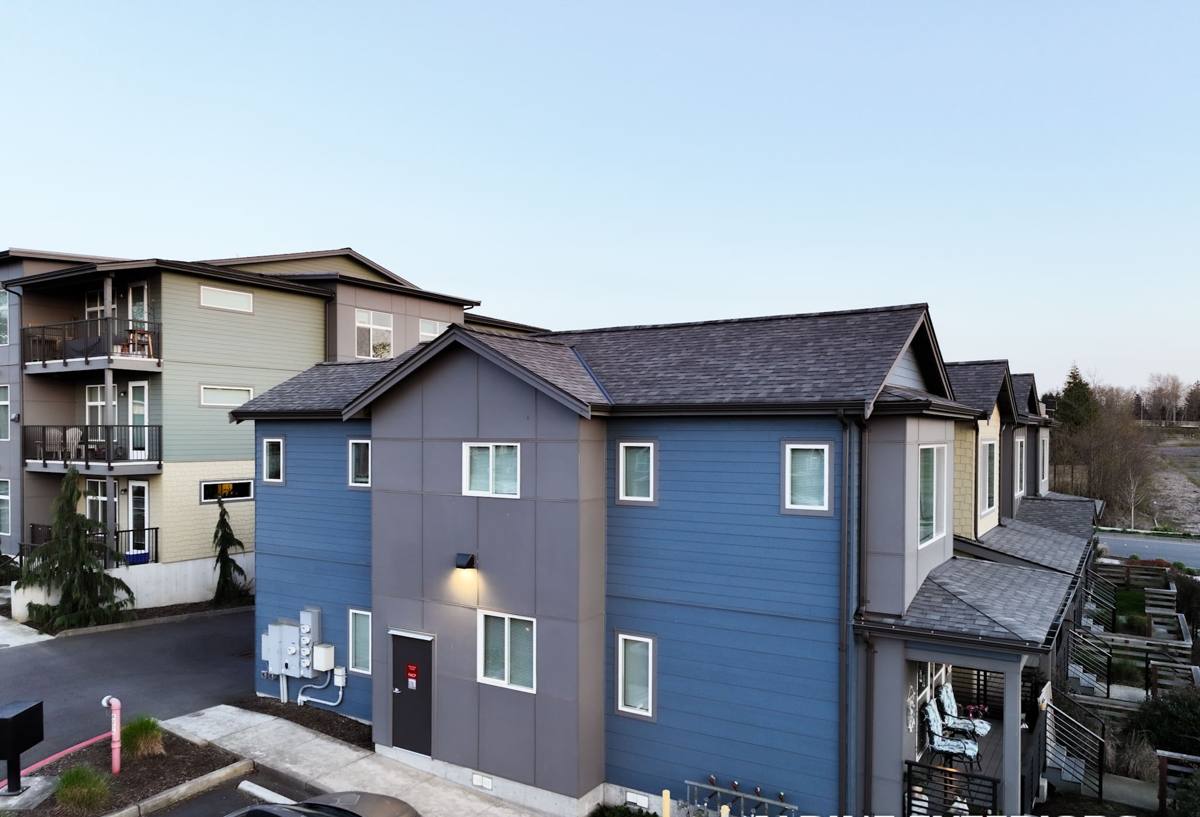
What King County's Climate Does to Vertical Siding
Vertical siding styles like board and batten have more seams and more vertical joints than horizontal lap siding, and every one of those seams is a potential path for moisture if it isn't detailed correctly. In a drier climate that's a minor concern. In King County, it's the whole ballgame.
Driving Rain and Wind-Driven Moisture
Issaquah sits close enough to the Cascades that storms moving through the region often arrive with real wind behind the rain, not just straight-down drizzle. Wind-driven rain pushes water sideways and upward against a wall, which means it can find its way behind battens and around butt joints that would stay dry in calmer weather. Correct flashing and joint treatment matter more here than in siding markets with gentler weather patterns.
Moss, Algae, and Shade
Issaquah's tree canopy and its lots along wooded hillsides mean plenty of exterior walls get only partial sun, if that, for much of the year. Shaded, damp surfaces are exactly what moss and algae need to take hold, and once organic growth establishes itself on a porous or absorbent siding material, it holds moisture against that surface even longer, feeding a cycle that accelerates rot and paint failure. While Issaquah itself isn't a shoreline community, it shares the broader Puget Sound region's marine-influenced climate, and that damp, mild, moss-friendly weather pattern doesn't stop at the water's edge.
Freeze-Thaw Cycling in the Foothills
Elevation near the foothills means Issaquah sees more frost and the occasional snow event than lower, closer-in Seattle neighborhoods. Water that's absorbed into a siding material and then freezes expands, and repeated freeze-thaw cycling is one of the more reliable ways to shorten the working life of a moisture-sensitive board.
What a Correct Board & Batten Installation Actually Involves
Board and batten looks simple from the curb, but the installation details are where the style either holds up or falls apart. A correct job includes:
- A drainable water-resistive barrier behind the siding, not just building paper stapled flat to the sheathing
- A rainscreen gap (typically furring strips) that lets any water that gets past the surface drain and lets the wall assembly dry out between rain events
- Manufacturer-specified fastener spacing and fastener type driven into framing, not just sheathing, at both the boards and the battens
- Flashing at every horizontal transition — window and door heads, water tables, roof-to-wall intersections — not caulk used as a substitute for flashing
- Proper clearance from grade, decks, and roof lines so the bottom of the siding isn't sitting in standing water or snow load
- Battens installed with consistent reveal and spacing so the finished wall reads as intentional, not improvised
Skip any one of these and the style still looks fine on installation day. The problems show up two, five, or ten winters later, usually as staining, soft spots, or paint failure right at the seams — which is exactly where board and batten has the most seams to fail at.
Why We Install Board & Batten Only in James Hardie Fiber Cement
We get asked fairly often about board and batten in cedar, engineered wood, or vinyl. All three can be made to look good in a showroom or on a sunny install day. Our position is that in a King County climate — and especially on shaded, rain-exposed Issaquah lots — those materials put more of the long-term burden on the homeowner than we think is fair to sell someone.
Cedar Board & Batten
Real cedar has genuine appeal and a natural look that some homeowners want specifically. But cedar is an absorbent, organic material, and in a climate with Issaquah's moss season and shade patterns, it needs regular refinishing, vigilant caulk maintenance, and prompt attention to any moisture intrusion to avoid rot. That's a real ongoing commitment, not a one-time cost.
Vinyl Board & Batten
Vinyl is inexpensive and low-maintenance in the sense that it doesn't need painting, but it's a thin, flexible plastic product that expands and contracts significantly with temperature swings, can crack in impacts, and fades under UV exposure over time. It also can't be painted to refresh a color the way fiber cement can, so once it fades or goes out of style, the fix is replacement.
LP SmartSide and Other Engineered Wood
Engineered wood products have improved over the years, but they're still wood-based, which means the cut edges and any moisture intrusion point are vulnerable to swelling and rot if the installation or ongoing caulk maintenance isn't kept up perfectly. In a climate that gives a wall very little time to dry out between storms, that's a risk we'd rather not build a reputation on.
James Hardie Fiber Cement
James Hardie's board and batten systems — whether built from HardiePanel vertical panels with matching battens or the Hardie Artisan line — are fiber cement: a mix of cement, sand, and cellulose fiber that doesn't rot, doesn't support moss growth the way wood does, and is non-combustible. Hardie's HZ5 product line is engineered specifically for climates like ours, and the factory-applied ColorPlus finish is baked on and warranted against fading and peeling in a way field-applied paint on cedar or engineered wood can't match. That's the whole reason we standardized on it — not as a sales pitch, but because it's the product we're willing to stand behind after the installation crew leaves.
Board & Batten Material Comparison for King County Homes
| Factor | James Hardie Fiber Cement | Cedar | Vinyl | Engineered Wood |
|---|---|---|---|---|
| Moisture/rot resistance | Excellent — cement-based, doesn't rot | Moderate — needs sealed finish maintained | Good (won't rot, but water can get behind it) | Fair — vulnerable at cut edges/gaps |
| Moss/algae resistance | Strong | Weak without regular treatment | Moderate — can still harbor growth in shade | Weak to moderate |
| Finish longevity | Factory ColorPlus, long warranty | Field-applied, repaint every few years | Color molded in, fades over time, not repaintable | Field-applied, repaint periodically |
| Fire resistance | Non-combustible | Combustible | Melts/deforms under heat | Combustible |
| Typical maintenance | Occasional wash, minimal upkeep | Regular refinishing and caulk checks | Occasional wash, watch for cracking | Regular caulk and paint upkeep |
Our Process for an Issaquah Board & Batten Project
Every board and batten job we take on in Issaquah follows the same sequence, because skipping steps is where most siding failures start.
- On-site assessment — we look at your home's sun exposure, tree cover, drainage patterns, and existing wall condition, since a shaded, low-sun wall on the north side needs the same care as a fully exposed south wall, just different attention
- Sheathing and moisture check — before any new siding goes up, we confirm what's underneath is sound; covering rot or trapped moisture with new siding just hides the problem
- Water-resistive barrier and rainscreen installation — this is the layer that does the real work of managing moisture over the life of the siding
- Panel and batten layout — we plan spacing and reveal before the first board goes up so the finished wall is even and intentional
- Installation to manufacturer spec — correct fastener type, spacing, and penetration into framing, per James Hardie's published installation requirements
- Flashing and detail work — every window, door, and transition gets flashed, not just caulked
- Final walkthrough — we go over the finished job with you before we consider it done
Maintaining Board & Batten Siding in an Issaquah Climate
Fiber cement board and batten is low-maintenance compared to wood, but "low-maintenance" isn't "no-maintenance." A short seasonal routine keeps it performing the way it's designed to:
- Rinse siding annually to remove pollen, dust, and early moss growth before it establishes, especially on shaded walls
- Check caulking at window and door trim yearly, since caulk is the one component that wears out faster than the siding itself
- Keep gutters clear so overflow doesn't run directly down the wall face during heavy rain events
- Trim back vegetation and tree limbs that keep a wall section shaded and damp longer than the rest of the house
- Watch for any staining or discoloration at seams and address it early rather than waiting
Why Local Issaquah Experience Actually Matters Here
A crew that hasn't worked in Issaquah before can still install siding, but they're guessing at things a local crew already knows: which wall orientations on Sammamish Plateau and foothill lots stay damp longest, how local permitting and any HOA design guidelines in the area tend to handle exterior material changes, and how this region's rain patterns differ from other parts of King County. That local pattern recognition shows up in small decisions — where to add extra flashing attention, how to sequence a job around Issaquah's wetter months — that don't show up on a spec sheet but do show up in how the siding performs ten years later.
If you're considering board and batten siding for your Issaquah home, we're happy to walk the property with you, look at your specific sun and moisture exposure, and give you a straight assessment of what the job actually needs — no pressure, no inflated quote games. Use the form below to request a free estimate.