 King County
 Building a Deck That Actually Holds Up in Issaquah
Issaquah sits where the Cascade foothills meet the broader Puget Sound climate zone, and that combination is tougher on outdoor structures than most homeowners expect. Long stretches of driving rain, moisture-laden air moving through the region, and shaded, tree-covered lots all add up to conditions that push moss, mildew, and slow wood rot into places a deck built for a drier climate would never see. A deck that looks fine on installation day can start showing problems within a year or two if it wasn't designed and built with this specific climate in mind.
We build and repair decks for homeowners throughout King County, and Issaquah properties tend to share a few traits: sloped lots, partial tree cover, and a long stretch of the year where surfaces simply don't dry out fast. None of that means you can't have a great deck here. It means the details that get skipped in a quick, generic install are exactly the details that matter most.
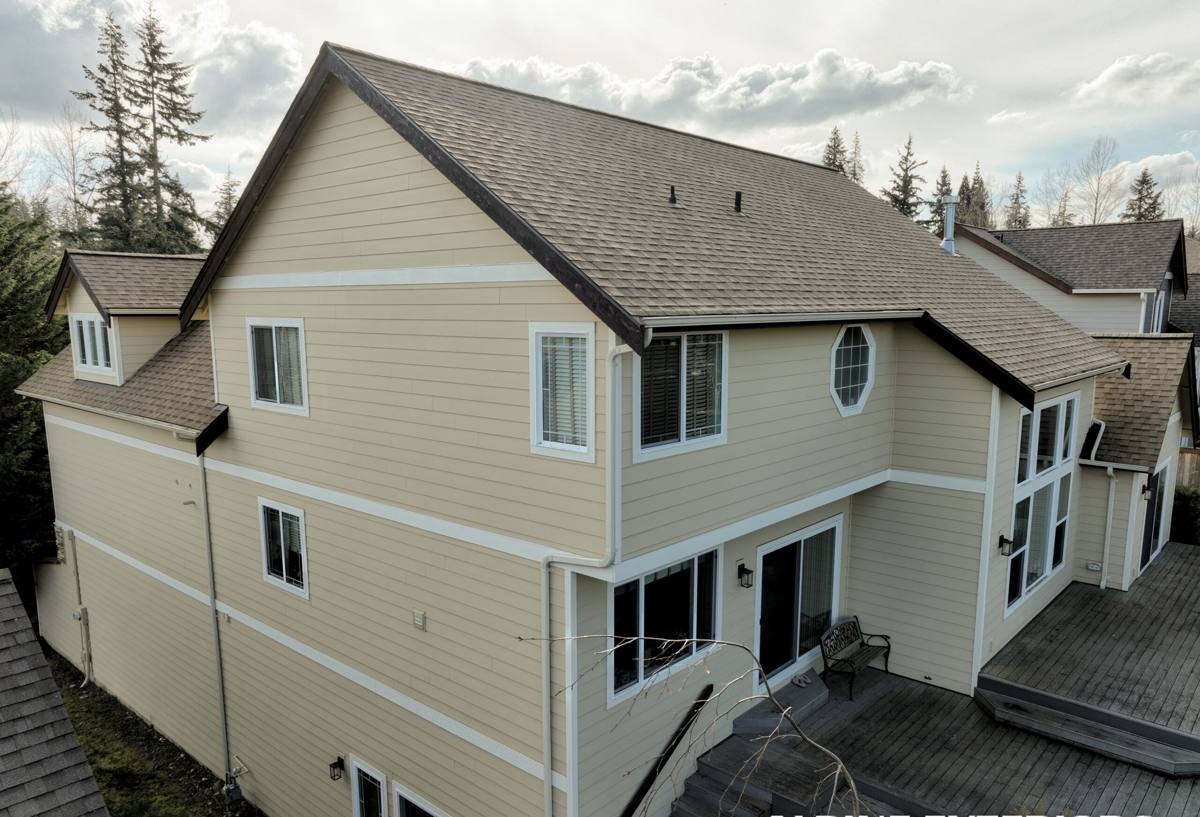
What Issaquah's Climate Does to an Outdoor Deck
The Puget Sound region's marine-influenced climate keeps humidity high for months at a time. Rain rarely comes as a short, hard downpour and moves on — it settles in, soaks surfaces, and gets pulled into every joint, fastener hole, and unsealed cut end on a deck. Add tree cover, which is common on Issaquah lots, and you get a surface that stays damp long after the rain has stopped.
That combination creates a few predictable failure points:
- Moss and algae growth on decking boards, especially on the shaded side of the house or under tree canopy, which makes surfaces slick and accelerates surface wear.
- Trapped moisture at ledger boards and framing connections — the hidden structural areas where a deck actually fails, long before the decking surface shows damage.
- Fastener corrosion when the wrong hardware is used, leading to rust staining and weakened connections over time.
- Slow wood rot in end grain and any spot where water can sit instead of shed.
A deck built without accounting for these realities may look identical to a properly built one at first glance. The difference shows up three, five, or ten years down the road.
What a Correctly Built Deck Needs Here
Structure You Don't See
The framing, footings, ledger attachment, and fasteners underneath the decking boards do most of the real work of keeping a deck safe and long-lasting. In a climate that stays wet as long as this one does, we pay particular attention to how the deck ledger is flashed against the house, how footings are set relative to grade and drainage, and using fasteners and connectors rated for outdoor, high-moisture exposure rather than standard interior-grade hardware.
Drainage and Airflow
Water needs somewhere to go, and air needs to move underneath the deck to help it dry between rain events. That means correct board spacing, a substructure that isn't boxed in without ventilation, and grading underneath the deck that carries water away from the house foundation instead of pooling against it.
Surface Material Matched to the Site
A fully shaded deck under mature trees needs a different surface strategy than one that gets afternoon sun. We factor in how much direct light and airflow a specific spot on your property actually gets before recommending a decking material, because that single factor changes how fast moss and mildew take hold.
Comparing Decking Materials for a Wet, Shaded Climate
| Material | Moisture Behavior | Maintenance | Best Fit |
|---|---|---|---|
| Pressure-treated wood | Resists rot when properly sealed and maintained; end cuts need re-sealing | Annual cleaning and periodic sealing/staining | Budget-conscious projects where upkeep will be kept current |
| Cedar | Naturally moisture-resistant, but still needs finish maintenance in this climate | Regular cleaning and re-staining to preserve color and protection | Homeowners who want a natural look and are willing to maintain it |
| Composite decking | Doesn't rot, but can still grow surface mildew or moss in constant shade | Periodic washing; no staining or sealing required | Low-maintenance preference, shaded or sun-exposed lots alike |
| PVC decking | Fully moisture-resistant surface material | Occasional washing | Heavily shaded, damp lots where moisture exposure is constant |
There's no single "best" material for every Issaquah property — the right choice depends on how much shade and airflow your specific site gets, your budget, and how much upkeep you actually want to do. We walk through this honestly with every homeowner rather than defaulting to whatever is easiest to sell.
Moss, Mold, and the Long Wet Season
Moss doesn't just make a deck look neglected — on a walking surface, it's a slip hazard, and left alone it holds moisture against the board surface, which shortens the life of both wood and composite decking. In this region, moss season runs long, often from fall through spring, and shaded decks can stay damp for weeks at a stretch.
Two things reduce moss and mold pressure on a deck more than anything else: sunlight and airflow, neither of which we can add to your lot, and surface design and spacing, which we can control. Proper board gapping, substructure ventilation, and keeping the deck surface clear of overhanging debris all make a measurable difference in how much moss takes hold between cleanings.
Our Deck Building Process
We build decks the same deliberate way regardless of size, because the steps that get skipped are the ones that cause problems later:
- On-site evaluation — we look at your specific lot's sun exposure, drainage, tree cover, and how the deck will attach to the house.
- Design and material discussion — layout, decking material, railing, and any features are discussed against your budget and how much maintenance you want to take on.
- Permitting — we handle the local permit and inspection process so the deck is built to code, not just to look right.
- Foundation and framing — footings, ledger flashing, and structural framing are built first and built right, since this is the work that determines the deck's actual lifespan.
- Decking, railing, and finish work — the visible surface goes on last, with attention to spacing and detailing that supports drainage and airflow.
- Final walkthrough — we go over the finished deck with you, including what maintenance it will need going forward.
A Simple Checklist for Homeowners Evaluating a Deck Quote
- Does the quote specify fastener and hardware type, or just "standard hardware"?
- Is ledger flashing against the house explicitly included?
- Does the contractor ask about sun exposure and tree cover on your specific lot?
- Is a local permit included in the process, or left to you?
- Does the proposal explain trade-offs between materials rather than pushing one option?
Permits and Local Code Considerations
Most deck projects in King County jurisdictions require a permit, particularly for decks attached to the house or built above a certain height. Permitting isn't a formality — it triggers inspections of the footings and structural connections that are exactly the areas most prone to failure if built incorrectly. We handle the permit process as a standard part of the job so you're not left navigating it on your own, and so the finished deck is documented as built to code.
Why It Matters to Hire a Crew That Already Works in Issaquah
A contractor who works regularly in this specific area already knows how local lots drain, how much shade a typical property gets under mature tree cover, and which construction details actually hold up through a full King County wet season rather than just looking good on installation day. That local pattern recognition shows up in small decisions — where to route drainage, which fastener to use, how to detail a ledger connection — that a crew unfamiliar with the area's conditions may not think to prioritize.
It also matters for accountability. A local crew is easy to reach if a question comes up after the project is done, and has a reputation in the area worth protecting.
What a Deck Realistically Costs to Maintain
Material choice affects the ongoing time and cost of keeping a deck in good shape, and it's worth thinking about before the build, not after:
| Factor | Wood Decking | Composite/PVC Decking |
|---|---|---|
| Upfront cost | Generally lower | Generally higher |
| Annual maintenance | Cleaning plus periodic sealing or staining | Cleaning only |
| Moss/mildew resistance | Depends on finish upkeep | Better in shaded, damp spots |
| Expected lifespan with upkeep | Long, if maintenance stays current | Typically longer with less ongoing effort |
There's an honest trade-off here rather than a clear winner: wood costs less upfront but asks more of you over time, while composite and PVC cost more upfront and ask less. We'll lay out the real numbers for your project once we've seen the site.
Get an Honest Look at Your Deck Project
Whether you're planning a new deck, replacing an aging one, or want a second opinion on a quote you've already received, we're happy to take a look and talk through what your specific lot actually needs. Use the form below to request a free, no-pressure estimate.