 King County
 Fiber Cement Siding in Issaquah: Built for Foothill Rain and a Long Moss Season
Issaquah sits where the Puget Sound lowlands meet the foothills of the Cascades, tucked against Tiger Mountain and Squak Mountain with Lake Sammamish just to the west. That location is part of what makes the town look the way it does, thick tree cover, green hillsides, a lot of shade, but it also means local homes take on more moisture stress than a straight rainfall total would suggest. Marine air moving in off Puget Sound combines with orographic lift off the foothills, so Issaquah tends to see more sustained wet weather than flatter parts of King County, and that moisture lingers longer on shaded, tree-covered lots. Add in a moss season that can run most of the year on north-facing walls, and you have a climate that is genuinely harder on exterior siding than it looks from the street.
We install James Hardie fiber cement siding exclusively on Issaquah homes and across the rest of our King County service area. That is not a brand preference we picked off a supplier list, it is a standard we settled on after seeing which materials actually hold up here and which ones quietly fail behind the paint.
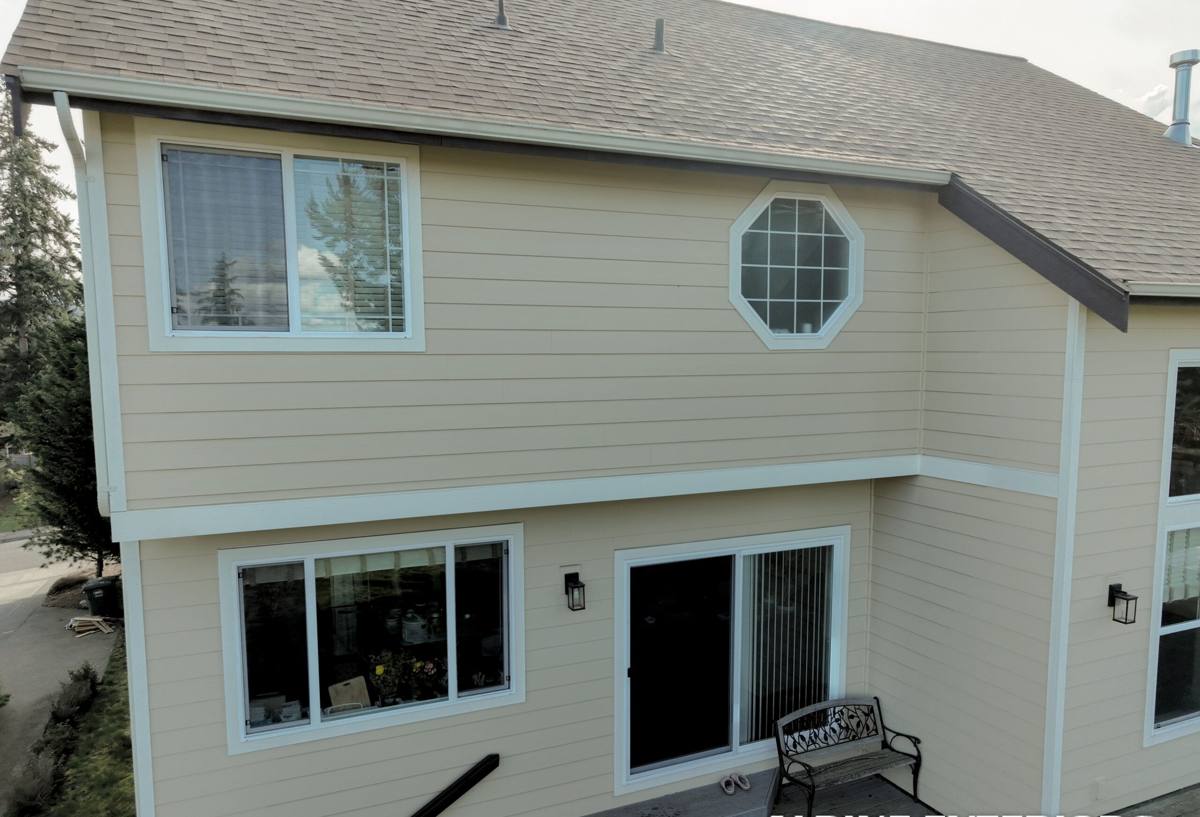
What Issaquah's Climate Does to Siding
Driving Rain and Foothill Runoff
Rain in this part of King County rarely falls straight down for long. Wind pushes it sideways into wall assemblies, and homes closer to the wooded slopes around Issaquah can also deal with runoff and splash-back from saturated ground and dense landscaping. That combination puts real load on lap joints, trim details, and anywhere two siding pieces meet, well beyond what a simple annual rainfall figure implies.
A Long Moss Season Under Tree Cover
Heavy tree cover, consistent shade, and steady moisture add up to a moss and mildew season that can stretch across most of the year on the shadier sides of a house. Any siding material that is even slightly porous, or that holds moisture against the substrate, becomes a growth surface over time. It usually shows up first low on the wall or on north-facing elevations, long before it is obvious from the street or driveway.
Marine-Influenced Humidity
Issaquah is inland, but it still sits within the marine air mass that defines the greater Puget Sound region. That means consistently high humidity and slow drying times compared to a drier inland climate, which matters for how quickly a wall assembly can shed moisture after a storm rolls through.
Why We Only Install James Hardie Siding
We used to offer a wider range of siding products. We stopped, and the reason was practical rather than promotional: what we kept finding on tear-offs and service calls in this exact climate pushed us toward one system we could fully stand behind.
- Non-combustible core: Fiber cement doesn't feed a fire the way wood-based siding products can, which matters for household safety and insurance underwriting alike.
- Factory-applied ColorPlus finish: The color is baked on under controlled factory conditions rather than brushed on in the field, so it resists fading and moisture intrusion far longer than site-applied paint.
- Climate-engineered HZ product lines: Hardie's HZ5 formulation is built for regions with sustained moisture exposure and freeze-thaw cycling, which describes the King County foothills well.
- Dimensional stability: Fiber cement doesn't swell, cup, or warp the way engineered wood siding can after repeated wet-season moisture cycles.
- Strong transferable warranty: Hardie backs its products with one of the more robust warranty structures in the industry, provided the installation follows spec.
We won't install LP SmartSide, vinyl siding, Cemplank, Allura, primed spruce, or cedar. Each has a legitimate place in the market, and plenty of homeowners are satisfied with them elsewhere. But we made a professional call that in a climate with this much sustained moisture and shade, one system we trust completely is worth more than a cheaper option that quietly shifts maintenance risk onto the homeowner a few years down the road.
What a Correct Fiber Cement Installation Involves
Material choice is only half the equation. A James Hardie installation that performs the way it's designed to requires correct fastening patterns, proper clearances from grade and roof lines, correctly lapped and sealed joints, and house wrap and flashing details that work with the siding rather than against it. Skipping any of those steps is one of the more common ways a good product ends up with a bad reputation on a specific house.
Fastening and Clearances
Fiber cement needs to be fastened per manufacturer spec, with the right nail pattern and depth, and held at the correct clearance from decks, patios, roof lines, and grade. Get those clearances wrong and you create a wicking point where moisture sits against the bottom edge of the board, which matters even more on shaded Issaquah lots that stay damp longer after a storm.
Joint and Trim Detailing
Every seam, corner, and trim joint is a potential entry point for wind-driven rain. Correct caulking, flashing, and lap sequencing at those joints is what actually keeps water out over the life of the siding, not just on install day but ten or fifteen years later.
Repair vs. Full Replacement
Not every siding problem calls for a full tear-off. Localized damage, a section that took storm or impact damage, or trim that's failed around a window can often be repaired and matched into existing Hardie siding. But when moisture has been tracking behind the wall for a while, or the existing material is an older product at the end of its useful life, patching it usually just delays a bigger job. We'll tell you honestly which situation you're in.
Choosing the Right Product Line and Color
Hardie makes several plank profiles and panel styles, and the right pick depends on the home's architecture as much as the climate. For Issaquah's moisture load, we generally recommend the HZ5 formulation, engineered for regions with heavy rain and freeze-thaw cycling, over a milder climate zone product. Color is worth equal attention: ColorPlus factory finishes come pre-matched to trim and accent colors and hold up far better against UV and sustained damp exposure than a field-applied paint job, which matters on shaded elevations where paint takes longer to fully cure and dry between coats during installation.
Fiber Cement Siding Cost Factors in Issaquah
| Factor | What It Affects | Why It Matters Here |
|---|---|---|
| Home size and wall complexity | Total material and labor | More trim, dormers, and corners mean more joints where wind-driven rain can intrude |
| Tear-off vs. overlay | Labor scope and substrate access | Tear-off reveals hidden moisture damage that's common under older siding on shaded lots |
| Substrate condition | Repair costs before new siding goes on | Sustained moisture behind failing siding can rot sheathing and framing over time |
| Trim and color selection | Material cost and finish longevity | ColorPlus factory finishes hold up better against humidity and UV than field-applied paint |
| Site access and tree cover | Labor time and equipment needs | Wooded, sloped lots common around Issaquah can add setup and staging time |
Exact numbers depend on the specific home, which is why we walk the property in person before giving a real estimate instead of quoting off a generic price sheet.
Signs Your Issaquah Home's Siding Needs Attention
- Moss or dark staining that returns quickly after cleaning, especially on shaded or north-facing walls
- Soft or spongy siding, particularly low on the wall or around window and door trim
- Peeling paint, bubbling, or visible warping on siding boards
- Cracked, chipped, or missing sections after storms or wind events
- Visible gaps at seams, corners, or trim joints where water can track in
- Rising energy bills that may point to a wall assembly no longer sealing properly
How Our Process Works
We start with an in-person walkthrough of the home, looking at existing siding condition, trim details, drainage patterns, and how much shade and moisture exposure each elevation actually gets. From there we put together a scope and estimate specific to that house, not a generic package. If the job moves forward, we handle tear-off and any substrate repair before a single new board goes up, since installing over hidden rot just hides the problem for another few years. Installation follows Hardie's fastening, clearance, and flashing specifications, and we do a final walkthrough with the homeowner before calling the job done.
Why a Local King County Crew Matters
A crew that works across Issaquah and the rest of King County day in and day out sees how driving rain, shade, and moss actually behave on real houses over a full year, not just how a product performs on a spec sheet. That repeated, local exposure shapes practical decisions on install day, where extra flashing attention matters most, which elevations stay wet the longest, and which details are worth the extra time so a homeowner isn't dealing with a callback two winters later. Issaquah's mix of foothill terrain, tree cover, and marine-influenced humidity isn't identical to every other town in the county, and a crew with local experience accounts for that instead of applying a one-size-fits-all approach.
If your Issaquah home needs new siding, repair work, or an honest second opinion on what's happening behind an aging wall, we're glad to take a look. Reach out using the form below to schedule a free, no-pressure estimate.