 King County
 New-Construction Windows Are a Different Job Than Replacement
Installing windows in a home that's still framed is not the same trade as swapping out an old window in a finished wall. There's no existing frame to work around, no old caulk line to match, and no interior trim to protect. Instead, the window has to be integrated correctly into the rough opening, the weather-resistive barrier, and the flashing system before siding or interior finishes ever go on. Get this stage wrong and the mistake gets buried behind drywall and cladding for years, usually surfacing as a stain, a soft spot, or a draft long after the builder has moved on to the next lot.
For homeowners building or having a custom home built in Issaquah, this is the stage that matters most. It's also the stage that's easiest to rush, because framers, siding crews, and window installers are often all trying to keep the same schedule. A crew that treats new-construction window installation as its own discipline — not an afterthought squeezed between framing and siding — is what protects the house for the next several decades.
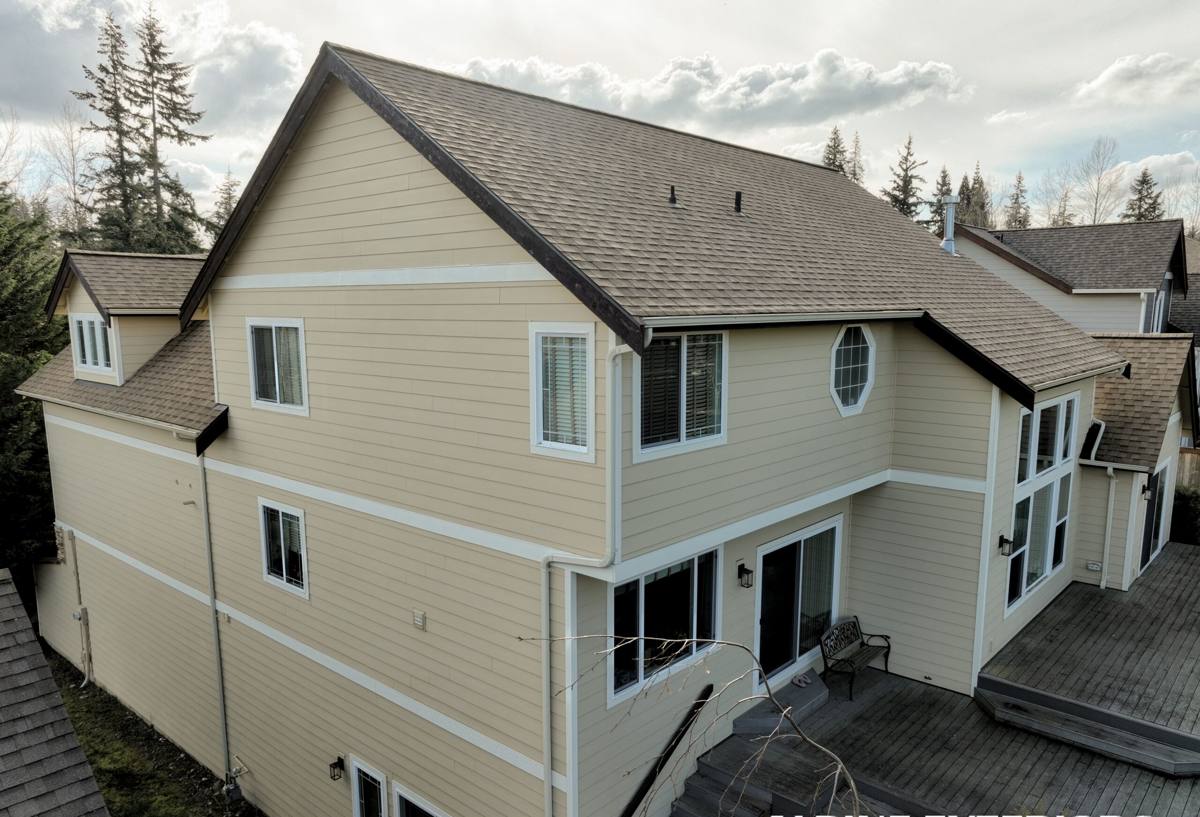
What Issaquah's Climate Asks of a New Window Install
Issaquah sits at the foot of the Issaquah Alps, and that geography changes how weather hits a house here compared to homes closer to the water or further out on the plateau. The foothills push moisture-laden air upward, which means more rain, more overcast days, and a longer wet season than many people expect moving in from drier climates. That has direct consequences for how a new window needs to be installed, not just what window gets chosen.
Wind-Driven Rain and the Foothill Effect
Rain here doesn't always fall straight down. Wind pushes it sideways and upward against exterior walls, which means a window's weakest point often isn't the glass — it's the edges. Flashing has to be layered correctly (shingle-style, bottom to top) so water sheds down and out rather than finding a way behind the barrier and into the framing.
Moss, Moisture, and Long-Term Cladding Health
King County's long moss season is mostly a roofing and siding concern, but it matters for windows too. Moisture that lingers around a poorly flashed window head or sill feeds the same conditions that grow moss and mildew nearby, and it slowly degrades sheathing and framing that nobody sees until a repair is already needed.
Condensation Inside a New, Tightly Sealed Home
New homes are built tighter than older housing stock, which is good for energy bills but changes how indoor humidity behaves. Cooking, showers, and even breathing add moisture to the air, and if it hits a cold window surface it condenses. Correct window selection and proper sealing at the rough opening — not just a good pane of glass — is what keeps that condensation from becoming a mold or rot problem at the frame.
What a Correct New-Construction Installation Actually Involves
A window that looks fine from the street can still be installed wrong. The parts that matter are the ones you can't see once the house is finished.
Rough Opening and Sill Pan Prep
Every opening should be checked for square, level, and correct dimension before a window ever goes in — the framing plan and the actual framed opening don't always match perfectly. A sloped sill pan under the window directs any water that does get past the frame back outside instead of letting it pool against the sheathing.
Flashing and Weather-Resistive Barrier Integration
The window's flange has to be woven into the house wrap in the correct order — jamb flashing first, then head flashing lapped over the top, with the weather-resistive barrier lapped over all of it. This is the single most common place corners get cut on a tight schedule, and it's the reason so many "mystery leaks" in newer homes trace back to the window opening rather than the window itself.
Nailing Fin vs. Block Frame Windows
Most Pacific Northwest new construction uses nailing-fin (flanged) windows, which attach directly to the sheathing and integrate with the WRB. Block frame windows, more common in masonry or some higher-end builds, set into a rough opening with a different flashing approach entirely. Which one is correct depends on the wall assembly and cladding, and it needs to be decided before framing is finalized — not improvised on install day.
Choosing a Frame Material for New Construction
Every frame material handles King County's wet, temperature-swinging climate a little differently. There's no single "best" choice — it depends on budget, maintenance appetite, and how the house is being finished.
| Frame Material | Moisture Performance | Maintenance | Typical Lifespan | Best Fit |
|---|---|---|---|---|
| Vinyl | Good; won't rot, some flex in temperature swings | Low | 20-30 years | Budget-conscious builds, rental or spec homes |
| Fiberglass | Excellent; very stable, minimal expansion/contraction | Low | 30-40+ years | Custom homes, larger openings, energy-focused builds |
| Wood-Clad | Good exterior protection, interior wood needs care | Moderate | 20-30 years (with upkeep) | Homeowners wanting a natural interior look |
| Aluminum | Weak in this climate; prone to condensation and heat loss unless thermally broken | Low | 20-30 years | Limited use — mainly commercial or specific architectural styles |
We steer most Issaquah new-construction clients toward vinyl or fiberglass, simply because both handle constant moisture exposure and temperature cycling without the added upkeep that wood clad or non-thermally-broken aluminum require in this climate. That's a maintenance and performance call, not a knock on any manufacturer.
Energy Code, U-Factor, and SHGC: What Washington Requires
Washington's state energy code sets minimum performance requirements for new-construction windows, and King County building departments enforce them at permit and inspection. Two numbers matter most:
- U-factor — measures how well the window resists heat loss. Lower is better for our cool, wet winters.
- SHGC (Solar Heat Gain Coefficient) — measures how much solar heat passes through the glass. This matters more on south- and west-facing walls that get direct sun.
Every code-compliant window carries an NFRC label showing both numbers, and that label should match what's specified on the builder's window schedule. Part of a correct new-construction install is confirming the windows that actually arrive on site are the ones that were specified — substitutions happen more often than homeowners realize, usually to save cost or lead time, and it's worth catching before they're sealed into the wall.
Our New-Construction Window Process
Working on a home that's still under construction means working inside someone else's schedule — the builder's, the framer's, the siding crew's. Our process is built around fitting into that sequence without becoming the reason it slips.
- Plan and window schedule review — we confirm sizes, egress requirements for bedrooms, and U-factor/SHGC targets against the approved plans before anything ships.
- Rough opening verification — every opening gets checked for square, level, and size once framing is complete, before installation day.
- Sill pan and flashing installation — sloped sill pans and properly lapped flashing go in first, tied correctly into the weather-resistive barrier.
- Window set and shim — windows are set plumb and square, shimmed without distorting the frame, and fastened per manufacturer spec.
- Seal and insulate — the gap between frame and rough opening is insulated and air-sealed correctly, avoiding both gaps and over-packing that can bow the frame.
- Final walkthrough — operation, seals, and flashing integration are checked before siding closes everything in.
A Checklist Before You Hire a Window Crew for Your New Build
Whether you're a homeowner working with a builder or a builder bringing on a window sub, these are worth confirming before install day:
- Window sizes and models match the approved plan and window schedule
- NFRC labels confirm U-factor and SHGC meet Washington energy code
- A written flashing sequence is specified, not left to whoever's on site that day
- Sill pans are included at every opening, not just the ones that "need it"
- Bedroom windows meet egress size and sill-height requirements
- There's a clear plan for who inspects the rough opening before windows are set
- The crew coordinates directly with the siding contractor on flashing overlap
Why a Local Issaquah Crew Matters on a New Build
New construction moves fast, and a lot can go wrong in the gap between trades if nobody's paying close attention to the window openings specifically. A crew that regularly works Issaquah and the surrounding King County area already knows how local building departments inspect flashing and rough openings, what kind of weather exposure a given lot and orientation is going to see, and how to sequence around builders without becoming the bottleneck.
That local familiarity matters in Issaquah's newer neighborhoods too — many of the growing subdivisions and master-planned communities here, including larger developments like Issaquah Highlands, have architectural review standards that affect window style, trim, and exterior appearance. A crew that's done this before in the same area isn't guessing at what will pass review or what the local rain and wind patterns will actually do to a given wall assembly over the next twenty years.
Ready to Talk Windows for Your Issaquah Build?
If you're framing a new home or working with a builder in Issaquah or elsewhere in King County, it's worth getting a second set of eyes on the window schedule and flashing plan before installation day. We're happy to walk through your plans, talk through frame material and performance options for your specific lot and orientation, and give you a free, no-pressure estimate — no obligation, just a straight answer on what your build actually needs.