 King County
 Window Replacement Built for Issaquah's Foothill Climate
Issaquah sits where the Puget Sound lowlands run up against the foothills of Cougar, Squak, and Tiger Mountain, and that setting shapes what windows in this town actually have to deal with. Homes here get more shade and tree cover than a lot of King County neighborhoods, more standing moisture on siding and trim, and a longer stretch of damp, low-light months where wood, seals, and hardware never fully dry out between storms. Add the region's long moss season and the driving, sideways rain that comes through in a hard windstorm, and you've got a climate that's tough on any window that isn't sealed and flashed correctly the first time.
Window replacement in Issaquah isn't just about picking new glass. It's about making sure the window assembly, the flashing behind it, and the seal around the frame are all working together to keep water moving out and away from the wall assembly, not into it. We've done that work across King County long enough to know where Issaquah homes tend to run into trouble, and we build our process around avoiding those problems rather than fixing them later.
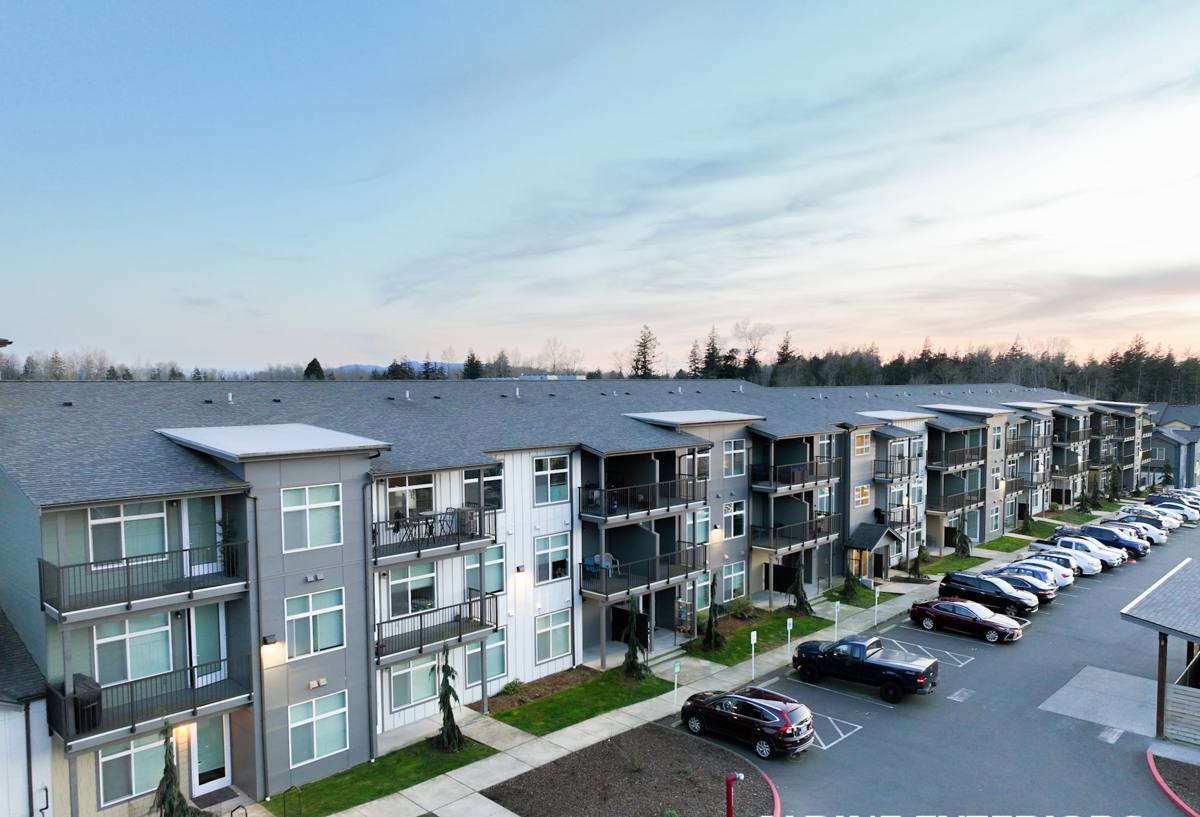
What Issaquah's Climate Does to Windows Over Time
Shade, Moisture, and Slow Drying
A lot of Issaquah's housing stock backs up to greenbelt, mature landscaping, or hillside tree lines. That shade is nice in August and rough on window frames the rest of the year. Wood and composite frames in shaded exposures dry out slower after every rain, which means any small gap in the seal or caulk line has more time to let moisture work into the frame before the next dry spell.
Moss and Organic Growth
The same conditions that grow moss on a north-facing roof slope will grow it in window tracks, sills, and the corners of frames that don't drain well. Moss and algae hold moisture against the surface longer than bare wood or vinyl would on its own, which accelerates rot in wood-frame windows and can stain or degrade seals on vinyl and fiberglass units over the years.
Driving Rain and Wind-Driven Water
Issaquah gets its share of wind funneling down off the foothills during winter storms, and wind-driven rain finds every weak point in a window's water management. A window that's fine in a light, straight-down rain can leak in a sideways storm if the flashing and sill pan weren't installed to handle it. This is one of the most common causes of hidden water damage we find behind old windows during a replacement.
Temperature and Humidity Swings
Valley floor and hillside properties in Issaquah can see noticeably different temperature and humidity conditions block to block. That variation stresses seals and weatherstripping over time, especially on older single-pane or early dual-pane units that weren't built with today's sealant technology.
Signs an Issaquah Home Needs Window Replacement
- Fogging or a permanent haze between the panes of a dual-pane window — the seal has failed and the gas fill (if any) is gone
- Soft, spongy, or visibly rotted wood at the sill, corners, or lower frame
- Persistent drafts or a noticeable temperature difference near the window even when it's closed and locked
- Paint or finish that keeps peeling or bubbling in the same spot, season after season
- Moss, algae, or black staining building up in the track or lower corners that won't stay clean
- Windows that are difficult to open, close, or lock — often a sign the frame has shifted or swelled
- Visible daylight or gaps around the frame from outside
- Higher heating bills than neighboring homes of similar size and age
What a Correct Window Replacement Actually Involves
Swapping glass for glass isn't the same as doing the job right. A correct window replacement in a climate like Issaquah's means paying as much attention to what's happening around the window as what's happening in it.
Assessing the Rough Opening
Before anything comes out, we check the condition of the framing and sheathing around the window. If there's been slow moisture intrusion — which is common behind older, poorly flashed windows — that needs to be addressed before a new window goes in, not covered up by it.
Flashing and Drainage
The flashing tape, sill pan, and integration with the home's water-resistive barrier are what actually keep water out over the long run — the window unit itself is only part of the system. We build in a drainage path so any water that does get behind the exterior cladding has somewhere to go, rather than sitting against the frame.
Air Sealing and Insulation
Gaps around the new frame get properly insulated and air-sealed, which matters for both comfort and for keeping condensation from forming inside the wall cavity during Issaquah's cooler, wetter months.
Exterior Sealant and Trim Detailing
The exterior sealant joint and trim work are finished so water sheds away from the window rather than pooling on a horizontal surface or running behind the trim — a common failure point we see on older homes in shaded, high-moss areas.
Choosing Materials and Glass for Local Conditions
There's no single "best" window for every King County home, but there are real trade-offs worth understanding before you decide.
| Factor | Vinyl | Fiberglass/Composite | Wood (clad exterior) |
|---|---|---|---|
| Moisture tolerance | Very good — won't rot | Very good — dimensionally stable | Good if the exterior cladding stays intact and sealed |
| Maintenance in shaded/mossy areas | Low — occasional cleaning | Low | Higher — cladding seams and sealant need periodic checks |
| Upfront cost | Lowest | Mid to upper-mid | Highest |
| Typical warranty structure | Manufacturer-backed, varies by line | Manufacturer-backed, often longer on frame | Split — frame vs. exterior cladding vs. interior wood finish |
| Best fit | Budget-conscious, low-maintenance priority | Larger openings, long-term stability | Homeowners wanting a natural wood interior look |
For glass, an argon-filled dual-pane unit with a good low-E coating is the standard starting point for this climate — it manages both our wet winters and warmer summer afternoons without needing to jump straight to triple-pane, which adds cost and weight that isn't always necessary depending on the home's exposure. We'll walk through what makes sense for your specific windows rather than defaulting to the most expensive option.
Why a Crew That Already Works Issaquah Matters
Window replacement done wrong doesn't usually fail on day one — it fails eighteen months to five years later, when a poorly integrated flashing detail finally lets water into the wall. A crew that's worked Issaquah's housing stock knows the patterns: which eras of construction are more prone to hidden moisture behind older windows, how shaded lots change the maintenance timeline, and how to sequence the work with the rest of the exterior — siding, trim, gutters — so everything sheds water the way it's supposed to.
We also know that Issaquah homeowners are often dealing with permits and inspection requirements tied to King County or city jurisdiction, depending on the property. We handle that coordination as part of the job rather than leaving it for the homeowner to sort out.
Our Process, Start to Finish
- On-site assessment — We inspect existing windows, framing condition, and any signs of past water intrusion before recommending anything.
- Honest scope and options — You get a clear picture of what needs to happen, what's optional, and what it costs — no upsell for its own sake.
- Measurement and ordering — Precise measurements matter more than people expect; a window that's slightly off-size creates gaps that are hard to seal correctly later.
- Removal and opening prep — Old units come out carefully, and we address any rot, staining, or drainage issues found in the opening before the new window goes in.
- Installation with proper flashing — Sill pan, flashing tape, and integration with the wall's water barrier, done in the right order.
- Insulation, sealing, and trim — Interior and exterior finishing so the window performs as a full system, not just a piece of glass.
- Final walkthrough — We check operation, sealing, and cleanup with you before calling the job done.
What This Typically Costs
Window replacement pricing depends on the number of openings, window size, material, glass package, and how much work the existing opening needs before a new window can go in. Broadly, a straightforward vinyl replacement window runs at the lower end of the range, fiberglass and larger openings sit in the middle, and wood-clad or custom sizes run higher. Homes with hidden moisture damage behind old windows will also see cost tied to repairing that framing — something we won't know for certain until we open things up, which is why we quote based on an actual inspection rather than a phone estimate.
Ready for an Honest Look at Your Windows?
If you're noticing drafts, fogged glass, sticking sashes, or moss buildup around your window frames, it's worth having a local crew take a look before those small issues turn into framing repairs. We offer free, no-pressure estimates for Issaquah homeowners — use the form below to get a straightforward assessment of what your windows need and what your options actually cost.