 King County
 Custom Decks in Kent, Built for the Weather We Actually Get
A deck in Kent has a harder job than most homeowners realize. It isn't just an outdoor room bolted onto the back of the house — it's a structure that sits exposed to King County's wet season for most of the year, catches whatever moisture blows in off the Sound, and grows moss the moment it's given the chance. A deck built without that reality in mind will look fine for a season or two, then start showing the signs: dark streaking, soft spots underfoot, slick green film on the boards every fall, and fasteners bleeding rust down the face of the joists. We build decks in Kent to handle that climate from day one, not to react to it five years later.
This page covers what a correctly built custom deck looks like in this area — the materials that hold up, the structural details that actually matter, how our process works, and why it's worth hiring a crew that already knows Kent's conditions instead of a general contractor working from a one-size-fits-all playbook.
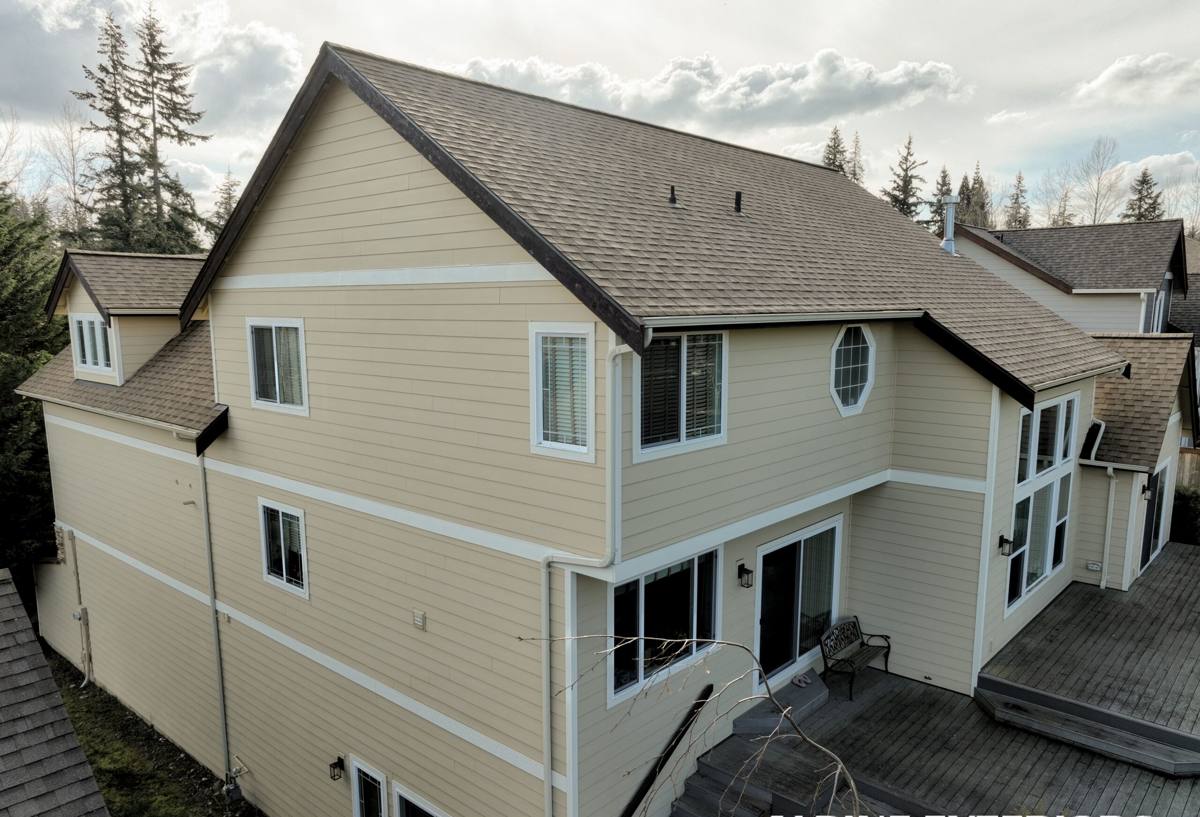
What Kent's Climate Does to a Deck
King County doesn't get hard freezes often, but it makes up for that with volume and duration of moisture. Long stretches of driving rain, heavy morning dew, and shaded yards that never fully dry out all add up to a moss season that can run from fall through spring. Add the marine air common across the region and you get a slow, steady corrosion pressure on metal fasteners and connectors that a drier climate simply doesn't produce.
The three things that fail first
- Ledger board attachment — where the deck meets the house is the single most common point of hidden water intrusion and structural failure if flashing isn't done correctly.
- Fasteners and hardware — standard or under-rated coatings corrode faster here, leading to staining and, eventually, weakened connections.
- Board surfaces in shaded areas — moss and algae take hold on any surface that stays damp, and untreated or poorly ventilated decking never gets the airflow to dry out between rains.
None of these are exotic problems. They're the predictable result of building a deck the same way you would in a dry climate. The fix isn't complicated either — it just requires using the right materials and details from the start, which costs little to nothing extra at the time of construction and saves real money over the life of the deck.
Choosing Decking Material for a Kent Backyard
There's no single "best" decking material — there's the material that fits your maintenance tolerance, your budget, and how much sun or shade your yard actually gets. Here's how the common options compare for this climate specifically.
| Material | How it handles Kent's wet season | Maintenance | Typical lifespan |
|---|---|---|---|
| Pressure-treated wood | Good if properly sealed and re-sealed; absorbs moisture if neglected | Annual cleaning and re-staining/sealing | 15-20 years with upkeep |
| Cedar | Naturally moisture- and rot-resistant, but still needs sealing in shaded, damp spots | Periodic cleaning and re-oiling to maintain color | 20-25 years with upkeep |
| Composite decking | Excellent — doesn't absorb water or rot, but can still grow surface moss/algae film if never cleaned | Occasional washing; no sealing or staining | 25-30+ years, manufacturer-warrantied |
We don't push one material on every job. If you want the lower upfront cost of wood and are comfortable with yearly upkeep, we'll build it correctly for that. If you want to stop thinking about your deck once it's built, composite is the better fit for a shaded, moisture-heavy King County yard — not because wood is a bad product, but because it asks more of the owner in exactly the conditions this area produces. We'll walk the yard with you and give you a straight recommendation based on sun exposure, drainage, and how the deck will actually be used.
Framing material matters as much as the decking
Homeowners spend most of their attention on the board they'll walk on, but the framing underneath does more of the structural work over time. In a climate like this, we treat the substructure — joists, beams, posts — as the part that has to outlast everything else, since it's the hardest and most expensive part to replace later.
What a Correct Deck Build Actually Involves
A deck is a structural project, not a carpentry project. The visible decking is the smallest part of what determines whether it lasts. Here's what we treat as non-negotiable on every custom deck we build in Kent:
- Proper ledger flashing where the deck attaches to the house, so water is directed away from the wall assembly instead of into it
- Footings sized and set to local frost and soil requirements, not guessed at
- Joist spacing and hardware rated for the actual decking material and expected loads, including hot tubs or heavy furniture if that's the plan
- Corrosion-resistant fasteners and structural connectors suited to a wet marine climate, not the cheapest option on the shelf
- Airflow and drainage underneath the deck so the structure can actually dry out between rain events instead of staying damp for weeks
- Guardrails, stair rise/run, and baluster spacing built to current code, not to whatever looked right by eye
Skipping any one of these doesn't show up right away. It shows up in year three or four as soft framing, a leaning ledger, or a deck that never quite feels solid underfoot. Building it right the first time costs a fraction of what it costs to tear out and rebuild a structure that was framed wrong.
Our Process for a Kent Deck Project
- Site visit and honest assessment — we look at sun exposure, drainage, existing structure (if there is one), and how you actually plan to use the space.
- Design and material selection — layout, decking material, railing style, and any features like built-in seating or a pergola, matched to your budget and maintenance preference.
- Permitting — most custom decks in King County require a permit, and we handle that process rather than leaving it on you to navigate.
- Construction — footings and framing first, inspected before decking goes on, then decking, railings, and finish work.
- Final walkthrough — we go over the finished deck with you, including what maintenance it actually needs and on what schedule.
Permits and Code Considerations in King County
Deck permitting requirements vary by jurisdiction and by the size and height of the structure, but in general, a custom deck attached to the house, elevated above a certain height, or built with permanent footings will require a permit and inspection in King County. This isn't a formality to skip — it exists because footing depth, guardrail height, and structural attachment are exactly the details that determine whether a deck is safe and durable long-term. We pull the appropriate permits and build to the inspected standard as a matter of course, not as an upsell.
Living With a Deck Through a King County Moss Season
Even a well-built deck needs some seasonal attention in this climate. The goal of a correct build is to make that upkeep manageable, not to eliminate it entirely — no exterior structure in this region is maintenance-free.
A realistic seasonal checklist
- Sweep leaves and debris off the deck surface regularly in fall, especially in shaded corners where moisture collects
- Clean surface moss or algae film before it becomes slick, using a deck-safe cleaner rather than a pressure washer set too aggressively
- Check that gaps between boards stay clear so water can drain instead of pooling
- Inspect the ledger connection and any visible fasteners once a year for rust staining or movement
- Re-seal or re-stain wood decking on the manufacturer or product-recommended schedule — don't wait until it's visibly gray and dry
- Confirm gutters and downspouts near the deck are directing water away, not onto or under the structure
Why Hire a Crew That Already Works in Kent
Deck-building fundamentals don't change from region to region, but the details that separate a deck that lasts from one that doesn't are almost all climate-specific: how much flashing is enough, which fastener coatings are worth the extra cost, how much airflow a shaded deck actually needs, and what King County's permitting process expects at each inspection stage. A crew that builds decks across a range of climates has to relearn these details every time. A crew that works Kent regularly already knows them, and builds them in without treating them as an upgrade.
We also know this area well enough to give you a straight answer about what your specific yard needs — whether that's more attention to drainage because of a shaded, low-lying lot, or a simpler build because the site gets good sun and airflow. That kind of judgment only comes from doing this work locally, season after season.
Getting Started
If you're weighing a new deck or replacing one that's past its useful life, we're glad to come take a look, walk through material and layout options, and give you a straightforward, no-pressure estimate. There's no cost and no obligation to get started — just fill out the form below.