 King County
 Roof Replacement Built for Kent's Weather, Not a Generic Climate
A roof in Kent has a harder job than most homeowners realize. This is a marine climate — long wet seasons, driving rain that comes in sideways more often than straight down, and enough humidity and shade in the tree-covered lots common around King County to keep moss thriving for most of the year. Add in the salt-tinged air that moves through the greater Puget Sound region, and you've got a combination that ages roofing materials faster than the manufacturer's brochure suggests. A roof replacement here isn't just about swapping old shingles for new ones. It's about building an assembly that can shed constant moisture, resist moss colonization, and hold up to metal fasteners and flashing that see more corrosion pressure than they would in a dry inland climate.
We install and replace roofs across King County, and Kent's mix of older single-family neighborhoods and newer construction means we see everything from roofs that were under-built for this climate from day one to roofs that were solid systems finally reaching the end of their service life. The right replacement plan depends on which situation you're in.
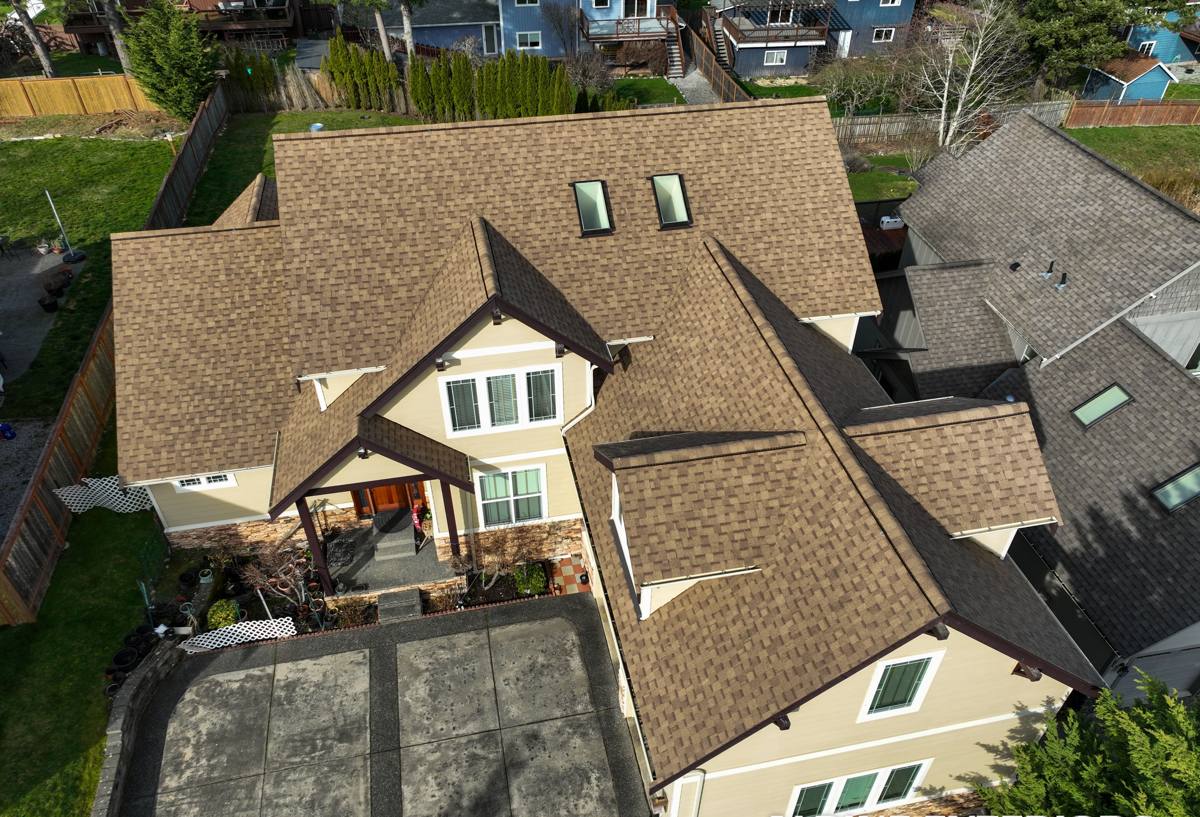
How to Tell a Roof Needs Replacing, Not Just Patching
Most homeowners call us after noticing one visible problem — a stain on a ceiling, a shingle in the yard, moss creeping up from the eaves. The visible sign is rarely the whole story. Here's what we actually look for during an inspection to decide whether repair still makes sense or replacement is the honest answer:
- Granule loss heavy enough that you can see bare asphalt mat on multiple shingles, not just a few isolated spots
- Shingles that are cupping, curling, or cracking across large sections rather than one localized area
- Soft or spongy decking felt underfoot during the inspection walk — a sign moisture has already reached the plywood
- Moss and algae growth that keeps returning within a season or two of cleaning, which usually points to a ventilation or moisture-retention problem, not just surface growth
- Flashing around chimneys, vents, and valleys that's rusted, lifted, or was installed with sealant instead of proper metalwork
- A roof already past 20-25 years for asphalt composition, or showing age-appropriate wear at that mark
- Multiple past repairs in different areas, which usually means the whole system is aging out together
If a roof is showing one or two of these in isolation, targeted repair can still be the right call, and we'll say so. Replacement makes sense when the underlying materials — decking, underlayment, flashing — are failing broadly enough that patching one area just shifts the problem to the next.
What a Correct Roof Replacement Actually Involves
Full Tear-Off, Not a Layover
We remove the existing roofing down to the decking rather than installing new shingles over old ones. A layover traps moisture between layers, hides decking damage, and voids most manufacturer warranties. It's faster and cheaper, which is exactly why some crews push it — but in a climate like Kent's, where the decking underneath is doing real work keeping moisture out, we want to see it directly and repair or replace any damaged sheathing before anything new goes down.
Decking Inspection and Repair
Once the old roofing is off, every section of decking gets checked. Soft, delaminated, or water-stained plywood gets replaced — not skipped over or covered up. This is the step that separates a roof that lasts its full rated lifespan from one that fails early from the inside out.
Underlayment That Matches the Climate
Given how much sustained wet weather this region gets, we use synthetic underlayment as a water-resistant layer beneath the shingles, with self-adhered ice-and-water membrane in the vulnerable spots — eaves, valleys, and around any roof penetrations — where wind-driven rain and ice damming are most likely to force water backward under the shingle edge.
Flashing Done in Metal, Not Sealant
Chimneys, skylights, sidewalls, and valleys all need properly formed metal flashing, step-flashed and integrated with the underlayment — not caulked over as a shortcut. Sealant fails; correctly lapped metal doesn't need to fight gravity to keep water out.
Ventilation That Actually Balances
Intake at the soffits and exhaust at the ridge need to work together, not just exist. Poor ventilation is one of the biggest drivers of moss growth, premature shingle aging, and moisture buildup in the attic — all of which show up faster in a climate this wet. Part of every replacement quote includes checking whether the existing ventilation is actually balanced, and correcting it if it isn't.
Material Options for a Kent Roof
There's no single "best" roofing material — the right choice depends on budget, roof pitch, how long you plan to stay in the home, and how much maintenance you want to take on. Here's how the common options actually compare for this climate:
| Material | Typical Lifespan Here | Moss/Moisture Behavior | Maintenance |
|---|---|---|---|
| Architectural asphalt shingle | 25-30 years | Good with proper ventilation and periodic cleaning; algae-resistant granule options help | Low — occasional debris/moss cleaning |
| 3-tab asphalt shingle | 15-20 years | Same moss exposure as architectural, but thinner mat ages faster under constant wet cycling | Low, but shorter service life overall |
| Standing seam metal | 40-50+ years | Sheds moisture fast, very moss-resistant on the panel field itself | Low, though fastener and sealant details need to be right at install |
| Cedar shake | 20-30 years with upkeep | Attractive but naturally moisture-retentive; needs consistent maintenance to resist rot and moss in this climate | High — regular treatment and inspection |
We install asphalt and metal roofing as our standard recommendations for this region. We're upfront that cedar shake, while it has real visual appeal, asks a lot of a homeowner in ongoing maintenance to hold up against this climate's moisture load — that's a maintenance-burden tradeoff worth knowing before you commit, not a knock on the material itself.
Our Replacement Process
- On-site inspection and honest assessment — we get on the roof, check the decking where accessible, and tell you plainly whether you need replacement or repair still has life left in it.
- Written estimate — material options, scope, and price laid out clearly, no vague allowances buried in the fine print.
- Permitting — we handle the King County or City of Kent permitting requirements that apply to your project so you don't have to chase paperwork.
- Tear-off and decking repair — typically completed in a single day for most Kent home sizes, weather permitting.
- Underlayment, flashing, and shingle or metal installation — done in the sequence above, with attention to the ventilation balance.
- Cleanup and magnetic sweep — yard and driveway cleared of debris and stray nails before we consider the job done.
- Final walkthrough — we go over the finished roof with you before we call it complete.
Moss and Moisture: A Checklist Worth Keeping
Even a correctly installed roof benefits from basic upkeep in a climate that pushes moss and moisture year-round. This is the short list we give homeowners after every replacement:
- Keep overhanging branches trimmed back to reduce shade and debris buildup on the roof plane
- Clear gutters at least twice a year — clogged gutters back water up under the shingle edge
- Have moss growth removed gently (not pressure-washed, which can strip granules) as soon as it appears rather than letting it establish
- Check attic ventilation isn't blocked by insulation at the soffits
- Watch for any interior ceiling stains after heavy rain events and address them early, before they become a decking issue
Why a Crew That Already Works Kent Matters
Roofing code requirements, permitting steps, and typical construction styles vary somewhat by jurisdiction across King County, and Kent has its own permitting process separate from unincorporated county areas. A crew that already works in this specific area knows what the local permitting office expects, what inspection points typically get flagged, and how local drainage and lot conditions tend to affect roof design — details that a crew unfamiliar with the area has to learn on your project instead of already knowing. That familiarity translates into fewer surprises, a smoother permit process, and a roof designed with this climate's realities in mind from the first estimate, not figured out as problems come up.
What Affects the Cost of a Kent Roof Replacement
Every roof is priced individually, but the main factors that move the number are consistent:
| Factor | Why It Matters |
|---|---|
| Roof size and pitch | More surface area and steeper pitches mean more material and labor, plus added safety measures on steep sections |
| Decking condition | Hidden rot or delamination found during tear-off adds repair scope you can't fully price until the old roofing is off |
| Material choice | Asphalt, metal, and cedar carry different material and labor costs, as shown above |
| Number of penetrations | Chimneys, skylights, and vents each need individual flashing work, which adds labor |
| Layers to remove | A roof with multiple existing layers takes longer to tear off than a single-layer roof |
| Access and site conditions | Steep driveways, limited staging area, or difficult roof access can affect labor and equipment needs |
We don't quote from a distance — every estimate is based on an actual look at your roof, so the number you get reflects your home, not a regional average.
If your roof is showing its age or you just want an honest read on how much life it has left, we're happy to take a look. Request a free, no-pressure estimate using the form below and we'll walk you through what we find.