 King County
 Kent sits in the Green River valley, tucked between the Cascade foothills and the Puget Sound lowlands, and that geography matters more than most homeowners realize when it comes to siding. Moisture settles in the valley. Humidity lingers under tree cover and in shaded north-facing walls. And across King County generally, the marine air moving in off Puget Sound carries salt and dampness that slowly works on anything less than fully weather-resistant. A siding job done right in Kent has to account for all of it, not just look good on installation day.
This page covers what siding installation actually involves for a Kent home specifically — what the climate does to different materials over time, what a correct installation looks like step by step, and why we've standardized on one product system rather than offering a menu of options.
What Kent's Climate Does to Siding Over Time
The Pacific Northwest doesn't get the punishing summer heat of the Southwest or the deep freeze of the upper Midwest. Instead, it wears siding down slowly and quietly, which is exactly why so many homeowners don't notice a problem until it's expensive.
Driving Rain and Wind-Driven Moisture
Kent gets sustained fall and winter rain, often pushed sideways by wind off the valley. That means water isn't just falling on siding — it's being driven into every seam, joint, and fastener point. Any gap in the weather-resistive barrier behind the siding, or any panel installed without correct flashing, becomes an entry point. Once water gets behind siding in this climate, it doesn't dry out quickly; the air stays damp for months at a stretch.
Moss, Mildew, and a Long Growing Season
King County's moss season isn't really a season — it's most of the year. Anywhere siding stays shaded or doesn't get enough sun and airflow to dry between rain events, moss and mildew take hold. On wood-based products this isn't cosmetic; it holds moisture against the substrate and accelerates rot. On fiber cement it's a maintenance issue, not a structural one, but it still needs to be part of how a wall is designed and installed — proper clearance, drainage, and ventilation behind the cladding all reduce how much moss you'll be dealing with later.
Salt Air and Regional Humidity
Kent isn't waterfront, but King County as a whole sits close enough to Puget Sound that salt-laden marine air is part of the regional climate picture, especially combined with the near-constant ambient humidity. Salt air accelerates corrosion on fasteners and metal flashing, and it interacts with humidity to keep surfaces damp longer than in a drier climate. Materials and hardware that aren't rated for this combination age faster here than the same products would in most of the country.
Why We Install Fiber Cement — and Only James Hardie
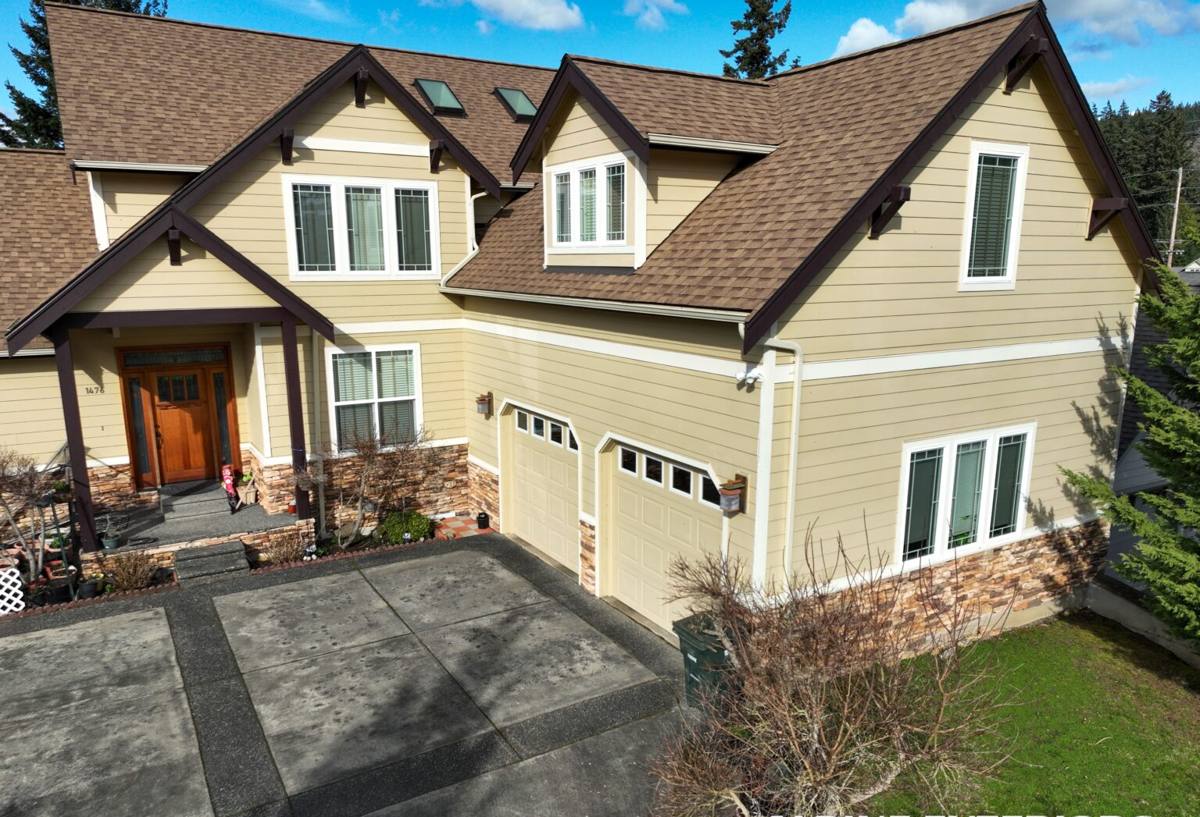
King County Exterior installs one siding system: James Hardie fiber cement. We don't offer vinyl, LP SmartSide, Cemplank, Allura, or primed wood species as alternatives, and that's a deliberate standard, not a lack of options.
Fiber cement is non-combustible and dimensionally stable in a way wood-based and engineered-wood products aren't — it doesn't swell, split, or delaminate the way products with a wood or wood-fiber core can when they take on repeated moisture cycling, which is exactly what a Kent winter puts siding through. James Hardie's ColorPlus finish is factory-baked onto the panel rather than field-applied, which matters in a climate where field-applied paint has to cure and bond correctly in cool, damp conditions — not always a given here. And Hardie engineers specific HZ (HardieZone) product formulations for different climate zones, including the wetter marine zones the Pacific Northwest falls into, rather than shipping one generic formulation everywhere.
We've made the call that installing one product system extremely well, and knowing its behavior, flashing details, and failure points inside and out, produces better long-term outcomes for homeowners than installing several systems adequately. That's the whole reason this company exists in its current form.
What a Correct Siding Installation Actually Involves
Siding failures in this climate are almost never about the panel material itself — they're about what's underneath it and how it was fastened. A correct installation is a system, not just a facade.
- Weather-resistive barrier: A continuous, properly lapped water-resistive barrier behind the siding, with all penetrations (pipes, vents, hose bibs) sealed and flashed before a single panel goes up.
- Flashing at every transition: Windows, doors, rooflines, decks, and any horizontal trim need flashing detailed to shed water outward, not just caulk relying on adhesion alone.
- Correct fastening: Hardie panels have specific nailing patterns, fastener types, and minimum embedment depths. Under- or over-driven fasteners are one of the most common causes of early siding problems.
- Proper clearances: Minimum gaps between siding and roofing, decking, and grade so water sheds away instead of wicking up into the bottom edge of the panel.
- Caulking and joint treatment done to spec: Butt joints, corners, and trim intersections sealed with the right products in the right sequence — not just caulked over gaps at the end.
- Manufacturer-spec painting or factory finish: Cut edges primed and sealed per Hardie's installation guidelines so exposed fiber cement isn't left absorbing moisture at every cut.
Skip any one of these and the panel itself can be flawless while the wall still fails behind it. This is where cutting corners costs homeowners the most, because the damage is invisible until it isn't.
Our Process for a Kent Siding Installation
1. On-Site Assessment
We walk the exterior, check existing siding and sheathing condition, look for signs of past moisture intrusion around windows and rooflines, and evaluate drainage around the foundation. This tells us whether we're dealing with a straightforward re-side or whether sheathing repair is needed first.
2. Tear-Off and Substrate Check
Old siding comes off and we inspect the sheathing underneath. In a wet climate like this, hidden rot behind old siding isn't rare — we address it before anything new goes on, because siding installed over compromised sheathing fails regardless of how good the panel is.
3. Weather Barrier and Flashing
New house wrap or weather-resistive barrier goes on continuously, with window and door flashing integrated correctly — this is the layer that actually keeps Kent's driving rain out of the wall assembly.
4. Hardie Panel Installation
Panels, siding boards, or planks go up to Hardie's fastening and clearance specifications, with trim, corners, and joints detailed for this climate specifically — including the drainage and airflow considerations that reduce moss buildup over time.
5. Finish and Final Inspection
Caulking, touch-up painting on cut edges, and a full walk-through, checking every penetration, joint, and clearance before we call the job done.
Comparing Siding Options for Kent's Climate
| Factor | James Hardie Fiber Cement | Vinyl | Wood-Based (LP SmartSide, cedar, primed spruce) |
|---|---|---|---|
| Moisture behavior | Dimensionally stable, doesn't swell or rot | Doesn't absorb water, but can warp and gap | Prone to swelling, rot, and moisture-driven decay |
| Moss/mildew impact | Cosmetic only, cleanable | Cosmetic, can trap moisture at seams | Can compromise substrate over time |
| Fire resistance | Non-combustible | Combustible, can melt/deform | Combustible |
| Finish durability | Factory-baked ColorPlus finish | Color molded through, can fade/chalk | Field-applied paint, needs recoating |
| Typical maintenance | Occasional wash, repaint on longer cycle | Low, but repairs are visible | Regular repainting and moisture checks |
Signs a Kent Home May Need New Siding
- Visible warping, buckling, or panels pulling away from the wall
- Soft or spongy spots when pressed, especially near the bottom edges or around windows
- Paint that's peeling or bubbling repeatedly in the same spots year after year
- Persistent moss or dark streaking that returns quickly after cleaning
- Rising energy bills with no other explanation, suggesting the wall assembly is no longer sealing properly
- Visible gaps, cracked caulking, or daylight around trim and window edges
Any one of these on its own isn't necessarily an emergency, but a combination of two or more is usually a sign the wall assembly — not just the surface — needs attention.
What Affects the Cost of a Kent Siding Installation
| Cost Factor | Why It Matters |
|---|---|
| Home size and wall complexity | More corners, dormers, and trim details mean more labor and cut edges to seal |
| Sheathing condition | Hidden rot found during tear-off adds repair scope before new siding goes on |
| Siding profile chosen | Lap siding, shingle-style panels, and panel systems differ in material and labor cost |
| Trim and accessory work | Corner boards, window trim, and fascia detailing add to the scope |
| Access and site conditions | Story height, landscaping, and staging needs affect labor time |
We give a written, itemized estimate after the on-site assessment rather than a ballpark over the phone — too much of the real cost depends on what's under the existing siding.
Why Hiring a Crew That Already Works in Kent Matters
Siding installation isn't a one-size-fits-all trade. A crew that primarily works in a drier climate, or that installs whatever product a homeowner picks off a shelf, doesn't build the same habits around flashing details, drainage planning, and moss-conscious detailing that a King County-focused crew builds from doing it repeatedly in this exact climate. Knowing how water moves through a Kent winter, and detailing every wall accordingly, is the difference between siding that looks right for a year and siding that performs correctly for decades.
Get a Free Estimate
If you're weighing a siding replacement for your Kent home, we're happy to take a look, walk you through what we find, and put together a straightforward, no-pressure estimate. Use the form below to get started.