 King County
 Composite Decking Built for How Kirkland Actually Weathers
A deck in Kirkland doesn't fail the way a deck fails in a dry climate. It doesn't crack from heat or bleach out from constant sun. It fails quietly, from underneath, because of moisture that never really goes away between October and June. If you're planning a new composite deck or replacing an old wood one, the material matters, but so does the way it's built into the ground, the house, and the weather this part of King County actually gets. That's the part a lot of installs get wrong.
We work on decks across King County, and Kirkland jobs have their own personality. Lake Washington sits right there, which means humidity and fog linger longer than they do a few miles inland, yards stay shaded and damp under mature trees, and the same marine weather pattern that pushes salt-tinged air across the Puget Sound side of the county still brings Kirkland its own steady dose of moisture, drizzle, and the kind of still, wet air that keeps things from drying out. Add driving rain off the water and a moss season that can run half the year, and you've got conditions that punish a poorly built deck fast.
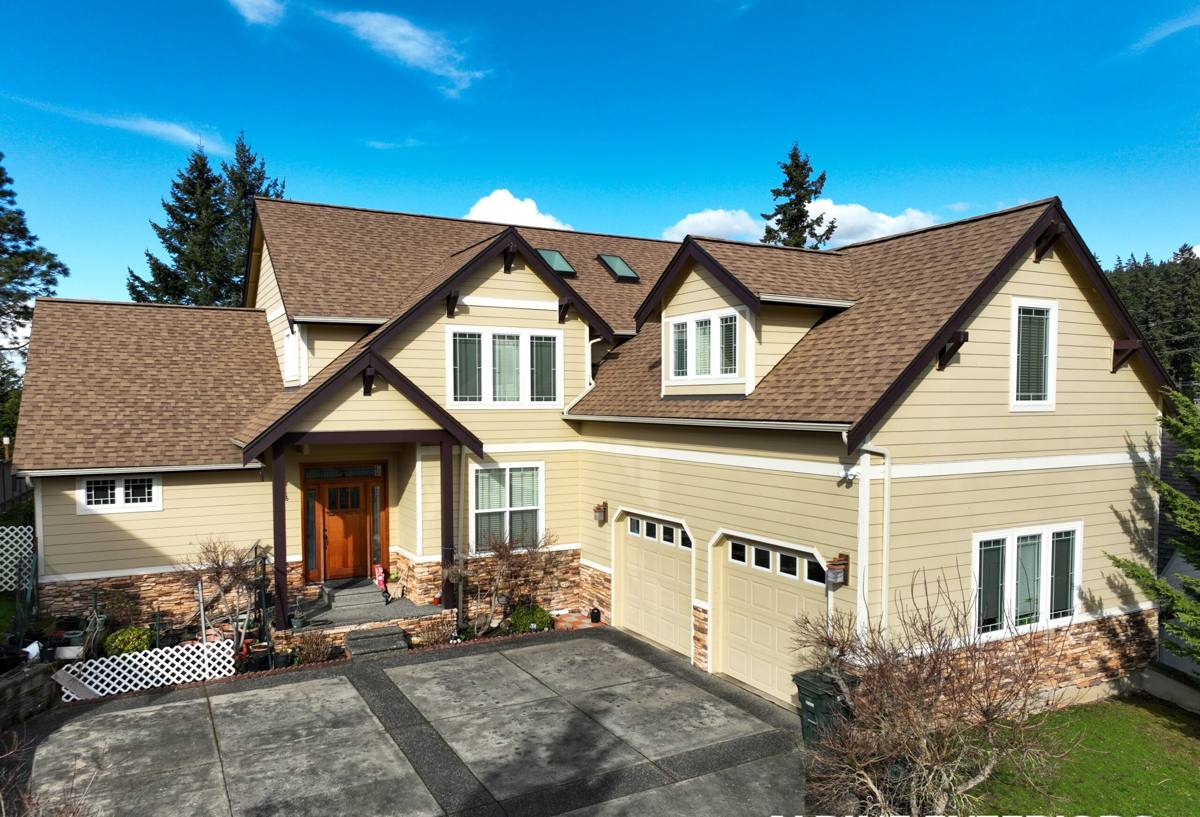
What Kirkland's Climate Actually Does to a Deck
Moss and algae are a maintenance issue, not just a cosmetic one
Moss doesn't just make a deck look neglected. It holds moisture against the surface long after the rain stops, and on the wrong material or the wrong fastening pattern, that trapped moisture is what starts rot, corrodes hardware, or breaks down a board's surface layer. In shaded Kirkland yards near mature trees or close to the lake, moss and algae growth is often the single biggest driver of how a deck ages.
Driving rain finds gaps, not just open surfaces
Wind-driven rain off Lake Washington doesn't fall straight down — it gets pushed sideways into ledger connections, stair stringers, and any spot where a deck meets the house. A deck built without real attention to flashing and drainage at those transitions will show water damage at the house connection years before the decking itself wears out.
Freeze-thaw cycles are mild but real
King County doesn't get brutal winters, but it does get repeated freeze-thaw swings through the wet months. Water that's soaked into a post base, a fastener hole, or an unsealed cut edge expands and contracts enough, over enough cycles, to open up small failures that get worse every year.
Why Composite Makes Sense for a Kirkland Deck
Composite decking isn't automatically the right call for every home, but in a climate this wet, it solves real problems that wood struggles with. It doesn't absorb water into its structure the way real wood does, so it isn't as prone to the swelling, cupping, and splintering that shows up on wood decks that sit damp for months at a time. It also doesn't need annual staining or sealing to keep moisture out, which matters when moss and algae are already working against you.
That doesn't mean composite is maintenance-free — no exterior product in this climate is. It still needs regular cleaning to keep moss and mildew from taking hold on the surface, and it still depends entirely on what's underneath it. A composite board over a poorly built or poorly ventilated substructure will trap moisture just as badly as bad wood does. The board is only as good as the frame it's fastened to.
What a Correct Composite Deck Installation Involves
This is where most of the long-term performance of a deck actually gets decided — not in the decking material itself, but in the parts you don't see once the boards go down.
- Ledger flashing done properly — the connection to the house is the single most common source of hidden water damage on any deck, and it needs real flashing, not just caulk.
- Adequate joist spacing for composite — composite boards have their own span and spacing requirements, and they're often tighter than what's fine for wood. Following the manufacturer's spec here isn't optional if you want the warranty to mean anything.
- Ventilation under the deck — airflow beneath the frame lets moisture escape instead of sitting against joists and fasteners through the wet season.
- Hidden fastener systems installed correctly — these give a cleaner look but are less forgiving of installer error than face-screwing; gapping and clip spacing have to be right.
- Post bases that keep wood off standing water — support posts need a real break between the wood and any surface where water can pool.
- Proper board gapping for expansion — composite still moves with temperature and moisture, and boards installed tight against each other or against trim can buckle.
Composite vs. Other Decking Materials for This Climate
| Material | Moisture behavior | Upkeep in a mossy, wet climate | Typical lifespan here |
|---|---|---|---|
| Pressure-treated wood | Absorbs water, prone to swelling and splitting if not resealed | Annual cleaning, staining, and sealing needed | 10–15 years with upkeep |
| Cedar | Naturally rot-resistant but still absorbs moisture over time | Regular sealing to hold its color and resistance | 15–20 years with diligent care |
| Composite | Resists moisture absorption into the board itself | Periodic cleaning to keep moss and mildew off the surface | 25–30+ years, warranty-backed |
| PVC/vinyl decking | Fully moisture-resistant but can look and feel less like wood | Low, mostly rinsing and occasional cleaning | 25–30+ years |
We install composite most often in Kirkland because it lands in the middle: it handles the wet season noticeably better than wood without the upkeep burden, and most manufacturers back it with a warranty that's meaningful as long as the installation follows their spacing and fastening requirements.
How We Approach a Kirkland Composite Deck Project
1. On-site assessment
We look at drainage on the lot, shade and tree cover, the condition of any existing structure, and how the deck meets the house. In Kirkland, we're specifically checking for moss buildup patterns and low-airflow spots that will need attention in the new build.
2. Design and material selection
We walk through composite board options, colors, and fastening systems based on your home and budget, and we're upfront about which choices hold up better in shaded, damp conditions versus full-sun spots.
3. Permitting
Deck permitting requirements vary by jurisdiction within King County, and we handle that process so the structural work — footings, ledger attachment, railing height — meets current code, not just what an old deck happened to get away with.
4. Build, with the substructure prioritized
We spend more time on framing, flashing, and ventilation than on the composite boards themselves, because that's where deck failures actually start in this climate.
5. Final walkthrough
We go over gapping, drainage, and what routine cleaning should look like for the specific board and finish you chose, so there are no surprises the first wet winter.
What Drives Cost on a Kirkland Composite Deck
| Factor | Why it matters here |
|---|---|
| Substructure condition | An existing frame that's been sitting damp under moss may need more replacement than expected once opened up |
| Height and access | Elevated decks common on sloped Kirkland lots near the lake need more substantial framing and railing work |
| Board and fastener choice | Hidden fastener systems and higher-tier composite lines cost more but reduce long-term maintenance |
| Drainage and flashing work | Proper ledger flashing and under-deck ventilation add labor but are what prevents hidden rot |
| Permitting and inspection | Structural changes, especially on elevated decks, require permitted work and inspection sign-off |
Every project is different, and we'd rather walk your specific site than quote a number that doesn't reflect what your deck actually needs. Broadly, composite deck projects run from a modest board-replacement scope up into a full rebuild with new framing, and we'll break down exactly where your money is going during the estimate.
Living With a Composite Deck Through Kirkland's Wet Season
Composite cuts down on maintenance, but "low maintenance" isn't "no maintenance" — especially with the moss pressure this area gets.
- Sweep off leaves and debris regularly through fall so they don't hold moisture against the board surface
- Clean the deck at least once or twice a year with a soft-bristle brush and a cleaner made for composite — pressure washing on the wrong setting can damage the surface texture
- Keep gutters and downspouts clear so runoff isn't dumping extra water directly onto or under the deck
- Trim back overhanging branches where practical to cut down on shade and debris that feed moss growth
- Check under-deck ventilation gaps periodically to make sure they haven't been blocked by landscaping or storage
- Address any moss on railings or stairs promptly — those surfaces get slick fast and it's a safety issue, not just appearance
Why It Matters to Hire a Crew That Already Works in Kirkland
A lot of deck problems we get called to fix weren't caused by bad materials — they were caused by a build that didn't account for the specific way this climate behaves. A crew that mostly works in drier parts of the country will default to spacing, flashing, and ventilation details that are fine somewhere else and inadequate here. Working regularly across King County means we're not guessing at how a Kirkland lot drains, how much shade a lakefront yard actually gets, or how a deck needs to be detailed to handle a moss season that runs longer than most homeowners expect.
It also means we're around after the job is done. If a warranty question comes up or you want a maintenance check before the wet season sets in, you're working with a local crew, not chasing down a company that was only in town for one project.
If you're weighing composite decking for a Kirkland home, we're glad to walk the site, look at your existing deck or bare yard, and give you a straight answer on what it would take to do it right. The estimate is free, there's no pressure, and you'll get a real breakdown of the work involved — just fill out the form below to get started.