 King County
 Why Kirkland Siding Takes a Beating
Kirkland sits right against Lake Washington, and that waterfront position means homes here deal with a specific combination of stresses that inland King County neighborhoods don't face in the same way. Moist air moves off the lake and settles against exterior walls, driving rain off the Sound comes in sideways during fall and winter storms, and the long, mild, wet stretch from October through April gives moss and algae months to establish themselves on north-facing and shaded siding. None of this is exotic weather. It's just relentless, and relentless is what eventually finds every weak point in a siding system — a gapped joint, a cracked board, a spot where caulking gave up years ago.
Siding repair in this climate isn't cosmetic work. It's about closing the specific openings that let moisture behind the cladding before that moisture reaches the sheathing, framing, or insulation. A repair that looks fine from the sidewalk can still be wrong if it doesn't address how water actually moves on a Kirkland house.
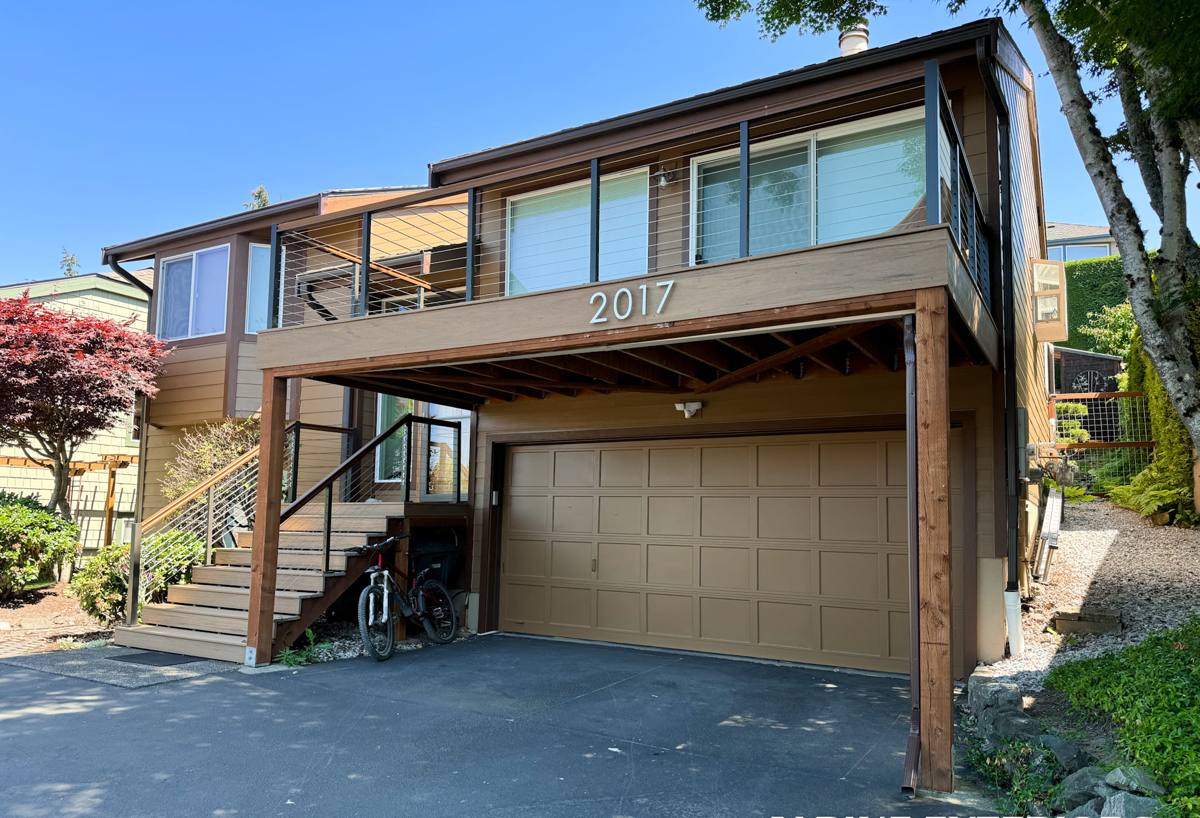
What Actually Fails on Kirkland Homes
Wood and Engineered Wood Siding
Older cedar and engineered wood products absorb moisture at cut edges, fastener holes, and anywhere the factory finish has worn through. Once water gets in, the board swells, the paint or coating fails faster, and rot follows — often starting at the bottom edge of a board or behind a downspout that's been quietly overflowing for a season or two.
Vinyl Siding
Vinyl doesn't rot, but it does crack in cold snaps, buckle when nailed too tight for our temperature swings, and blow loose in wind off the lake. Cracked or missing panels are an easy entry point for wind-driven rain, and matching an exact panel color gets harder every year as manufacturers update their lines.
Fiber Cement Siding
Fiber cement is far more stable than wood or vinyl, but it isn't immune to problems. Most fiber cement issues we find in Kirkland trace back to installation, not the material: caulk joints that were never properly backed, boards installed too close to grade or a deck surface, or flashing details that were skipped to save time. When fiber cement is installed correctly, repair work is rare and usually limited to impact damage or a failed sealant joint rather than moisture intrusion.
Signs You Need a Repair, Not Just a Watch-and-Wait
- Soft or spongy spots when you press on siding near the bottom courses or around windows
- Visible gaps at seams, corners, or where siding meets trim, window frames, or the foundation
- Peeling paint or bubbling finish in one localized area rather than across the whole wall
- Dark streaking, moss buildup, or persistent green film on north- or east-facing walls
- Cracked, warped, or missing boards or panels after a windstorm
- Musty smell or visible staining on interior walls that share an exterior wall with damaged siding
- Caulking that has shrunk, cracked, or pulled away from the joint it's supposed to seal
Any one of these on its own might be minor. Several together, or one that's been sitting unaddressed through a wet season, usually means water has already gotten past the surface.
Repair or Replace? How We Make That Call
Not every damaged section needs a full re-side, and we don't push replacement when a targeted repair will genuinely hold up. But we also won't patch over a problem that's going to resurface in two years. The honest answer depends on how much of the wall is affected, what's underneath it, and how the existing material is holding up overall.
| Factor | Repair usually makes sense | Replacement is the better call |
|---|---|---|
| Extent of damage | Isolated to one board, panel, or corner | Spread across multiple walls or elevations |
| Underlying sheathing | Dry, solid, no soft spots | Soft, delaminating, or showing rot |
| Age of existing siding | Under 15-20 years, finish still sound | Near or past its expected service life |
| Cause of damage | One-time event (storm impact, accidental damage) | Ongoing moisture intrusion or systemic install flaws |
| Material match | Discontinued but close match available | No reasonable color/profile match exists |
We'll always tell you plainly which side of that table your house falls on, including when the honest answer is "this will hold for a few more years" rather than pushing a bigger job than the house needs.
What a Correct Repair Actually Involves
A repair that just swaps a board for a board and re-caulks the edge is a temporary fix. A repair that lasts starts by finding out why the original section failed and correcting that condition, not just replacing the symptom.
- Remove damaged material carefully to expose the water-resistive barrier and sheathing underneath without creating new damage to adjacent, sound siding.
- Inspect what's behind it — house wrap, flashing, framing — for rot, mold, or moisture staining that needs to be addressed before anything goes back on the wall.
- Correct the underlying cause, whether that's re-flashing a window head, adding a proper kick-out flashing above a deck ledger, or re-establishing clearance between siding and grade.
- Install matching or compatible material, fastened and gapped to manufacturer spec, not just tacked in to fill the hole.
- Seal and finish correctly, using sealants rated for our climate and matching factory or field-applied finish so the repair doesn't stand out or weather differently than the surrounding wall.
Skipping step two is the most common shortcut in this trade, and it's the one that guarantees the same repair comes back in a few years.
Why the Material You Repair With Matters
We install James Hardie fiber cement siding exclusively on full siding jobs, and that standard shapes how we approach repairs too. When we're patching an existing Hardie wall, we use Hardie boards with matching ColorPlus finish or profile, so the repair blends in and carries the same fire-resistant, moisture-stable performance as the rest of the wall — not a mismatched patch that ages differently.
When we're repairing a home sided in vinyl, wood, or another fiber cement brand, we'll do the repair honestly with compatible materials if that's what the homeowner wants. But we'll also tell you straight if a section of the wall is failing repeatedly because of what it's made of rather than how it was installed. Wood needs ongoing paint and caulk maintenance to keep water out. Vinyl becomes harder to color-match every year as product lines change, and it flexes and cracks in ways fiber cement doesn't. If a wall is on its third or fourth repair in the same spot, that's usually a material and installation story, not bad luck — and at that point we'll lay out what a Hardie replacement would look like and let you decide, no pressure either way.
Our Repair Process for Kirkland Homeowners
- On-site assessment — we look at the damaged area plus the whole elevation it's on, since problems rarely stay contained to one board.
- Honest scope and estimate — you get a clear picture of what's being repaired, why, and what it costs before any work starts.
- Moisture and structural check — if there's any sign water reached the sheathing or framing, we address that before closing the wall back up.
- Repair and finish match — material, fastening, and finish are matched as closely as possible to the surrounding siding.
- Final walkthrough — we show you what was done and what to keep an eye on going forward.
Because we work Kirkland regularly, we're familiar with the permitting expectations in this part of King County and with how exterior work typically gets handled for homes with an HOA or architectural review process — details that add friction when a crew is working here for the first time.
Moss, Mildew, and Keeping Repairs From Recurring
A good repair addresses today's damage. Keeping it from happening again is mostly about managing the moisture and organic growth that our wet season encourages.
- Keep gutters clear so overflow doesn't run down the wall behind the siding
- Trim back vegetation and tree cover that keeps shaded walls damp for days after rain
- Rinse moss and algae off siding surfaces before it builds up a thick mat, especially on north-facing walls
- Check caulking at trim, windows, and penetrations every year or two and re-seal before it fails
- Watch areas near grade, decks, and downspouts first — that's where most Kirkland siding problems start
- Have any storm damage looked at promptly rather than waiting through a wet season
Why Hire a Crew That Already Works in Kirkland
Siding repair is a trade where local experience shows up in small decisions: knowing which elevations in this part of King County take the worst of the driving rain, recognizing moss patterns that signal a drainage issue rather than just cosmetic buildup, and understanding how the lake's proximity affects moisture behavior differently than it would a few miles inland. A crew that's worked Kirkland homes before isn't guessing at any of that.
It also matters when it comes to material availability and matching. We keep track of what's been installed around the area and how to source a close match for an existing wall, rather than showing up and hoping the local supply house has something close enough.
If you've got damaged, aging, or failing siding on a Kirkland home, we're glad to take a look and give you a straight answer on what it needs — repair, partial replacement, or nothing urgent at all. Reach out for a free, no-pressure estimate using the form below.