 King County
 Why Mercer Island's Climate Is Hard on Exterior Siding
Mercer Island sits on Lake Washington in the middle of King County, wrapped in mature tree canopy and just minutes from the marine, moisture-heavy air that moves through the greater Puget Sound region. That combination is scenic, but it's rough on a home's exterior. Dense trees shade large sections of many roofs and walls for most of the day, which means those surfaces stay damp far longer after rain than they would on an open lot. Add driving rain that comes in sideways during fall and winter storms, and you get siding that rarely gets a real chance to dry out between weather events.
Over a full year, that adds up to one of the more demanding siding environments in King County. Homes on shaded, north- or east-facing walls are especially prone to persistent moss and algae growth, and any siding material that traps moisture behind it — rather than shedding it and letting the wall assembly breathe — is working against the climate instead of with it.
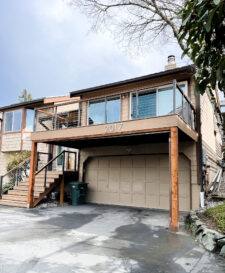
What a Damp, Moss-Prone Climate Demands From Your Siding
Given what Mercer Island's weather does to an exterior over time, a siding system here needs to do a few things well, not just look good on install day:
- Resist moisture absorption into the material itself, so repeated wetting doesn't lead to swelling, softening, or rot
- Hold a finish that doesn't give moss and algae an easy surface to grip
- Work with a drainage plane behind it, so incidental water has somewhere to go instead of sitting against the wall
- Handle the freeze-thaw swings that show up in colder snaps without cracking
- Stand up to direct, wind-driven rain at exposed elevations without depending on caulk alone to keep water out
This is exactly the profile we weigh when we talk with Mercer Island homeowners about siding, and it's why we don't treat this as a generic "pick a color" decision. The material and the installation both have to be matched to what this specific climate does to a house year after year.
Why We Install Only James Hardie Fiber Cement
We install James Hardie fiber cement siding exclusively — not vinyl, not engineered wood products like LP SmartSide, not other fiber cement brands, not cedar or primed spruce. That's a deliberate standard, not a limited product list. Fiber cement itself is made from cement, sand, and cellulose fiber, which means it doesn't absorb and swell the way wood-based products can, and it's non-combustible, which matters for wildfire-conscious homeowners even in a wetter climate like ours.
Within fiber cement, we standardized on Hardie specifically because of how the product is engineered and finished:
Climate-Engineered Formulation
Hardie manufactures different siding formulations for different climate zones, including an HZ5 line developed for regions with cold, wet winters — the Pacific Northwest being a textbook example. That's a meaningfully different approach than a one-size-fits-all siding product, and it matters in a county where a wall can stay damp for days after a storm.
ColorPlus Factory Finish
Hardie's ColorPlus finish is baked on at the factory under controlled conditions, rather than field-painted on site. A factory finish bonds more consistently than a job-site paint job, holds color longer, and gives moss and algae a harder surface to establish on than a porous, field-applied coat. It also means touch-ups use a color-matched formula rather than a repaint of the whole wall.
Longevity and Warranty
When it's installed to spec, fiber cement is a long-service-life product, and Hardie backs it with a substantial, transferable product warranty — a real factor for Mercer Island homeowners who care about resale value as much as day-to-day performance. We won't put our name on an install where the underlying material is fighting the climate instead of handling it, and that's the honest reason we've narrowed our offering to one product line instead of several.
What Correct Fiber Cement Installation Actually Involves
Fiber cement siding is only as good as the assembly it's installed into. On Mercer Island, where shaded, slow-drying walls are common, the details behind the siding matter as much as the siding itself:
- Drainage gap (rainscreen): a ventilated gap between the weather-resistive barrier and the siding lets any moisture that gets behind the panels drain and dry, instead of sitting trapped against the sheathing
- Weather-resistive barrier: a continuous, properly lapped house wrap underneath everything, sealed at penetrations
- Flashing: correctly integrated flashing at windows, doors, and roof-to-wall intersections, so water is directed out and away rather than relying on caulk to stop it
- Fastening: Hardie-specified nails, spacing, and blind-nailing where the design allows, so panels are secured without cracking the material or leaving vulnerable exposed fastener heads
- Clearances: proper gaps from grade, roof lines, and decks so siding isn't sitting in standing water or splash-back
- Caulking discipline: sealing only where Hardie's specifications call for it — over-caulking every seam can trap moisture rather than let it escape
Skipping or rushing any one of these is usually where a fiber cement job goes wrong — not the material itself. On a climate like Mercer Island's, a poorly detailed install can trap moisture behind otherwise excellent siding and cause exactly the kind of hidden damage the material was supposed to prevent.
How Fiber Cement Compares to Other Siding Materials Locally
Homeowners often ask us to explain, plainly, how the material options stack up for a climate like this one. Here's the honest comparison:
| Material | Moisture / Moss Resistance | Maintenance | Fire Rating | Finish Durability |
|---|---|---|---|---|
| James Hardie Fiber Cement | Strong — engineered formulation, drains via rainscreen | Occasional rinse, periodic caulk check | Non-combustible | Factory-baked ColorPlus finish |
| Vinyl | Doesn't absorb water, but seams and gaps can trap moisture behind it | Low, but can fade, warp, or become brittle over time | Combustible | Color molded in, but fades and chalks with UV exposure |
| LP SmartSide / Engineered Wood | Wood-based core is vulnerable if moisture reaches cut edges or seams | Field-painted finish needs monitoring and eventual repainting | Combustible | Site-applied or factory primer, variable long-term hold |
| Cedar / Primed Spruce | Natural wood, absorbs moisture and is prone to rot in shaded, damp areas | Highest — regular staining, sealing, and pest monitoring | Combustible | Requires ongoing refinishing to hold up |
Every material on that list has a legitimate use case somewhere. In a climate defined by long wet seasons, shaded lots, and a serious moss problem, fiber cement's combination of moisture stability and a factory-cured finish is why it's the one we stand behind for Mercer Island homes.
Our Process for Mercer Island Projects
Working on Mercer Island comes with a few practical realities we plan around from the first visit:
Assessment
We start by inspecting the existing siding, trim, and — where accessible — the sheathing underneath, looking specifically for moisture damage, soft spots, and areas where past caulking or paint has been masking a problem rather than solving it. This is where we catch issues that a surface-level look would miss.
Permitting
Mercer Island is its own incorporated city within King County, so building permits for siding work are handled through the city rather than unincorporated King County's process. We account for this in scheduling so it doesn't catch a project off guard.
Site Considerations
Many Mercer Island properties have significant tree cover, and local regulations are protective of established trees, so we plan material staging, scaffolding, and debris removal with that in mind rather than treating every lot like an open, unshaded site.
Installation
Once we're on site: remove and dispose of old siding, inspect and repair sheathing as needed, install the weather-resistive barrier and rainscreen, hang and fasten the Hardie panels to spec, install trim and flashing, and finish with color-matched touch-up where needed. We close out with a walk-through and warranty registration so the paperwork is in your hands, not just ours.
Maintenance Checklist for a Damp, Mossy Climate
Even the right material benefits from a small amount of homeowner upkeep. On Mercer Island, we recommend:
- Rinse siding with a garden hose once or twice a year, focusing on shaded, north- and east-facing walls where moss tends to establish first
- Trim back branches and vegetation that keep a wall shaded and damp, to improve airflow and sun exposure
- Check caulking at windows, doors, and trim joints annually, and have gaps resealed before they become a moisture path
- Keep gutters and downspouts clear so overflow isn't running down the siding face
- Address moss as soon as it appears rather than letting it establish — the longer it sits, the more it holds moisture against the surface
- Avoid high-pressure washing directly into seams and joints, which can force water behind the siding
- Have a professional look at the exterior every few years, especially on an older home, to catch small issues while they're still small
Signs Your Current Siding May Need Replacing
If your home already has an aging siding system, watch for:
- Soft, spongy, or crumbling spots when you press on the surface
- Paint that won't hold or keeps peeling in the same spots
- Moss or algae that comes right back within weeks of cleaning
- Visible warping, buckling, or delamination, particularly with wood-based products
- Gaps opening up at seams, corners, or trim joints
- A musty smell near exterior walls, or interior stains that trace back to an outside wall
None of these are emergencies on their own, but together they're a sign the siding is losing its fight with the climate rather than winning it.
If you're weighing a siding project on Mercer Island — whether you're dealing with visible damage or just planning ahead — we're happy to take a look and walk you through what we're seeing, with no pressure to commit on the spot. Use the form below to request a free estimate.