 King County
 Metal Roofing in Shoreline: Built for Salt Air, Driving Rain, and a Long Moss Season
Shoreline sits along the edge of Puget Sound with heavy tree canopy running through most of its neighborhoods, and that combination puts a specific kind of stress on a roof. Homes closer to the water pick up salt-tinged marine air, while the shade from mature evergreens keeps roof surfaces damp and slow to dry for long stretches of the year. Add in wind-driven rain that doesn't fall straight down, and you have a climate that's genuinely harder on a roof than the general Puget Sound averages suggest. A roofing material that performs fine in a drier, sunnier market can still struggle here specifically because of how long it stays wet and how much organic debris settles on it.
Metal roofing has become one of the more reliable answers to that combination for King County homeowners who want a roof that sheds water fast, resists moss better than most alternatives, and doesn't need to be replaced again in fifteen or twenty years. It isn't the right fit for every home or every budget, and we'll say so plainly during an estimate. But for a lot of Shoreline properties, especially ones under heavy tree cover or exposed to open wind off the water, it solves problems that asphalt shingles keep running into.
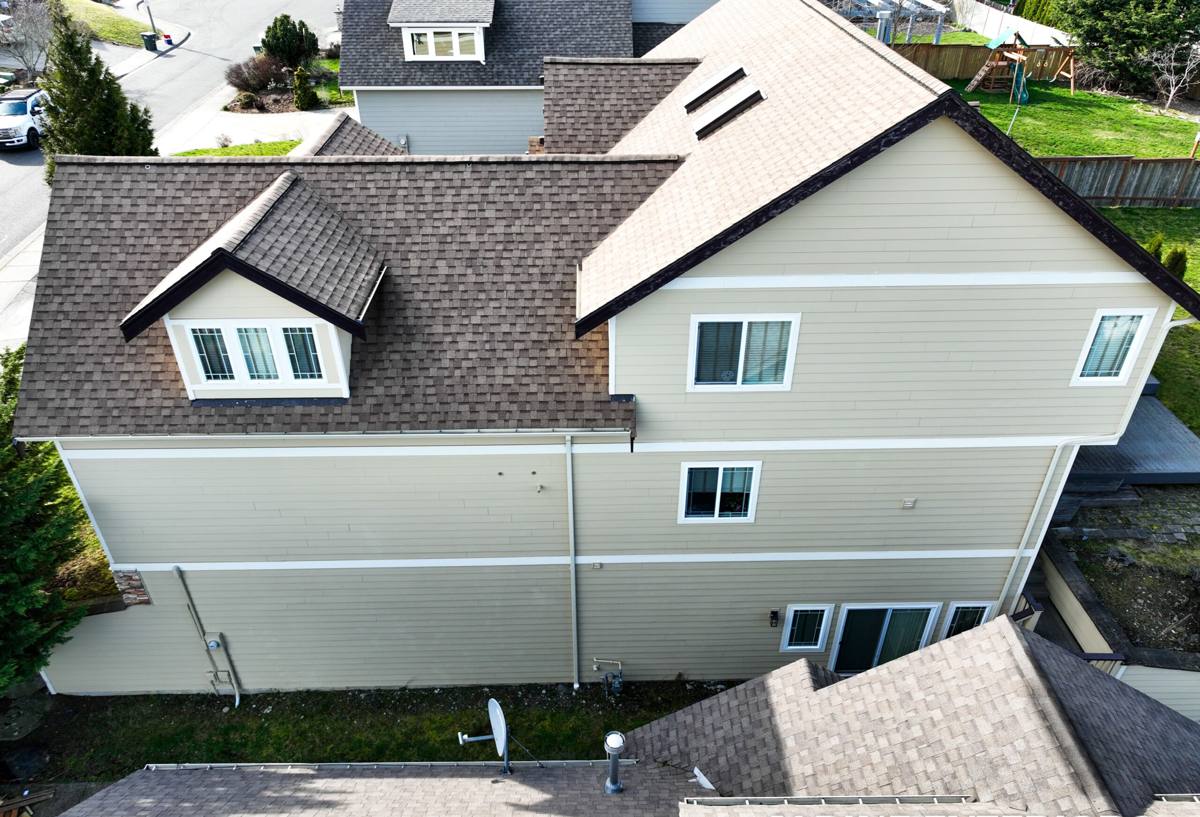
What Shoreline's Climate Does to a Roof
Salt Air Off Puget Sound
Homes nearer the water pick up a steady, low-grade dose of salt-laden air moving in off the Sound. Over time, that air accelerates corrosion in fasteners, flashing, and any metal component that isn't rated for coastal exposure. It's a slow process, which is exactly why it's easy to underestimate on install day and only becomes obvious years later when trim, valleys, or fastener heads start rusting well ahead of schedule.
Wind-Driven Rain and Sustained Wet Seasons
Rain in this part of King County rarely falls straight down for long. Wind pushes it sideways under ridge caps, into valleys, and up under shingle tabs and flashing laps that were only ever designed to shed water moving downhill. A roof system needs real wind resistance built into its detailing, not just a rating on a data sheet, to hold up through a full Shoreline winter.
Moss, Shade, and Tree Canopy
Shoreline's tree cover is one of its defining features, and it's also one of the harder things on a roof. Shaded, north-facing slopes and anything near overhanging branches stay damp long after the rest of the roof has dried out, which is exactly the condition moss and algae need to take hold. Asphalt shingles give moss something to root into; metal doesn't offer the same foothold, though it isn't fully immune if debris is left to sit and hold moisture against the surface long enough.
Why Metal Roofing Fits This Climate
- Fast water shedding: A steep-profile metal roof sheds rain quickly instead of holding it against the surface the way a granulated shingle can, which matters directly in a climate this wet.
- Moss and organic growth resistance: Metal doesn't give moss and moss spores the porous surface they need to establish, so growth is far less common than on asphalt or wood, especially under tree canopy.
- Wind performance: Properly installed standing seam and mechanically fastened metal panels hold up well against the sideways-driven rain and gusts that come through this area, particularly on more exposed, open lots.
- Longevity: A correctly installed metal roof commonly outlasts two or more full asphalt shingle roof cycles, which changes the math over the life of the home even though the upfront cost is higher.
- Fire resistance: Metal roofing carries a Class A fire rating, which some homeowners weigh into their insurance and safety planning regardless of wildfire exposure risk in this specific area.
None of that means metal is automatically the right choice. It costs more upfront than asphalt, it can be noisier in heavy rain without proper underlayment and insulation, and it requires a crew that actually knows the material — panel spacing, expansion allowance, and fastening details that are different from shingle work and unforgiving if done wrong. We'll walk through the honest trade-offs for your specific roof before recommending it.
Choosing a Metal Roofing System
"Metal roofing" covers more than one product, and the right choice depends on the roof's slope, exposure, and how the homeowner weighs cost against long-term maintenance.
| System | How It's Fastened | Best Fit |
|---|---|---|
| Standing seam | Concealed clips, no exposed fasteners | Homes wanting the longest service life and lowest long-term maintenance, especially under tree cover or near the water |
| Exposed-fastener panel | Screws through the panel face | Budget-conscious projects, outbuildings, or lower-slope applications where upfront cost matters more than fastener longevity |
| Metal shingle or shake profile | Interlocking panels, concealed or partially exposed fasteners | Homeowners who want the look of traditional shingles or shakes with metal's durability |
Exposed-fastener systems cost less to install but rely on rubber-gasketed screws that age and need periodic inspection and replacement, which matters more in a climate that keeps roofs wet as long as Shoreline's does. Standing seam avoids that maintenance point entirely by keeping every fastener hidden under the seam, which is a large part of why it's become the standard recommendation for full roof replacements in this market rather than an upgrade reserved for high-end homes.
What a Correct Metal Roof Installation Involves
Metal roofing performs the way it's supposed to only when the details underneath it are right. A panel that looks perfect from the street can still fail early if the underlayment, flashing, or fastening pattern underneath it was rushed.
- Deck inspection and prep: The sheathing has to be sound and dry before anything goes down; covering rot or moisture damage just traps the problem under new material.
- High-quality underlayment: A synthetic or self-adhered underlayment rated for metal roofing protects the deck and manages any condensation that forms on the underside of the panels in a cool, damp climate.
- Correct panel spacing and fastening: Metal expands and contracts with temperature swings, and fastening patterns have to account for that movement or panels can buckle or work fasteners loose over time.
- Flashing and valley detail: Valleys, chimneys, skylights, and roof-to-wall transitions are where most roof leaks actually start, metal or otherwise. These details take real experience to get watertight in a wind-driven rain climate.
- Ventilation: A metal roof still needs proper attic or roof-deck ventilation to manage moisture from inside the home, independent of how well it sheds rain from outside.
Cutting a corner on any one of those steps is one of the more common ways a good material ends up with a bad reputation. We treat installation detail as seriously as the panel spec itself.
Metal Roofing Cost Factors in Shoreline
| Factor | What It Affects | Why It Matters Here |
|---|---|---|
| Roof complexity | Panel cutting, seams, and flashing labor | More valleys, dormers, and penetrations mean more places for wind-driven rain to find a weak seam |
| Panel system chosen | Material and installation cost | Standing seam costs more upfront than exposed-fastener but avoids ongoing gasket maintenance |
| Tear-off vs. overlay | Labor scope and deck access | Tear-off reveals hidden moisture damage that's common under older roofing in shaded, wet lots |
| Deck and substrate condition | Repair costs before new roofing goes on | Years of trapped moisture under moss-covered shingles can rot sheathing before it's visible from the ground |
| Tree exposure and site access | Staging, cleanup, and safety setup | Heavily wooded lots common in Shoreline can add setup time and require extra care around overhanging limbs |
Exact numbers depend on the specific roof, which is why we walk the property in person and inspect the existing deck before giving a real estimate rather than quoting off a flat price sheet.
Signs a Shoreline Roof Needs Attention
- Moss or dark streaking that returns quickly after cleaning, especially on shaded, north-facing slopes
- Rusting fasteners, streaking stains, or corrosion around flashing and trim on an existing metal roof
- Granule loss, curling, or cracked shingles on an aging asphalt roof nearing the end of its life
- Soft spots, sagging, or visible daylight in the attic around valleys and penetrations
- Water stains on interior ceilings, especially after a windy rainstorm rather than a calm one
- Debris buildup in valleys or against roof-to-wall transitions that traps moisture against the surface
Roofing Alongside Siding, Windows, and Decks
A roof rarely fails in isolation. A poorly flashed roof-to-wall transition can show up as siding damage on the wall below it, and a leaking valley near a skylight can travel along framing before it ever shows up as a ceiling stain. Because we handle roofing alongside siding, windows, and decks, we can look at a Shoreline home as one connected exterior system rather than diagnosing a roof problem in isolation and missing where the water is actually coming from.
Why a Local Shoreline Crew Matters
A crew that works King County roofs through a full wet season sees how salt air, wind-driven rain, and shaded, moss-prone slopes actually behave on real houses, not just how a panel performs on a manufacturer's spec sheet. That experience shapes real decisions on install day: where extra flashing attention matters most, which slopes and orientations stay wet longest, and which details are worth the extra time so a homeowner isn't dealing with a leak two winters later. Shoreline's mix of Puget Sound exposure and heavy tree canopy isn't identical to every King County neighborhood, and a crew with local experience accounts for that instead of applying a one-size-fits-all approach.
Get a Free, No-Pressure Estimate
If your Shoreline home needs a new roof, storm repair, or an honest opinion on whether metal roofing makes sense for your specific property, we're glad to take a look. Reach out using the form below to schedule a free estimate, no pressure and no upsell script.