 King County
 West Seattle's Climate Is Rough on Roofs
West Seattle sits on a peninsula surrounded by Puget Sound, which means homes here take on a combination most inland King County neighborhoods don't deal with: salt-laden marine air, wind-driven rain off the water, and long stretches of overcast, damp weather that can run from October well into spring. Add in the mature tree canopy that shades many West Seattle streets, and you get roofs that stay wet longer, dry out slower, and grow moss faster than roofs even a few miles inland.
None of that is unusual for the Pacific Northwest, but it does mean a roof installed without these conditions in mind will age faster than it should. Fasteners and flashing exposed to salt air corrode sooner. Shingles on shaded, north-facing slopes hold moisture and grow moss mats that lift edges and trap water against the decking. Driving rain off the Sound finds any weak point in flashing or underlayment that a drier climate would never expose. A correctly installed roof accounts for all of this from the start.
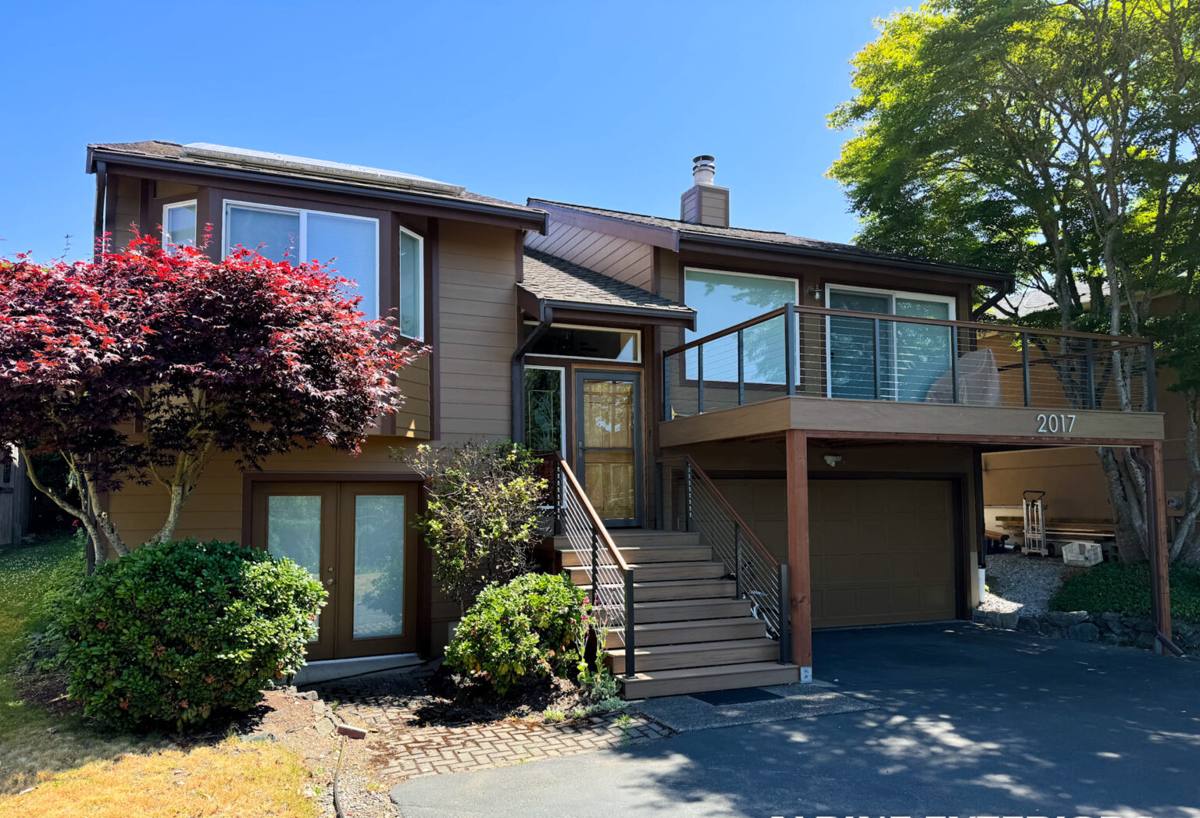
Signs a West Seattle Home Needs a New Roof, Not Another Repair
Most roofs give warning signs well before a leak shows up inside. The trouble is a lot of homeowners don't see them because roofs aren't something people check regularly. Here's what we look for when we're deciding whether a repair still makes sense or whether it's time to talk about full replacement.
- Shingles that are curling, cupping, or losing granules in patches (you'll often see granules collecting in gutters)
- Moss mats thick enough that you can't see the shingle surface underneath, especially on shaded or north-facing sections
- Soft or spongy spots when walking the roof, which usually means the decking underneath has started to rot
- Daylight visible through the roof boards from inside the attic
- Water stains on interior ceilings or in the attic, even faint ones
- A roof that's 20+ years old and has needed more than one or two repairs in the last few years
- Flashing around chimneys, skylights, or sidewalls that's rusted, lifted, or was never properly stepped and counter-flashed
One or two of these usually still means a repair. Several at once, or any sign of decking rot, means patching is just delaying a bigger and more expensive problem.
What a Correct Roof Installation Actually Involves
A new roof is more than laying down shingles. The parts you don't see are what determine whether the roof holds up through a West Seattle winter or starts failing in year five.
Tear-off, not overlay
We remove the existing roofing down to the decking rather than layering new shingles over old ones. Overlays trap moisture, hide decking problems, and void most manufacturer warranties. In a wet climate, that trapped moisture is exactly what accelerates rot.
Decking inspection and repair
Once the old roofing is off, we inspect the sheathing for soft spots, delamination, or rot — common around chimneys, valleys, and older skylights — and replace any bad sections before anything new goes down.
Ice and water shield where it matters most
Eaves, valleys, and roof-to-wall transitions get a self-adhering waterproof membrane underneath the main underlayment. This is the single most important defense against the driving rain and wind-driven moisture that West Seattle's exposure to the Sound produces.
Proper flashing
Chimneys, skylights, and sidewalls get step and counter-flashing installed correctly, not just caulked over. Caulk fails; properly lapped flashing sheds water for the life of the roof.
Balanced ventilation
Intake at the eaves and exhaust at the ridge keep the attic dry and temperature-balanced, which slows shingle aging from the underside and reduces the moisture load that feeds moss and mildew.
Correct fastening and finishing
Proper nail placement and count, starter strip along the eaves, and a finished ridge cap — the details that separate a roof that performs for its full rated life from one that starts showing problems early.
Roofing Materials for Coastal King County Conditions
Most West Seattle homes are well served by architectural asphalt shingles, but the right choice depends on your roof's exposure, your home's style, and how much long-term maintenance you want to take on.
| Material | Typical Lifespan | Moss/Moisture Resistance | Maintenance |
|---|---|---|---|
| Architectural asphalt shingles | 25-30 years | Good, with proper ventilation and periodic cleaning | Low to moderate |
| Standing seam metal | 40-50+ years | Excellent — sheds moss and moisture better than any shingle product | Low |
| Synthetic/composite shingles | 30-40 years | Very good, resists moisture absorption | Low |
| Cedar shake | 20-30 years with upkeep | Requires diligent maintenance in wet, shaded areas | High |
We install architectural asphalt and metal roofing as our primary recommendations for this area. Cedar shake has a traditional look that some homeowners want, but in a climate with this much shade and moisture, it demands a level of ongoing treatment and inspection that most homeowners underestimate — that's a maintenance trade-off worth going in with eyes open, not a knock on the material itself.
Our New Roof Installation Process
- Free on-site inspection. We walk the roof, check the attic, and give you a straight assessment of whether you need a repair or a replacement.
- Material and scope discussion. We go over material options, expected lifespan, and pricing so you know what you're choosing and why.
- Permit and scheduling. We pull the required permit and schedule around the weather forecast — dry-season windows matter for a tear-off.
- Property protection. Tarps go over landscaping, driveways, and anything below the work area before tear-off starts.
- Tear-off and decking repair. Old roofing comes off, decking gets inspected and repaired as needed.
- Underlayment, flashing, and roofing installation. Ice and water shield, synthetic underlayment, flashing, and the new roofing material go on in that order.
- Final walk-through. We inspect the finished roof with you and go over warranty documentation.
- Cleanup. Full site cleanup including a magnetic sweep for stray nails.
What Affects the Cost of a New Roof in West Seattle
| Factor | Why It Matters |
|---|---|
| Roof size and pitch | More square footage and steeper pitches mean more material and labor time |
| Number of layers to remove | Some older homes have multiple roofing layers, which adds tear-off time |
| Decking condition | Rot found during tear-off requires sheathing replacement, which affects material cost |
| Material selection | Asphalt, synthetic, and metal roofing carry different material and labor costs |
| Roof complexity | Valleys, skylights, chimneys, and dormers all add flashing work and labor time |
| Site access | Narrow lots, limited driveway space, and street parking common in West Seattle can affect staging and disposal logistics |
We give a firm, itemized quote after the on-site inspection — not a phone estimate — because these factors vary enough house to house that a real number requires a real look at your roof.
Ventilation, Moss, and Keeping a New Roof Healthy Long-Term
A new roof's biggest long-term threat in this area isn't age, it's trapped moisture. Proper attic ventilation is the first line of defense — it keeps warm, moist air from condensing against the underside of the decking and keeps the attic temperature closer to outdoor temperature, which slows shingle aging from below.
On the outside, moss is the main recurring issue for shaded and north-facing roof sections. Zinc or copper strips near the ridge can help slow regrowth on some roofs, but they're a supplement, not a substitute for periodic inspection and gentle cleaning. We recommend having a roof looked at every year or two in this climate, especially on properties with heavy tree cover, so moss and debris buildup get addressed before they start holding moisture against the shingles.
Gutters matter here too. With the tree cover common across West Seattle, gutters clog faster and hold water and debris against the roof edge longer than they would on a more exposed lot. Keeping them clear protects the eaves and the ice-and-water-shield areas that do the most work during heavy rain.
Why It Matters to Hire a Crew That Already Works in West Seattle
Roofing crews unfamiliar with this specific area tend to underestimate a few things: how tight some of the streets and driveways are for staging a tear-off and disposal, how much shade and moisture certain lots actually hold compared to what a quick drive-by suggests, and what decking condition to expect in the mix of older and newer housing stock found throughout the neighborhood. A crew that regularly works in West Seattle has already worked through those logistics and knows what to look for once the old roofing comes off.
There's also a practical warranty benefit. If a question comes up after installation — a flashing detail, a ventilation concern, anything — a crew already working in the area can get back out to your home quickly instead of scheduling around a long drive from elsewhere in King County.
Permits and Practical Considerations
A full roof replacement in Seattle generally requires a building permit, and we handle that as part of the process so you're not left navigating it yourself. If your home is part of an HOA or covenant community, it's worth checking whether there are material or color guidelines before finalizing your selection — we're happy to work with those requirements once you know what they are. We also plan installation timing around the wettest stretches of the year where possible, since a tear-off exposed to a heavy Puget Sound storm is a risk nobody wants to take.
If your roof is showing its age or you just want an honest opinion on whether repair or replacement makes more sense, we're glad to take a look. Fill out the form below for a free, no-pressure estimate on your West Seattle home.