 King County
 Board & Batten Siding in Queen Anne
Queen Anne's mix of early-1900s craftsman homes, mid-century remodels, and newer infill construction has made board and batten one of the most requested siding looks in the neighborhood. The vertical lines read as clean and modern on a new build, or period-appropriate on an older farmhouse-style remodel. But board and batten is also one of the siding styles most likely to be installed wrong, because the look depends on a series of small details — batten spacing, fastening pattern, flashing at the top and bottom of each panel — that don't show up in a photo. Get those details right and it's one of the most durable, low-maintenance profiles you can put on a King County home. Get them wrong and you're looking at trapped moisture behind the boards within a few winters.
This page covers what board and batten actually needs to hold up on a Queen Anne home specifically — not siding in general — and why we install it only in James Hardie fiber cement.
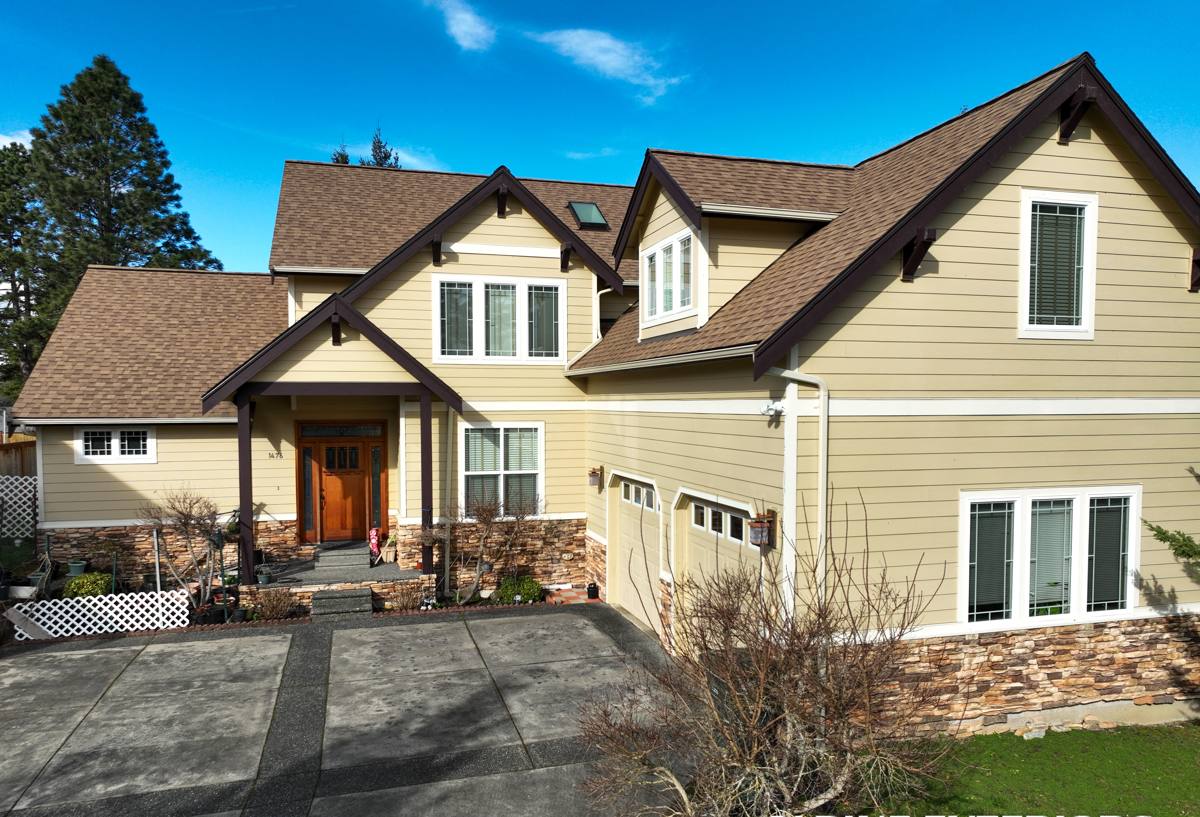
Why Queen Anne's Climate Is Hard on Board and Batten
Queen Anne sits high above Elliott Bay and the Ship Canal, which means homes here deal with a specific combination of exposures that doesn't apply evenly across King County.
Salt Air Off the Sound
Homes on the west- and north-facing slopes get regular exposure to salt-laden air moving in off Puget Sound. Salt air accelerates corrosion on exposed metal fasteners, flashing, and trim — a slow process that's invisible until streaking or fastener failure shows up years later.
Driving Rain
Seattle's rain is rarely heavy, but it's frequent, wind-driven, and long in duration. On a lap siding profile, water sheds down and off. On board and batten, water can run down a batten and pool at horizontal joints or behind poorly sealed vertical seams if the assembly wasn't detailed for it. Vertical board and batten needs a plan for where every drop of water goes — not just a good-looking surface.
A Long Moss Season
Shaded elevations, mature tree cover, and months of damp weather give moss and algae a long window to establish on north-facing walls and anywhere siding stays damp longer than it should. Board and batten's vertical battens create narrow shadow lines and ledges where moss gets a foothold if the siding surface can't dry out between rain events.
What a Correct Board and Batten Installation Involves
The visual identity of board and batten — wide panels with narrow vertical battens covering the seams — is the easy part. The parts that determine whether it lasts are underneath.
Rainscreen and Drainage Plane
Behind the panels, there needs to be a continuous water-resistive barrier and, ideally, a drainage gap that lets any moisture that gets past the surface drain and evaporate instead of sitting against the sheathing. On a rain-heavy site like Queen Anne, skipping this is the single most common shortcut that leads to rot behind board and batten within five to ten years.
Batten Spacing and Fastening
Battens need consistent spacing (both for appearance and for even load distribution) and correct fastener placement — through the panel and into structural framing or properly spaced furring, not just into sheathing. Fastener spacing also affects how the panel handles the wide temperature swings between a cold, wet winter and a dry August.
Flashing at Every Transition
Every horizontal joint, window head, and butt seam needs flashing detailed to shed water outward, not into the wall assembly. This is especially important around window and door openings, which are the most common failure point on any vertical siding profile.
Caulking Philosophy
Board and batten looks best with tight, clean lines, but over-reliance on caulk instead of proper flashing and lap details is a shortcut. Caulk fails; flashing doesn't. We use sealant where it belongs — not as a substitute for the underlying water management.
James Hardie Board and Batten Options
We install James Hardie exclusively, and for board and batten specifically there are two ways to get the look, each suited to a different style of Queen Anne home.
| System | Best For | What It Is |
|---|---|---|
| HardiePanel Vertical Siding + Battens | Farmhouse, craftsman, transitional remodels | Large-format fiber cement panels installed vertically with separate wood-look battens covering the seams; wide range of textures and ColorPlus finishes |
| Hardie Artisan Vertical Siding | High-end, architect-designed, modern builds | Hardie's premium collection, engineered for a crisper, more refined board and batten profile with tighter reveals and a smoother factory finish |
Both are non-combustible fiber cement, both carry factory-applied ColorPlus finish (so the color is baked on, not field-painted), and both are engineered for the Pacific Northwest's moisture exposure through Hardie's HZ10 product line. The choice between them usually comes down to budget and the level of architectural refinement the home calls for — we'll walk through both options during your estimate rather than push one by default.
Why We Don't Install Vinyl or Engineered Wood Board and Batten
Board and batten is also sold in vinyl and engineered wood (LP SmartSide-type) versions, and we get asked about both. Vinyl board and batten is lightweight and inexpensive, but it expands and contracts significantly with temperature swings, which shows at the vertical batten joints over time, and it doesn't hold paint if a homeowner ever wants to change the color. Engineered wood products perform reasonably when detailed and maintained correctly, but they're wood-based and more sensitive to the sustained moisture exposure Queen Anne sees for months at a stretch — any breach in the coating shortens their life faster than it would on a fiber cement panel. We standardized on James Hardie because fiber cement doesn't have either of those failure modes: it doesn't rot, it holds its factory finish for years, and it's non-combustible.
Our Installation Process
- On-site assessment — we evaluate your home's specific exposure: elevation, shade, wind direction, and current siding condition.
- Tear-off and sheathing inspection — old siding comes off and we inspect the sheathing underneath for hidden rot before anything new goes up.
- Water-resistive barrier and drainage plane — installed continuously, with special attention to window and door openings.
- Flashing — custom-fit at every horizontal joint, window head, and penetration.
- Panel and batten installation — to Hardie's fastening specifications, not shortcuts, with consistent batten spacing.
- Final detailing and cleanup — caulking where appropriate, touch-up, and a walkthrough with you before we call the job done.
Signs Your Current Siding Needs Attention
If you're not sure whether your existing siding is due for replacement rather than repair, look for these signs before your next wet season:
- Soft or spongy spots when you press on the siding, especially near the bottom courses
- Persistent dark streaking or moss growth that returns within weeks of cleaning
- Visible gaps, warping, or separation at batten seams
- Paint or finish that's peeling or chalking heavily on one side of the house more than others
- Rising energy bills that suggest the wall assembly isn't performing the way it should
- Any visible daylight or drafts around window trim where siding meets the frame
Cost Factors for Board and Batten in Queen Anne
Every home is different, but the same factors tend to move the price up or down on board and batten jobs in this neighborhood:
| Factor | Why It Matters |
|---|---|
| Home access and lot slope | Many Queen Anne lots are steep or tight, affecting staging and scaffolding needs |
| Existing siding removal | Tear-off and disposal of old siding adds labor versus a bare-sheathing install |
| Sheathing repair | Hidden rot found during tear-off needs to be addressed before new siding goes on |
| Panel system chosen | HardiePanel vertical vs. Hardie Artisan carry different material costs |
| Trim and window detail complexity | Homes with more window openings and architectural detail require more flashing and fitting time |
We give straight, itemized estimates rather than one all-in number with no explanation, so you can see exactly where the cost is going.
Why Hiring a Crew That Already Works Queen Anne Matters
Board and batten installed correctly in Bellevue or Renton still needs to account for Queen Anne's specific exposure to salt air, wind off the Sound, and shaded, slow-drying elevations. A crew that installs siding across King County day in and day out gets a feel for which sides of which streets need extra flashing attention, how much drainage capacity is enough for this rain pattern, and how the moss season behaves on tree-covered lots. That local pattern recognition doesn't replace following manufacturer specs — it adds to it.
If you're considering board and batten siding for your Queen Anne home, we're happy to walk the exterior with you, point out anything we see, and put together a free, no-pressure estimate using the form below.